Golden-seared chicken breasts tucked into a bright tomato basil pan sauce are the kind of dinner that tastes like you put in more work than you did. The chicken stays juicy because it finishes in the sauce instead of cooking all the way through in a dry skillet, and the burst cherry tomatoes bring just enough sweetness to balance the garlic, balsamic, and Parmesan. It’s the sort of skillet meal that lands on the table looking rustic and polished at the same time.
What makes this version dependable is the order. The chicken gets a proper sear first, then the garlic and tomatoes build the sauce in the same pan so every browned bit gets pulled into the skillet. A splash of white wine or broth loosens everything without making the sauce watery, and the basil goes in at the end so it stays fresh and fragrant instead of turning dull and wilted.
Below you’ll find the sear timing that keeps the chicken tender, the sauce cue that tells you the tomatoes are ready, and a few smart swaps if you need to work with what’s in your kitchen.
The tomatoes broke down into the prettiest sauce and the chicken stayed juicy all the way through. I used the broth option and it still tasted rich, especially with the basil and Parmesan at the end.
Save this tomato basil chicken breasts skillet for the nights when you want juicy chicken, burst tomatoes, and a glossy basil-Parmesan finish without a pile of dishes.
The Sear That Keeps the Chicken Juicy Instead of Dry
The biggest mistake with skillet chicken is rushing past the sear or cranking the heat so high that the outside scorches before the center catches up. Here, the chicken needs a real golden crust first. That crust gives you flavor, but it also helps the meat hold together when it goes back into the sauce.
Use a large skillet and give the breasts space. If they’re crowded, they steam and the pan juices turn pale instead of rich. Pull the chicken once it hits 165°F, then let the sauce finish the job. That last short simmer keeps the texture tender instead of stringy.
What the Tomatoes, Wine, and Basil Are Each Doing Here
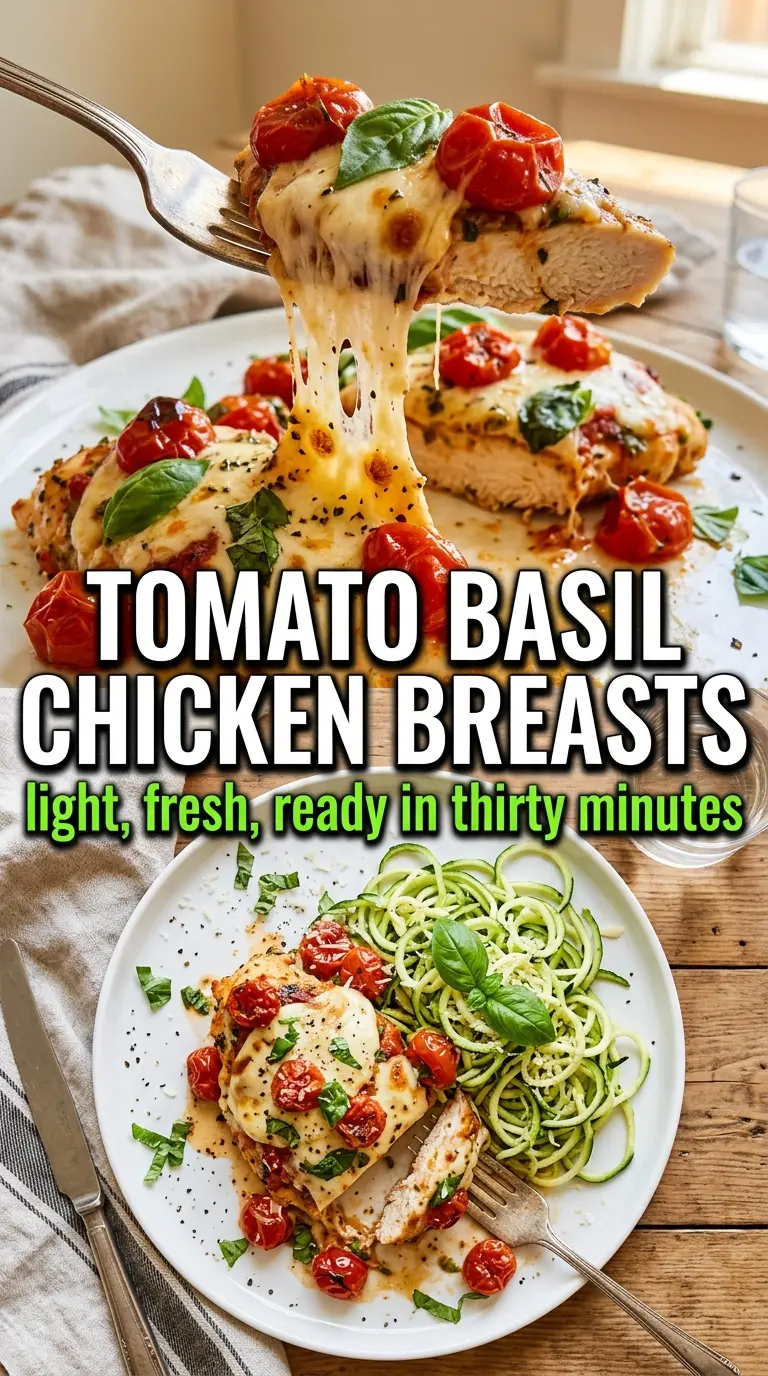
- Chicken breasts — Boneless, skinless breasts cook fast and soak up the sauce well, but they need the sear-and-finish method here or they can turn dry. If yours are thick on one end, pound them lightly so they cook evenly.
- Cherry tomatoes — These are the heart of the sauce. They burst into a sweet, juicy base that sliced tomatoes won’t give you as reliably. If you need to swap, use grape tomatoes before you reach for canned diced; canned will taste flatter and need more reduction.
- Dry white wine or chicken broth — Wine gives the sauce a little brightness and depth, while broth keeps it savory if you don’t want alcohol in the pan. Use a broth you’d actually drink; a weak broth makes the sauce taste thin.
- Balsamic vinegar — This isn’t here to make the sauce taste sweet. It sharpens the tomatoes and rounds out the garlic so the whole pan tastes finished. Add it near the end so its edge stays clean.
- Fresh basil — Dried basil can’t fully replace the fresh herbs in this dish. The basil ribbons are there for aroma and a clean green finish, so stir them in off the heat or right at the end.
- Parmesan — Shaved Parmesan melts into the sauce just enough to make it feel silky without turning heavy. Pre-shaved works in a pinch, but a fresh wedge gives you better texture and a sharper finish.
Building the Tomato Basil Sauce in the Same Pan
Seasoning and Searing the Chicken
Season both sides of the chicken with salt, pepper, garlic powder, and Italian seasoning, then lay it into olive oil that’s hot enough to shimmer. You want a steady sizzle, not a furious spit. Let the first side develop a deep golden crust before turning it; if it sticks, it isn’t ready yet. Once both sides are browned, check for 165°F and move the chicken out to a plate.
Softening the Garlic Without Burning It
Garlic goes into the same pan after the chicken, and it only needs about 30 seconds. Stir as soon as it hits the oil, because browned garlic turns bitter fast and will throw off the whole sauce. The pan still carries enough heat to wake it up without pushing it too far. If the garlic darkens at the edges, the pan is too hot and you need to get the tomatoes in right away.
Letting the Tomatoes Burst Naturally
Add the halved cherry tomatoes and let them sit long enough to blister before you start stirring aggressively. They should slump, split, and release their juices into the pan. This is where the sauce gets body. If the pan looks dry, the heat is too low; if the tomatoes are blackening before they burst, back the heat down and give them another minute.
Finishing the Sauce and Bringing It All Together
Pour in the wine or broth and scrape up every browned bit from the bottom of the skillet. Let it bubble for about a minute so the sharp edge cooks off and the liquid concentrates slightly. Stir in the red pepper flakes and balsamic, then return the chicken and spoon the sauce over the top. A short simmer finishes the meat and lets the sauce cling instead of pooling thinly in the pan.
How to Change the Dish Without Losing What Makes It Work
Make it dairy-free
Skip the Parmesan and finish with a drizzle of good olive oil instead. You’ll lose the salty, savory melt from the cheese, but the sauce still tastes complete because the tomatoes, garlic, and balsamic do most of the work.
Use chicken thighs instead of breasts
Boneless, skinless thighs stay juicier and give you a little more forgiveness if the heat runs high. They may need a few extra minutes in the pan, but the sauce itself doesn’t change.
Make it gluten-free and still keep it simple
The recipe is naturally gluten-free as written if your broth is certified gluten-free. That’s one reason skillet dinners like this are handy: the sauce gets its body from reduction, not flour.
Turn up the heat without changing the base
Add a pinch more red pepper flakes or a little extra black pepper at the end, not at the start. Late heat tastes cleaner and keeps the sauce bright instead of muddy.
Storage and Reheating
- Refrigerator: Store leftovers in an airtight container for up to 3 days. The sauce may loosen a bit as it sits, but the flavor deepens.
- Freezer: It freezes fairly well for up to 2 months, though the tomatoes soften more after thawing. Freeze in portions and thaw overnight in the fridge.
- Reheating: Reheat gently in a covered skillet over low heat with a splash of broth or water. High heat dries out the chicken and makes the sauce separate, so keep it low and slow.
Answers to the Questions Worth Asking
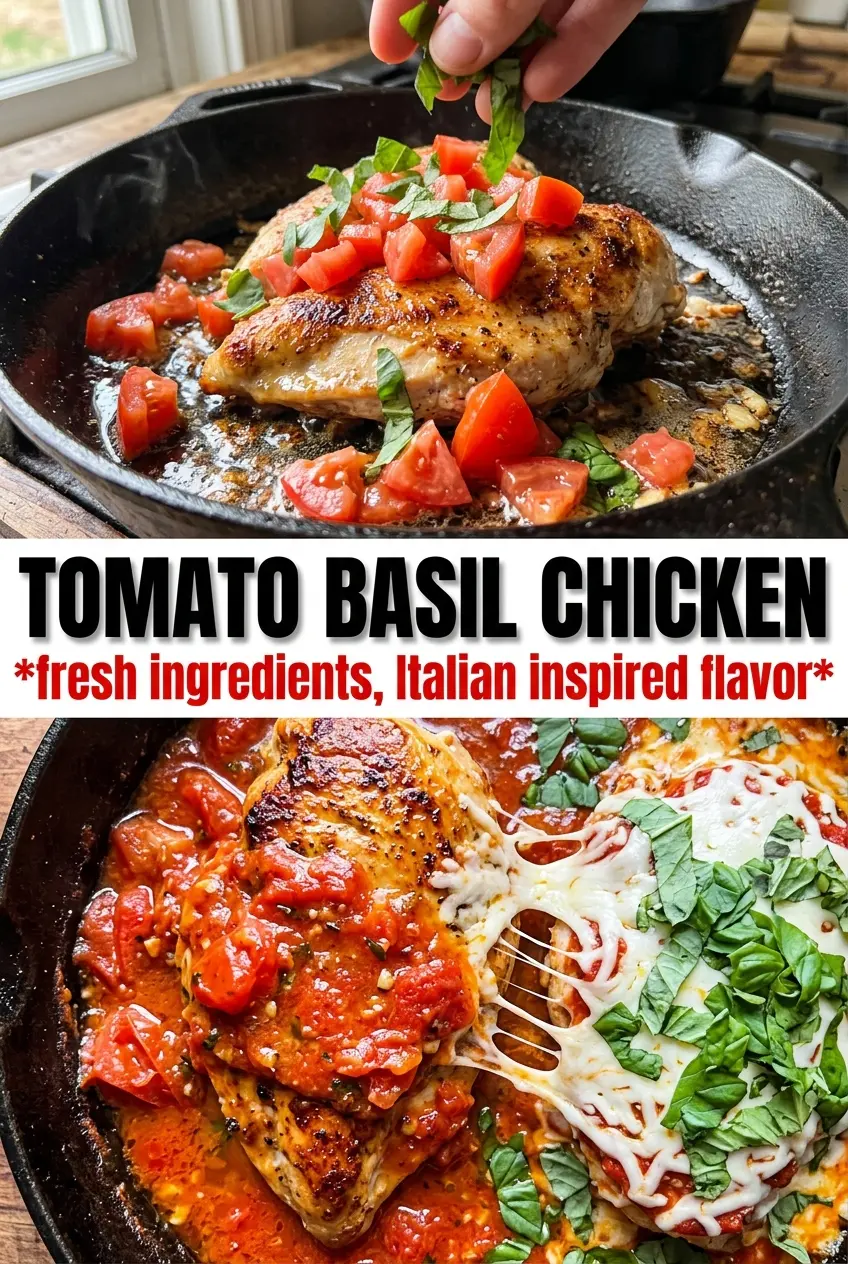
Tomato Basil Chicken Breasts
Ingredients
Equipment
Method
- Season the chicken breasts with salt, pepper, garlic powder, and Italian seasoning. Heat olive oil in a large cast iron skillet over medium-high heat and sear the chicken for 5-6 minutes per side until golden, until the internal temperature reaches 165°F; remove to a plate.
- Reduce heat to medium and cook the minced garlic in the same pan for 30 seconds, stirring so it doesn’t brown. Add halved cherry tomatoes and cook for 3-4 minutes until they burst and release their juices.
- Pour in the white wine (or chicken broth) and let it bubble for 1 minute, scraping up any browned bits from the pan. Stir in dried Italian seasoning, red pepper flakes, and balsamic vinegar.
- Return the chicken breasts to the pan and spoon the tomato sauce over each breast. Simmer for 2 minutes to warm through and lightly coat the chicken.
- Scatter fresh basil over the top, including a few whole leaves for garnish. Finish with shaved Parmesan and an extra drizzle of olive oil before serving.