Dumpling ramen bowl lands in that sweet spot between fast comfort and a dinner that feels built with care. The broth tastes deep and savory from the first spoonful, the dumplings stay plump, and the noodles keep enough chew to stand up to the hot broth instead of turning soft and tired. The soft-boiled egg pulls everything together with its rich yolk, and the corn, bok choy, and nori give each bite a little contrast.
The trick here is treating the broth like the base of the whole bowl, not just a cooking liquid. Miso goes in at a simmer, not a hard boil, so it keeps its round, fermented flavor instead of tasting flat. I also cook the noodles separately, which keeps the broth clean and the texture of the ramen right where it should be. If you’ve ever had a bowl turn muddy or overcooked before you reached the bottom, this version fixes that.
Below, I’ve laid out the small details that make the difference, from what to do if your dumplings are thick or thin to the easiest way to keep the eggs at that perfect jammy center.
The broth was silky and the dumplings stayed tender instead of getting bloated. Cooking the noodles separately kept everything tasting fresh, and the chili oil on top made it taste like takeout in the best way.
Love the rich soy-miso broth and plump dumplings? Save this Dumpling Ramen Bowl for the nights you want a fast bowl with real depth.
The Reason the Broth Stays Clean Instead of Cloudy
The broth in a dumpling ramen bowl can go from clear and savory to muddled fast if the noodles cook in it or the miso gets boiled hard. This version keeps the broth bright by building it at a gentle simmer, then cooking the noodles separately so starch doesn’t thicken the bowl into something heavy and dull. That extra minute of separation makes the finished broth taste cleaner and lets the soy, mirin, and miso stay distinct instead of collapsing into one salty note.
The other thing that matters is timing the dumplings and bok choy in the same pot. Dumplings need enough time to heat through and finish cooking, but bok choy only needs a brief stay in the broth before it turns limp and loses its sweetness. Keep the broth at a steady simmer, not a rolling boil, and you’ll get tender dumplings, crisp-tender greens, and a bowl that still looks fresh when it hits the table.
What Each Ingredient Is Doing in the Bowl
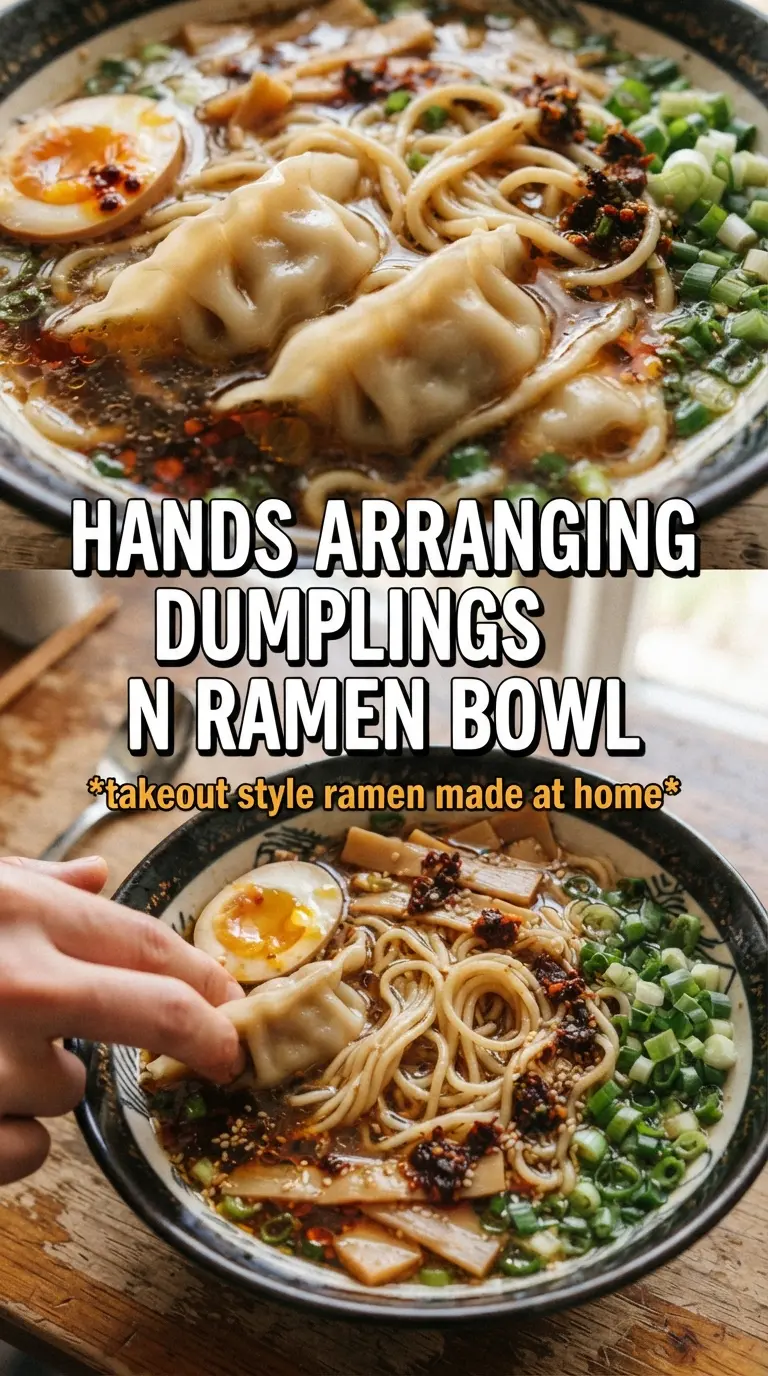
- Frozen dumplings — These do the heavy lifting and turn a simple noodle bowl into dinner. Pork gives a richer, more savory bite, while chicken keeps things a little lighter. Don’t thaw them first; they can soften and split before the centers are hot.
- White miso paste — This adds depth without making the broth heavy. It melts in smoothly if you whisk it into warm broth off a hard boil. Yellow miso can work in a pinch, but it tastes a little stronger and less delicate.
- Fresh ramen noodles — Fresh noodles keep a springy bite that dried noodles can’t fully match here. Cook them separately and drain them well so the broth stays clean. If you use dried ramen, pull it off the heat a minute early so it doesn’t go mushy in the bowl.
- Soft-boiled eggs — The jammy yolk gives the broth a rich, almost silky finish once it breaks. Seven minutes is the sweet spot for a set white and a runny center. If the eggs are cold from the fridge, give them an extra 30 seconds.
- Bok choy and corn — Bok choy brings crunch and a little green bitterness, while corn adds sweetness that balances the soy-miso broth. Baby bok choy works too, just shorten the cooking time. Frozen corn is fine straight from the freezer.
How to Build the Bowl Without Overcooking Anything
Warming the Broth Base
Bring the chicken broth to a steady simmer before you add the miso, soy sauce, mirin, and sesame oil. Whisk until the miso disappears into the liquid and the broth looks glossy, not grainy. If the broth boils hard at this stage, the miso can taste flatter and a little harsh. Keep it moving gently from here on out.
Cooking the Dumplings Through
Drop the frozen dumplings straight into the simmering broth and let them cook until they’re hot all the way through and the wrappers look translucent in spots, about 5 to 7 minutes depending on size. If they’re crowded, stir once or twice so they don’t stick together or settle on the bottom. The filling should feel firm when you cut one open, not cold in the center.
Adding the Bok Choy at the End
Stir in the bok choy only after the dumplings are cooked. Two to three minutes is enough for the stems to turn tender and the leaves to wilt without losing color. If you leave it in too long, the greens go muddy and the bowl loses its fresh finish. Corn goes in here too if you want it warmed through without turning soft.
Assembling for the Best Texture
Cook the ramen noodles separately, drain them well, and divide them between the bowls before ladling in the broth. This keeps the noodles springy and prevents the broth from turning starchy as it sits. Top each bowl with the egg, green onions, nori, sesame seeds, and chili oil right before serving so the nori stays crisp and the yolk can run into the broth.
How to Adapt This for Different Tastes and Pantry Swaps
Dairy-Free and Naturally Rich
This bowl is already dairy-free, so nothing needs to be changed to fit that need. The richness comes from miso, sesame oil, and the egg yolk, which gives you a full-bodied bowl without cream or butter.
Gluten-Free Tweaks
Use gluten-free ramen and tamari instead of regular soy sauce. Check the dumpling package carefully, since many frozen dumplings use wheat wrappers. The bowl still works well, but the texture of the noodles may be a little softer depending on the brand.
Vegetarian Version
Swap in vegetable dumplings and use vegetable broth instead of chicken broth. The broth will taste a little lighter, so keep the miso, soy sauce, and sesame oil in place to rebuild that savory base. A few sautéed mushrooms also help if you want more depth.
Make It Spicier or Milder
Chili oil gives the bowl its heat at the end, which keeps the spice clean and adjustable. Add more at the table for a sharper kick, or skip it and finish with a tiny splash of sesame oil if you want the broth softer and nuttier.
Storage and Reheating
- Refrigerator: Store the broth, dumplings, noodles, and toppings separately for up to 3 days. If they sit together, the noodles drink up the broth and go soft.
- Freezer: The broth and dumplings freeze well for up to 2 months, but the noodles and bok choy don’t. Freeze the base in a sealed container, then cook fresh noodles when you’re ready to serve.
- Reheating: Warm the broth and dumplings gently on the stove until steaming, then add fresh noodles or briefly warm leftover noodles in hot broth just before serving. Don’t boil hard, or the dumplings can split and the broth can turn aggressive.
Questions I Get Asked About This Dumpling Ramen Bowl
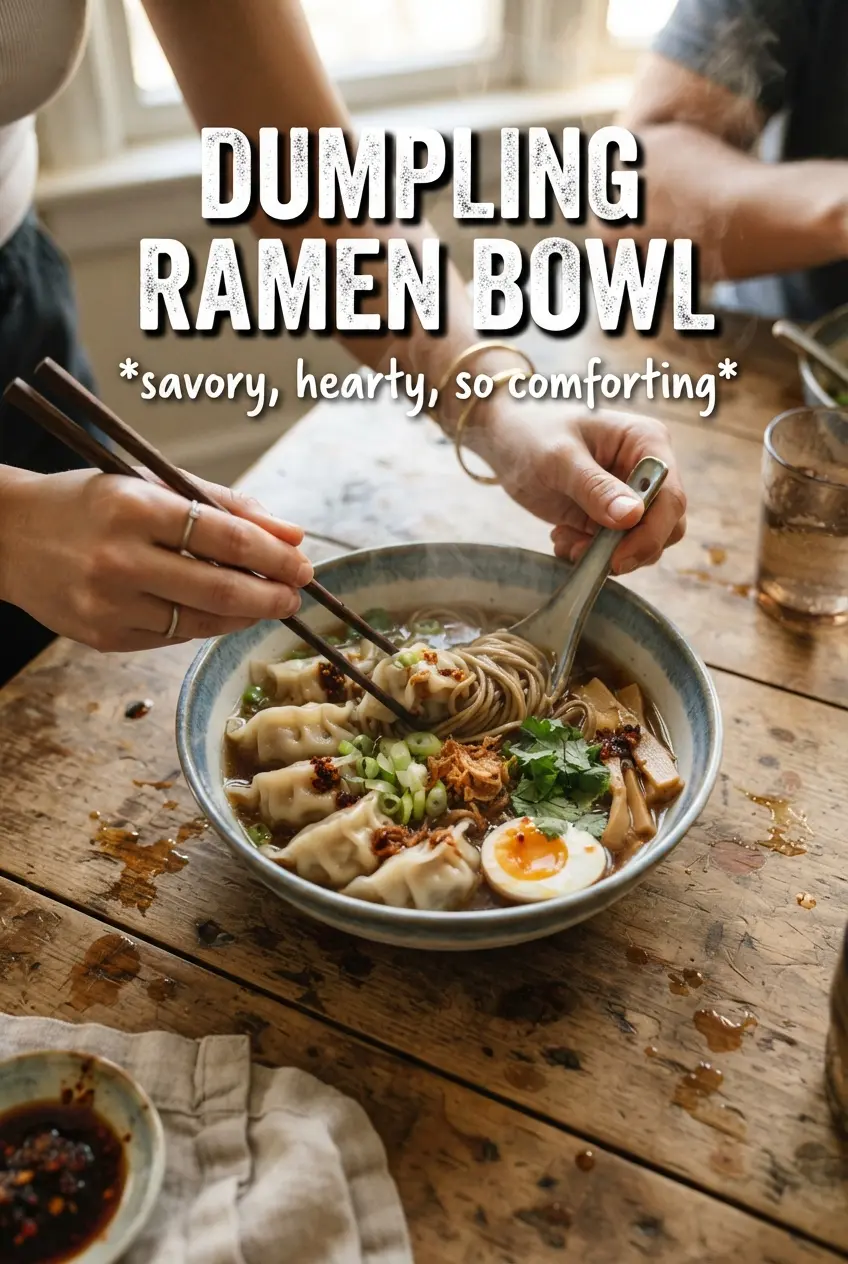
Dumpling Ramen Bowl
Ingredients
Equipment
Method
- Bring chicken broth to a simmer in a Dutch oven over medium heat. Whisk in white miso paste, soy sauce, mirin, and sesame oil until smooth.
- Add frozen pork or chicken dumplings to the simmering broth. Cook 5-7 minutes until cooked through, stirring gently once or twice to keep them from sticking.
- Add bok choy halves to the pot. Cook 2-3 minutes until wilted and bright green.
- Cook fresh ramen noodles separately according to package instructions. Drain the noodles well so they don’t dilute the broth.
- Divide cooked ramen noodles between 4 bowls. Ladle broth and dumplings over the noodles.
- Top each bowl with halved soft-boiled eggs, corn kernels, sliced green onions, nori sheets, sesame seeds, and chili oil. Taste and add salt if needed.