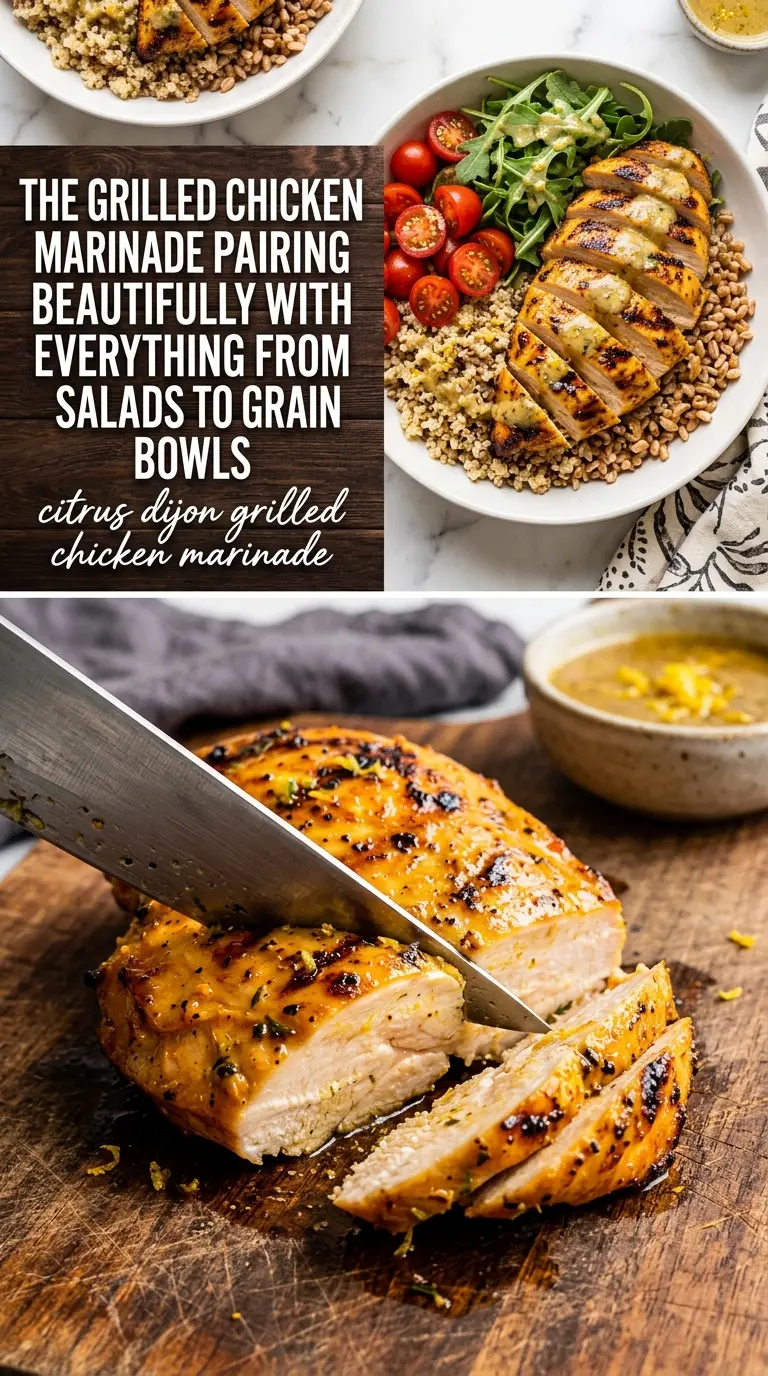
Juicy grilled chicken gets a bright, sharp edge from this citrus Dijon marinade, and that balance is what keeps it on repeat. The mustard gives the chicken a savory backbone, the orange and lemon lift it up, and a little honey smooths out the edges so the finished bite tastes layered instead of one-note. On the grill, it turns into chicken with browned, flavorful skin or a deep, glossy crust, depending on the cut you use.
The trick here is restraint with the acid and patience with the marinating time. Dijon does more than add flavor; it helps the marinade cling to the chicken, and the olive oil carries the garlic and thyme across the surface. You get the best result when the chicken has enough time to soak up the flavor, but not so long that the citrus starts working the texture too hard. Two to eight hours is the sweet spot.
Below, I’ve included the part that matters most when grilling this kind of chicken: how to keep the outside from scorching before the inside is cooked through, plus a few smart swaps if you’re working with thighs, breasts, or a grill pan.
The marinade coated the chicken beautifully, and after 6 hours on the grill the flavor was bright but not overpowering. My chicken breasts stayed juicy, and the glaze on the outside caramelized just enough.
Save this Citrus Dijon Grilled Chicken Marinade for bright, juicy chicken with a tangy glaze that grills up golden every time.
The Part Most Grilled Chicken Marinades Get Wrong
Grilled chicken goes dry fast when the marinade is all acid and no balance. Citrus brings the brightness, but too much of it for too long can tighten the protein and leave you with meat that tastes sharp instead of juicy. This version avoids that by pairing orange and lemon with olive oil, honey, and Dijon, which gives the chicken a protective coating and a more rounded finish on the grill.
Dijon is doing two jobs here. It seasons the chicken from the start, and it helps the marinade emulsify so the oil and citrus don’t separate into two layers in the bag. That means every piece gets a more even coating, which matters if you’re using different cuts in the same batch. If you’ve ever had one side of the chicken taste bold and the other taste flat, that’s usually a marinating issue, not a grilling one.
- Dijon mustard — This is the backbone of the marinade. It brings tang, salt, and body, and there isn’t a swap that gives quite the same cling or savory depth. Yellow mustard will taste sharper and thinner.
- Orange juice and lemon juice — Orange smooths the marinade and keeps the citrus from feeling harsh. Lemon adds the cleaner snap. Fresh juice gives the best flavor here; bottled juice works in a pinch, but it tastes flatter.
- Honey — Just enough to round out the mustard and citrus and encourage browning. Don’t skip it unless you want a more bracing, less glazed finish.
- Olive oil — This helps the marinade coat the chicken evenly and keeps the grill from drying out the surface too quickly. A basic extra-virgin olive oil is fine; save the fancy finishing oil for the table.
- Chicken cut — Breasts, thighs, drumsticks, or bone-in pieces all work. Thighs are the most forgiving, while breasts need the most attention on the grill so they don’t overcook before the outside picks up color.
What Each Ingredient Is Actually Doing in This Citrus Dijon Grilled Chicken
- Acid (vinegar, lemon, or lime juice) — The acid tenderizes the protein gently. It also adds brightness and prevents the marinade from tasting flat.
- Oil (carrying flavor and protecting) — Oil coats the protein and prevents drying. It helps the marinade adhere and penetrate evenly.
- Salt (seasoning and moisture retention) — Salt seasons the protein and helps it retain juices. Apply directly before cooking for best results.
- Spices and aromatics (garlic, onion, herbs) — These add complexity and depth. They should be minced fine for quick penetration.
- Heat (if using warm spices) — Warm spices like cumin and coriander add earthiness. Toast them briefly before mixing for deeper flavor.
- Resting time (varies by marinade strength) — Weak marinades need 2+ hours; strong marinades (with lots of acid) need 30 minutes to 1 hour. Marinate longer and the protein becomes mushy.
- Cold storage (essential for food safety) — Marinades work best in the refrigerator. Room temperature marinades over-tenderize quickly.
- Pat dry before cooking — Excess marinade on the surface burns. Dry the protein so it can develop a good crust.
How to Keep the Chicken Juicy from Marinade to Grill Marks
Whisk Until the Marinade Looks Smooth
Combine the oil, Dijon, citrus juices, garlic, honey, thyme, salt, and pepper in a bowl and whisk until it looks cohesive and slightly thickened. If it still looks streaky, keep whisking; that means the mustard hasn’t fully pulled the oil and juice together yet. This matters because a broken marinade won’t coat the chicken evenly, and the flavor ends up patchy.
Let the Chicken Sit, But Don’t Overdo It
Place the chicken in a zip-top bag or shallow dish and pour the marinade over it, turning the pieces so every surface is coated. Refrigerate for 2 to 8 hours. Less than 2 hours and the flavor stays on the surface; much past 8 hours and the citrus can start to make the texture a little soft, especially with boneless breasts.
Grill with Enough Heat to Color, Not Char
Preheat the grill to medium-high and let it get there fully before the chicken goes on. Shake off excess marinade so the sugars from the honey don’t burn in thick streaks, then grill until the chicken releases more cleanly from the grates and has good color. If it’s browning too fast before the center is done, move it to a cooler part of the grill and finish there; that’s the difference between juicy chicken and dry chicken.
Rest Before Slicing
Let the chicken rest for 5 minutes before cutting into it. If you slice too soon, the juices run onto the plate instead of staying in the meat. That short rest is what keeps the first bite tender and the second bite just as good as the first.
How to Adapt This Marinade for Different Cuts and Different Tables
For chicken breasts that stay juicy
Use boneless breasts of even thickness, or pound the thicker end slightly so they cook at the same rate. Pull them off the grill as soon as they hit 165°F; going much past that is where dryness creeps in. This version is the brightest and cleanest tasting, but it also punishes overcooking the fastest.
For bone-in thighs or drumsticks
Keep the marinade the same and give the chicken the full 6 to 8 hours if you can. Dark meat handles the citrus better and stays forgiving over the heat, so you’ll get deeper browning and a richer finish. Expect a slightly longer grill time, but better flavor in exchange.
For a dairy-free, gluten-free main dish
This recipe already fits both without any changes, as long as your Dijon is gluten-free. That makes it an easy crowd recipe when you need something bright and grilled that doesn’t rely on dairy or flour for texture.
For a deeper herb finish
Add chopped fresh rosemary or tarragon to the marinade if you want a more French-leaning profile. Thyme stays the safest choice because it works with both citrus and mustard, but a small amount of tarragon gives the chicken a softer, more aromatic edge.
Storage and Reheating
- Refrigerator: Store cooked chicken in an airtight container for up to 4 days. The citrus note softens a little, but the flavor holds up well.
- Freezer: Cooked chicken freezes well for up to 2 months. Slice it before freezing if you plan to use it for salads or wraps later.
- Reheating: Reheat gently in a covered skillet over low heat with a splash of water or broth, or warm it in a 300°F oven until just heated through. High heat dries out grilled chicken fast, especially breast meat.
Answers to the Questions Worth Asking

Citrus Dijon Grilled Chicken Marinade
Ingredients
Equipment
Method
- Whisk together olive oil, Dijon mustard, orange juice, lemon juice, garlic, honey, thyme, salt, and pepper until smooth and evenly combined.
- Place chicken in a large zip-top bag and pour the marinade over it, squeezing out excess air and sealing the bag.
- Marinate in the refrigerator for 2-8 hours for the best citrus-Dijon flavor.
- Preheat the grill to medium-high heat.
- Grill chicken until the internal temperature reaches 165°F, timing varies by cut; turn as needed for even browning and a golden exterior.
- Let the chicken rest for 5 minutes before serving to keep the juices in.