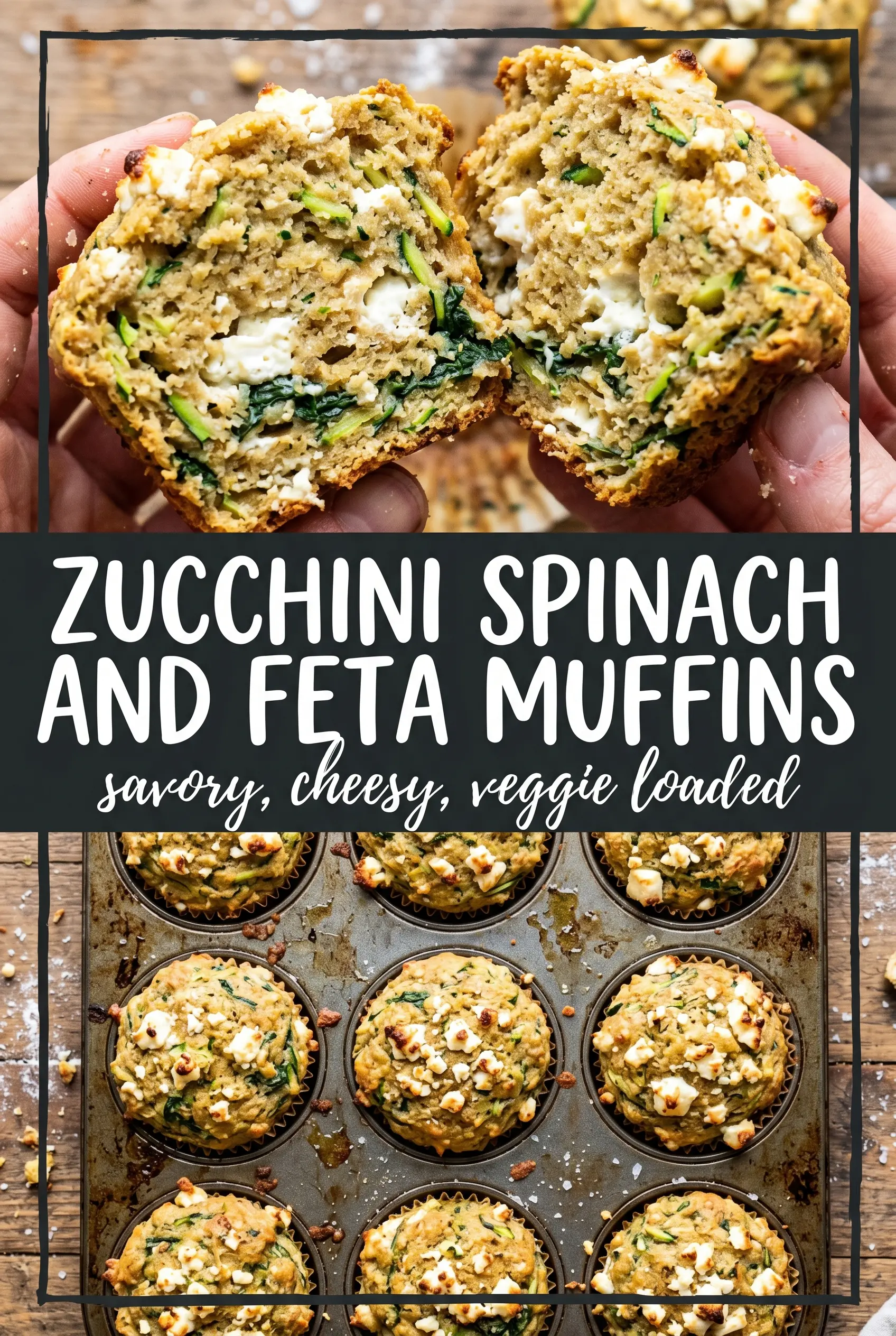
Savory zucchini spinach and feta muffins bake up tender, fluffy, and full of little salty pockets of feta in every bite. The zucchini keeps the crumb moist without turning heavy, while the spinach and herbs give each muffin that fresh, green look that makes people reach for a second one before they finish the first.
What makes these work is balance. The yogurt and olive oil keep the crumb soft, the baking powder and baking soda give the muffins lift, and the zucchini gets squeezed dry so the batter stays light instead of dense. Feta brings enough salt and tang that the muffins taste finished even before you add anything else.
Below, I’ll show you the small prep step that keeps the batter from turning watery, plus a few smart swaps if you want to change the herbs, the cheese, or the flour without losing that same sturdy, bakery-style texture.
The muffins came out light and fluffy, and the feta stayed in little salty pockets instead of disappearing into the batter. I also loved that the zucchini didn’t make them soggy once I squeezed it dry.
Like these zucchini spinach and feta muffins? Save them to Pinterest for a savory breakfast that stays fluffy, salty, and easy to grab all week.
The Reason These Muffins Stay Tender Instead of Heavy
The biggest mistake with savory vegetable muffins is treating the batter like a quick bread and overmixing it. Once flour gets worked too much, the muffins bake up tight and bready instead of soft. Here, the batter should look a little rough when the dry and wet ingredients first come together. That’s the right place to stop.
The other thing that changes the texture is the zucchini. It adds moisture, but only if you squeeze it dry before folding it in. Too much water in the zucchini pushes the batter toward gummy, and the muffins won’t rise with the same clean, even crumb.
- Zucchini — Grate it on the small side and squeeze it well in a clean kitchen towel. That step is doing real work here. A wet zucchini will dilute the batter and leave you with muffins that look baked on the outside but sink or feel damp in the middle.
- Greek yogurt — This adds tang and structure at the same time. Full-fat or low-fat both work, but regular yogurt won’t give the same thick, stable batter unless you strain it first.
- Feta — Use a crumbly block feta if you can. It holds its shape better than the pre-crumbled kind, which tends to dry out and disappear into the batter. The salt level varies a lot by brand, so taste before adding extra salt.
- Fresh dill or parsley — Fresh herbs matter more than dried here. They sharpen the flavor and keep the muffins from tasting flat. Dill gives the most Mediterranean finish, while parsley keeps things milder.
What Each Ingredient Is Doing in the Bowl

- All-purpose flour — This gives the muffins enough structure to hold the vegetables and cheese without turning dense. A 1:1 gluten-free baking blend works well if it includes xanthan gum, but the texture will be a little more delicate.
- Baking powder and baking soda — Together they give lift and help the muffins brown. The yogurt brings enough acidity to activate the baking soda, which is why these rise better than recipes that rely on baking powder alone.
- Olive oil — Olive oil keeps the crumb soft even after the muffins cool. A mild olive oil is best; a strongly peppery one can take over the flavor.
- Milk — This loosens the batter just enough to fold in the vegetables cleanly. Whole milk gives a richer result, but any milk works here, including unsweetened dairy-free milk.
- Spinach — Chop it finely so it distributes through the batter instead of clumping. If the leaves are very wet, pat them dry first so they don’t add extra moisture.
Building the Batter So the Muffins Rise Cleanly
Mix the dry ingredients first
Whisk the flour, baking powder, baking soda, garlic powder, pepper, and salt until the mixture looks even all the way through. That keeps the leavening from clumping, which matters because uneven baking soda can leave little bitter spots. If the dry ingredients aren’t fully combined, the muffins won’t rise evenly.
Bring the wet mixture together smoothly
Whisk the eggs, Greek yogurt, olive oil, and milk until the batter looks glossy and no streaks of yogurt remain. This part should look cohesive before it meets the flour. If the yogurt is cold from the fridge, the olive oil may look a little separated at first; keep whisking and it will come together.
Fold in the vegetables and feta last
Stir the wet into the dry just until the flour disappears, then fold in the zucchini, spinach, feta, and herbs. The batter should look thick and studded, not silky. Overmixing here is the fastest way to make the muffins tough, so stop as soon as the add-ins are evenly distributed.
Bake until the tops are set and springy
Divide the batter evenly and bake until the tops are golden and a toothpick comes out clean. The centers should feel set when lightly pressed, but not dry. If you overbake them, the feta will stay tasty but the crumb loses that soft, tender texture that makes these worth making.
How to Adapt These Muffins Without Losing the Good Part
Make Them Gluten-Free
Use a cup-for-cup gluten-free flour blend that includes xanthan gum. The muffins will still be moist and savory, but the crumb will be a little more delicate and best eaten the day they’re baked.
Swap the Feta for a Milder Cheese
Use crumbled goat cheese for a creamier, tangier muffin, or small cubes of cheddar for a milder version. Feta gives the sharpest salty bite, so swapping it out softens the overall flavor and makes the muffins taste less Mediterranean.
Make Them Dairy-Free
Use unsweetened dairy-free yogurt and milk, then skip the feta or replace it with a dairy-free feta-style crumble if you have one you trust. The muffins will still bake up tender, but they’ll lose some of the salty richness that feta normally brings.
Add More Herb Flavor
Swap the dill for parsley, chives, or a little chopped mint. Dill gives the boldest Greek-style character, while parsley keeps the flavor cleaner and more flexible for breakfast or lunch.
Storage and Reheating
- Refrigerator: Store in an airtight container for up to 4 days. The tops soften a little, but the centers stay moist.
- Freezer: These freeze well. Wrap individually and freeze for up to 2 months, then thaw at room temperature or overnight in the fridge.
- Reheating: Warm in a 300°F oven for 8 to 10 minutes or microwave briefly just until heated through. If you microwave too long, the eggs and cheese can turn rubbery.
Answers to the Questions Worth Asking
Zucchini Spinach and Feta Muffins
Ingredients
Equipment
Method
- Preheat oven to 375°F and line a 12-cup muffin tin with liners or grease well, so the batter releases cleanly after baking. Make sure the oven reaches temperature before baking.
- Whisk all-purpose flour, baking powder, baking soda, garlic powder, black pepper, and salt in a large bowl until evenly combined. Stop whisking when the dry mix looks uniform in color.
- In a separate bowl, whisk eggs, plain Greek yogurt, olive oil, and milk until smooth. The mixture should look glossy and fully blended.
- Stir wet into dry until just combined, then pause to avoid overmixing. A few small streaks of flour are okay.
- Fold in grated zucchini, fresh spinach, feta cheese, and fresh dill or parsley until the batter is speckled green with visible white feta crumbles. Stop when no dry pockets remain.
- Divide batter evenly among muffin cups, filling each about ¾ full, so they rise with a domed top. Aim for consistent mounds across all cups.
- Bake at 375°F for 20–22 minutes until the tops are golden and a toothpick comes out clean. You should see a firm springy top when pressed lightly.
- Cool in the pan for 5 minutes before serving so the muffins set and release more easily. Serve warm for the best soft crumb.