Zucchini lattice lasagna turns a classic baked pasta dinner into something you actually want to bring to the table with the pan still in your hands. The top bakes into a golden woven pattern, the sauce bubbles up around the edges, and every slice holds together with a clean stack of meat sauce, ricotta, and melted cheese. It looks dramatic, but it eats like a proper lasagna — hearty, savory, and sturdy enough to cut into neat squares.
The part that makes this version work is the zucchini treatment. The planks need to be thin enough to bend and weave without snapping, and they need a little patience in the oven so they soften without turning watery. A good, thick meat sauce matters here too, because a loose sauce will seep into the vegetables and turn the whole top layer slippery instead of structured. Letting the lasagna rest after baking is the difference between a pretty pan and a messy one.
Below, I’ve laid out the exact point where the lattice comes together, which ingredient swaps work best, and how to keep the top from collapsing when you slice it. If you’ve ever wanted a lasagna that looks as good as it tastes, this is the one.
The zucchini lattice baked up golden instead of soggy, and the ricotta layer stayed creamy without sliding apart when I cut it. My husband kept going back for “just one more” piece because the edges got those crispy cheese bits.
Like this woven zucchini lasagna? Save it to Pinterest for a dinner that looks polished, slices cleanly, and turns zucchini into the showpiece.
The Part That Keeps a Zucchini Top from Going Limp
The biggest mistake with a vegetable-topped lasagna is treating the zucchini like decoration instead of part of the structure. If the planks are cut too thick, they won’t weave cleanly and they stay stiff after baking. If they’re sliced too thin and not overlapped tightly, they shrivel and leave gaps that expose the filling. The goal is a tight lattice that acts like a lid: enough surface area to brown, enough overlap to stay in place, and enough flexibility to drape without breaking.
The other thing that matters here is moisture control. Zucchini gives up water in the oven, and if the filling underneath is loose, that moisture has nowhere to go except into the lasagna. A thick marinara, well-drained meat, and a rest after baking all work together to keep the slices clean. Don’t rush the cut after it comes out of the oven. That 15-minute rest is what lets the cheese set and the lattice stay intact.
What the Zucchini, Ricotta, and Sauce Each Need to Do
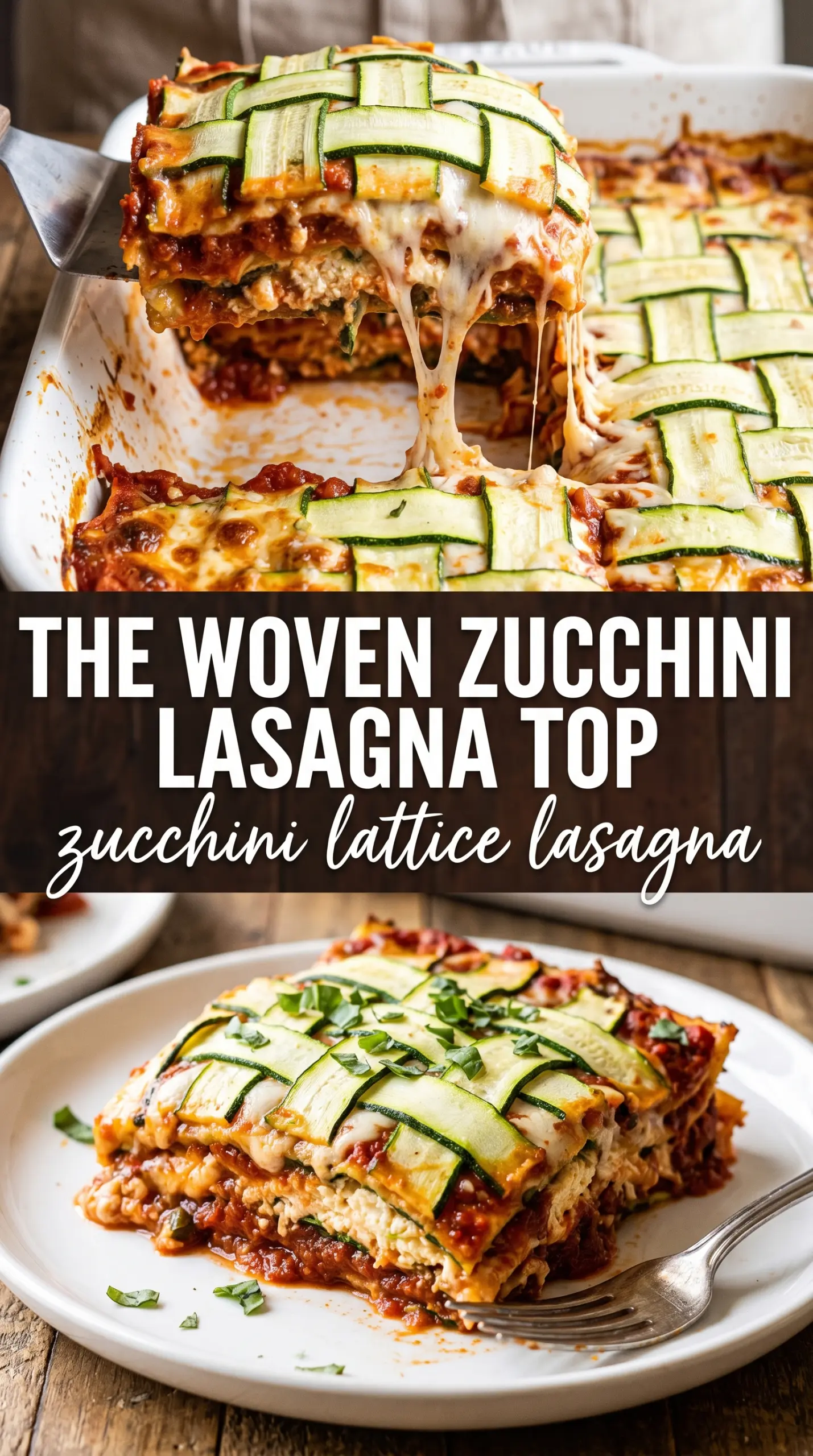
- Green zucchini — These hold the lattice shape best because they’re sturdy and mild. Slice them lengthwise into thin planks with a mandoline or a sharp knife, and stop if they start turning translucent; that’s a sign they’re thin enough to weave but not so thin they’ll disintegrate.
- Yellow squash — This gives the top its striped look and adds a little extra tenderness. It behaves much like zucchini, but it can soften a touch faster, so keep the strips similar in thickness or the weave won’t bake evenly.
- Ground beef or Italian sausage — This is the backbone of the dish, and sausage gives you the most seasoning with the least effort. If you use ground beef, the Italian seasoning and garlic matter more because the meat itself is milder.
- Ricotta — The egg and parmesan help it set instead of running out when you slice the lasagna. If your ricotta is very wet, drain it briefly in a fine-mesh sieve first; that one step keeps the filling from loosening the whole pan.
- Mozzarella and parmesan — Mozzarella gives you the stretch, but parmesan is what helps the zucchini brown on top. Skip the pre-shredded stuff if you can, because freshly grated cheese melts more smoothly and doesn’t carry the same starch coating.
Building the Pan So the Lattice Can Bake Without Sliding
Cooking Down the Sauce
Brown the meat with the onion until the pan smells savory and the onion turns soft and glossy, then drain off the excess fat. That step matters because greasy sauce will keep the layers from holding together. Add the garlic, marinara, and Italian seasoning, then simmer until the sauce thickens a little and stops looking watery around the edges. If it still pours like soup, keep cooking.
Setting the Ricotta Layer
Mix the ricotta with the egg, parmesan, parsley, salt, and pepper until it looks smooth and spoonable. The egg gives the layer enough body to slice cleanly once baked, but too much stirring can make the ricotta heavy and paste-like. You want it thick enough to spread without running, like soft frosting. If it seems loose, a little extra parmesan helps tighten it up.
Weaving the Zucchini Top
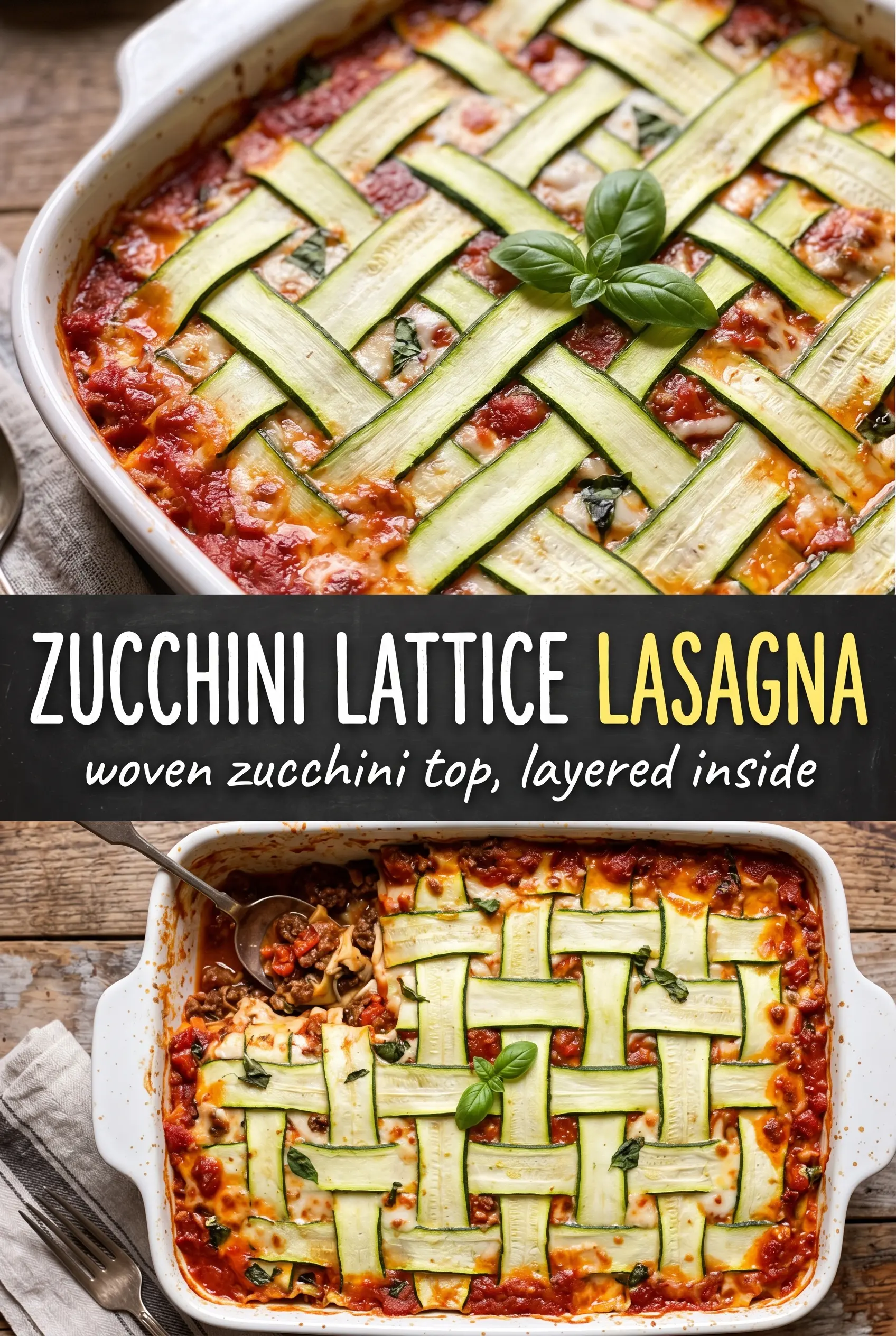
Lay the zucchini and squash strips over the filled lasagna in alternating rows, then lift every other strip and tuck a new strip underneath to form the weave. Keep the pattern snug, because loose strips slide around once the cheese melts. A light brush of olive oil helps the top brown instead of drying out, and the parmesan gives the edges a crisp finish. If a strip tears, overlap it with the next one and keep going; the whole top doesn’t need to be perfect to bake beautifully.
Baking and Resting
Bake until the filling bubbles at the edges and the lattice is golden with a few deeper browned spots. Those browned bits are the payoff, so don’t pull it early just because the top looks set. The center needs the full bake time to heat through and let the cheese finish melting. Rest it for 15 minutes before slicing so the layers settle instead of spilling out onto the plate.
How to Change This Without Losing the Structure
Make it lighter with turkey
Swap the beef or sausage for ground turkey, but add a little extra Italian seasoning and a pinch of salt because turkey is leaner and milder. You’ll get a cleaner, less rich lasagna, which works well if you want the zucchini to stay front and center.
Dairy-free version
Use a dairy-free ricotta-style substitute and a good melting mozzarella alternative, but expect a softer set and less browning. The lattice still works, but the cheese layer won’t slice as firmly, so the rest time becomes even more important.
Make it gluten-free without changing the flavor
This dish is already naturally gluten-free if you skip any pasta layer under the lattice and use a sauce you trust. The main thing to watch is the marinara label, since some jarred sauces hide thickeners or pasta-related cross-contamination.
Add pasta under the lattice for a more classic slice
If you want a sturdier, more traditional lasagna feel, add a layer of cooked noodles under the zucchini top. That gives the pan more body and makes the slices a little easier to lift, but it also softens the visual impact of the lattice because the vegetables become the garnish instead of the structure.
Storage and Reheating
- Refrigerator: Store covered for up to 4 days. The zucchini softens a little more each day, but the flavor holds well.
- Freezer: It freezes, though the zucchini top will lose some of its lattice definition after thawing. Wrap individual portions tightly and freeze for up to 2 months for the best texture.
- Reheating: Reheat covered at 350°F until hot in the center. If you blast it in the microwave, the cheese layer gets oily and the zucchini turns soggy faster.
Answers to the Questions Worth Asking
Zucchini Lattice Lasagna
Ingredients
Equipment
Method
- Brown the ground beef or Italian sausage with the diced onion in a Dutch oven until the meat is browned, then drain excess fat. Keep heat medium-high so the mixture thickens as it cooks.
- Add the minced garlic and cook for 30–60 seconds until fragrant. Do not brown the garlic.
- Stir in the marinara sauce and Italian seasoning, bring to a simmer, and cook for 10 minutes. The sauce should look slightly thick and cohesive.
- Combine the ricotta cheese, egg, grated parmesan, fresh parsley, salt, and pepper in a bowl and mix until smooth. Stop mixing once no streaks of ricotta remain.
- Preheat the oven to 375°F and grease a 9x13 baking dish. Set the dish aside so it’s ready for layering.
- Spread a layer of the meat sauce in the baking dish, then add a layer of extra zucchini planks or pasta. Cover the bottom evenly so later layers hold together.
- Dollop and spread the ricotta mixture over the base layer, then top with meat sauce. Smooth it gently so the surface stays level.
- Lay alternating green zucchini and yellow squash strips over the top, weaving them under and over each other to form a tight lattice. Press lightly at the intersections so the pattern holds while baking.
- Brush the zucchini lattice with olive oil and sprinkle with extra parmesan. Aim for even coverage so the lattice turns golden across the whole surface.
- Bake at 375°F for 40–50 minutes until the lattice is golden and the filling bubbles around the edges. If the top browns too fast, loosely cover with foil for the remaining time.
- Rest the lasagna for 15 minutes before slicing. Let it set so the lattice pattern stays intact when cut.