Zucchini lasagna roll-ups land somewhere between a baked pasta dinner and a vegetable-forward casserole, and the best versions are tidy enough to slice with a spoon but still tender at the center. The zucchini softens just enough to roll without cracking, the ricotta filling stays creamy instead of watery, and the marinara bakes into the edges so every bite tastes layered and complete.
The part that makes this recipe work is moisture control. Zucchini carries a lot of water, and frozen spinach can wreck the filling if it isn’t squeezed nearly dry. A short roast after salting the zucchini planks helps them lose extra liquid and gives them enough flexibility to roll cleanly. That extra step is the difference between neat spirals and a baking dish full of puddles.
Below, I’ll walk through the two spots where people usually run into trouble: getting the zucchini soft without turning it flimsy, and keeping the filling thick enough to hold inside the rolls. I’ve also included a few practical swaps and make-ahead notes, since this is the kind of dish that works well for a quiet weeknight or a dinner you want to prep ahead.
The zucchini held its shape beautifully, and the filling stayed creamy instead of runny. I loved that the marinara thickened around the edges while the cheese on top browned in spots.
Pin these zucchini lasagna roll-ups for a low-carb baked dinner with creamy ricotta, spinach, and golden mozzarella.
The Part That Keeps Zucchini Roll-Ups From Turning Watery
Zucchini looks sturdy, but once it hits heat it gives up a lot of moisture. If you skip the salting and the quick roast, the rolls tend to collapse into soft ribbons and the sauce turns thin around the edges of the pan. That’s why this recipe handles the zucchini before the filling ever goes on.
The salt pulls water to the surface, and the oven finishes the job by drying the planks just enough to make them flexible. You’re not cooking them all the way through here. You’re getting them ready to roll so they stay intact after baking. If the slices still feel wet or slippery, give them a few more minutes in the oven rather than forcing the assembly.
What Each Ingredient Is Actually Doing in These Rolls
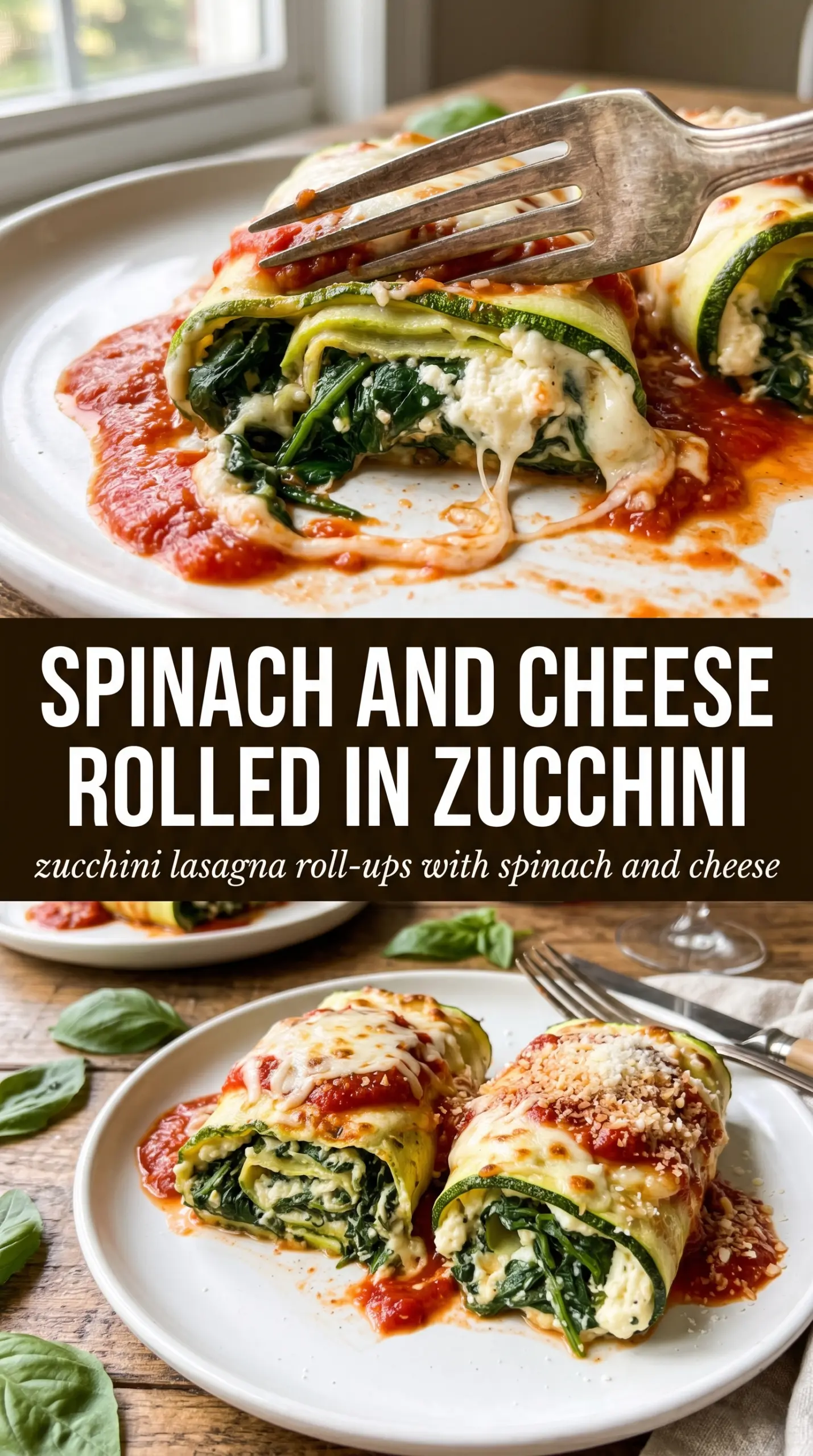
- Zucchini — Large zucchini give you wider planks that are easier to roll. Smaller zucchini can work, but the strips are narrower and the rolls look fussier. Slice lengthwise into even planks so they soften at the same rate.
- Ricotta — This is the creamy base that holds the filling together. Whole-milk ricotta gives the richest texture, but part-skim works if it’s not watery. If your ricotta looks loose, drain it in a fine mesh strainer before mixing.
- Frozen spinach — Frozen spinach is the easiest way to get concentrated flavor and color, but it has to be squeezed dry enough to crumble in your hand. If it’s damp, it will thin the filling and leak into the dish. Fresh spinach can be used, but you’ll need a large quantity and you’ll have to cook off the water first.
- Parmesan and mozzarella — Parmesan sharpens the filling, while mozzarella gives it that stretchy, baked finish. The topping mozzarella is worth using because it browns better and seals the rolls into a casserole-like layer. Pre-shredded cheese works, but freshly shredded melts a little smoother.
- Nutmeg — A small amount gives the ricotta filling that classic baked-cheese warmth without making it taste sweet. Don’t overdo it; you want depth, not a dessert note.
- Marinara — Use a sauce you’d actually eat on pasta. A thin, watery jarred sauce can make the pan soupy, so if yours seems loose, simmer it for a few minutes first to tighten it up.
Rolling and Baking the Dish So the Cheese Stays Creamy
Softening the Zucchini Without Turning It Limp
Salt the zucchini planks and let them sit for the full 15 minutes. You’ll see moisture bead on the surface, which is exactly what you want. Pat them dry, then roast just until they’re bendable and a little dry around the edges. If they roast too long, they’ll tear when you roll them; if they’re still stiff, they’ll spring open in the dish.
Mixing the Filling Until It Holds Its Shape
Stir the ricotta, egg, squeezed spinach, cheeses, garlic, nutmeg, salt, and pepper until everything is evenly combined. The mixture should look thick and scoopable, not loose or glossy. If the spinach was even a little wet, the filling will slacken as it sits, so press it firmly against the side of the bowl while mixing to spot any hidden moisture.
Assembling the Rolls in the Sauce
Spread a thin layer of marinara in the baking dish first. That keeps the zucchini from sticking and gives the bottom of the rolls a chance to braise in sauce instead of drying out. Spread the filling on one end of each plank, roll tightly, and place seam-side down. If a plank cracks, use it in the center of the dish where the sauce and cheese will hide it.
Baking Until Bubbling and Set
Spoon the remaining sauce over the rolls and top with mozzarella. Bake until the cheese is melted, lightly browned, and the sauce is bubbling at the edges. Pull the dish when the center looks hot and the cheese has some color; overbaking is what makes the filling grainy and the zucchini collapse. Let it rest for 10 minutes so the rolls set and slice neatly.
Three Ways to Adjust These Rolls Without Losing the Texture
Make it gluten-free as written
This recipe is naturally gluten-free as long as your marinara is gluten-free too. The structure comes from the zucchini and cheese, so you don’t need a flour substitute. The main thing to watch is sauce thickness, since some gluten-free jarred sauces run thinner than others.
Swap in cottage cheese for a lighter filling
You can replace part or all of the ricotta with small-curd cottage cheese, but drain it first so the filling doesn’t turn watery. The texture will be a little less rich and a little more structured, which some people prefer. For the smoothest result, pulse the cottage cheese briefly in a food processor before mixing.
Add ground turkey for a heartier pan
Brown 1/2 to 3/4 pound of ground turkey with garlic and a pinch of salt, then cool it before folding it into the ricotta mixture. That adds protein and turns the dish into a more filling main course, but it also makes the rolls denser, so don’t overpack the filling. Keep the sauce layer generous to balance the extra bulk.
Storage and Reheating
- Refrigerator: Store covered for up to 4 days. The zucchini softens a bit more as it sits, but the flavors hold up well.
- Freezer: Freeze baked or unbaked rolls in a tightly covered dish for up to 2 months. For best texture, thaw overnight in the refrigerator before reheating or baking.
- Reheating: Reheat covered in a 350°F oven until hot in the center. The mistake to avoid is blasting it in the microwave too long, which can make the zucchini soggy and the cheese tough.
Answers to the Questions Worth Asking
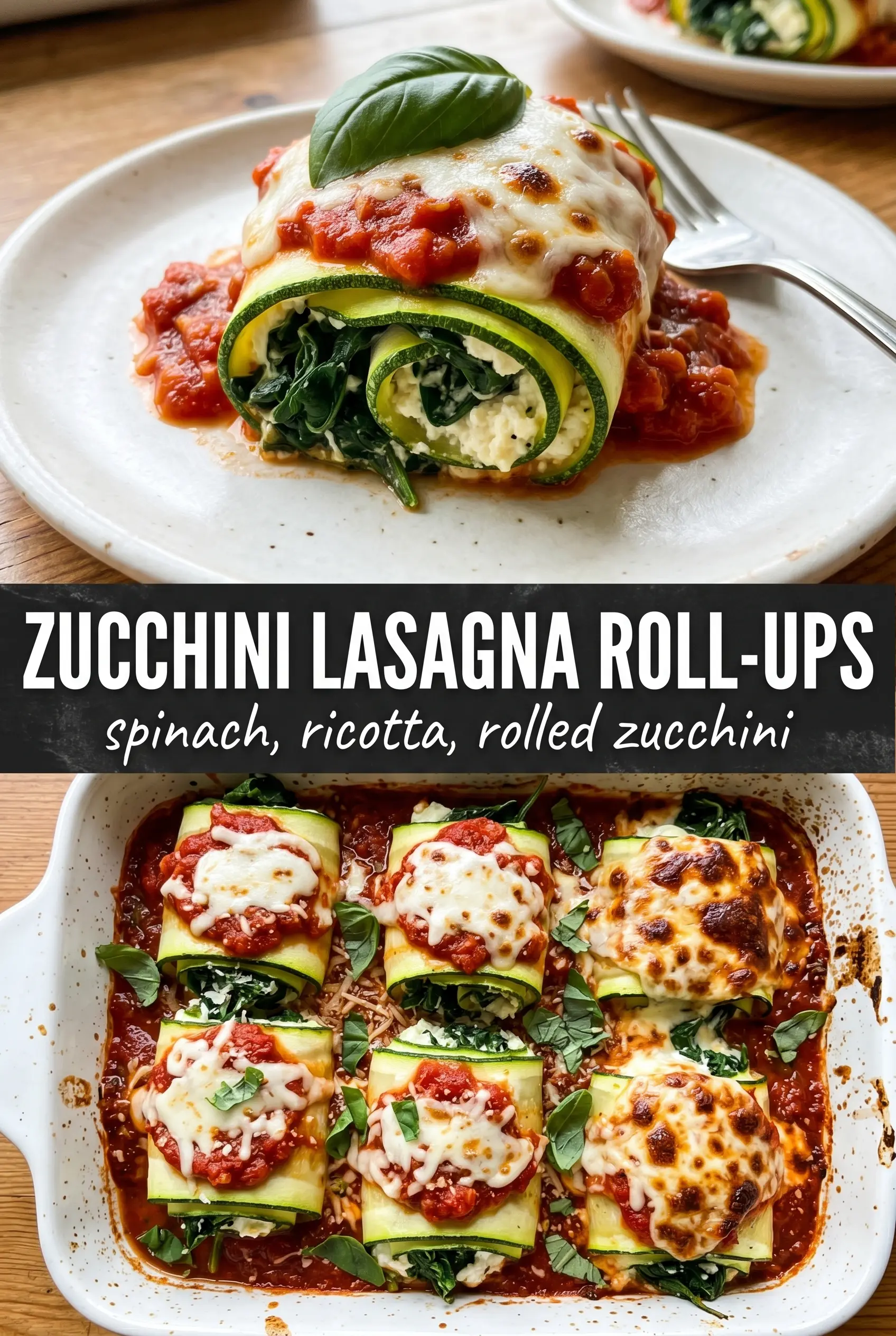
Zucchini Lasagna Roll-Ups with Spinach and Cheese
Ingredients
Equipment
Method
- Salt the zucchini planks and let them rest 15 minutes, then pat dry. Visual cue: the surface should look drier, with less sheen where the salt pulled out moisture.
- Roast the zucchini at 400°F for 8–10 minutes on a sheet pan to soften and dry out slightly. Visual cue: edges look lightly flexible and the moisture sheen reduces.
- Squeeze all moisture from the thawed frozen spinach so it is very dry. Visual cue: the spinach clumps without releasing visible liquid when pressed.
- Mix ricotta cheese, egg, the squeezed spinach, 1 cup mozzarella, parmesan, minced garlic, nutmeg, plus salt and pepper until combined. Visual cue: the filling turns thick, cohesive, and evenly green-speckled.
- Preheat the oven to 375°F, then spread 1 cup marinara sauce in a 9x13 baking dish. Visual cue: the sauce covers the bottom in an even layer.
- Spread spinach cheese filling along one end of each zucchini plank and roll tightly. Place the rolls seam-side down in the dish so they hold together.
- Spoon the remaining marinara over the rolls and top with 1 cup mozzarella. Visual cue: mozzarella is visible on top and will form a golden layer as it bakes.
- Bake for 28–35 minutes at 375°F until the cheese is golden and bubbling. Visual cue: the top looks browned and you see bubbling around the marinara edges.
- Rest the zucchini roll-ups for 10 minutes before serving. Visual cue: bubbling settles and the rolls look set instead of loose.
- Garnish with extra parmesan and fresh basil. Visual cue: fresh basil leaves appear bright green on top.