Tender zucchini cake has a way of disappearing fast because it bakes up with a soft, plush crumb that stays moist for days without tasting heavy. The cinnamon and nutmeg give it that carrot-cake warmth, while the cream cheese frosting on top brings just enough tang to keep each square from leaning too sweet. It’s the kind of sheet cake that cuts neatly, travels well, and tastes even better after it sits for a bit.
What makes this version work is the zucchini prep. Grating it finely and squeezing out the excess moisture keeps the batter from turning gummy, but you still get all the tenderness zucchini brings. The oil does the same kind of heavy lifting here, keeping the cake soft even after a night in the fridge. I also keep the spice blend simple and balanced so the cake tastes warm and familiar instead of muddy.
Below, I’ll walk through the one step people usually rush, how to keep the frosting smooth, and a few easy ways to adapt the cake if you want nuts, no nuts, or a dairy-free finish.
I squeezed the zucchini like you said and the cake baked up light instead of wet. The frosting was thick and fluffy, and the whole pan was gone by the next day.
Like this cream cheese frosted zucchini cake? Save it to Pinterest for the days when you want a moist spiced sheet cake that slices cleanly and feeds a crowd.
The Zucchini Has to Lose Water Before It Hits the Batter
The biggest mistake in zucchini cake is treating the vegetable like a mix-in instead of an ingredient with its own moisture. Zucchini carries a lot of water, and if you fold it in straight from the grater, that water ends up in the batter instead of the vegetable drawer. The cake can still bake through, but the crumb turns dense and slightly wet in the center.
Squeeze the grated zucchini dry in a clean kitchen towel or several layers of paper towels until it feels loose and lightly damp, not dripping. You don’t need to wring it into a brick; you just want to remove the extra moisture that would otherwise fight the structure of the cake. That step lets the crumb stay tender while still baking up with clean edges and a soft middle.
What Each Ingredient Is Actually Doing in This Cake
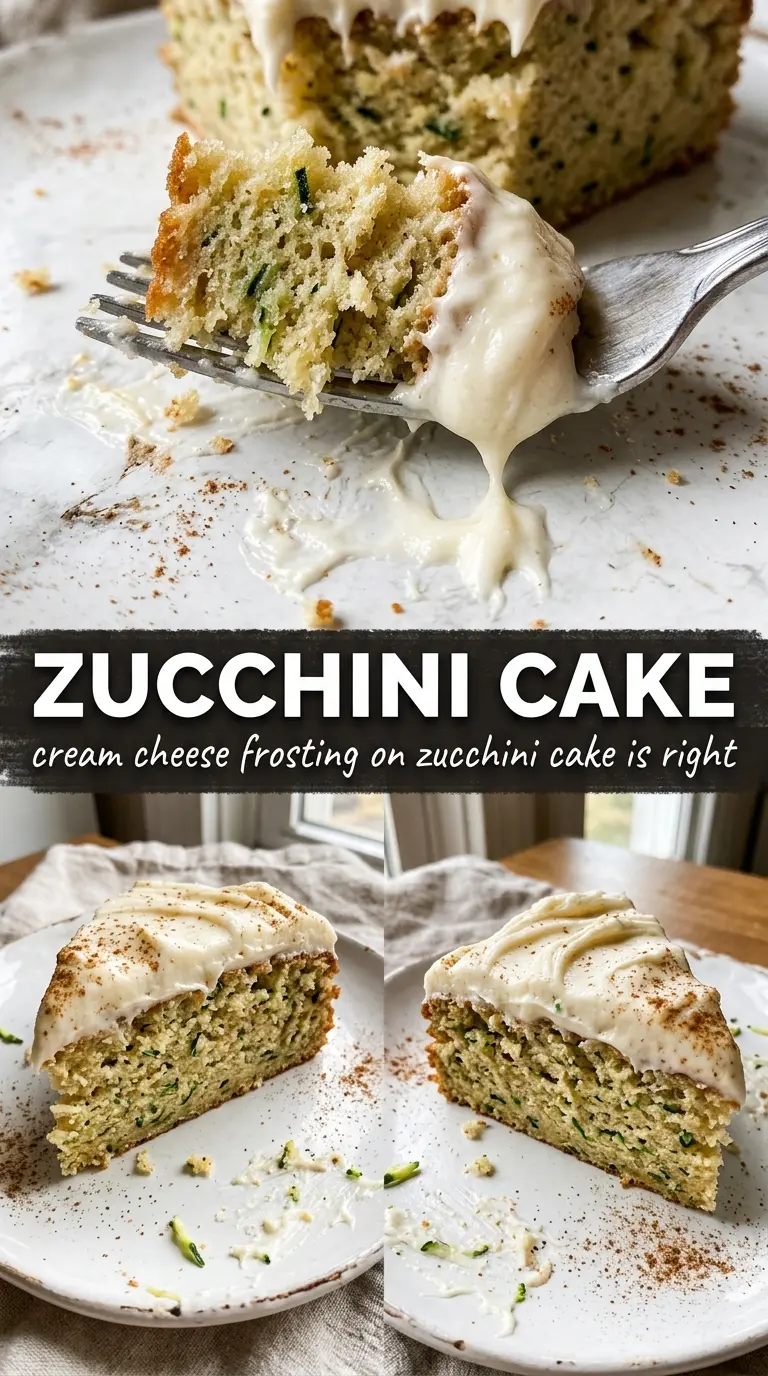
- All-purpose flour — Gives the cake enough structure to hold the moisture from the zucchini and oil. Cake flour can make it a touch softer, but all-purpose is the dependable choice here.
- Vegetable oil — This is what keeps the cake tender after chilling. Butter can work, but it sets firmer and the crumb won’t stay as plush the next day.
- Eggs — They bind the batter and help the cake rise without making it dry. Room-temperature eggs mix in more smoothly and help the batter emulsify faster.
- Grated zucchini — It disappears into the crumb, adding moisture and tenderness without a noticeable vegetable flavor. Squeeze it dry first; that one move makes the difference between light and gummy.
- Cream cheese frosting — The tang balances the sweet spice in the cake. Softened cream cheese and butter beat into the smoothest frosting; cold dairy leaves little lumps that never fully disappear.
- Walnuts — Optional, but they add a little crunch and a toasted, earthy note. Leave them out if you want a smoother slice or need a nut-free cake.
Building the Batter and Frosting Without Losing the Light Crumb
Mix the dry ingredients first
Whisk the flour, cinnamon, baking soda, baking powder, salt, and nutmeg together until the spice is evenly distributed. This keeps you from biting into one pocket that tastes like cinnamon and another that tastes flat. Baking soda and baking powder need to be spread through the flour before any liquid goes in, or the rise can turn patchy.
Beat the wet ingredients until smooth
Work the sugar, oil, eggs, and vanilla together until the mixture looks glossy and a little thickened. You’re not whipping in air like a sponge cake; you’re building an even base that will hold the flour without streaking. If the eggs are cold, the mixture can look separated at first, but it comes together once they start emulsifying.
Fold in the zucchini and finish the batter gently
Stir in the squeezed zucchini, then add the dry ingredients and walnuts just until the flour disappears. Stop as soon as you stop seeing dry pockets. Overmixing at this stage makes the cake tighter and can turn the crumb a little rubbery, which is the opposite of what you want from a zucchini cake.
Bake until the center springs back
Spread the batter into a greased 9×13 pan and bake until the top is set and a toothpick comes out clean or with a few moist crumbs. The cake should feel springy in the center, not jiggly. Pulling it early leaves a gummy middle, but leaving it in too long dries out the edges faster than you’d expect in a sheet cake.
Beat the frosting until fluffy, not greasy
Softened cream cheese and butter need to be beaten until completely smooth before the powdered sugar goes in. If the frosting looks lumpy at the start, keep going until it loosens; cold bits are the reason cream cheese frosting turns grainy. Add the milk only as needed so the frosting stays thick enough to spread without sliding off the cake.
How to Adapt This Zucchini Sheet Cake for Different Kitchens
Nut-Free Zucchini Cake
Leave out the walnuts and the cake stays just as tender. You lose the little crunch and toasted flavor, but the crumb remains soft and clean, which is often what people want from a frosted sheet cake anyway.
Dairy-Free Frosting Swap
For a dairy-free finish, use a plant-based cream cheese and butter alternative with the same measurements. The frosting will be a little softer and may need an extra spoonful of powdered sugar to hold its shape, but you still get that tangy top layer that makes the cake taste complete.
Less Sweet, More Spice
If you like the cake to taste more like a spiced breakfast loaf than a dessert, reduce the sugar by 1/4 cup and add another 1/4 teaspoon of nutmeg or a pinch of cloves. The cake will bake up slightly less plush, but the warm spice comes through more clearly.
Storage and Reheating
- Refrigerator: Store covered for up to 5 days. The cake stays moist, and the frosting firms up slightly, which makes the slices neater.
- Freezer: Freeze unfrosted cake layers or individual frosted slices wrapped well for up to 2 months. Thaw overnight in the refrigerator so the frosting doesn’t sweat and slide.
- Reheating: This cake is best served at cool room temperature, not warmed. If you want the frosting softer, let a slice sit out for 20 to 30 minutes instead of microwaving it, which can make the frosting separate.
Questions I Get Asked About This Recipe
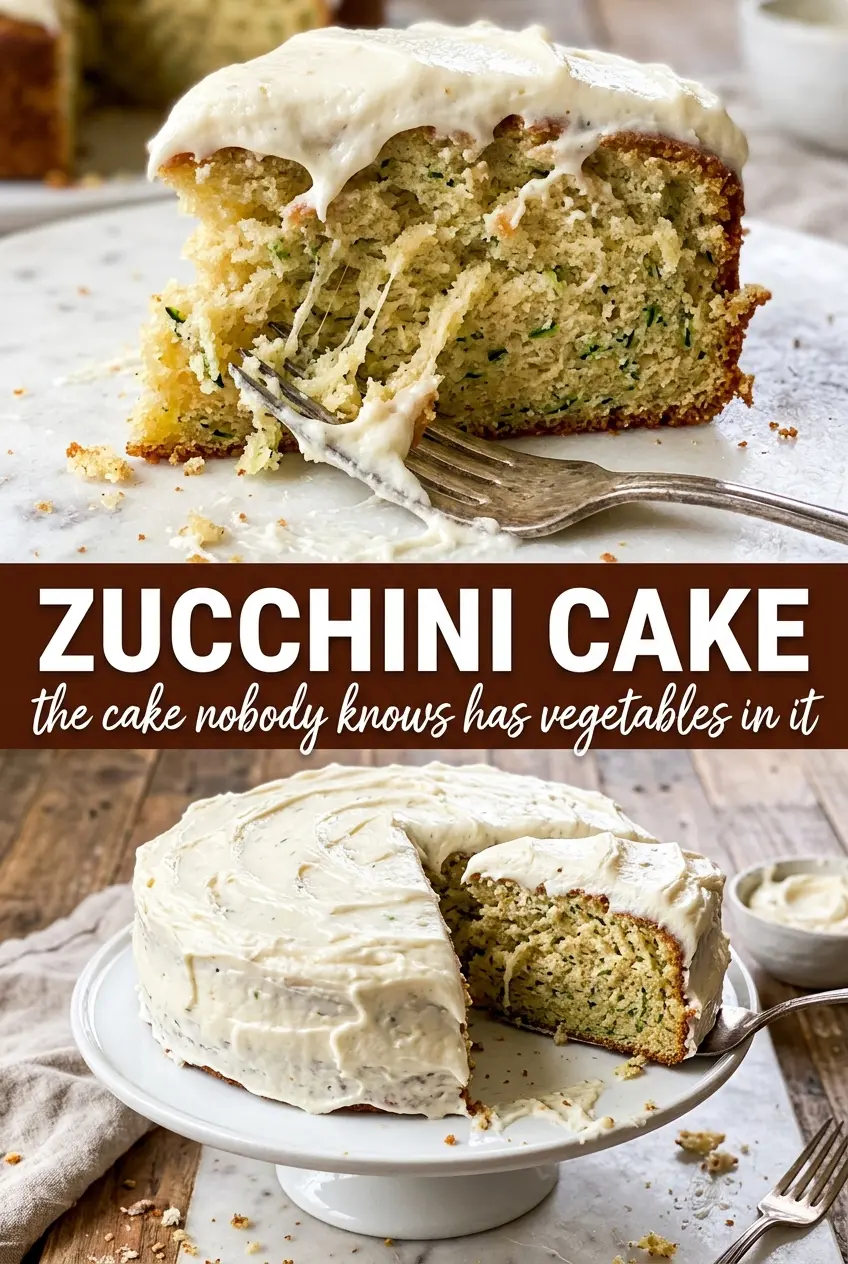
Zucchini Cake
Ingredients
Equipment
Method
- Preheat the oven to 350°F and grease a 9x13 baking pan.
- In a bowl, whisk all-purpose flour, cinnamon, baking soda, baking powder, salt, and nutmeg until evenly combined.
- In another bowl, beat granulated sugar, vegetable oil, eggs, and vanilla extract until smooth.
- Stir in the grated squeezed zucchini until the batter looks evenly moistened.
- Fold the dry ingredients into the wet ingredients just until no dry streaks remain, then fold in chopped walnuts if using.
- Pour the batter into the prepared pan and spread it into an even layer.
- Bake for 30–35 minutes at 350°F until a toothpick comes out clean.
- Let the cake cool completely in the pan before frosting, about 30 minutes.
- Beat cream cheese, butter, powdered sugar, vanilla, and milk until light and fluffy.
- Spread the frosting over the fully cooled cake in an even layer, then slice into squares to serve.