Caramelized edges, juicy thighs, and a glaze that turns glossy on the grill are what make whiskey pineapple chicken worth repeating. The pineapple brings sweetness and enough acidity to keep the chicken tasting bright, while the whiskey adds a warm, smoky depth that reads as grown-up barbecue instead of sticky-sweet glaze.
The trick is reserving part of the marinade before the chicken goes in. That clean portion gets reduced into the basting sauce, so you get a thick, safe glaze with all the same flavor instead of risking raw marinade on the grill. Chicken thighs are the right cut here because they stay tender over medium heat and can take a little browning without drying out.
Below, you’ll find the exact timing for a good marinade, the grill cues that keep the sugar from scorching, and a few smart swaps if you want to make this dairy-free, lower-sugar, or cook it another way.
The marinade made the chicken so tender, and the glaze got sticky and caramelized without burning. I grilled it 6 minutes per side and the pineapple on the side was the perfect finish.
Save this whiskey pineapple chicken for the nights when you want sticky grilled chicken with a smoky-sweet glaze and zero dull bites.
The Marinade Needs a Clean Portion Before It Touches the Chicken
The biggest mistake with sweet grilled chicken is brushing raw marinade on at the end and calling it a glaze. That leaves you with a thin, sugary coating that never really tightens up, and if you don’t separate some of the marinade first, you’re left without a safe basting sauce. Reserve that third of a cup before the chicken goes in, then simmer or reduce it as needed so it clings instead of running off the meat.
Chicken thighs are doing important work here. They stay juicy over direct heat and give the brown sugar time to caramelize without turning dry and stringy. If you swap in breasts, pull them sooner and use a thermometer; overcooked breast meat turns this kind of glaze into a rescue mission.
- Pineapple juice — This is the main tenderizing ingredient and the source of the bright tropical note. Fresh or canned both work, but unsweetened juice gives you more control because the brown sugar is already doing plenty.
- Whiskey — It adds warmth and a little oakiness after the alcohol cooks off. You don’t need an expensive bottle; a mid-shelf whiskey is fine as long as it tastes clean.
- Brown sugar — This is what makes the glaze stick and caramelize. Light or dark both work, but dark brown sugar gives the sauce a deeper molasses edge.
- Soy sauce — It keeps the marinade from tasting flat and balances the sweetness. If you need a gluten-free version, use tamari in the same amount.
- Ginger and garlic — They keep the sauce from leaning candy-sweet. Grate the ginger finely so it melts into the marinade instead of leaving sharp little threads on the finished chicken.
What Each Ingredient Is Actually Doing in Whiskey Pineapple Chicken
- Protein (quality, proper thickness) — Good quality protein tastes better. Even thickness ensures even cooking.
- Seasoning (bold, distributed throughout) — Don’t be shy with salt and pepper. Quality seasoning elevates everything.
- Oil or fat (protective and flavorful) — The fat helps develop crust and carries flavors. Use generously.
- Heat management (appropriate temperature for the protein) — Too high and the outside burns before the inside cooks. Too low and it steams.
- Technique (sear, then finish based on thickness) — Proper technique creates flavor. Sear for crust, then cook through gently.
- Aromatics and seasonings (garlic, herbs, spices) — These add complexity and depth. Distribute them throughout the cooking process.
- Resting time (let it rest before serving) — Resting allows juices to reabsorb. This keeps the protein moist and tender.
- Optional: finishing sauce or glaze — A light sauce adds richness without overwhelming. Apply at the very end.
Grill the Chicken Until the Glaze Turns Sticky, Not Burnt
Mixing and Marinating
Whisk the pineapple juice, whiskey, brown sugar, soy sauce, garlic, and ginger until the sugar dissolves as much as it can. Pull out 1/3 cup before adding the chicken, then coat the thighs and marinate them for 1 to 4 hours. Less than an hour won’t give the flavors time to sink in; much longer can make the surface soft and a little mushy because of the pineapple.
Building the Basting Glaze
Take that reserved marinade and reduce it in a small pan until it looks slightly syrupy and coats a spoon. If it still splashes like juice, it won’t cling on the grill. The goal is a glaze that darkens at the edges but doesn’t turn into candy before it hits the chicken.
Grilling the Chicken and Pineapple
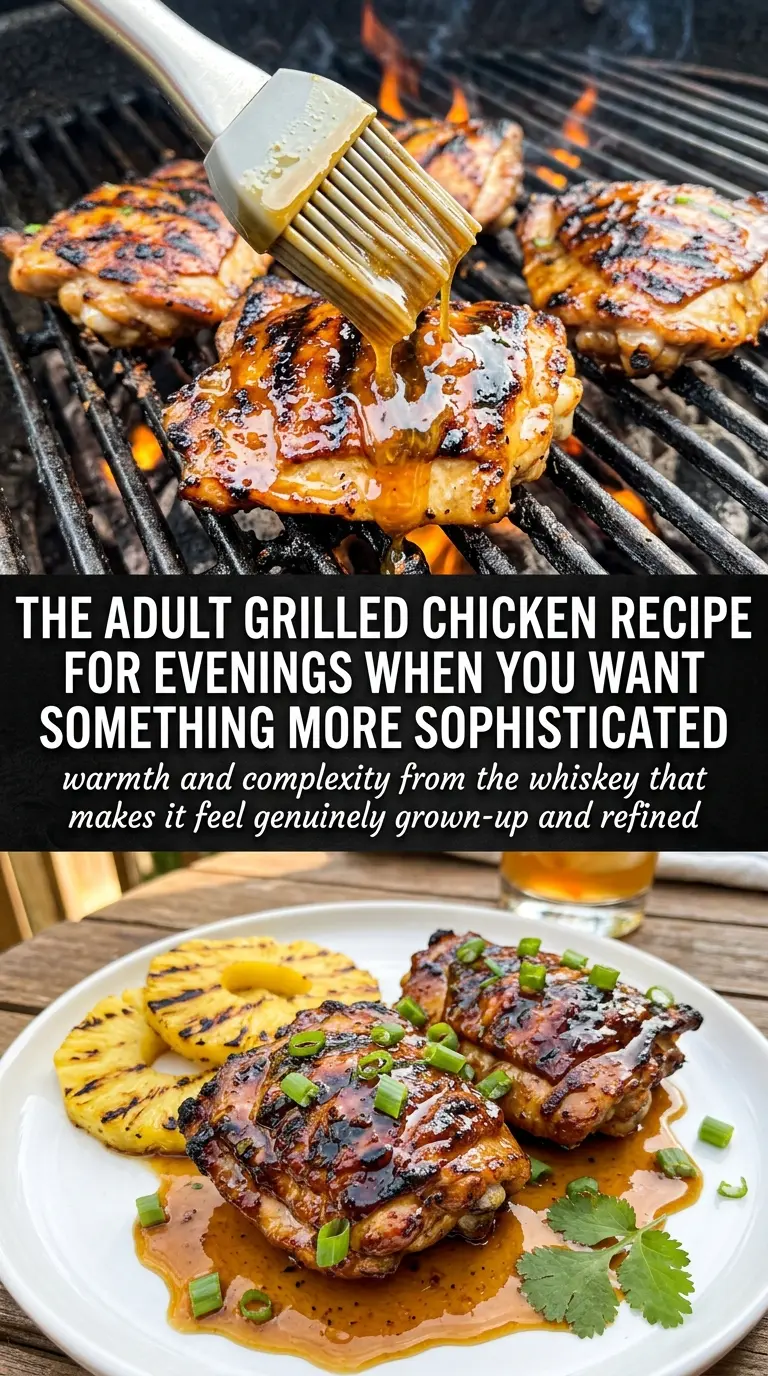
Grill the chicken over medium heat for 6 to 7 minutes per side, basting often once the surface starts to set. If the flame is too hot, the sugar will scorch before the inside finishes, so keep one cooler spot on the grill and move the thighs if they darken too fast. The chicken is done when the juices run clear and the center reaches 165°F, with deep browned patches where the glaze hit the heat.
Finishing with the Pineapple
Grill the pineapple slices for about 2 minutes per side, just until they pick up marks and soften at the edges. You want them warmed through and lightly caramelized, not collapsed. Serve them with the chicken so the sweet fruit echoes the marinade and cuts through the smoky glaze.
Three Ways to Make This Chicken Fit Your Table
Gluten-Free Version
Swap the soy sauce for tamari or coconut aminos. Tamari gives you the closest match in saltiness and depth, while coconut aminos taste a little sweeter and softer, so you may want an extra teaspoon of soy-free salt if the glaze tastes flat.
No-Grill Oven Finish
Roast the marinated chicken on a rack at 425°F until nearly done, then broil briefly with the reduced glaze brushed on top. You won’t get the same smoky edge from the grill, but you will get better control over the sugar, which helps if your broiler runs hot.
Lower-Sugar Adjustments
Cut the brown sugar back to 2 tablespoons and let the pineapple juice do more of the work. The glaze will be thinner and less sticky, but the chicken will taste brighter and burn less easily, which is useful if you’re cooking over active flames.
Chicken Breast Swap
Use boneless breasts cut into even pieces and shorten the grill time. Breast meat dries out faster, so pull it as soon as it hits 165°F and don’t over-baste early, or the sugar will darken before the center finishes.
Storage and Reheating
- Refrigerator: Store leftovers in an airtight container for 3 to 4 days. The glaze will thicken as it chills, which is normal.
- Freezer: The cooked chicken freezes well for up to 2 months. Wrap it tightly and freeze with a little extra sauce if you have it, since the glaze helps protect the meat from drying out.
- Reheating: Warm it covered in a 300°F oven until hot, or reheat gently in a skillet with a splash of water. High heat can make the sugar in the glaze harden and scorch before the chicken warms through.
Questions I Get Asked About This Recipe
Whiskey Pineapple Chicken
Ingredients
Method
- Mix pineapple juice, whiskey, brown sugar, soy sauce, garlic, and ginger in a bowl until the sugar dissolves and the mixture looks uniform.
- Reserve 1/3 cup of the marinade for basting so you can use it while grilling.
- Add chicken thighs to the remaining marinade, then refrigerate for 1-4 hours to let the flavors soak in.
- Preheat the grill to medium heat, then place chicken thighs on the grates and cook for 6-7 minutes per side, basting frequently with the reserved marinade.
- Grill pineapple slices for 2 minutes per side, until you see grill marks and a caramelized surface.
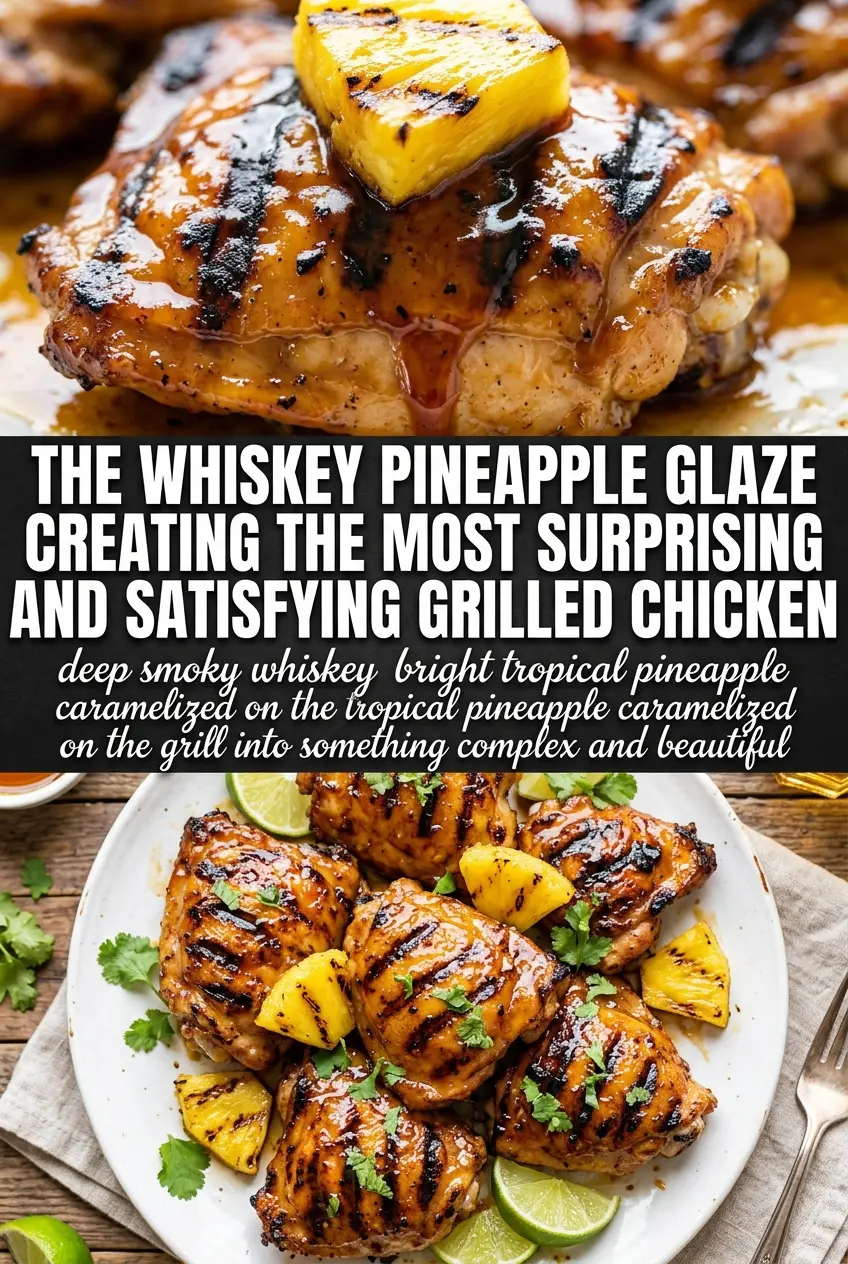
- Serve the caramelized whiskey-pineapple glazed chicken topped with the grilled pineapple slices.