Jewel-red watermelon sorbet tastes like the best part of summer stripped down to its cleanest, coldest form. It’s bright, intensely fruity, and soft enough to scoop straight from the blender if you want a slushy texture, or firm enough to hold a proper curl after a short freeze. The payoff is all in the balance: sweet watermelon, a little lime to wake it up, and just enough sugar to keep the texture smooth instead of icy.
The trick here is starting with frozen watermelon cubes and blending them fast, before they have time to melt into juice. Watermelon brings a lot of water to the party, which is why sorbet can turn grainy if you under-sweeten it or freeze it too hard without enough sugar. The lime zest matters more than it looks like it should; it gives the sorbet a fresh, fragrant edge that makes the fruit taste even more like itself.
Below, I’ve included the part that matters most: how to keep this sorbet from freezing into a brick, what to do if your melon is extra sweet or a little bland, and the easiest way to get a clean scoop after it firms up.
The texture was spot on after an hour in the freezer — still scoopable, not icy, and the lime kept it from tasting flat. My kids kept asking for “one more taste” right out of the blender.
Like this watermelon sorbet? Save it to Pinterest for the days when you want a bright, dairy-free frozen dessert with only a handful of ingredients.
The Reason Watermelon Sorbet Stays Smooth Instead of Icy
Watermelon sorbet only looks effortless. The texture depends on how much free water is in the fruit, and watermelon has plenty. If you blend it after it starts thawing, the mixture turns thin and freezes into hard crystals later. Freezing the cubes solid first gives you a head start on a creamy, spoonable finish because the blender can whip air into the fruit before it turns soupy.
Sugar is doing more than sweetening here. It lowers the freezing point, which keeps the sorbet from becoming a block of ice after it sits in the freezer. Lime juice adds brightness, but it also sharpens the flavor enough that the watermelon tastes more vivid instead of just cold. If your melon is very sweet, you may need less sugar than the recipe calls for; if it tastes pale or watery, the full amount helps the texture as much as the flavor.
What Each Ingredient Is Actually Doing in This Sorbet
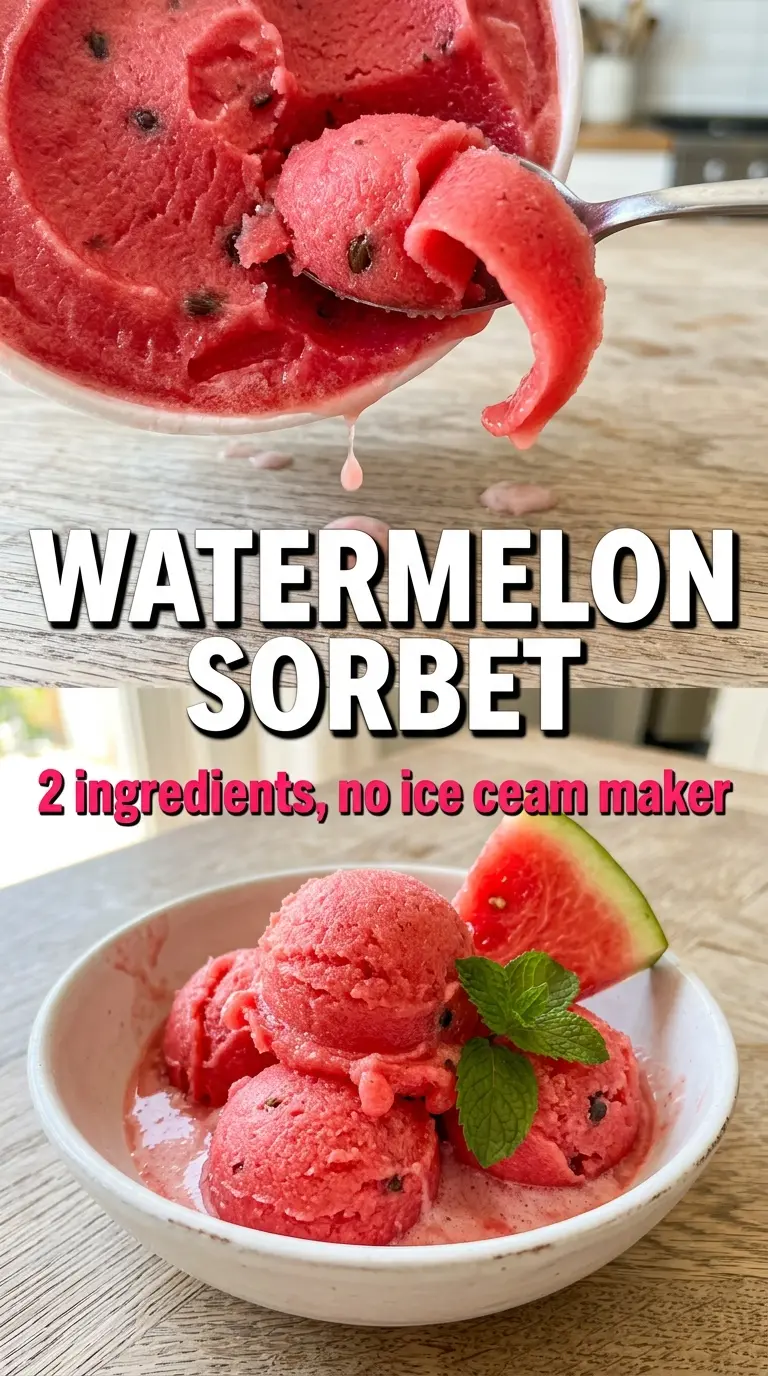
- Seedless watermelon — Use the sweetest melon you can find. A ripe watermelon gives the sorbet its color and body, and there’s no way to fake that with extract or juice. If your melon tastes watery, chill it well before freezing and expect to use a touch more sugar.
- Granulated sugar — This is the texture insurance. It keeps the sorbet scoopable and soft instead of crumbly or icy. You can start with less and add more after tasting, but don’t skip it entirely unless you want a firmer, more frozen-fruit style dessert.
- Fresh lime juice and zest — Juice brings acidity; zest brings fragrance. Bottled lime juice can work in a pinch, but the zest is what makes the sorbet taste fresh instead of flat. Zest the limes before you cut and juice them, because that’s much easier.
- Pinch of salt — It doesn’t make the sorbet salty. It makes the watermelon taste more like itself and keeps the sweetness from going one-note.
- Fresh mint — This is for serving, not blending. A few leaves add a cool, herbal finish that plays nicely with the lime.
Blending It Fast Before the Melon Turns Watery
Freeze the Watermelon in a Single Layer
Spread the cubed watermelon across a baking sheet so the pieces freeze separately instead of into one giant clump. If you pile them up, the outside freezes first and traps soft fruit in the middle, which makes blending uneven. Four hours is the minimum, and the cubes should feel hard all the way through, not bendy at the edges.
Blend Until It Moves Like Soft Serve
Put the frozen watermelon straight into the blender with the sugar, lime juice, zest, and salt. At first it may look dry and crumbly, then it will start to collapse into a thick, glossy puree. Stop and scrape down the sides if needed, but don’t let it run long enough to warm up; that’s when the mixture starts to lose its frosty texture.
Taste Before It Freezes Firm
This is the moment to adjust. If it tastes flat, add a little more lime or a small pinch more salt. If the watermelon is less sweet than expected, add another spoonful of sugar and blend again for a few seconds. Once it goes into the freezer, those balances get harder to fix.
Pack and Freeze for a Scoopable Finish
Spoon the sorbet into a shallow container and press a piece of parchment or plastic wrap directly on the surface before freezing. That helps prevent ice crystals from forming on top. One to two hours usually gives you a firmer scoop, but if you leave it longer, let it sit at room temperature for a few minutes before serving so it loosens instead of chipping into chunks.
How to Adjust Watermelon Sorbet When You Need a Different Finish
Dairy-Free and Naturally Vegan
This recipe is already dairy-free and vegan as written, which is part of the charm. The texture comes from the fruit and sugar, not cream, so there’s nothing to replace. If you want it richer without adding dairy, serve it with coconut flakes or a spoonful of coconut yogurt on the side.
Less Sweet, More Tart
Cut the sugar back to 2 tablespoons if your watermelon is already very sweet and ripe. The sorbet will still set, but it will freeze harder and taste cleaner, almost like a frozen watermelon granita. Extra lime juice helps keep the flavor lively when you reduce the sugar.
Making It Ahead for a Dinner Party
Blend the sorbet earlier in the day and freeze it in the container until just before serving. For the cleanest scoop, pull it out about 5 to 10 minutes ahead of time. If you freeze it overnight, it may need a longer rest on the counter because watermelon sorbet firms up more than dairy-based ice cream.
Storage and Reheating
- Refrigerator: Not recommended. This is a frozen dessert, and the fridge will melt it into a watery slush.
- Freezer: Store in an airtight container for up to 1 week. After that, it can pick up ice crystals and lose some of its bright flavor.
- Reheating: There’s no reheating here, but if it’s too hard to scoop, let it sit at room temperature for 5 to 10 minutes. Microwaving will melt the edges and leave the center frozen solid.
Answers to the Questions Worth Asking
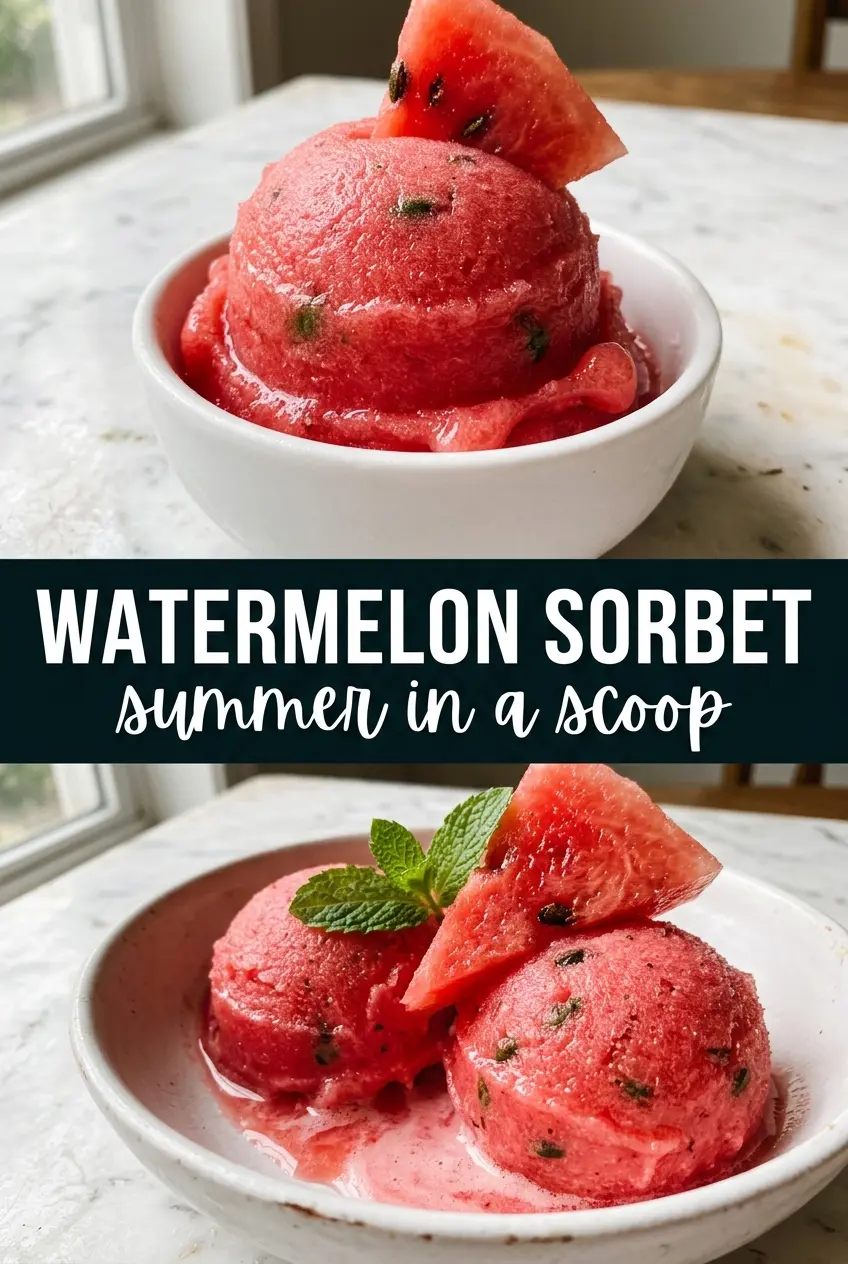
Watermelon Sorbet
Ingredients
Equipment
Method
- Spread the cubed seedless watermelon in a single layer on a sheet pan and freeze for at least 4 hours, until solid.
- Add the frozen seedless watermelon, granulated sugar, fresh lime juice, lime zest, and salt to a blender and blend on high speed for 1-2 minutes until completely smooth, with no icy chunks visible.
- Taste the blended sorbet base and adjust sweetness or tartness as needed, aiming for a bright watermelon flavor.
- Serve immediately as a soft sorbet or transfer to a container and freeze for 1-2 more hours for a firmer scoop, until the texture thickens.
- Scoop into bowls and garnish with fresh mint for serving, then enjoy right away.