Vegetable soup lands on the table tasting clean, hearty, and full of color, with a broth that stays clear instead of turning muddy and vegetables that each keep their own shape. The best bowls have a little bit of everything in every spoonful: tender potatoes, sweet corn, bright peas, and carrots that still taste like carrots instead of surrendering to the pot.
The trick is in the order. The onions, carrots, and celery build the base first, the potatoes simmer long enough to turn tender, and the green beans, peas, and corn go in late so they keep their bite and color. That staggered timing is what keeps this soup from tasting flat or overcooked.
Below, I’ve included the small details that make a big difference, from how to keep the broth balanced to the swaps that still give you a solid, comforting bowl when you need to work with what’s in the kitchen.
I liked how the potatoes held their shape and the peas stayed bright instead of going gray. The broth tasted even better the next day after the thyme had time to settle in.
Save this vegetable soup for the nights when you want a clear, broth-based pot packed with tender potatoes and bright late-added vegetables.
The Order That Keeps Vegetable Soup Bright, Not Mushy
Most vegetable soups go dull because everything cooks for the same amount of time. That works for flavor, but it doesn’t work for texture. Potatoes need a longer simmer, while peas, corn, and green beans only need a few minutes or they lose their color and turn soft at the edges.
The broth also matters more than people think. Use a vegetable broth you actually like sipping, because once the soup simmers, that base is carrying the whole pot. If the broth tastes thin from the start, the finished soup will taste thin too, no matter how many vegetables you add.
What Each Vegetable Is Doing in the Pot
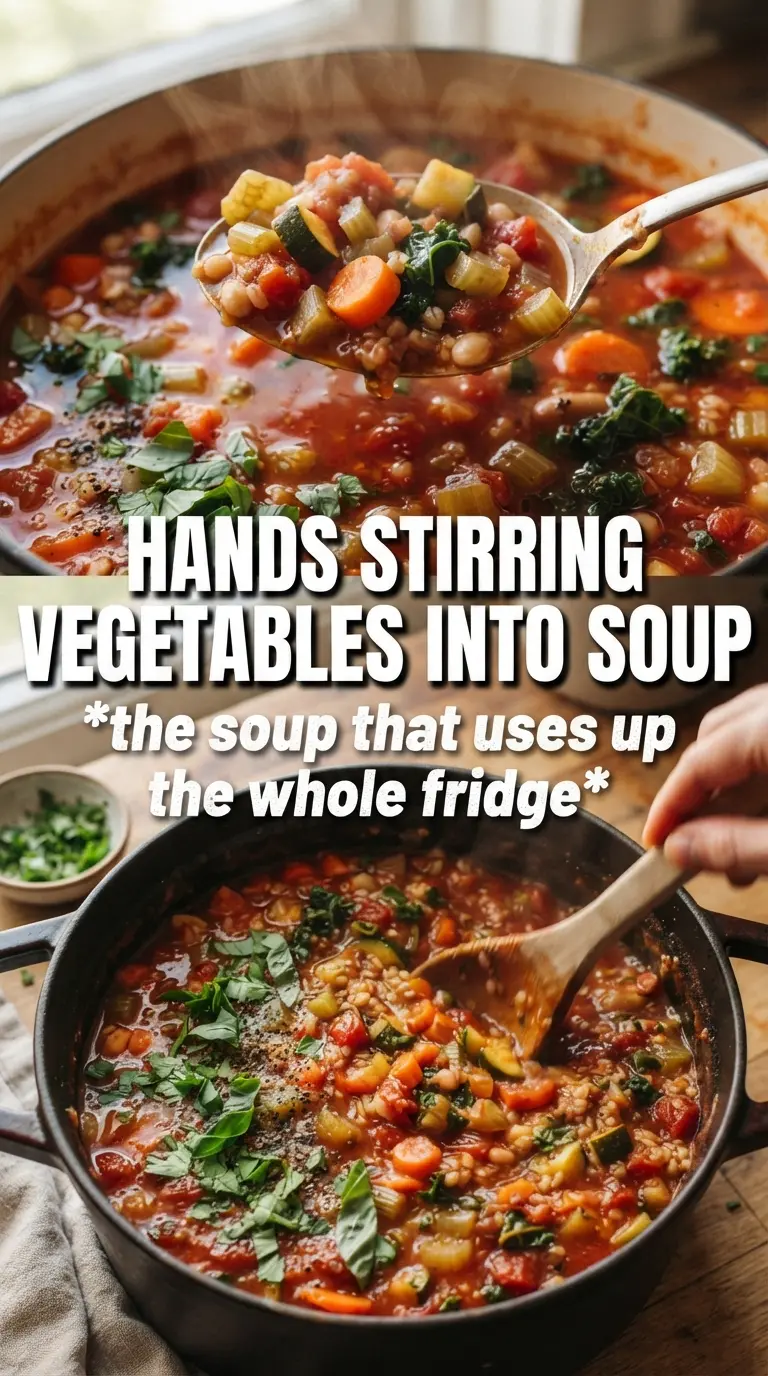
- Potatoes — These give the soup body and make it feel like a main dish. Yukon Golds stay creamy without falling apart as quickly as russets, but either works if you cut the pieces evenly so they cook at the same pace.
- Carrots, celery, and onion — This is the base layer. Let them soften in the oil before adding liquid so they release sweetness instead of tasting sharp and raw.
- Garlic — One minute is enough. Garlic burns fast in a soup pot, and burnt garlic will tint the broth bitter.
- Vegetable broth — A good broth brings depth without needing extra work. If yours is salty, hold back on the salt until the end so you can season with control.
- Frozen peas and corn — Frozen is perfect here. They’re picked at their peak and added late, which keeps the soup lively and bright.
- Thyme, parsley, and bay leaf — These give the soup its classic savory finish. Fresh herbs can go in at the end too, but dried herbs need time in the broth to open up.
Building the Pot in Layers So the Vegetables Cook at the Right Speed
Softening the Aromatics
Start with the onion, carrots, and celery in olive oil over medium heat until the onion turns translucent and the vegetables look glossy, not browned. That step takes about 5 minutes and gives the broth a sweeter, rounder base. If the pan starts browning too fast, lower the heat; browned edges are fine, but scorched bits will make the soup taste harsh.
Adding the Broth and Potatoes
Once the garlic smells fragrant, pour in the broth and add the tomatoes, potatoes, thyme, parsley, and bay leaf. Bring it up to a boil first, then drop it to a steady simmer. A hard boil can break down the potatoes too quickly and cloud the broth, while a gentle simmer keeps the soup clear and the potatoes intact.
Finishing with the Quick-Cooking Vegetables
Add the green beans after the potatoes have had time to soften, then finish with the corn and peas near the end. That late addition keeps the beans snappy and the peas sweet. Pull the bay leaf before serving, taste the broth, and add salt and pepper only after the vegetables are fully cooked, since the broth concentrates a little as it simmers.
How to Adapt This Soup for What’s in Your Kitchen
Make It Heartier with Beans or Pasta
Stir in a can of drained white beans during the last 10 minutes, or add a small handful of small pasta with the potatoes if you want a thicker, more filling bowl. Beans give the soup more body without changing the broth much, while pasta will absorb liquid and make the soup less brothy the next day.
Gluten-Free and Naturally Vegetarian
This soup is already vegetarian, and it stays gluten-free as long as your vegetable broth is certified gluten-free. That’s the only label worth checking, since broth is the ingredient most likely to hide a gluten-based additive.
Swap the Vegetables by Season
Use zucchini, chopped cabbage, or diced green beans in place of the potatoes if you want a lighter soup, but add tender vegetables near the end so they don’t disappear into the broth. The goal is to keep the timing matched to the vegetable, not to force everything into the same schedule.
Storage and Reheating
- Refrigerator: Store in an airtight container for up to 4 days. The potatoes will absorb a little broth as it sits, so the soup may look thicker on day two.
- Freezer: It freezes well for up to 3 months, but the potatoes soften slightly after thawing. If you know you want to freeze it, undercook the potatoes just a touch.
- Reheating: Warm it gently on the stove over medium-low heat until steaming hot. A hard boil can split the texture of the potatoes and make the peas taste dull.
Questions I Get Asked About This Recipe
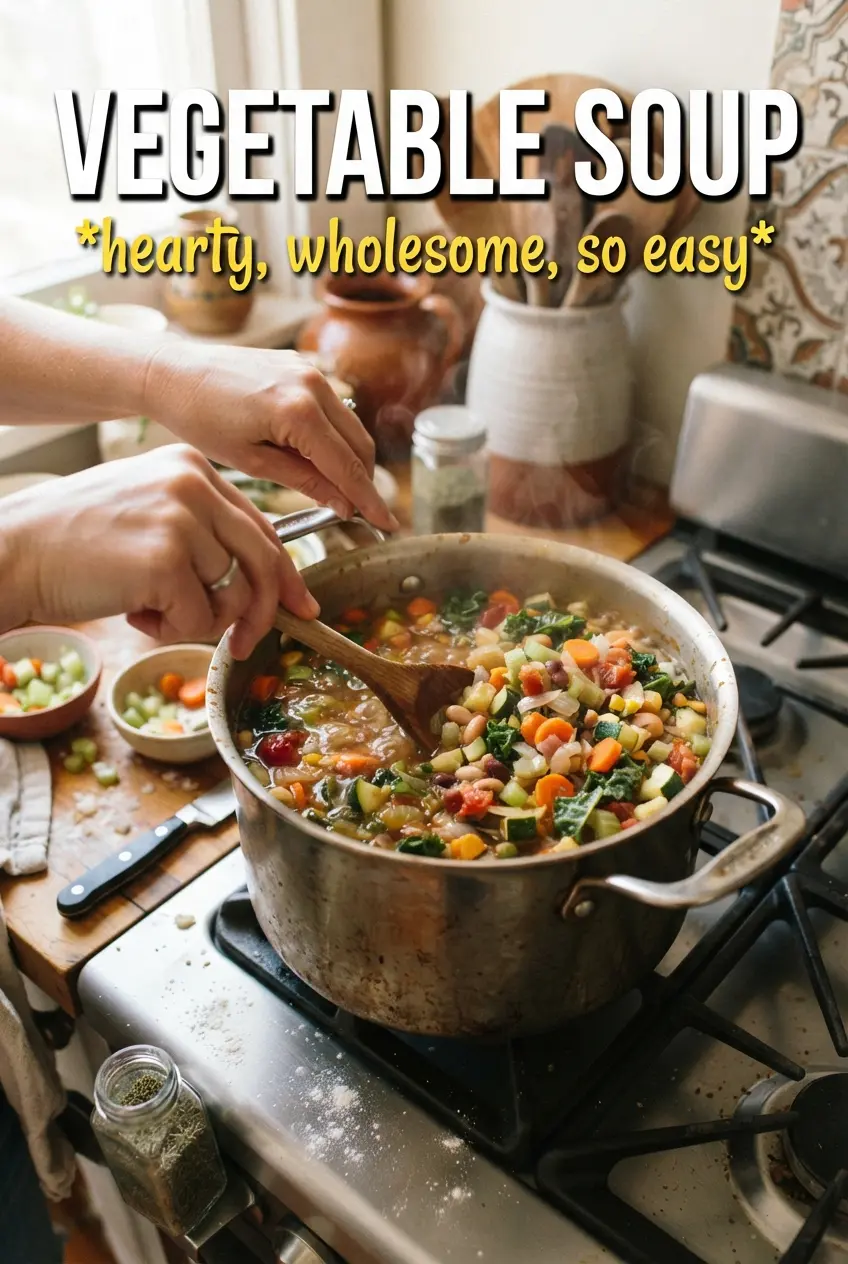
Vegetable Soup
Ingredients
Equipment
Method
- Heat olive oil in a large pot over medium heat, then sauté onion, carrots, and celery for 5 minutes, stirring until the onion softens and looks glossy.
- Add garlic and cook for 1 minute, stirring constantly until fragrant and lightly golden at the edges.
- Add vegetable broth, diced tomatoes, potatoes, dried thyme, dried parsley, and bay leaf, then stir until everything is evenly combined.
- Bring the pot to a boil, then reduce heat to a gentle simmer and cook for 15 minutes, with small bubbles rising steadily around the vegetables.
- Add green beans and simmer for 8 minutes, until potatoes are tender when pierced.
- Stir in frozen corn and frozen peas, then cook for 3 more minutes until peas are bright green and everything is hot.
- Remove the bay leaf and discard it.
- Season with salt and pepper to taste, then garnish with fresh parsley for a fresh green finish.