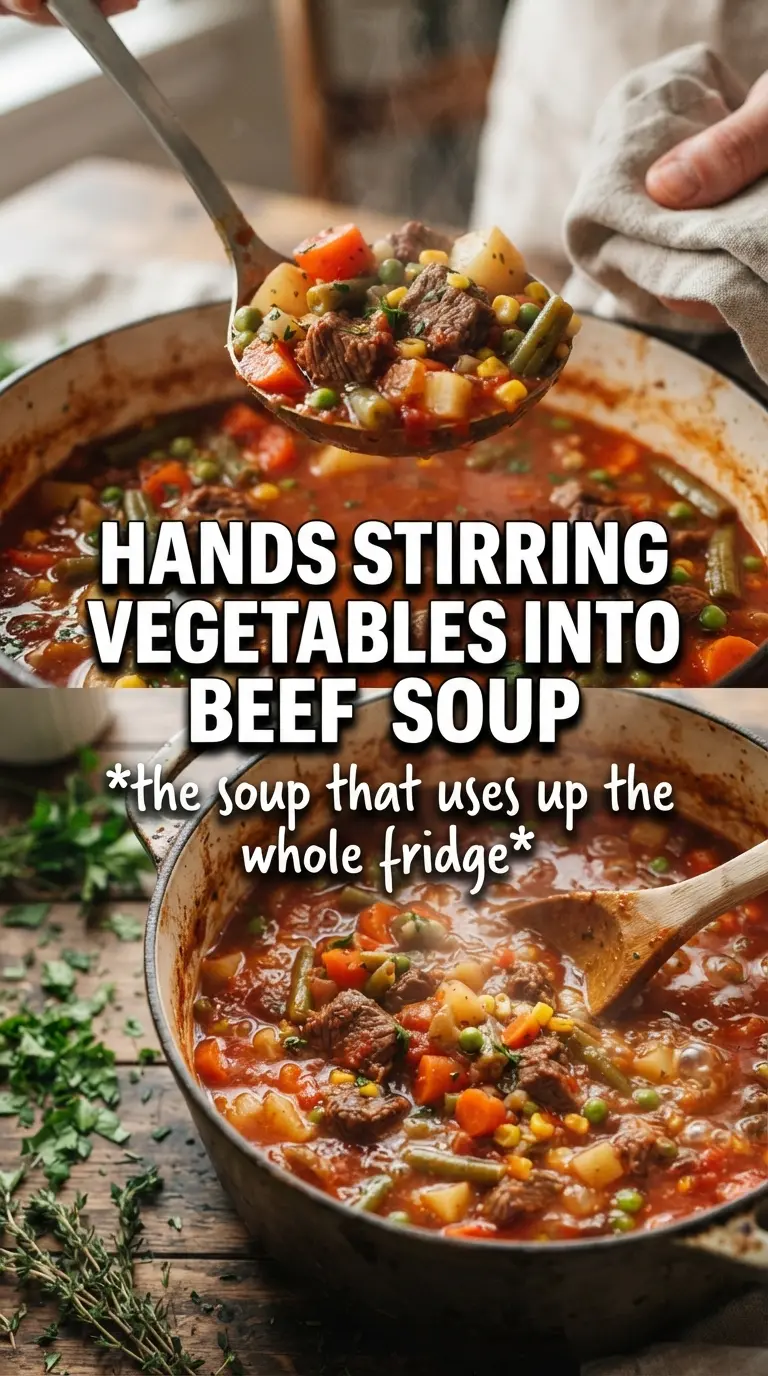
Vegetable beef soup hits the table with the kind of depth that makes a second bowl feel inevitable. The broth turns rich and mahogany-colored from browned beef, tomato paste, and a long enough simmer to pull all that flavor into the pot. The vegetables stay distinct instead of collapsing into mush, and the potatoes give the soup a satisfying body without turning it heavy.
What makes this version work is the order. The beef gets a real sear first, which builds the base flavor before any liquid goes in. The tomato paste cooks in the fat with the vegetables, so it loses that raw edge and blends into the broth instead of floating on top. Then the potatoes, green beans, and corn go in later, which keeps them from tasting tired by the time the soup is ready.
Below, I’ve included the small details that matter most: how to get good color on the beef, when to add each vegetable, and what to change if you want to stretch the pot a little farther or make it ahead.
The broth got deep and rich, and the potatoes held their shape without turning chalky. I loved that the green beans and corn went in at the end — everything tasted fresh, not overcooked.
Love the rich broth and tender vegetables in this vegetable beef soup? Save it to Pinterest for a comforting one-pot dinner that reheats beautifully.
The Beef Needs Color Before the Broth Can Taste Like Anything
If the beef goes into the pot pale, the soup stays flat. Browning the meat in batches is what gives this broth its deep, savory backbone, and crowding the pan is the fastest way to steam the cubes instead of searing them. You want browned edges, a little fond stuck to the bottom, and a pan that smells meaty before the vegetables even go in.
The tomato paste matters here too. Cooking it with the onions, carrots, celery, and garlic for a couple of minutes takes away the metallic taste that canned paste can have straight from the tube or can. That short step also helps it darken and blend into the broth, which is part of why this soup tastes like it simmered all afternoon even though the total cook time is under two hours.
- Beef stew meat — Cubes with a little marbling give you the best texture after simmering. Lean beef gets dry before the vegetables are done.
- Tomato paste — This is the depth-builder. If you skip the brief cooking step, the soup will taste sharper and less rounded.
- Worcestershire sauce — A small amount adds savory complexity that plain broth can’t match. There’s no real substitute for the same punch, but a splash of soy sauce works in a pinch.
- Green beans and corn — These go in late so they stay bright and taste like vegetables, not filler. Frozen corn is perfect here because it holds its sweetness well.
What Each Ingredient Is Actually Doing in This Recipe
- Primary ingredient (the star) — Quality matters most. Choose the best you can find.
- Cooking medium (oil, butter, or broth) — This carries flavors and prevents dryness.
- Seasonings (salt, pepper, spices, herbs) — Layer flavors so nothing overpowers. Build depth gradually.
- Aromatics (garlic, onion, herbs) — Cook with fat to bloom flavors. Become the foundation.
- Supporting ingredients — Complement the main ingredient without overpowering it.
- Sauce or liquid (if applicable) — Brings flavors together. Balance richness with acid.
- Acid (lemon, vinegar, wine, or other) — Brightens and prevents flat-tasting results.
- Final finish (garnish, glaze, or sauce) — Prevents one-dimensional taste and adds visual appeal.
How to Build the Pot So Every Vegetable Stays Worth Eating
Getting a Real Sear on the Beef
Heat the olive oil until it shimmers, then brown the beef in batches. Each side should take on a deep crust before you turn it. If the pot looks crowded, pull some meat out and work in rounds; water released from overcrowded beef is the reason so many soups start gray instead of rich.
Cooking the Aromatics Into the Base
Add the onion, carrots, and celery to the same pot and cook until the onion softens and the carrots start to lose their raw edge. Stir in the garlic and tomato paste and let them cook for about two minutes. The paste should darken a shade and coat the vegetables; if it smells burnt, the heat was too high.
Letting the Broth Simmer Before the Potatoes Go In
Return the beef, add the broth, tomatoes, Worcestershire, thyme, and bay leaf, then bring everything to a boil before lowering it to a steady simmer. You want gentle movement, not a hard bubble that tears the beef apart. This is the stretch where the meat starts turning tender and the broth takes on the first real layer of flavor.
Adding the Starchy and Tender Vegetables at the End
Potatoes need enough time to cook through, but not so much time that they start breaking apart. Add them after the first simmer, then finish with the green beans and corn during the last few minutes. The potatoes should be fork-tender, the beans still have some bite, and the corn should taste sweet and fresh instead of flat.
How to Adapt This Pot for Different Kitchens and Different Leftovers
Make It Gluten-Free Without Losing Body
This soup is naturally gluten-free as written, as long as your Worcestershire sauce is a gluten-free brand. The broth does the heavy lifting here, so you don’t need flour or roux to thicken it.
Swap the Beef for Ground Beef
Ground beef makes a faster, softer-textured version of this soup. Brown it well and drain off excess fat before adding the vegetables, but expect a less chunky, less stew-like result than you get from stew meat.
Use What’s in the Freezer
Frozen mixed vegetables can stand in for the green beans and corn if that’s what you have. Add them near the end so they don’t overcook, and keep in mind that a mixed bag usually gives a softer, less distinct vegetable texture.
Storage and Reheating
- Refrigerator: Store in an airtight container for up to 4 days. The broth thickens a bit as it chills, and the potatoes soften slightly.
- Freezer: This freezes well for up to 3 months, but the potatoes will be softer after thawing. Cool it completely before freezing and leave a little space at the top of the container.
- Reheating: Warm it gently on the stove over medium-low heat until steaming. A hard boil can break down the potatoes and make the beef stringy.
Answers to the Questions Worth Asking
Vegetable Beef Soup
Ingredients
Equipment
Method
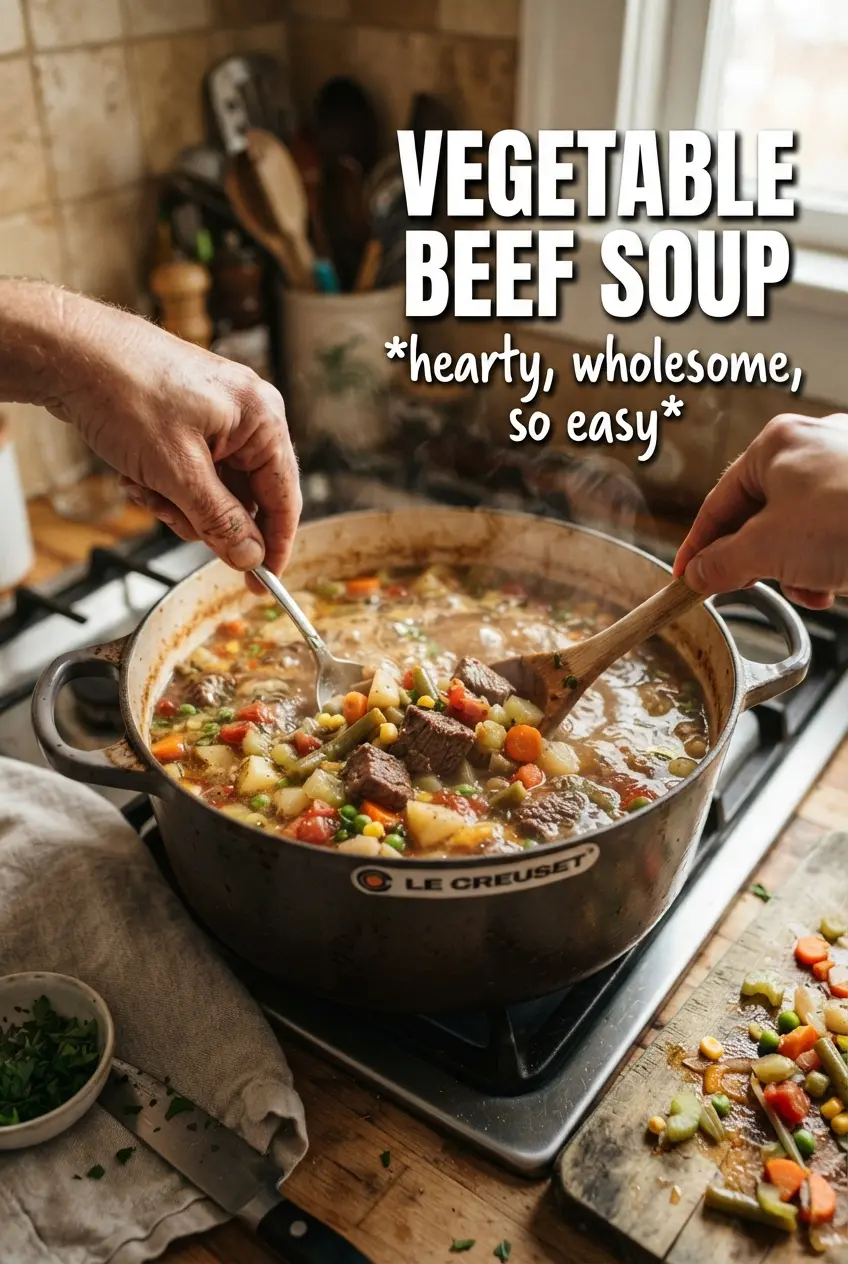
- Heat the olive oil in a large Dutch oven over medium-high heat and sear the beef in batches until browned on all sides, about 5 minutes total per batch. Remove to a plate when the surface is dark and crusty.
- Add the onion, carrots, and celery to the Dutch oven and sauté for 5 minutes until the onion looks softened. Add the garlic and tomato paste and cook for 2 minutes, stirring until fragrant and slightly darkened.
- Return the beef to the pot. Add the beef broth, diced tomatoes, Worcestershire sauce, thyme, and bay leaf, then bring to a boil.
- Once boiling, reduce the heat to maintain a gentle simmer and cook for 30 minutes. Look for steady bubbles around the edges and tender beef starting to break down.
- Add the potato cubes and simmer for 15 minutes, stirring occasionally. The soup should thicken slightly as potatoes release starch.
- Add the green beans and frozen corn and cook for the last 8 minutes. The beans should be bright green and crisp-tender, and the corn should be heated through.
- Remove the bay leaf from the soup. Season with salt and pepper to taste, then serve while the vegetables are tender and the broth is hot.