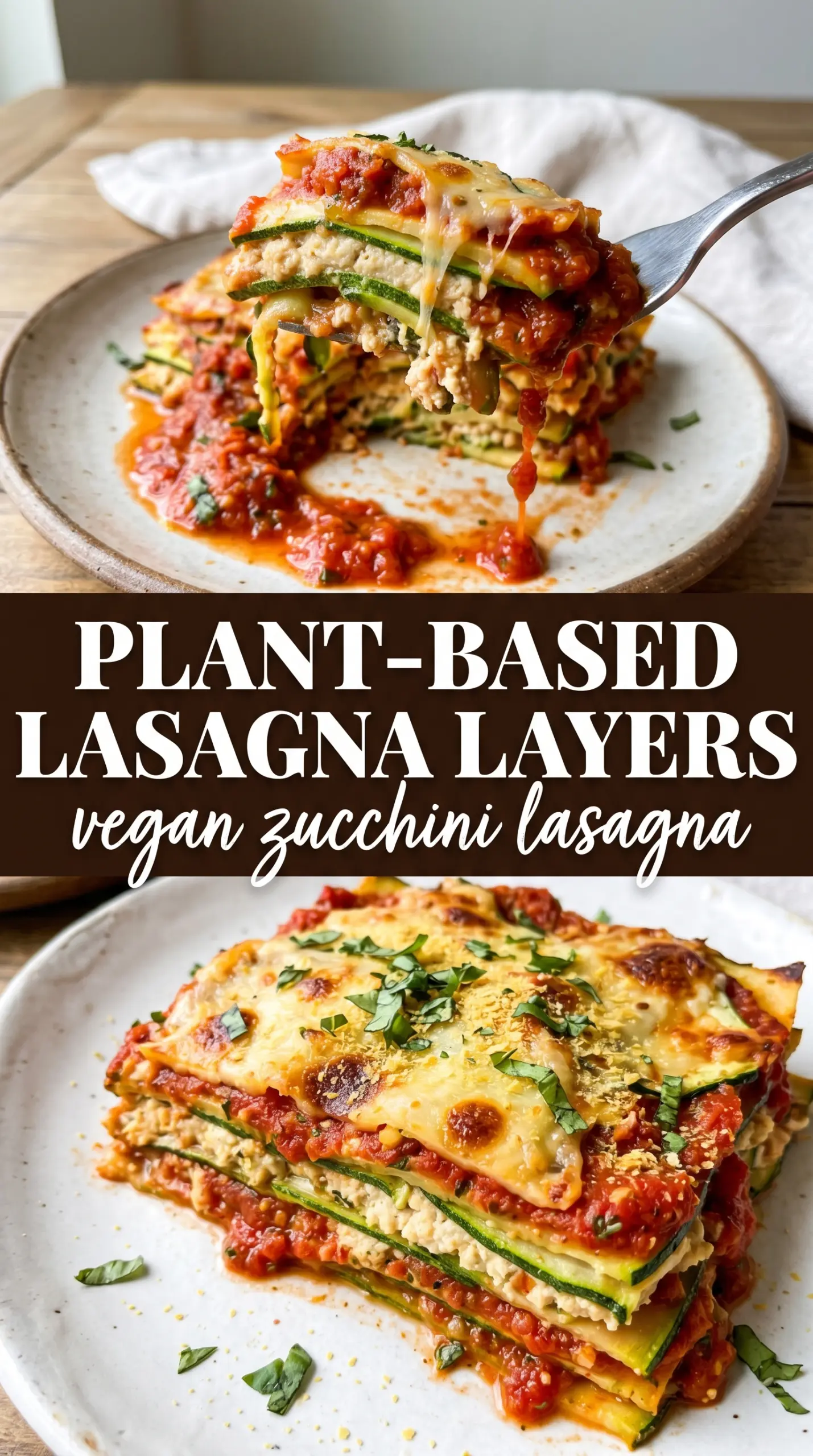
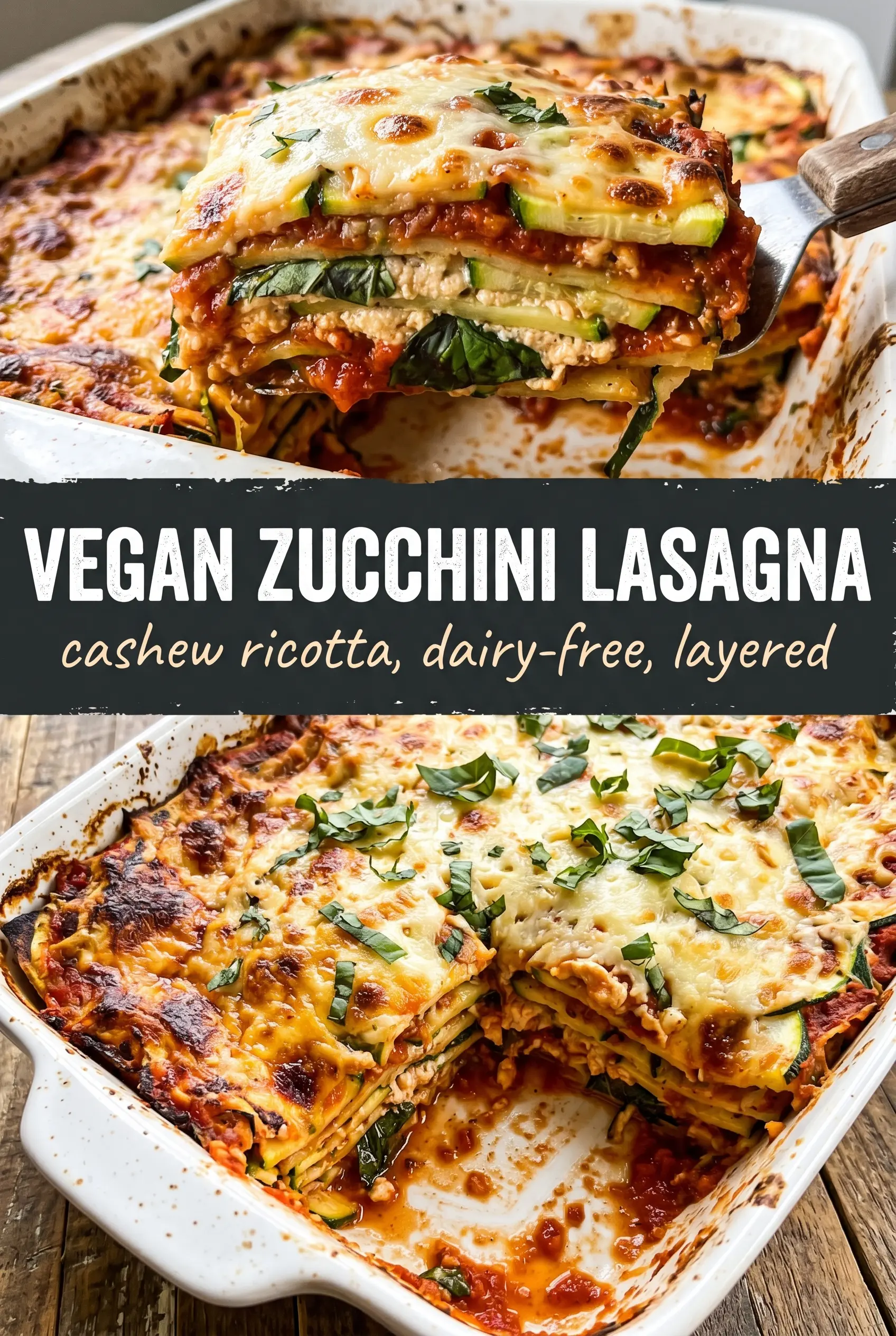
Vegan zucchini lasagna earns its place at the table when the layers stay distinct, the center slices cleanly, and the top comes out bubbling with a little browning around the edges. The best versions don’t lean on heavy sauces or watery vegetables to carry the dish. They build real structure: tender zucchini that still holds its shape, a lentil Bolognese with enough body to cling, and a cashew ricotta that tastes rich instead of thin or grainy.
The two things that make this version work are moisture control and layering discipline. Zucchini releases a lot of water, so salting and roasting the planks before assembly keeps the lasagna from turning soupy. The cashews need to be fully soaked and blended until absolutely smooth, because any grit in the ricotta stands out once it’s baked between soft vegetables and sauce.
Below you’ll find the timing that keeps the texture right, the ingredient swaps that still give you a sturdy slice, and the one rest period that makes all the difference when it’s time to serve.
I’ve made zucchini lasagna before, but this was the first one that sliced neatly without puddling on the plate. Roasting the zucchini first and letting it rest after baking made a huge difference.
Save this vegan zucchini lasagna for the nights when you want layered comfort with a golden cashew ricotta top and no pasta noodles.
The Mistake That Makes Zucchini Lasagna Watery
Zucchini is the part that usually ruins this dish. It looks sturdy enough going into the pan, then it gives up a full cup of water while it bakes and turns the whole casserole loose. Salting the planks first pulls out some of that moisture before it ever reaches the oven, and roasting them afterward finishes the job. That extra step isn’t decorative. It’s what keeps the lasagna from collapsing into a sauce puddle when you cut into it.
The other thing that matters is patience during assembly. A thick sauce and dry zucchini work together, but if either one is too loose the layers slide. Let the lentil Bolognese simmer until it’s spoonable, not soupy, and don’t skip the 15-minute rest after baking. That’s the difference between a pan that scoops and a pan that slices.
- Green or brown lentils — These hold their shape best and give the sauce enough body to stand in for meat. Red lentils break down too much here and turn the filling mushy.
- Cashews — Soaked cashews blend into a creamy ricotta that tastes rich without dairy. If you skip the soak, the texture stays grainy, even in a strong blender.
- Tomato paste — This gives the sauce depth and thickness fast. It’s worth using the full amount, because crushed tomatoes alone can taste thin in a layered bake.
- Vegan mozzarella — Use a melt-friendly brand here. Shreds that brown nicely add a little stretch and help the top hold together when you cut the first slice.
What Each Ingredient Is Actually Doing in This Recipe
- Primary ingredient (the star) — Quality matters most. Choose the best you can find.
- Cooking medium (oil, butter, or broth) — This carries flavors and prevents dryness.
- Seasonings (salt, pepper, spices, herbs) — Layer flavors so nothing overpowers. Build depth gradually.
- Aromatics (garlic, onion, herbs) — Cook with fat to bloom flavors. Become the foundation.
- Supporting ingredients — Complement the main ingredient without overpowering it.
- Sauce or liquid (if applicable) — Brings flavors together. Balance richness with acid.
- Acid (lemon, vinegar, wine, or other) — Brightens and prevents flat-tasting results.
- Final finish (garnish, glaze, or sauce) — Prevents one-dimensional taste and adds visual appeal.
Building the Layers So the Pan Holds Together
Drying Out the Zucchini
Slice the zucchini into thin planks, salt them, and let them sit long enough for moisture to bead on the surface. When you pat them dry, they should feel a little softer and less slick. Roast them until they’ve lost some volume and picked up a little color at the edges. If they still look glossy and raw, they’ll keep steaming in the oven and loosen the lasagna.
Thickening the Lentil Bolognese
Sauté the onion and carrots until the onion turns translucent and the carrots start to soften. Add the garlic only for the last 30 seconds so it doesn’t turn bitter, then stir in the lentils, tomatoes, paste, and seasoning. Simmer until the sauce mounds on a spoon instead of running off it. If it looks too loose, keep cooking; watery sauce is the fastest way to end up with a messy slice.
Blending the Cashew Ricotta
Blend the soaked cashews with water, nutritional yeast, lemon juice, garlic, salt, and pepper until the mixture looks glossy and completely smooth. Stop and scrape the sides a couple of times so you don’t end up with hidden bits of cashew in the middle. The ricotta should be thick but spreadable, almost like soft cream cheese. If it’s stiff, add water one teaspoon at a time; if it’s thin, it won’t stay in neat layers.
Baking and Resting
Assemble the lasagna with sauce, zucchini, ricotta, and repeat the layers until the pan is full, then finish with sauce and vegan mozzarella. Cover it for the first part of baking so the center heats through without drying out. Uncover it at the end to brown the top. The rest period matters just as much as the bake; cut too early and the layers slide apart, but give it 15 minutes and it sets up into clean squares.
How to Adapt This Vegan Zucchini Lasagna Without Losing the Structure
Make it gluten-free without changing a thing
This recipe is naturally gluten-free as written, as long as your vegan mozzarella and tomato paste are certified gluten-free. The texture stays the same because the structure comes from the zucchini, lentils, and cashew ricotta, not any pasta or flour thickeners.
Skip the nuts with a seed-based ricotta
Use soaked sunflower seeds or hulled hemp hearts in place of the cashews, then blend until smooth with the same lemon, garlic, and nutritional yeast. Sunflower seeds bring a slightly earthier taste, while hemp hearts make a softer, thinner filling that works best if you add less water.
Use eggplant for part of the zucchini
If you want a deeper, more savory edge, swap one or two zucchini planks per layer for roasted eggplant slices. Eggplant brings a softer bite and a richer flavor, but it also needs a little more roasting time to avoid adding moisture back into the pan.
Make it ahead for a calmer dinner
You can prepare the sauce and cashew ricotta a day ahead, then roast the zucchini and assemble the lasagna just before baking. That shortens the active cooking time and actually improves the flavor, because the lentil sauce has time to settle and taste more unified.
Storage and Reheating
- Refrigerator: Store covered for up to 4 days. The lasagna firms up in the fridge and slices even better the next day.
- Freezer: It freezes well in individual portions or as a whole baked pan. Wrap tightly once cooled, then thaw overnight in the fridge before reheating.
- Reheating: Warm covered in a 350°F oven until hot in the center, or reheat single slices in the microwave at medium power. High heat can make the zucchini water out again, so gentler reheating keeps the layers intact.
Answers to the Questions Worth Asking
Vegan Zucchini Lasagna
Ingredients
Equipment
Method
- Salt the zucchini planks and let sit for 20 minutes, then pat very dry.
- Roast the zucchini planks at 425°F for 10 minutes to remove extra moisture, then set aside.
- Sauté the onion and carrots in olive oil for 5 minutes.
- Add the garlic and cook for 30 seconds.
- Stir in the cooked lentils, crushed tomatoes, tomato paste, and Italian seasoning, then simmer for 15 minutes.
- Blend the soaked cashews with water, nutritional yeast, lemon juice, garlic, and salt and pepper until very smooth and creamy.
- Preheat the oven to 375°F.
- In a 9x13 dish, layer lentil sauce, zucchini planks, cashew ricotta, then repeat until you finish with lentil sauce and the vegan mozzarella on top.
- Cover with foil and bake for 35 minutes, then uncover and bake 12–15 minutes until the top is golden.
- Rest for 15 minutes before slicing to help the layers set.