Ruby-pink vanilla-rhubarb jam has a clean, bright tang from the fruit and a round, warm finish from the vanilla bean. The texture lands somewhere between spoonable and spreadable, which is exactly what you want when it’s going on toast, biscuits, or folded into yogurt. It sets up with a glossy body instead of a loose, syrupy pour, and the vanilla keeps the rhubarb from tasting sharp or one-note.
This version works because the rhubarb is cooked just long enough to release its juices before the pectin and sugar are pushed to a hard boil. That sequence matters. If you add the sugar too early or don’t boil hard enough after it goes in, the jam can stay runny. The lemon juice sharpens the flavor and helps the set along, while the vanilla bean adds those little flecks everyone notices the second the jar is opened.
Below, I’m breaking down the one step that keeps the jam from turning gummy, plus the ingredient choices that make the flavor taste fresh instead of flat. If you’ve ever had rhubarb jam that was either too loose or too sugary, this method will help you land in the middle.
The jam set up beautifully after the 24-hour rest, and the vanilla kept the rhubarb from being too tart. Mine turned into that perfect thick spread that stayed put on toast instead of running off the plate.
Save this vanilla-rhubarb jam for the days when you want a bright, glossy preserve with real vanilla bean flavor.
The Boil That Decides Whether This Jam Sets
Rhubarb carries a lot of water, which means the real work happens after the sugar goes in. The jam needs a full hard boil for the full minute so the pectin can do its job and the mixture can reach the point where it thickens as it cools. If the boil is timid, the jam may look done in the pot and still slide around in the jar later.
That’s the failure most people run into with rhubarb preserves. They stop too soon because the mixture already looks glossy. Don’t trust the shine alone. You want a boil that doesn’t calm down when you stir it, with bubbles breaking across the whole surface instead of just around the edges.
- Hard boil — This means an active boil that keeps going while you stir. That heat is what activates the pectin and concentrates the fruit.
- One-minute timing — Start the timer only after the boil comes back up fully. Starting early can leave you with a loose set.
- 24-hour rest — The jam won’t reach its final texture until it cools completely. Test it too soon and you’ll think it failed when it just needs time.
What the Rhubarb, Pectin, and Vanilla Each Bring to the Jar
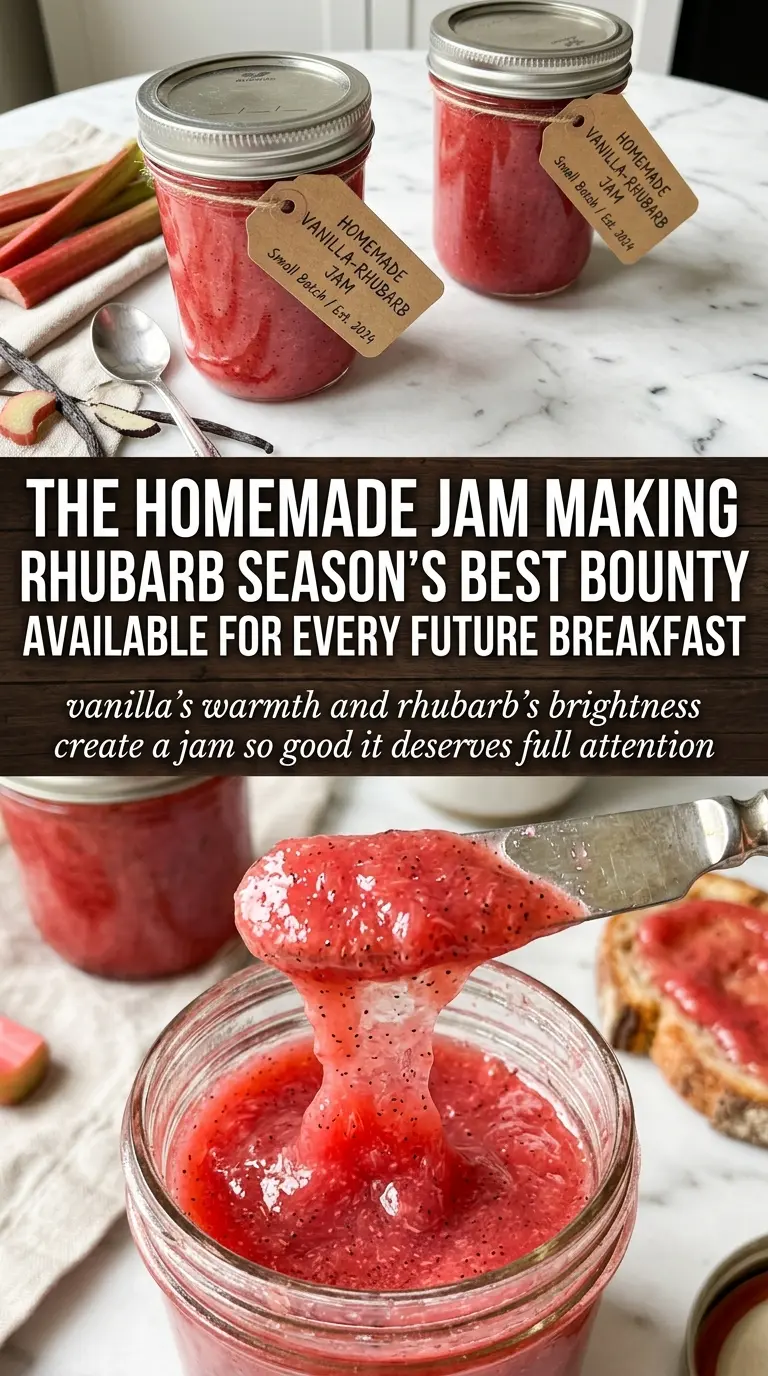
- Fresh rhubarb — Use firm stalks and dice them evenly so they break down at the same rate. Stringy or woody rhubarb can make the jam taste rough instead of bright.
- Powdered pectin — This is what gives the jam its reliable set. Don’t swap in a different type of pectin without checking the package instructions, because the ratios and timing can change.
- Vanilla bean — The bean pod and seeds give the jam that speckled look and a deeper flavor than extract alone. If you only have extract, stir it in off the heat at the end, but the flavor won’t be as rounded.
- Lemon juice — It sharpens the fruit and helps the set. Bottled lemon juice works here, but use the full amount; cutting it back can leave the jam flatter and softer.
- Sugar — It isn’t just for sweetness. It helps the jam gel and keeps the rhubarb’s tartness in balance, so don’t reduce it unless you’re using a low-sugar pectin formula designed for that change.
Getting the Jam Into Jars Without Losing the Set
Cooking the Fruit Base
Combine the rhubarb, vanilla bean, and lemon juice in a large pot first, then stir in the pectin before the heat goes on. As the mixture warms, the rhubarb will soften and release liquid, which is what gives the pectin enough moisture to work with. Keep stirring so the bottom doesn’t catch, because scorched fruit will darken the jam and throw off the flavor.
Boiling Hard at the Right Moment
Once the mixture reaches a rolling boil, add the sugar all at once and bring it back to a hard boil for exactly one minute. The boil should stay active even as you stir, and the surface should look thick and busy instead of foamy and loose. If the jam starts to climb the pan or spit, the heat is high enough; if it only barely simmers, it won’t set as well.
Finishing, Jarring, and Waiting
Pull the pot off the heat as soon as the minute is up, skim any foam, and remove the vanilla bean pod before ladling the jam into sterilized jars. Leave the 1/4-inch headspace so the jars seal properly during the water bath. After processing, don’t tilt or tighten the lids again; let them sit untouched for 24 hours so the set can finish cleanly.
How to Adjust This Jam When You Need a Different Result
Make It Dairy-Free and Gluten-Free
It already fits both of those needs as written, which is part of why it’s such a useful preserve to keep on hand. The only thing to watch is cross-contamination in your canning tools and jars if you’re serving it to someone with an allergy concern.
Use Vanilla Extract Instead of a Bean
Stir in 1 to 1 1/2 teaspoons of pure vanilla extract after the jam comes off the heat. You’ll lose the little vanilla flecks and some of the deeper aroma, but the flavor still lands nicely if that’s what you have.
Make a Sweeter, Softer Jam
Add an extra 1/2 cup sugar only if you want a less tart finish, and expect a slightly firmer, more candy-like result. The rhubarb will taste less sharp, but the jam will also lose some of the bright edge that makes it stand out.
Swap in Frozen Rhubarb
Frozen rhubarb works well if you thaw and drain it first, since extra ice crystals can water the jam down. The flavor stays good, but you may need the full boil time to get the set you want.
Storage and Reheating
- Refrigerator: Store sealed jars in the fridge after opening for up to 3 weeks. The texture may tighten a bit as it chills, which is normal.
- Freezer: This jam can be frozen in freezer-safe containers if you leave headspace for expansion. The set may soften slightly after thawing, but the flavor stays strong.
- Reheating: Jam usually doesn’t need reheating, but if you want it looser for swirling into yogurt or oats, warm only the amount you need over low heat. High heat can make it loose and sticky instead of glossy and spreadable.
Questions I Get Asked About This Recipe
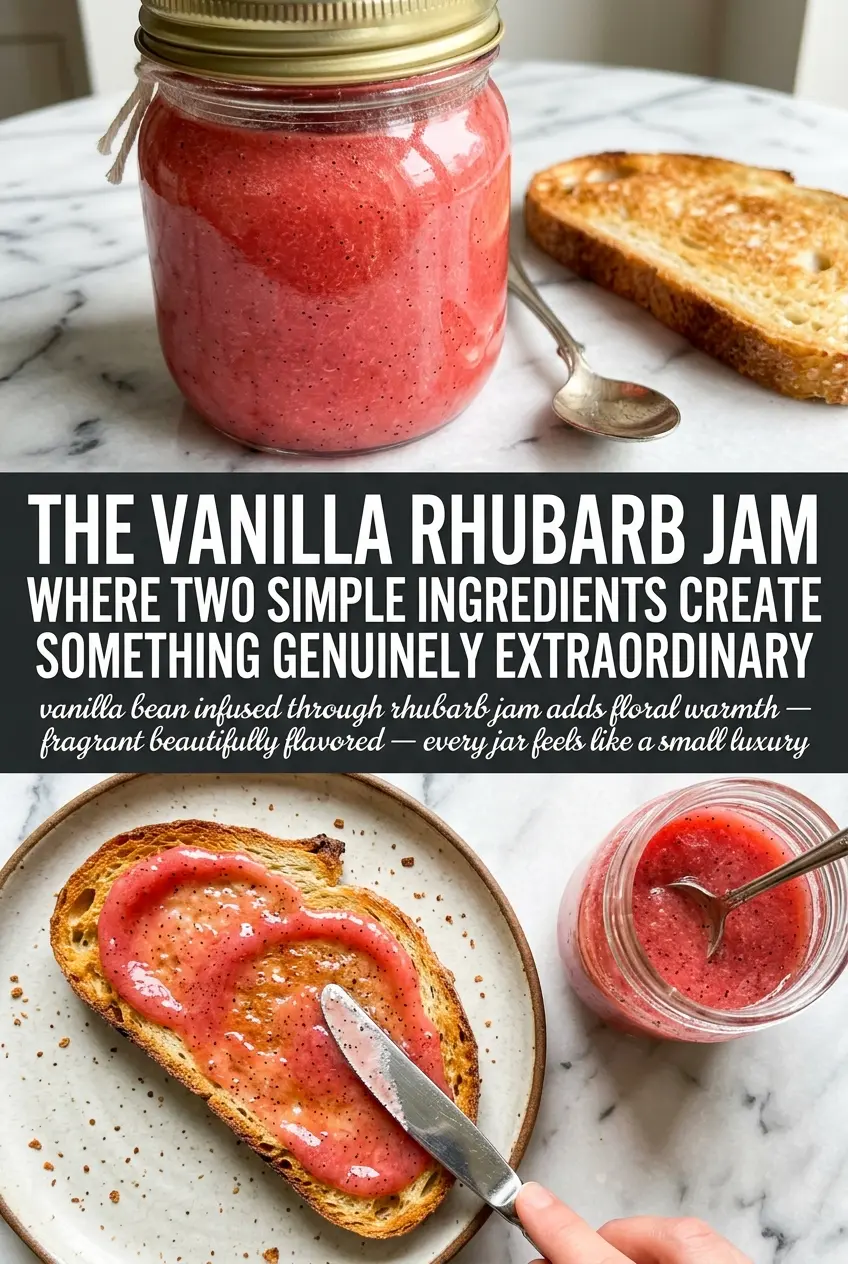
Vanilla-Rhubarb Jam
Ingredients
Equipment
Method
- Combine diced fresh rhubarb, vanilla bean pod and seeds, and lemon juice in a large Dutch oven.
- Stir in powdered pectin and cook over medium-high heat until the mixture reaches a rolling boil, stirring constantly.
- Add sugar all at once and return to a hard boil for 1 minute, stirring constantly to prevent scorching.
- Remove from heat and skim off any foam, then remove the vanilla bean pod.
- Ladle hot jam into sterilized half-pint jars, leaving 1/4-inch headspace.
- Process jars in a boiling water bath for 10 minutes.
- Let jars sit undisturbed at room temperature for 24 hours to set completely.