Tuscan chickpea soup lands in that sweet spot between rustic and comforting: brothy enough to feel light, but hearty enough that a bowl actually satisfies. The chickpeas turn creamy when some of them are mashed into the pot, the kale softens without going mushy, and the rosemary gives the broth a deep, savory edge that makes the whole thing taste like it simmered much longer than it did.
The trick is building flavor in layers. Onion and garlic start in olive oil, then the tomatoes, broth, rosemary, and parmesan rind work together to create a broth with real backbone. Mashing part of the chickpeas is what gives the soup body without adding cream, and adding the kale at the end keeps it bright and green instead of dull and overcooked.
Below, I’ve included the small details that matter most, including the best way to thicken the soup and the swaps that still keep it tasting balanced and hearty.
I’ve made a lot of chickpea soups, but mashing some of the beans right in the pot gave this one the best texture. The broth turned silky, and the lemon at the end kept it from tasting heavy.
Save this Tuscan Chickpea Soup for a brothy, lemony dinner with creamy chickpeas and kale.
The Reason This Soup Doesn’t Taste Flat
A lot of chickpea soups end up tasting like warm broth with vegetables floating in it. The fix here is using the same ingredients at different jobs: some chickpeas stay whole for texture, some get mashed to thicken the pot, and the parmesan rind quietly builds umami while everything simmers. That combination gives you a soup that tastes rounded instead of thin.
The other thing that matters is when you add the kale. If it goes in too early, it loses its color and turns soft in a way that dulls the whole bowl. Add it after the soup has already developed flavor, and it keeps enough structure to feel fresh against the creamy broth and tender beans.
What Each Ingredient Is Doing in the Pot
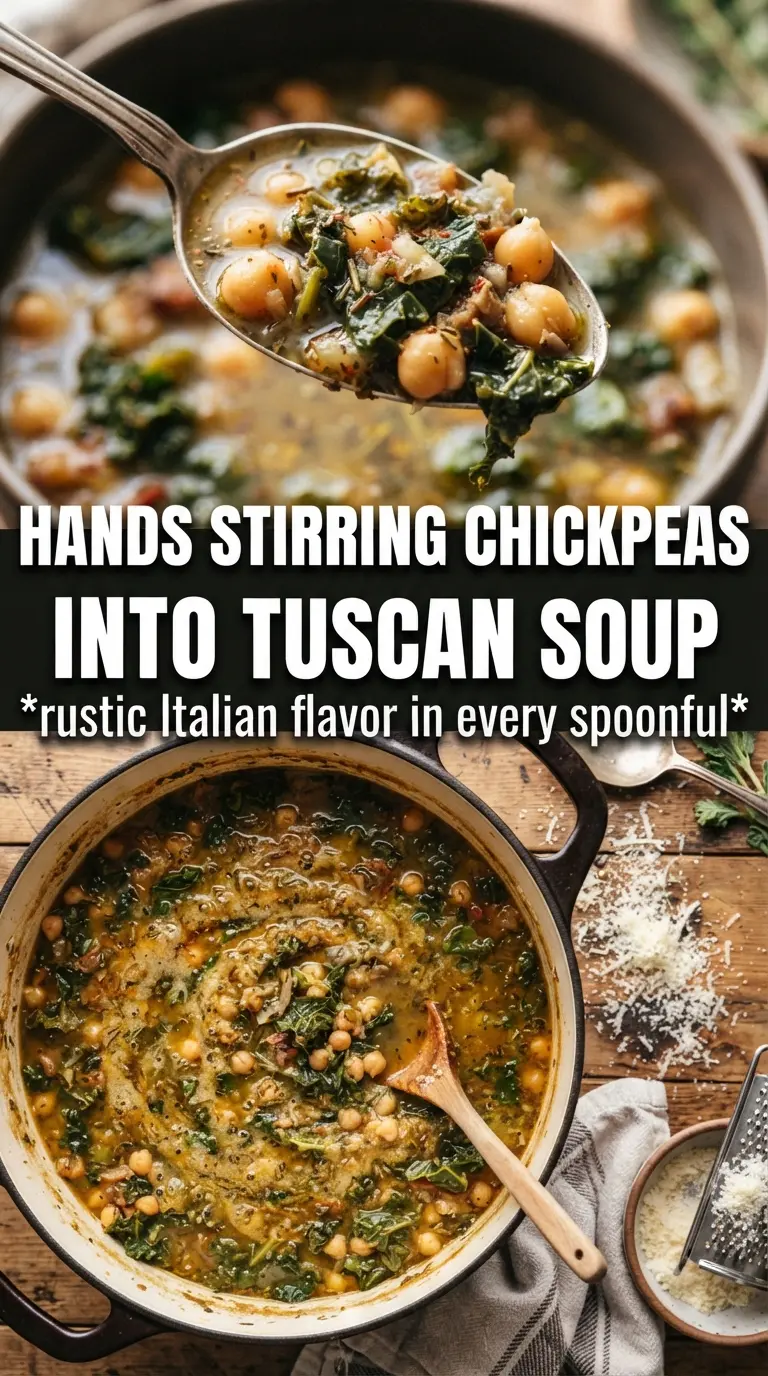
- Chickpeas — These give the soup its body and staying power. Canned chickpeas work well here because they’re already tender, and mashing a portion of them into the broth creates that creamy texture without needing dairy.
- Rosemary — Fresh rosemary is worth using if you have it because it perfumes the broth in a way dried herbs can’t quite match. If you only have dried, use less and crush it between your fingers before adding it so it wakes up in the heat.
- Fire-roasted tomatoes — These add sweetness, smoke, and acidity all at once. Regular diced tomatoes will work in a pinch, but the fire-roasted version gives the soup a deeper, more cooked-all-day taste.
- Parmesan rind — This is the quiet ingredient that makes people ask what you did differently. It melts just enough to season the broth without making it cheesy, and if you don’t have one, a little extra parmesan stirred in at the end can cover some of that gap.
- Kale — Use chopped kale with the tougher stems removed. It holds up well in soup and keeps a pleasant bite, but if yours is very mature, strip the leaves more carefully so the final bowl doesn’t taste woody.
Building the Broth in the Right Order
Starting with the Onion and Garlic
Heat the olive oil first, then cook the onion until it turns soft and translucent with a little edge of gold. That first five minutes matters because raw onion taste will sit in the broth if you rush it. Add the garlic and red pepper flakes only after the onion has softened; garlic burns fast, and burnt garlic turns bitter in a soup this simple.
Letting the Pot Simmer, Not Boil Hard
Once the chickpeas, tomatoes, broth, rosemary, Italian seasoning, and parmesan rind go in, bring the pot to a boil only to get everything moving, then lower it to a steady simmer. You want the surface to move lazily, not churn aggressively. A hard boil breaks down the broth too fast and can make the chickpeas split apart before they’ve had time to absorb flavor.
Thickening Without Cream
After about 20 minutes, remove the rosemary sprigs and parmesan rind, then mash or blend about a third of the chickpeas. This is the point that changes the soup from thin to spoon-coating. An immersion blender works well if you pulse only a few times; if you blend too much, you lose the rustic texture that makes this dish feel like a meal instead of a puree.
Finishing with the Kale and Lemon
Stir in the kale and cook just until it turns bright green and collapses into the broth, which usually takes about five minutes. Taste before serving, then add salt, pepper, and lemon. The lemon is not optional in spirit, even if the amount is small — it sharpens the broth and keeps the beans from tasting heavy. Finish each bowl with olive oil and parmesan right before serving.
How to Adapt This Soup When You Need a Different Bowl
Make It Dairy-Free
Skip the parmesan rind and finish with extra olive oil and a bigger squeeze of lemon. You’ll lose a little of the broth’s savory depth, but the soup still holds together because the chickpeas and tomatoes do the heavy lifting.
Make It Vegetarian Without Parmesan
If you want to keep it vegetarian but don’t use a parmesan rind, add a spoonful of white miso or a splash of soy sauce at the end for more savory depth. It won’t taste cheesy, but it will keep the broth from tasting one-dimensional.
Use Spinach Instead of Kale
Spinach works if that’s what you have, but stir it in during the last minute because it wilts almost instantly. The result is softer and lighter than kale, so the soup will feel a little less hearty.
Stretch It for a Bigger Crowd
Add an extra can of chickpeas and another cup of broth, then season at the end instead of scaling the salt early. Soups like this need final adjustment after they’ve simmered, especially once the liquid reduces and the cheese and lemon go in.
Storage and Reheating
- Refrigerator: Store in an airtight container for up to 4 days. The soup thickens as it sits because the chickpeas keep absorbing liquid.
- Freezer: It freezes well for up to 3 months, though the kale will soften a bit after thawing. Freeze before adding any fresh parmesan garnish.
- Reheating: Warm it gently on the stove over medium-low heat with a splash of broth or water. Don’t boil it hard again or the chickpeas can get mealy and the greens can lose their color.
Answers to the Questions Worth Asking
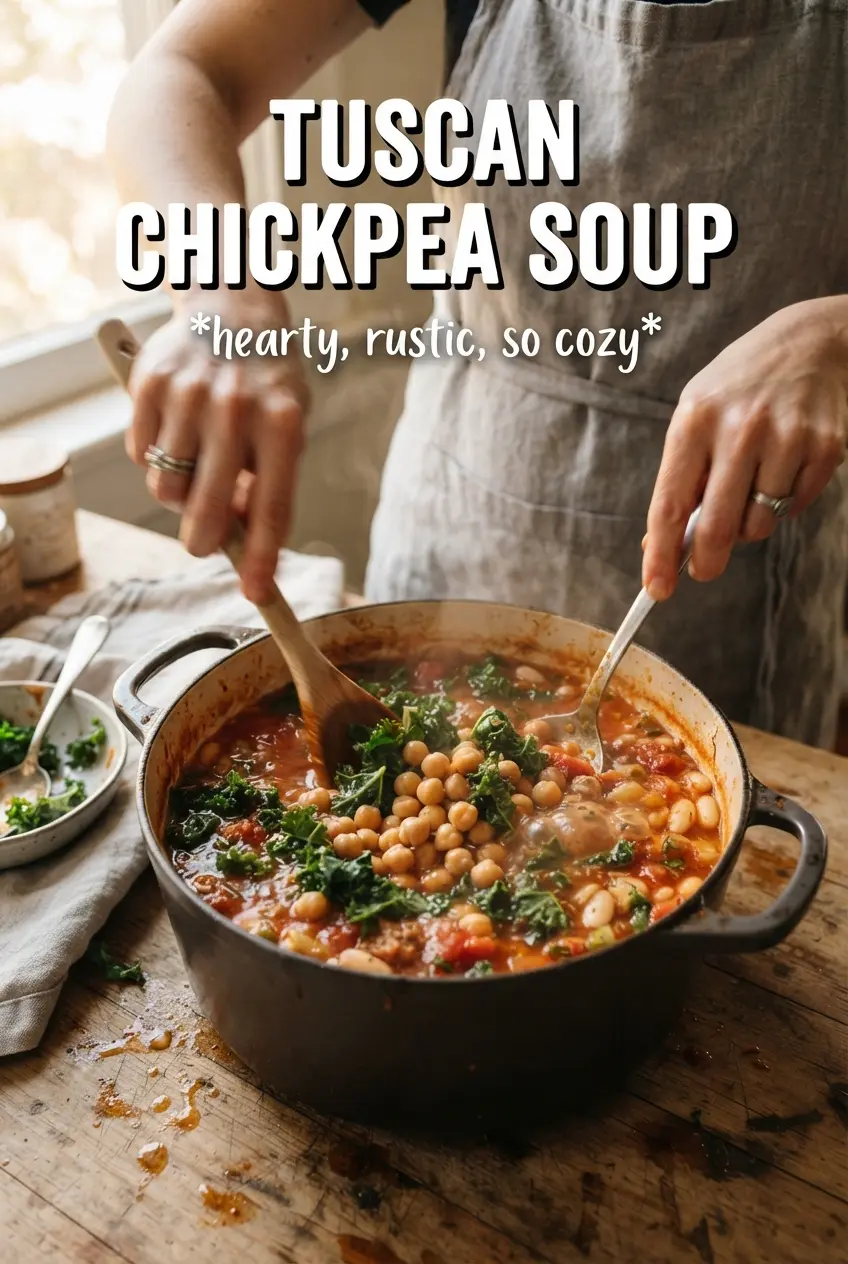
Tuscan Chickpea Soup
Ingredients
Equipment
Method
- Heat 2 tbsp olive oil in a large pot over medium heat and sauté the diced onion until softened, about 5 minutes, stirring occasionally so it doesn’t brown.
- Add the minced garlic and red pepper flakes and cook for 2 minutes, stirring until fragrant and lightly toasted.
- Add chickpeas, fire-roasted diced tomatoes, vegetable broth, rosemary, Italian seasoning, and the optional parmesan rind; bring the mixture to a boil.
- Reduce to a steady simmer and cook for 20 minutes, keeping small bubbles and gently stirring so the broth stays clear.
- Remove the rosemary sprigs and the parmesan rind, then mash or blend about a third of the chickpeas for a thicker, creamier texture.
- Stir in the chopped kale and cook for 5 minutes, until wilted but still bright green.
- Season with salt and pepper and add lemon to taste, then drizzle with olive oil and sprinkle parmesan before serving.