Zucchini rollatini lands on the table with the kind of bubbling, cheesy comfort that makes people reach for a second piece before they’ve finished the first. The zucchini softens just enough to roll without collapsing, the ricotta filling stays creamy instead of grainy, and the marinara bakes into the edges so every bite has a little tang to balance the richness.
The part that makes this version work is handling the zucchini before it ever meets the filling. Salt pulls out excess water, and a quick grill-pan sear or short bake keeps the rolls from turning watery in the oven. That extra step matters. It’s the difference between neat, tender spirals and a pan full of sauce with broken, slippery zucchini.
Below, I’ve included the small things that matter most: how thin the zucchini needs to be, why the filling should be mixed just until combined, and the easiest way to keep the rolls from popping open while they bake.
The zucchini stayed firm enough to roll, and the three-cheese filling baked up creamy instead of watery. I used the extra basil on top and the whole pan smelled like a restaurant when it came out of the oven.
Save these bubbly three cheese zucchini rollatini for the night you want a meatless baked pasta dish that still feels hearty and special.
The Step Most People Skip That Keeps Zucchini Rollatini from Getting Watery
Watery zucchini is the main reason rollatini turns sloppy. Zucchini carries a lot of moisture, and once it hits the oven, that water leaks into the marinara and thins the filling. Salting the planks first draws out a surprising amount of liquid, and patting them dry gives you a better surface for browning and rolling.
The second key move is softening the planks before assembling. Raw zucchini bends badly and breaks at the fold. A short trip over a grill pan or a quick bake makes the strips pliable without cooking them all the way through, which keeps the finished rolls tender instead of mushy.
- Zucchini — Thin, even planks matter more than the exact cooking method. A mandoline gives the most consistent slices, and consistency keeps the rolls baking at the same pace.
- Ricotta — Full-fat ricotta gives the filling body and a smoother finish. Part-skim works, but it can turn a little looser once baked.
- Egg — This is the binder that keeps the cheese filling from oozing out as soon as you cut into the pan. Don’t skip it unless you’re ready for a softer, less structured filling.
- Marinara — Use a sauce you’d actually eat on its own. Since it’s both the base and the topping, a bland sauce makes the whole dish taste flat.
What Each Cheese Is Doing in the Filling
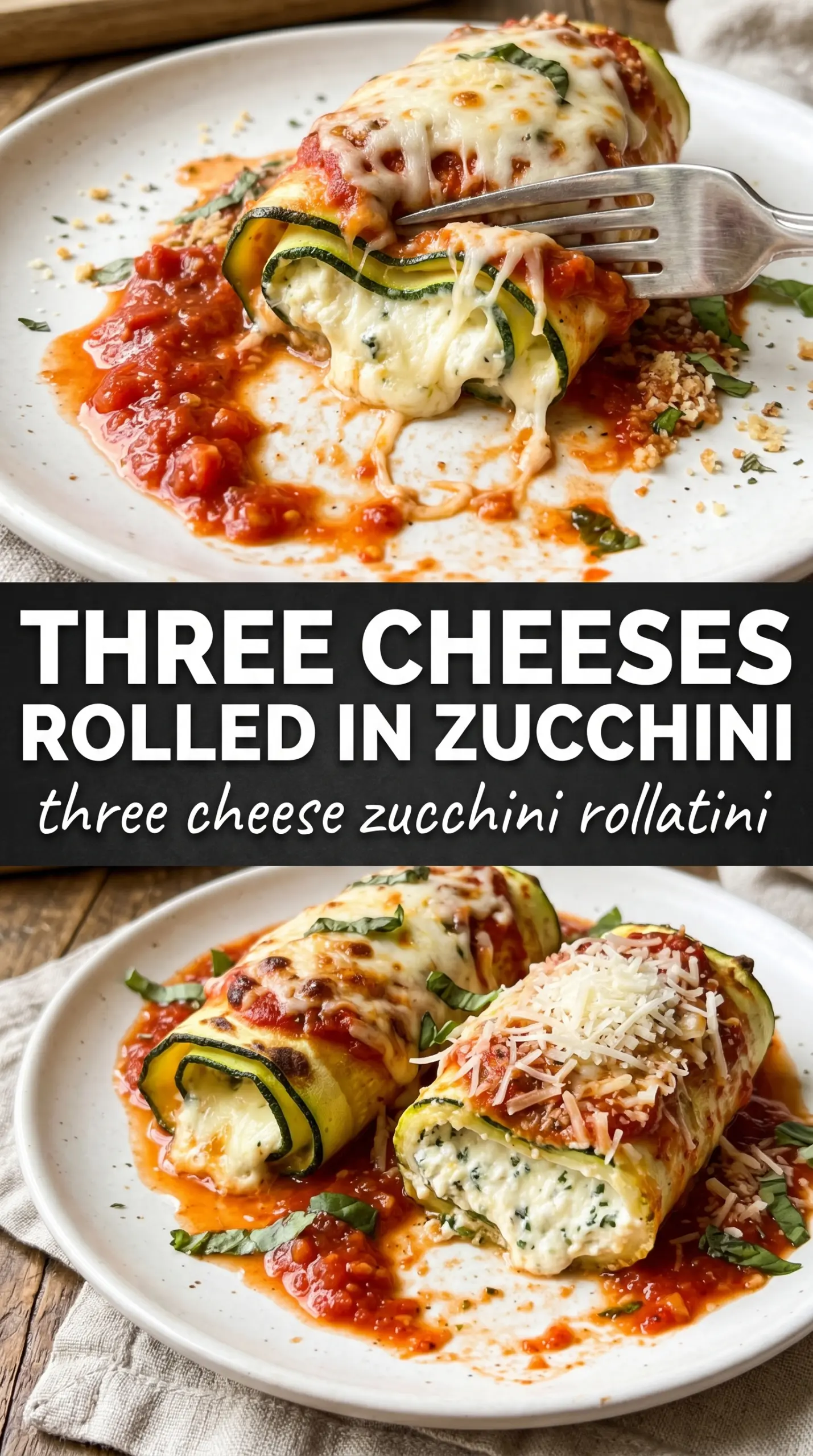
- Ricotta — This is the creamy backbone. It gives the filling volume and that soft, spoonable texture you want inside the rolls.
- Mozzarella — Mixed into the filling and used on top, it adds stretch and helps the rolls melt into each other just enough to feel cohesive.
- Parmesan — Parmesan brings salt and sharpness. It keeps the filling from tasting heavy and gives the top layer better browning.
- Fresh basil and parsley — Fresh herbs cut through the cheese and keep the dish from tasting one-note. Dried herbs won’t give the same lift here, especially in the filling.
- Garlic — One clove is enough. The filling should taste savory, not raw or aggressive, since the bake time is short.
How to Assemble the Rolls So They Hold Their Shape
Softening the Zucchini
Lay the zucchini planks out in a single layer after salting them, and don’t rush the resting time. You’ll see moisture bead on the surface, which is exactly what you want. After that, dry them thoroughly with paper towels; if they’re still slick, the filling won’t grip and the rolls can slide apart in the dish.
Mixing the Filling
Stir the ricotta, mozzarella, parmesan, egg, herbs, garlic, salt, and pepper just until combined. If you beat it hard, the ricotta can turn loose and pasty instead of creamy. The filling should hold together on a spoon without looking wet, and if it seems too soft, a little extra parmesan tightens it up fast.
Rolling and Nesting
Spoon the filling along one end of each plank, then roll firmly enough to keep it compact without squeezing the cheese out the sides. Set each roll seam-side down in the sauce so the pan does the work of holding them closed. If a plank cracks, use it anyway; overlap the broken edge under the roll and it usually disappears once baked.
Baking Until the Top Bubbles
Cover the rolls with the remaining sauce and mozzarella, then bake until the edges are bubbling and the cheese on top has melted into small golden spots. The center should be hot all the way through, but the pan doesn’t need a hard boil. Let it rest for 10 minutes before serving so the filling settles and the rolls slice cleanly.
Three Ways to Adapt This Without Losing the Texture
Gluten-Free and Naturally Vegetarian
This dish already fits a vegetarian table, and it’s naturally gluten-free as written as long as your marinara is gluten-free. That makes it an easy main dish when you need something hearty without breading or pasta.
Lighter Filling
Swap half the ricotta for part-skim ricotta or well-drained cottage cheese if you want a lighter dish. Cottage cheese brings more moisture, so drain it first and expect a slightly looser, more rustic filling.
Extra Rich Baked Finish
If you want a richer top, add a little more mozzarella during the last 10 minutes of baking so it melts without drying out. The result is a thicker cheese cap and a softer center, which is especially good if you’re serving this straight from the oven.
Make-Ahead for Dinner Later
You can assemble the whole pan a few hours ahead, cover it tightly, and refrigerate it until baking time. Add 5 to 10 minutes in the oven if it goes in cold, and wait to add the final basil garnish until after baking so it stays bright.
Storage and Reheating
- Refrigerator: Store leftovers covered for up to 4 days. The zucchini softens a bit more each day, but the flavor stays good.
- Freezer: Freezes fairly well in a tightly wrapped baking dish or airtight container for up to 2 months. Thaw overnight in the fridge before reheating for the best texture.
- Reheating: Cover and warm in a 350°F oven until hot, about 15 to 20 minutes for a smaller portion. Microwaving works in a pinch, but it can make the zucchini release extra water and turn the filling loose.
Answers to the Questions Worth Asking
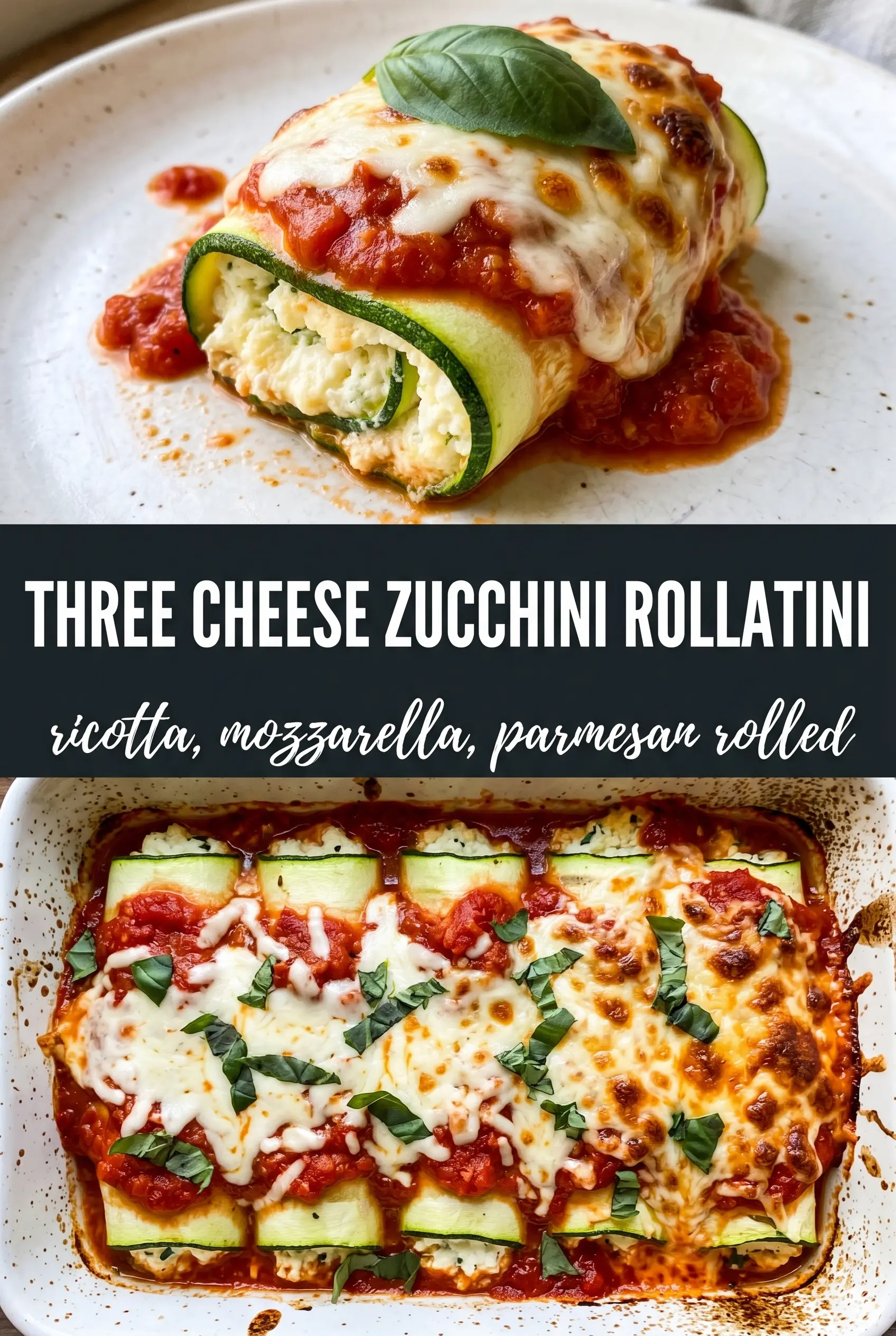
Three Cheese Zucchini Rollatini
Ingredients
Equipment
Method
- Salt the zucchini planks and let sit for 15 minutes, then pat completely dry.
- Grill the planks on a grill pan or bake at 400°F for 8 minutes to soften slightly and remove moisture, then let cool.
- Preheat the oven to 375°F.
- Mix the ricotta, 1 cup mozzarella, parmesan, egg, basil, parsley, garlic, salt, and pepper until well combined.
- Spread 1 cup marinara on the bottom of a 9x13 baking dish.
- Lay each zucchini plank flat and spread a spoonful of three-cheese filling along one end, then roll tightly.
- Place the rolls seam-side down in the baking dish.
- Spoon the remaining marinara over the rolls and top with shredded mozzarella.
- Bake for 28–35 minutes until the cheese is melted, golden, and bubbling.
- Rest the rollatini for 10 minutes before serving, then garnish with extra parmesan and basil.