Perfectly grilled salmon earns its keep when the skin turns crisp, the flesh stays tender, and the whole fillet lifts off the grates with those clean char marks everyone wants. This version keeps the seasoning simple on purpose. Lemon, garlic, and Dijon give the fish enough backbone to taste bright and savory without covering up the salmon itself.
The short marinate does two jobs here. It seasons the surface fast, and the little bit of Dijon helps the oil and lemon cling to the fish instead of sliding right off. The real win is in the grill time: skin-side down long enough to build a crust, then a quick finish on the second side so the center stays moist and flaky.
Below, I’ll walk through the small details that matter most, from oiling the grates to knowing exactly when the fish is ready to come off. If grilled salmon has ever stuck, dried out, or gone bland on you, this method fixes the parts that usually go wrong.
The salmon released from the grill cleanly and the skin got crisp without overcooking the middle. The lemon-Dijon mix was light but gave it enough flavor that we didn’t need anything else.
Save this grilled salmon for the nights when you want crisp skin, flaky fish, and a fast main dish with almost no cleanup.
The Reason Grilled Salmon Sticks or Stays Juicy
Most grilled salmon problems start before the fish ever hits the grate. If the grill isn’t hot enough, the skin clings and the surface steams. If it’s too hot or the fish gets flipped too early, the flesh tears before it has time to set. The sweet spot is medium-high heat on a clean, well-oiled grate, with the salmon left alone long enough to release on its own.
The skin does more than protect the fish. It acts like a built-in barrier that helps the salmon hold together while the heat works up from the bottom. That’s why this recipe keeps the first side on the grill longer than the second. You’re building structure first, then finishing the top just until it’s cooked through.
What the Lemon, Dijon, and Garlic Are Doing Here
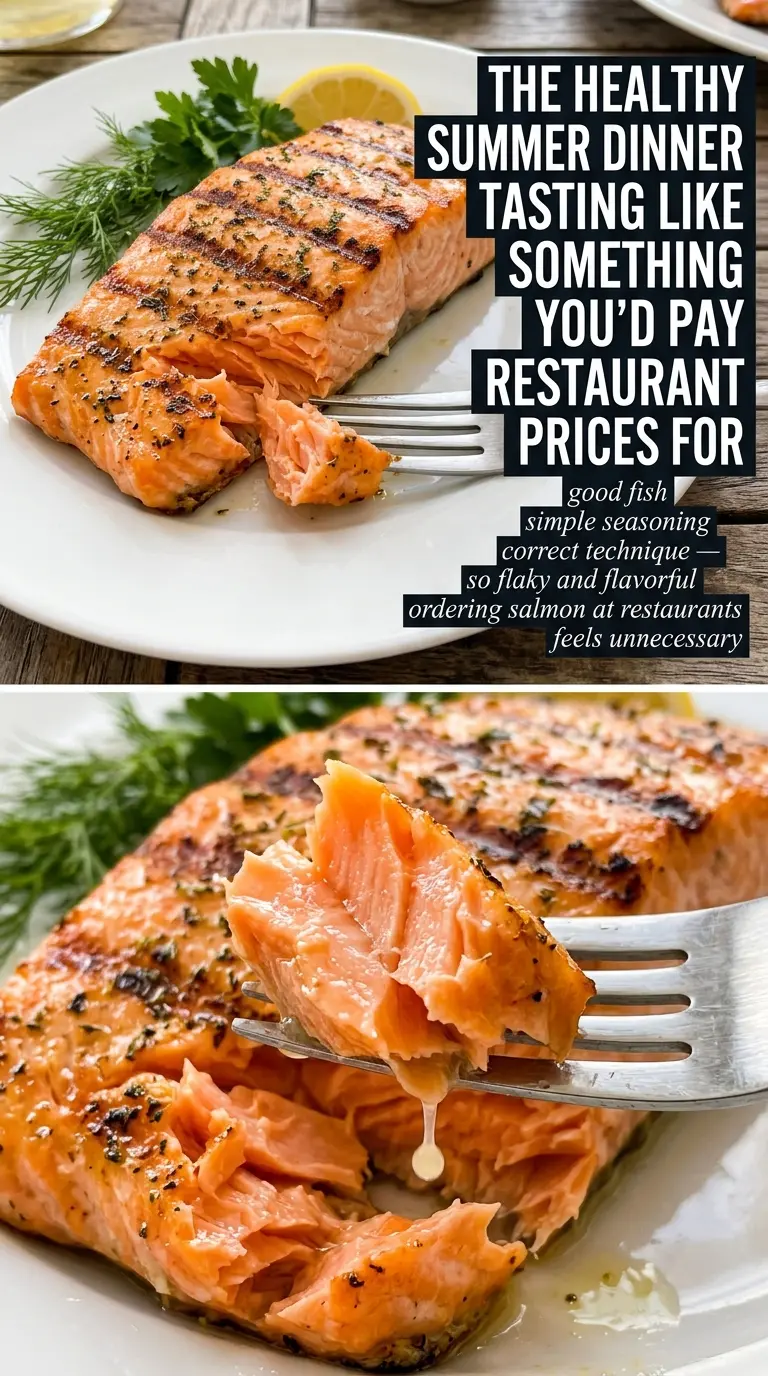
- Salmon fillets — Skin-on fillets hold up best on the grill and give you that crisp edge everyone wants. Thick fillets are easier to cook evenly than thin tail pieces, which can dry out before the skin has a chance to crisp.
- Olive oil — This helps the marinade coat the fish and keeps the exterior from sticking. A basic olive oil works fine here; save the fancy bottle for finishing.
- Lemon juice — Lemon brightens the salmon and cuts through the richness. Don’t let it sit much longer than 15 minutes, or the acid starts changing the texture on the surface and can make the fish a little soft.
- Dijon mustard — This is the ingredient that ties the marinade together. It adds a little sharpness and helps the oil and lemon stay emulsified long enough to brush onto the fish evenly.
- Fresh dill — Dill belongs with grilled salmon because it echoes the lemon without weighing the dish down. Dried dill won’t give the same fresh finish, so use fresh if you can.
Getting the Skin Crisp Before the Fish Overcooks
Mix the Marinade and Coat the Salmon
Whisk the olive oil, lemon juice, garlic, Dijon, salt, and pepper until the mixture looks slightly thickened and glossy. Brush it over the salmon instead of dunking the fish into a bowl; that keeps the fillets from getting waterlogged and gives you a more even coating. The 15-minute rest is enough to season the surface without starting to cook the fish in acid. If you leave it much longer, the exterior can turn soft and lose that clean grilled texture.
Heat the Grill and Oil the Grates
Preheat the grill until it’s hot enough that you can only hold your hand above it for a few seconds. Then oil the grates well with a folded paper towel or grill-safe brush. This is the step that prevents the skin from tearing when you try to lift the fish. If the grates aren’t hot and clean, the salmon will stick before it has a chance to release naturally.
Let the Skin Do the Heavy Lifting
Place the salmon skin-side down and don’t move it for 6 to 8 minutes. You’ll know it’s ready when the skin looks crisp at the edges and the fish releases with a little nudge instead of clinging to the metal. That first side is where most of the cooking happens, so resist the urge to flip early. If the fillet still feels glued down, it needs another minute.
Finish With a Quick Turn
Flip the salmon carefully and grill the second side for just 2 to 3 minutes. You’re only looking to finish the top and bring the fish to your preferred doneness, not cook it all the way through again. Pull it when the center still looks slightly translucent if you want it moist and tender, since carryover heat will finish the job as it rests. Overcooking by even a minute or two is the fastest way to lose that flaky texture.
How to Adapt This for Different Grills and Diets
No-Dairy, No-Problem Version
This recipe is naturally dairy-free, which means you don’t need to change anything to keep it that way. The olive oil, lemon, garlic, and Dijon give you all the richness and brightness you need without butter or cream.
Using a Gas Grill or Charcoal Grill
Gas gives you easier temperature control, while charcoal adds more smoke and a deeper grilled edge. Either one works as long as the grates are hot and oiled; the fish cares more about heat and contact than the fuel source. On charcoal, watch for flare-ups from the oil and move the salmon if the flames jump under it.
Using Skinless Salmon
Skinless fillets can work, but they need a little more protection because they’re easier to tear. Use a well-oiled grill basket or a sheet of heavy-duty foil with holes poked in it, and shorten the first cook slightly so the flesh doesn’t dry out. You’ll lose the crisp-skin payoff, but the lemon-Dijon seasoning still carries the dish.
Storage and Reheating
- Refrigerator: Store leftovers in an airtight container for up to 3 days. The skin won’t stay crisp, but the fish will still be tender if you handle it gently.
- Freezer: You can freeze cooked salmon for up to 2 months, though the texture softens after thawing. Wrap it tightly and freeze in a single layer first so the fillets don’t get smashed.
- Reheating: Reheat low and slow in a 300°F oven, loosely covered, until just warmed through. High heat dries salmon out fast, and the goal is to warm it, not cook it again.
Questions I Get Asked About This Recipe
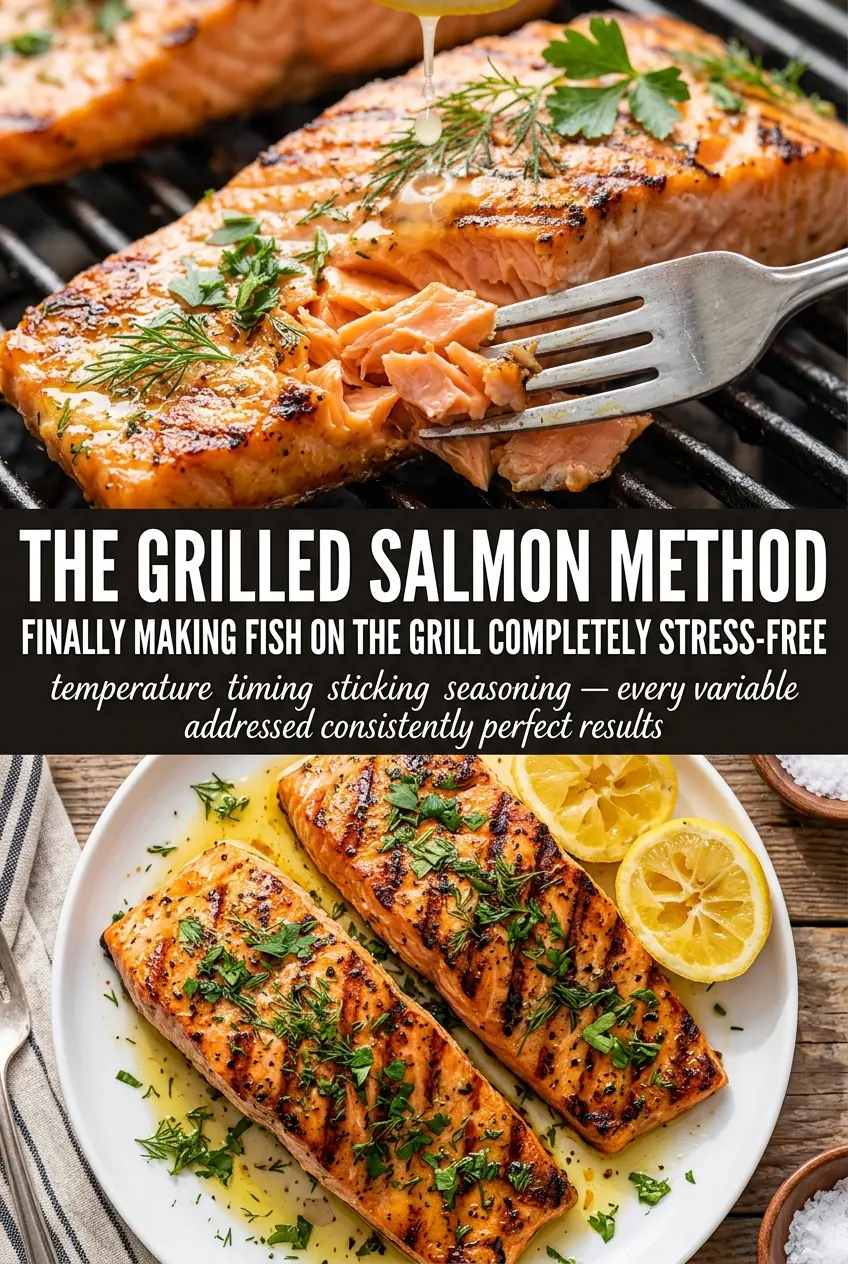
The Best Grilled Salmon
Ingredients
Equipment
Method
- Mix olive oil, lemon juice, minced garlic, Dijon mustard, salt, and pepper in a bowl until evenly combined.
- Brush salmon fillets with the marinade, keeping the coating on the skin side, then let sit for 15 minutes to marinate.
- Preheat the grill to medium-high heat and oil the grates well.
- Place salmon fillets on the grill skin-side down.
- Grill 6-8 minutes skin-side down without moving, until the skin is crisp and grill marks form.
- Carefully flip the salmon and grill 2-3 minutes until cooked to desired doneness.
- Serve grilled salmon with fresh dill and lemon wedges.