Tender chicken soaked in lemon, garlic, oregano, and olive oil has a way of turning an ordinary dinner into the kind people ask for again before the plates are cleared. The marinade brings brightness first, then that familiar savory Greek finish that clings to the chicken after grilling or roasting. It doesn’t taste busy or overworked; it tastes balanced, which is why it ends up on repeat.
What makes this version work is the ratio. There’s enough olive oil to carry the herbs and keep the chicken from drying out, but the lemon still has enough force to season the meat all the way through. Dijon doesn’t make it taste like mustard; it quietly helps the marinade emulsify so the garlic, lemon, and oil stay mixed long enough to coat every piece evenly. A longer marinade gives better flavor, but even a few hours makes a noticeable difference.
Below, I’ll walk through the small details that matter most: how long to marinate different cuts, what to swap when you’re out of fresh oregano, and why the resting time after cooking is worth keeping.
The chicken came out juicy and the lemon-oregano flavor went all the way through. I marinated it overnight, grilled it fast, and the outside got that great char without drying out the middle.
Save this Greek chicken marinade for juicy, lemony chicken with garlic and oregano that grills up cleanly every time.
The Secret to Keeping Greek Chicken Bright Instead of Bland
The biggest mistake with a lemon-based chicken marinade is letting the acid do all the work. Lemon juice seasons the meat, but if you lean on it too hard or leave the chicken in a harsh, unbalanced marinade for too long, the surface can turn mealy before it ever hits the grill. The olive oil here softens that edge and carries the garlic and herbs evenly, which is why the chicken tastes seasoned all the way through instead of just sharp on the outside.
Dijon mustard earns its place because it helps the marinade stay together. Without it, the oil and lemon separate fast, and you end up spooning thin liquid over chicken that never gets fully coated. The other detail that matters is salt: it needs enough time with the meat to move flavor inward, especially on thicker cuts like breasts or thighs.
- Olive oil — Use a good everyday extra-virgin olive oil here. It doesn’t need to be the most expensive bottle on the shelf, but it should taste clean, not dusty or bitter, because its flavor comes through in a marinade that isn’t heavily cooked down.
- Lemon juice and zest — The juice gives the tang, but the zest is what makes the marinade smell and taste distinctly Greek. Fresh zest matters more than fresh juice does here, since bottled lemon juice can’t replace those aromatic oils.
- Fresh oregano — Fresh oregano gives a softer, greener flavor. If you only have dried, cut the amount in half and crush it between your fingers before adding it so it wakes up in the oil. Dried oregano is actually a solid backup in this marinade.
- Dijon mustard — You won’t taste mustard in the finished chicken. What you get is better emulsification, which means the marinade stays clinging to the meat instead of pooling at the bottom of the bag.
- Chicken cut — Any cut works, but timing changes with thickness. Thighs forgive a long marinade and cook more evenly on the grill, while breasts need attention so they don’t go dry. Bone-in pieces hold onto flavor well; boneless pieces cook faster and need less time on the heat.
What Each Ingredient Is Actually Doing in This The Best Greek Chicken

- Acid (vinegar, lemon, or lime juice) — The acid tenderizes the protein gently. It also adds brightness and prevents the marinade from tasting flat.
- Oil (carrying flavor and protecting) — Oil coats the protein and prevents drying. It helps the marinade adhere and penetrate evenly.
- Salt (seasoning and moisture retention) — Salt seasons the protein and helps it retain juices. Apply directly before cooking for best results.
- Spices and aromatics (garlic, onion, herbs) — These add complexity and depth. They should be minced fine for quick penetration.
- Heat (if using warm spices) — Warm spices like cumin and coriander add earthiness. Toast them briefly before mixing for deeper flavor.
- Resting time (varies by marinade strength) — Weak marinades need 2+ hours; strong marinades (with lots of acid) need 30 minutes to 1 hour. Marinate longer and the protein becomes mushy.
- Cold storage (essential for food safety) — Marinades work best in the refrigerator. Room temperature marinades over-tenderize quickly.
- Pat dry before cooking — Excess marinade on the surface burns. Dry the protein so it can develop a good crust.
Getting the Marinade Into the Chicken Without Overdoing the Acid
Whisking the Base
Start by whisking the olive oil, lemon juice, zest, garlic, oregano, thyme, Dijon, salt, and pepper until the mixture looks cohesive and glossy. It won’t become fully thick like a sauce, but it should look evenly blended rather than separated into slicks of oil and juice. If the garlic sits in clumps, keep whisking; those clumps don’t distribute well once the chicken is in the bag.
Marinating for Real Flavor
Place the chicken in a zip-top bag or a shallow dish and coat it evenly with the marinade. Four hours is enough for surface flavor, but 8 to 24 hours gives you the most pronounced Greek-style seasoning. Don’t leave delicate boneless chicken in a very acidic marinade for multiple days or the texture can soften too much on the outside.
Grilling to the Right Finish
Preheat the grill to medium-high and let excess marinade drip off the chicken before it goes on. That keeps flare-ups under control and helps you get browning instead of soot. Cook until the thickest part reaches 165°F, then pull it off and rest it for 5 minutes; if you slice too soon, the juices run out and the meat tastes drier than it should.
Make it with chicken thighs for a juicier result
Boneless or bone-in thighs hold up especially well here because they stay tender even if the grill runs a little hot. They also take on the lemon and oregano flavor deeply, which makes them the easiest cut if you want the most forgiving version of this marinade.
Use dried oregano when that’s what you have
Dried oregano works well here, and it’s the better choice if you want a stronger, more concentrated herbal note. Use 1 tablespoon dried in place of 2 tablespoons fresh, and crush it before whisking so the oils release into the marinade.
Turn it into a dairy-free, gluten-free dinner board
The marinade itself is naturally dairy-free and gluten-free, so the main thing is what you serve with it. Pair the chicken with rice, roasted potatoes, cucumbers, tomatoes, or a simple salad and you’ve got a full meal without changing a thing in the marinade.
Swap in lime only if you want a sharper edge
Lime will work in a pinch, but it changes the character of the dish. The result is brighter and less classic, with a sharper citrus note that reads more generic Mediterranean than Greek.
Storage and Reheating
- Refrigerator: Store cooked chicken in an airtight container for up to 4 days. The flavor actually deepens overnight, though the grilled exterior softens a bit.
- Freezer: Freezes well for up to 2 months. Cool it completely first and wrap tightly so the lemon and garlic don’t pick up freezer odors.
- Reheating: Reheat gently in a covered skillet over low heat or in a 300°F oven until warmed through. High heat dries out the leaner cuts fast, especially chicken breast.
Questions I Get Asked About This Recipe
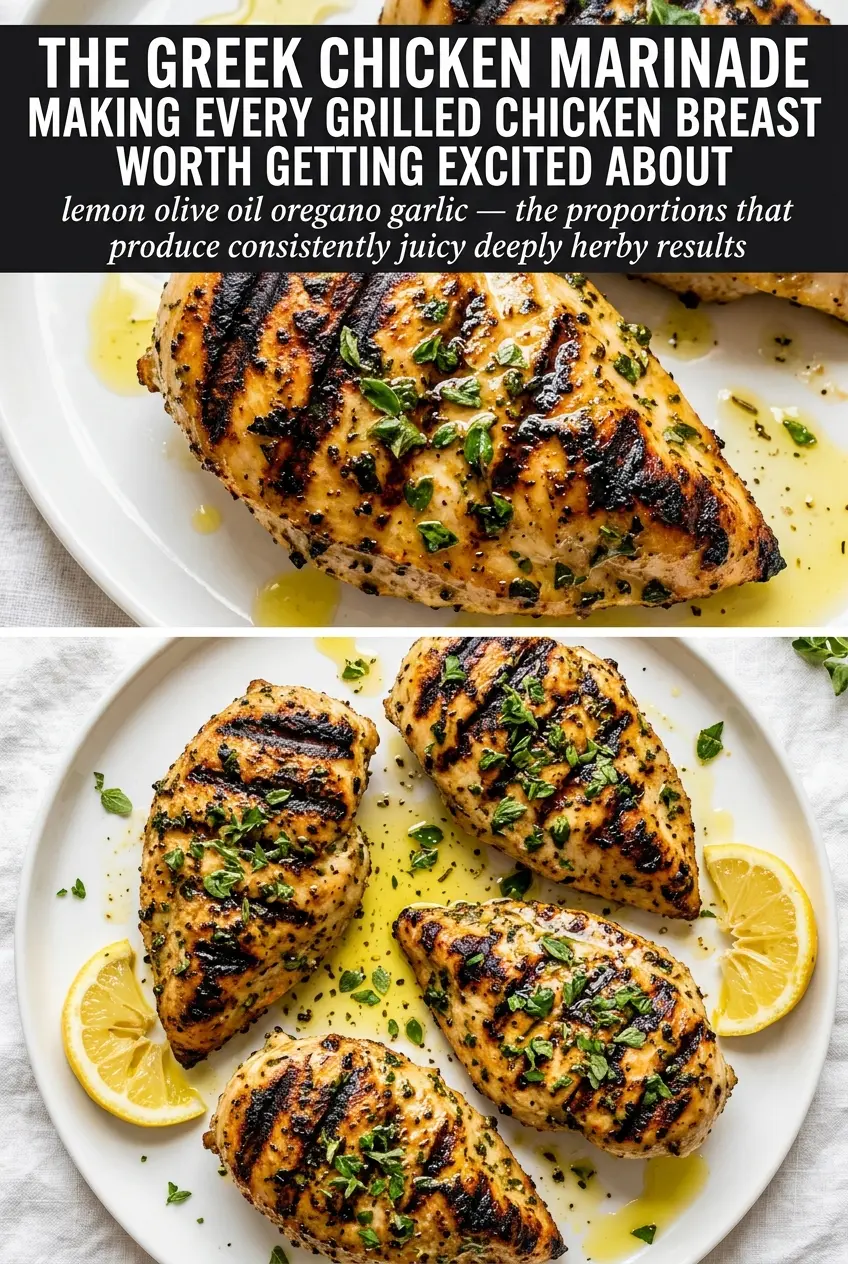
The Best Greek Chicken Marinade
Ingredients
Method
- Whisk together olive oil, lemon juice, lemon zest, garlic, oregano, thyme, Dijon mustard, salt, and pepper until combined.
- Place chicken in a large zip-top bag and pour the marinade over the chicken, then seal and turn to coat evenly.
- Refrigerate the bagged chicken for 4-24 hours so the flavors infuse.
- Preheat the grill to medium-high heat.
- Grill the chicken until the internal temperature reaches 165°F, timing varies by cut and thickness.
- Let the chicken rest for 5 minutes before serving.
- Serve with lemon wedges.