Juicy grilled chicken starts with a marinade that does more than coat the surface. This one seasons all the way through, helps the meat stay tender over the heat, and leaves you with chicken that tastes balanced instead of just salty or smoky. The lemon, Dijon, garlic, and herbs work together in a way that keeps every bite bright and savory.
The trick is in the balance. Soy sauce and Worcestershire bring depth, lemon juice lifts the flavor, and a little brown sugar helps the chicken brown without tipping into sticky-sweet territory. Olive oil carries everything across the meat and helps prevent the leaner cuts from drying out on the grill. You don’t need a long ingredient list for good grilled chicken. You need the right ones working together.
Below, I’ll show you why this marinade holds up on the grill, which chicken cuts work best, and how to adjust the timing so the meat stays juicy instead of turning stringy or bland. There’s also a simple guide for substitutions and storage, since this is the kind of recipe you’ll want to keep in your back pocket.
The chicken stayed juicy and the marinade caramelized on the grill without burning. I used it on thighs and breasts, and both came out with great flavor after just overnight in the fridge.
Save this grilled chicken marinade for the nights when you want juicy, well-browned chicken with almost no prep.
The Reason This Marinade Stays Bold Without Overpowering the Chicken
Most grilled chicken marinades fail in one of two ways: they taste flat after cooking, or they’re so acidic and salty that the chicken ends up tough. This one avoids both problems by using enough acid to brighten the meat, but not so much that it starts breaking it down into mush during the marinating window. The oil also matters. It carries the garlic, herbs, and mustard across the chicken, and it helps the surface brown instead of drying out the second it hits the heat.
The other key is the brown sugar. You don’t need enough to make the chicken sweet. You need just enough to encourage good color and round off the sharp edges from the lemon and soy. If your grilled chicken usually looks pale or tastes one-note, this balance is the part that changes everything.
- Lemon juice — Fresh lemon juice gives the marinade its lift. Bottled works in a pinch, but fresh has a cleaner edge and better aroma after grilling.
- Soy sauce — This does the heavy salting for the marinade and adds the deep, savory base. Use low-sodium soy sauce if you want a little more control over the final seasoning.
- Dijon mustard — Dijon helps the marinade emulsify so the oil and acid cling to the chicken instead of separating into layers. Yellow mustard won’t give the same sharp, rounded flavor.
- Brown sugar — This is there for browning, not sweetness. If you leave it out, the chicken still works, but the grill marks won’t caramelize as well.
What Each Ingredient Is Actually Doing in This The Best Ever Grilled Chicken
- Acid (vinegar, lemon, or lime juice) — The acid tenderizes the protein gently. It also adds brightness and prevents the marinade from tasting flat.
- Oil (carrying flavor and protecting) — Oil coats the protein and prevents drying. It helps the marinade adhere and penetrate evenly.
- Salt (seasoning and moisture retention) — Salt seasons the protein and helps it retain juices. Apply directly before cooking for best results.
- Spices and aromatics (garlic, onion, herbs) — These add complexity and depth. They should be minced fine for quick penetration.
- Heat (if using warm spices) — Warm spices like cumin and coriander add earthiness. Toast them briefly before mixing for deeper flavor.
- Resting time (varies by marinade strength) — Weak marinades need 2+ hours; strong marinades (with lots of acid) need 30 minutes to 1 hour. Marinate longer and the protein becomes mushy.
- Cold storage (essential for food safety) — Marinades work best in the refrigerator. Room temperature marinades over-tenderize quickly.
- Pat dry before cooking — Excess marinade on the surface burns. Dry the protein so it can develop a good crust.
How to Keep the Chicken Juicy From Marinade Bowl to Grill
Whisk the marinade until it looks cloudy and unified
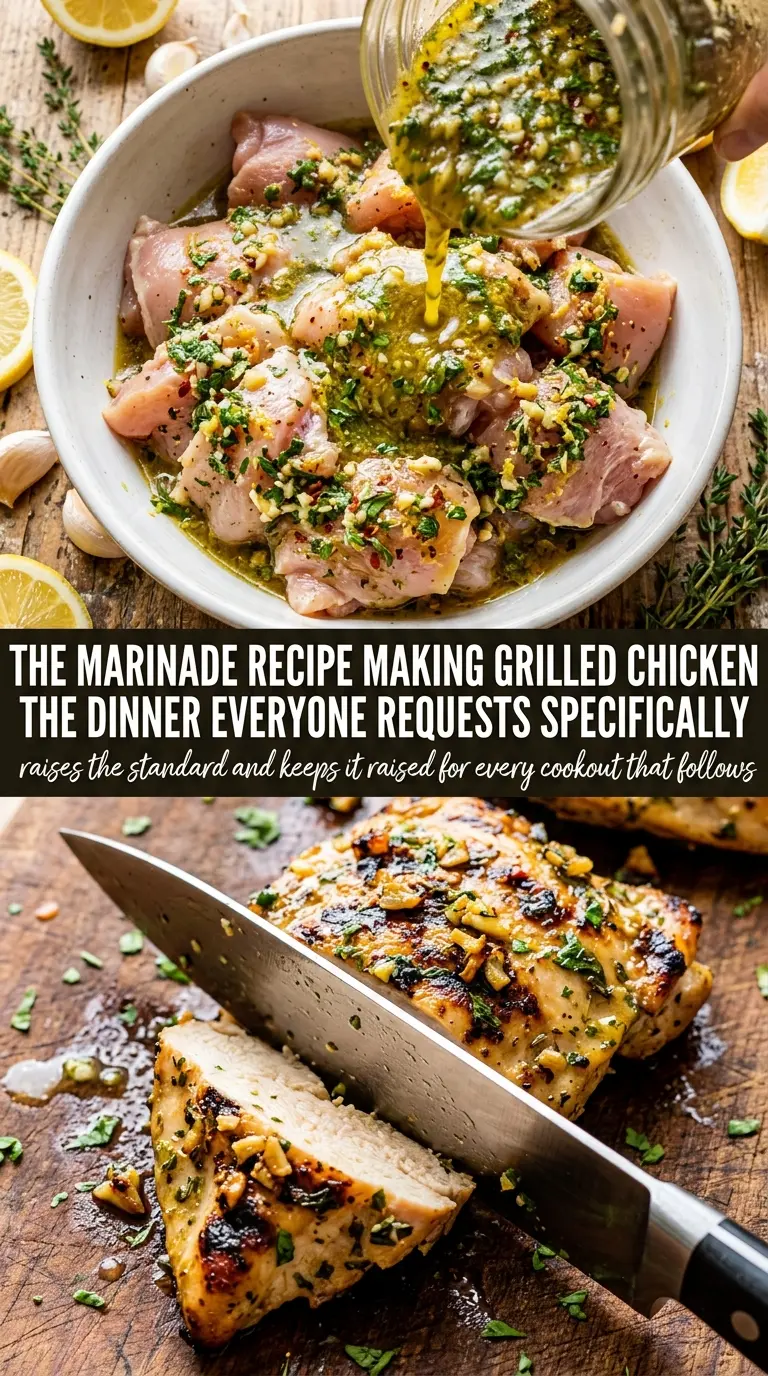
Start by whisking the oil, soy sauce, lemon juice, Worcestershire, Dijon, garlic, brown sugar, pepper, and dried herbs until the sugar dissolves and the mixture looks slightly thickened. If the marinade stays separated, it won’t coat the chicken evenly and the flavor will land in patches. A bowl with a little width makes this easier than a narrow measuring cup. The garlic should look suspended, not sitting in a slick of oil.
Give the chicken enough time, but not too much
Four hours is the sweet spot for most chicken cuts, and 24 hours is the upper limit I’d use here. The lemon juice is doing useful work, but too long in an acidic marinade can make the texture soft on the outside before the center cooks. If you’re using boneless breasts, stick closer to 4 to 8 hours. Thighs can handle the longer end of the range because they have more fat and a little more forgiveness.
Grill hot, then leave the chicken alone
Preheat the grill to medium-high and let the grates get properly hot before the chicken goes down. If the grill is too cool, the marinade steams instead of searing and you lose both color and flavor. Place the chicken on the grill and don’t move it around in the first few minutes. When it releases easily, that’s your sign the surface has browned enough to flip.
Pull it at temperature, then rest it
Use an instant-read thermometer and cook the chicken until the thickest part reaches 165°F. Timing changes with thickness and cut, so the thermometer matters more than the clock. Once it comes off the grill, let it rest for 5 to 10 minutes so the juices settle back into the meat. If you slice too soon, the cutting board catches all the good stuff instead of your plate.
How to Adapt This Marinade for Different Cuts, Diets, and Timing
Boneless breasts need a shorter soak
Chicken breasts dry out faster than thighs, so keep the marinating time closer to 4 to 8 hours. They’ll still pick up plenty of flavor without the texture going soft around the edges. Grill them over medium-high heat and pull them as soon as they hit 165°F.
Make it gluten-free without losing the savory backbone
Use gluten-free soy sauce or tamari in place of standard soy sauce. The marinade keeps the same balance and still browns nicely on the grill, since the sugar and mustard are doing the color work too. Worcestershire sauce can also be swapped for a gluten-free version if needed.
Go dairy-free and keep the same method
This recipe is naturally dairy-free, which makes it an easy crowd-friendly option. The texture and grilling method don’t need to change at all. Just watch the sugar level on the grill so the outside doesn’t char before the center reaches temperature.
No grill? Use a hot grill pan or broiler
A grill pan or broiler will still give you good browning, though you’ll lose a little of the smoke flavor. Keep the heat high and avoid overcrowding the pan so the chicken sears instead of steaming. Watch closely near the end, because the sugar in the marinade can go from golden to burnt fast under direct heat.
Storage and Reheating
- Refrigerator: Store cooked chicken in an airtight container for up to 4 days. Slice it after cooling if you want faster, more even reheating.
- Freezer: Cooked grilled chicken freezes well for up to 2 months. Wrap portions tightly and thaw in the refrigerator before reheating so the texture stays intact.
- Reheating: Reheat gently in a covered skillet with a splash of water or broth, or warm it in a low oven. High heat dries out grilled chicken fast, especially breasts.
Questions I Get Asked About This Recipe
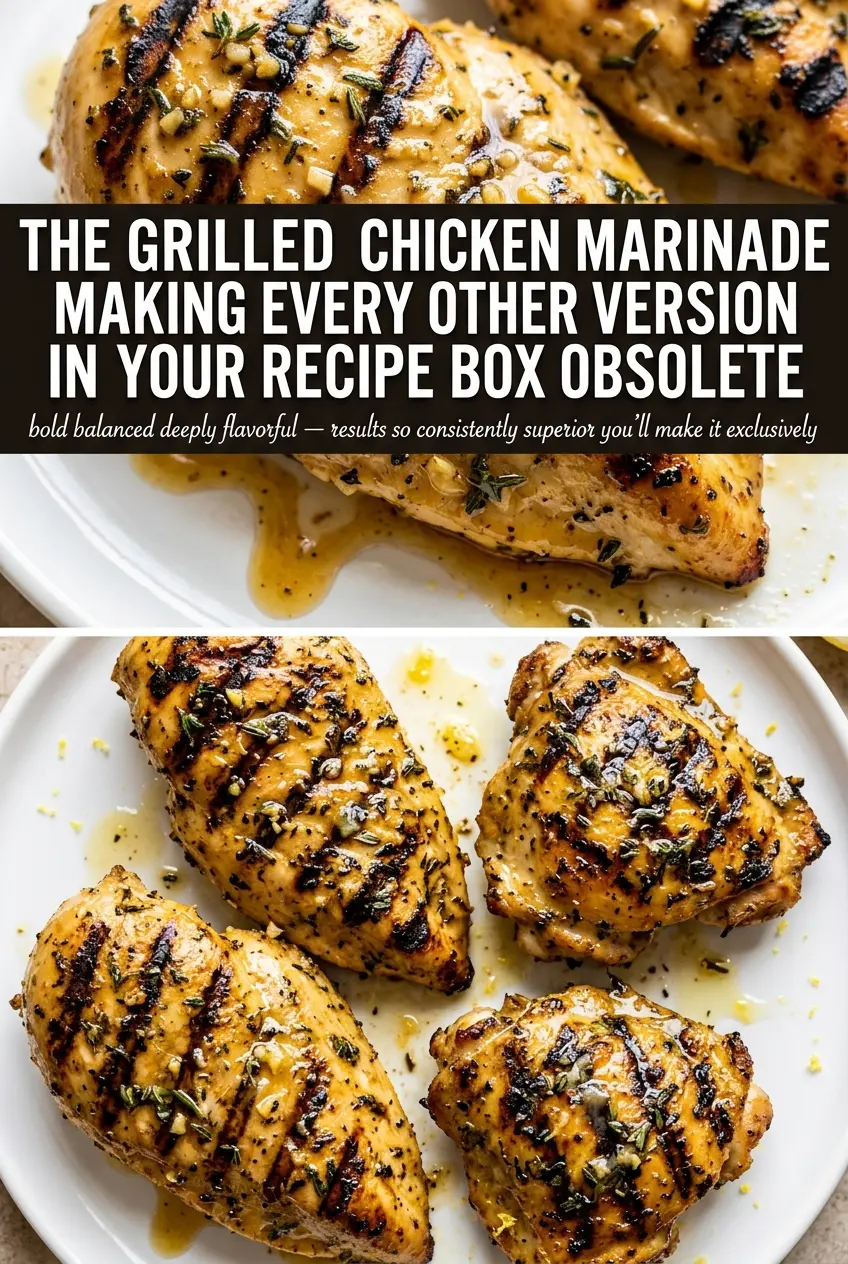
The Best Ever Grilled Chicken Marinade
Ingredients
Equipment
Method
- Whisk together olive oil, soy sauce, lemon juice, Worcestershire sauce, Dijon mustard, minced garlic, brown sugar, black pepper, and dried herbs in a bowl until smooth.
- Place chicken (any cut) in a large zip-top bag and pour the marinade over the chicken, then seal the bag.
- Refrigerate the sealed bag for 4-24 hours so the flavors penetrate; turn the bag once halfway if possible.
- Preheat the grill to medium-high heat.
- Grill chicken until the internal temperature reaches 165°F, with timing that varies by cut.
- Remove chicken from the grill and let it rest for 5-10 minutes before serving.