Stuffed peppers soup tastes like the best part of classic stuffed peppers, but it lands in the bowl with less fuss and a lot more comfort. The broth turns rich and tomato-forward, the rice cooks right in the pot, and the peppers soften just enough to keep their shape without feeling chunky or raw. A spoonful gives you beef, sweet bell pepper, tender rice, and that familiar savory finish that makes this kind of dinner disappear fast.
What makes this version work is the order. The beef gets browned first so the soup starts with depth, then the tomato paste cooks long enough to lose that raw edge before the broth goes in. Adding the rice near the end keeps it from turning mushy, which is the main place this kind of soup can go wrong. If the pot stays at a gentle simmer and you give it a stir now and then, the rice thickens the broth just enough without stealing all the liquid.
Below, I’ll walk through the parts that matter most, including how to keep the rice tender and what to change if you want a lighter or low-carb bowl.
The rice stayed tender, the broth thickened up beautifully, and the peppers still had a little bite instead of turning to mush. My husband went back for seconds and asked if I could make it again next week.
Save this stuffed peppers soup for nights when you want the flavor of stuffed peppers without the extra work.
The Reason the Rice Stays Tender Instead of Turning to Paste
The biggest mistake in stuffed pepper soup is adding the rice too early or boiling it too hard. White rice keeps cooking even after the heat comes down, and if the soup is raging when it goes in, the grains can split and the broth turns starchy in a heavy, gluey way. A gentle simmer is the sweet spot. You want the pot hot enough to cook the rice through, but not so aggressive that it beats the grains apart.
Tomato paste matters here too. Cooking it for a minute or two with the onions, peppers, and garlic takes away the raw, metallic edge and gives the broth a deeper, more rounded tomato flavor. That small step is what keeps the soup from tasting like canned tomatoes diluted with broth. It should smell sweeter and more concentrated before the liquid goes in.
What Each Ingredient Is Actually Doing in This Bowl
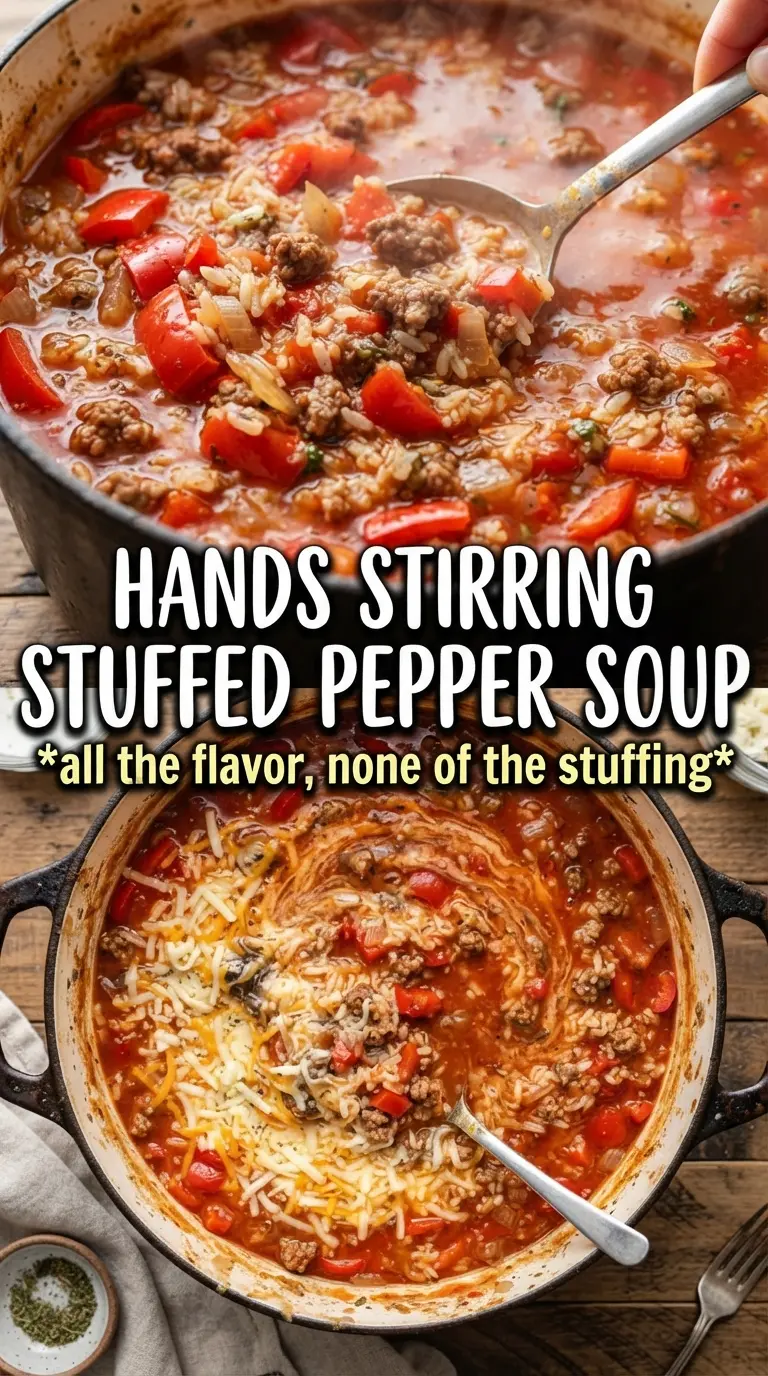
- Ground beef — This gives the soup its savory backbone and makes it eat like a full meal. An 80/20 or 85/15 blend gives the best flavor; leaner beef works, but the soup will taste a little thinner unless you season more aggressively.
- Bell peppers — The mix of green and red peppers keeps the soup tasting like stuffed peppers instead of generic beef-tomato soup. Green peppers bring the classic savory bite, while red peppers add sweetness. Dice them small so they soften into the broth instead of staying crunchy.
- Tomato paste plus crushed and diced tomatoes — This combination gives you both body and texture. The paste deepens the broth, the crushed tomatoes build the base, and the diced tomatoes leave some spoonable texture so the soup doesn’t go completely smooth.
- Uncooked white rice — Long grain white rice is the right choice because it cooks through at the same rate as the vegetables soften. Brown rice needs more liquid and a longer simmer, so it changes the whole recipe. If you swap it, adjust the broth and expect a different texture.
- Beef broth — Use a broth you would actually taste on its own. Since this soup has a short ingredient list, weak broth shows up fast. Low-sodium broth is the safest choice if you want control over the salt at the end.
- Shredded cheddar and parsley — The cheddar melts into the hot soup and makes each bowl feel complete, while parsley keeps it from tasting too heavy. Add both at the table so the cheese stays gooey and the herbs stay bright.
Building the Flavor Before the Rice Goes In
Brown the Beef Well
Cook the beef in a large pot until the pink is gone and some of the meat has picked up brown edges. Those browned bits are flavor, and you want them in the soup. If the pot fills with liquid and the beef steams instead of browning, keep cooking until the moisture cooks off before you drain the fat. That small pause makes the whole pot taste richer.
Softening the Peppers and Onion
Add the onion and bell peppers to the pot and cook them until the onion turns translucent and the peppers lose their raw crunch, about 4 to 5 minutes. You’re not looking for browning here, just enough softness to keep them from tasting sharp in the finished soup. Garlic goes in later and only needs a minute or two, because burnt garlic will take over the whole pot.
Letting the Tomato Base Cook Out
Stir in the tomato paste and cook it with the vegetables until it darkens slightly and smells sweet instead of tinny. Then add the crushed tomatoes, diced tomatoes, broth, and seasonings, and bring the soup to a real boil before lowering it to a simmer. If you skip the boil and go straight to a timid simmer, the rice can cook unevenly and the broth takes longer to come together.
Finishing with the Rice
Once the soup is simmering, stir in the uncooked rice, cover the pot, and let it cook until the grains are tender, about 18 to 20 minutes. Stir once or twice so the rice doesn’t stick to the bottom, but don’t keep lifting the lid or you’ll lose heat and stretch the cooking time. When it’s done, the rice should be soft but still hold its shape, and the broth should look a little thicker than when it started.
How to Adapt This Soup Without Losing the Stuffed Pepper Feel
Make It with Ground Turkey
Ground turkey works well if you want a lighter bowl, but it needs help from the seasoning and broth because it brings less built-in richness than beef. Use the same method, then taste at the end and add a little more salt or a pinch more smoked paprika if the soup seems flat.
Make It Dairy-Free
The soup itself is already dairy-free, so just skip the cheddar on top or use a dairy-free shredded cheese that melts well. The finish will be a little less creamy and salty, so a good pinch of extra pepper or a handful of parsley helps keep the bowl lively.
Use Brown Rice Instead
Brown rice needs a longer simmer and more liquid, so this is not a straight swap. If you use it, add extra broth and cook until the rice is tender, checking often so the soup doesn’t reduce too far before the grains are done.
Make It Ahead and Reheat Cleanly
This soup thickens as it sits because the rice keeps soaking up broth. If you plan to store it, hold back a little extra broth and stir it in when reheating so the texture loosens back up instead of turning thick and heavy.
Storage and Reheating
- Refrigerator: Store for up to 4 days. The rice will continue to absorb broth, so expect a thicker soup the next day.
- Freezer: It freezes, but the rice softens after thawing. For the best texture, freeze it without the rice and add freshly cooked rice when you reheat it.
- Reheating: Warm it gently on the stove over medium-low heat with a splash of broth or water. Avoid a hard boil, which can break down the rice and make the soup too dense.
Questions I Get Asked About This Recipe
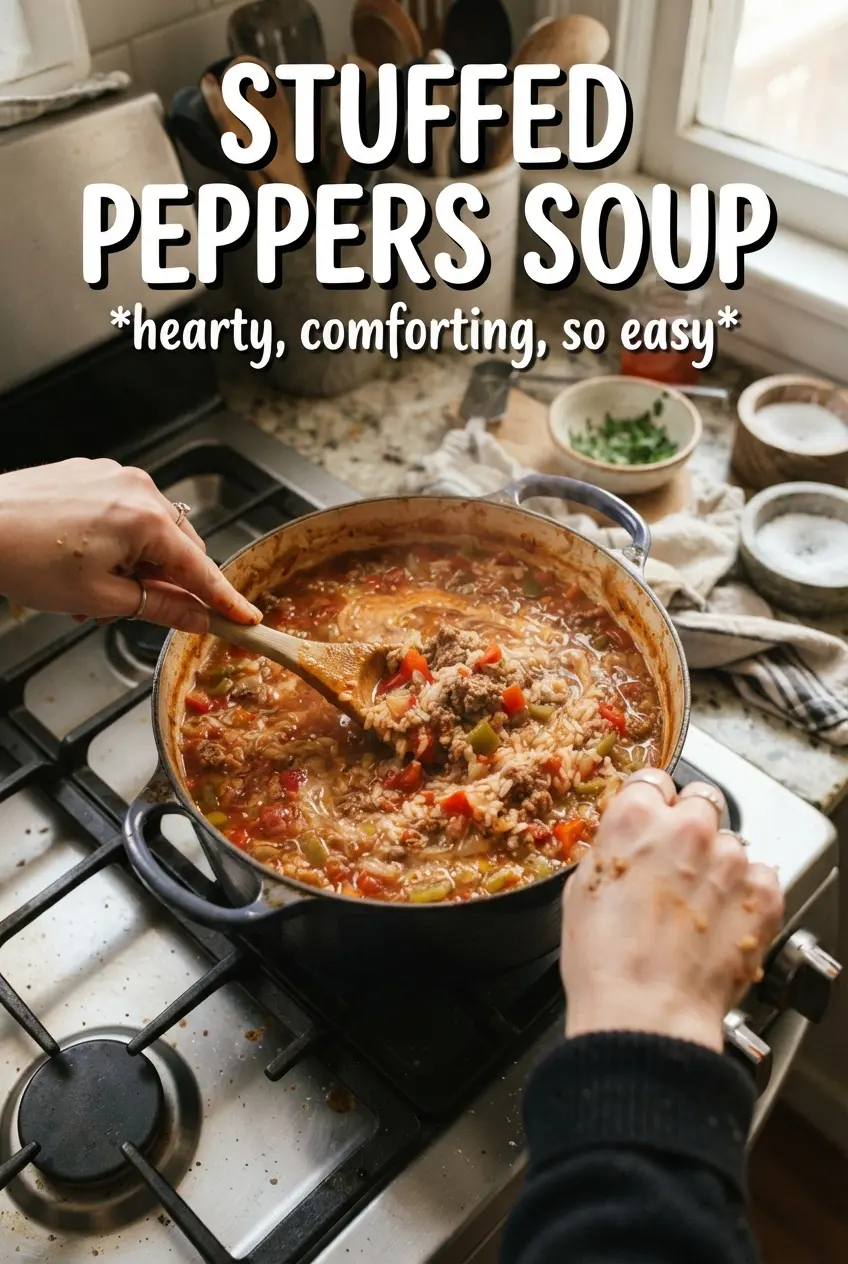
Stuffed Peppers Soup
Ingredients
Equipment
Method
- Brown ground beef in a large pot over medium-high heat, then drain the fat.
- Continue cooking until the beef is no longer pink, stirring occasionally so it browns evenly.
- Sauté onion and both bell peppers for 4-5 minutes until they soften.
- Add garlic and tomato paste and cook for 2 minutes, stirring until fragrant and thickened.
- Add crushed tomatoes, diced tomatoes, beef broth, Italian seasoning, garlic powder, and smoked paprika, then bring the mixture to a boil.
- Add uncooked rice, cover, and simmer for 18-20 minutes until the rice is cooked through and tender.
- Season with salt and pepper to taste.
- Serve hot with shredded cheddar and fresh parsley on top.