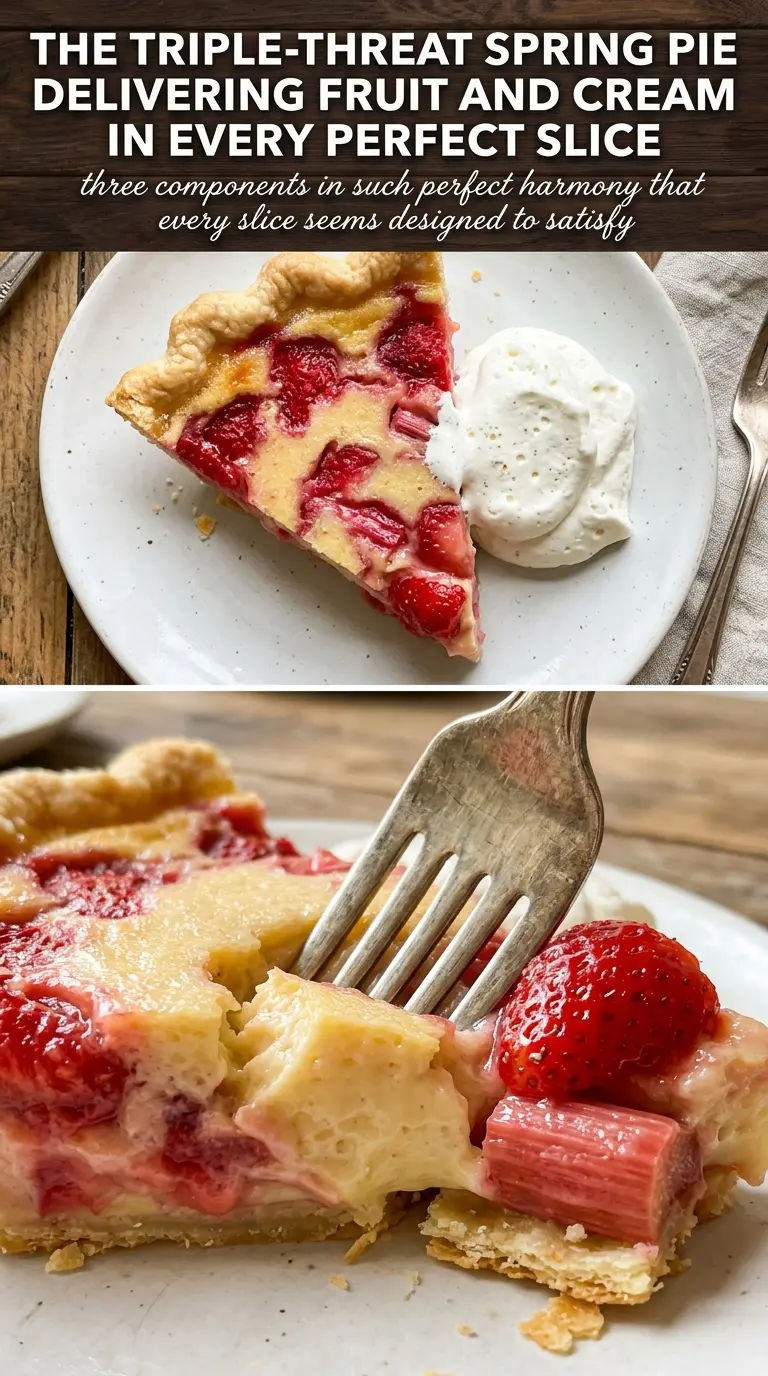
Strawberry rhubarb custard pie lands in that sweet spot between bright fruit pie and silky baked custard. The filling sets into a creamy slice that holds its shape, with tart rhubarb and soft strawberries peeking through each bite. In a flaky crust, it cuts cleanly after a long chill and tastes even better the next day, which is exactly why it earns repeat status.
The trick here is balance. Rhubarb brings the sharp edge, strawberries round it out, and the custard binds everything together without turning heavy. The flour gives the filling enough structure to slice, while the two-temperature bake helps the crust cook through before the custard overbakes. That first blast of heat sets the bottom and starts the thickening, then the lower oven temperature finishes the filling gently.
Below, I’ve included the one timing detail that keeps the custard from weeping, plus the swaps I’d use if your strawberries are especially sweet or your rhubarb is more on the fibrous side.
The custard baked up smooth and set perfectly around the fruit. I chilled it overnight and the slices held together cleanly, even with the strawberries releasing a little juice.
Save this strawberry rhubarb custard pie for the creamy, chilled slice that cuts clean and shows off those ruby fruit pieces.
The Small Mistake That Makes Custard Pies Runny
The filling in this pie depends on gentle, even heat. If the oven runs too hot for too long, the eggs tighten before the flour has a chance to thicken the juices from the fruit, and the center can end up loose after cooling. Starting hot helps the crust and bottom layer set, then reducing the temperature gives the custard time to bake through without curdling.
The other thing that matters is cooling patience. A custard pie may look done when the center still has a slight wobble, and that’s the right moment to pull it. It finishes setting as it cools, and if you wait for it to look fully firm in the oven, it usually ends up overbaked and a little rubbery.
- The initial high heat gives the crust a head start and helps the bottom of the filling set before the fruit gets watery.
- The reduced bake temperature keeps the custard smooth instead of puffed and grainy.
- The cooling time is part of the recipe, not an extra. Skip it and the slices will slump.
What Each Ingredient Is Actually Doing in This Pie
- Unbaked 9-inch pie crust — A sturdy, cold crust gives you clean slices and keeps the bottom from turning soggy. Homemade or store-bought both work, but the dough should be chilled and rolled evenly so the rim bakes at the same pace as the center.
- Fresh rhubarb — Rhubarb brings the tartness that keeps this pie from tasting flat. Cut it into small, even pieces so it softens at the same rate as the strawberries.
- Fresh strawberries — Strawberries add sweetness and a softer texture, but they can release juice as they bake. Slice them thick enough to hold some shape; very thin slices disappear into the custard.
- Eggs, flour, and cream — This is the structure of the pie. The eggs set the custard, the flour helps it slice cleanly, and the cream keeps the texture rich instead of eggy.
- Vanilla — Vanilla rounds out the fruit and softens rhubarb’s sharp edge. Use the real stuff if you have it; this is one place where a flat vanilla flavor shows.
Building the Custard So It Sets Around the Fruit
Layer the Fruit First
Spread the rhubarb and strawberries in an even layer across the crust so the custard can flow between the pieces. If you pile the fruit in the center, the middle bakes unevenly and the edges can overcook before the center sets. An even layer also keeps the top from looking all custard and no fruit when you slice it.
Whisk the Custard Until It Looks Completely Smooth
Mix the sugar, eggs, flour, cream, vanilla, and salt until there are no flour streaks left and the mixture looks glossy. Dry pockets of flour bake into little lumps, and those never fully disappear. If you want the smoothest texture, whisk the eggs first, then add the flour gradually so it disperses before the liquid goes in.
Watch for the Center Wobble
Bake at 400°F first, then lower the heat and finish until the edges are set and the center still has a gentle jiggle. If the whole pie sloshes when you move it, it needs more time. If the top starts to brown too quickly, tent it loosely with foil for the last stretch so the custard can finish without the crust getting too dark.
Cool It All the Way Down
Set the pie on a rack and leave it alone for at least three hours. The filling firms as it loses heat, and cutting too early is the fastest way to turn a neat pie into a puddle. Chilling after it reaches room temperature gives you the cleanest slices and the best texture.
How to Tweak This Pie Without Losing the Structure
Use a gluten-free crust
A gluten-free pie crust works here as long as it’s sturdy enough to handle a wet filling. The custard itself still uses flour, so the pie won’t be fully gluten-free unless you swap that for a gluten-free thickener such as cornstarch. The result is a little softer, but the fruit and custard still slice well after a proper chill.
Make it a little less sweet
If your strawberries are peak-season sweet, reduce the sugar slightly and let the rhubarb’s tartness come through. Don’t cut it too far or the custard can taste flat and the fruit will seem sharper than the filling around it. A small reduction keeps the pie balanced without changing the texture.
Swap in a frozen fruit mix
Frozen strawberries and rhubarb can work in a pinch, but don’t thaw them first or they’ll flood the custard with liquid. Toss them straight into the crust and expect a slightly softer set and a little more bake time. The flavor is still good, but the slices won’t be as tidy as they are with fresh fruit.
Storage and Reheating
- Refrigerator: Store covered for up to 4 days. The custard stays firm and the fruit juices settle in a little more by day two.
- Freezer: I don’t recommend freezing this pie. Custard pies usually turn watery and a bit grainy after thawing.
- Reheating: Serve it cold or let slices stand at room temperature for 15 to 20 minutes. Warming it in the oven can soften the custard too much and break the clean slice.
Questions I Get Asked About This Pie
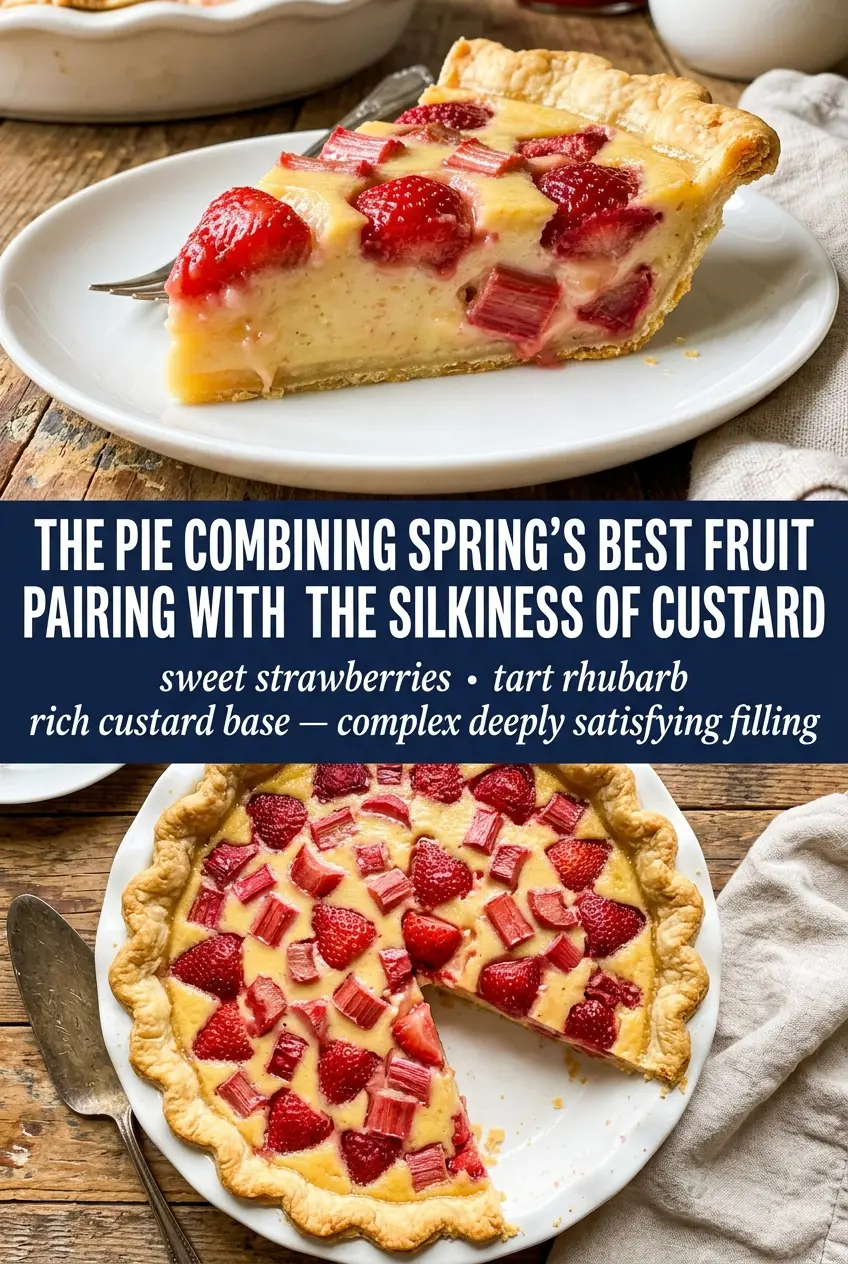
Strawberry Rhubarb Custard Pie
Ingredients
Equipment
Method
- Preheat oven to 400°F and place the pie crust in a pie plate, pressing it gently into the pan so it holds its shape.
- Arrange the diced rhubarb and sliced strawberries in the bottom of the crust in an even layer.
- Whisk together sugar and eggs until smooth, then whisk in all-purpose flour, heavy cream, vanilla extract, and salt until the custard mixture looks glossy and uniform.
- Pour the custard mixture over the fruit, filling the crust so the fruit is partially covered.
- Bake at 400°F for 15 minutes until the custard is starting to set at the edges, with the center still slightly loose.
- Reduce heat to 350°F and bake 35-40 minutes more until the custard is set with a gentle jiggle in the center.
- Cool completely for at least 3 hours until fully firm before slicing, and refrigerate if needed to keep the texture tight.