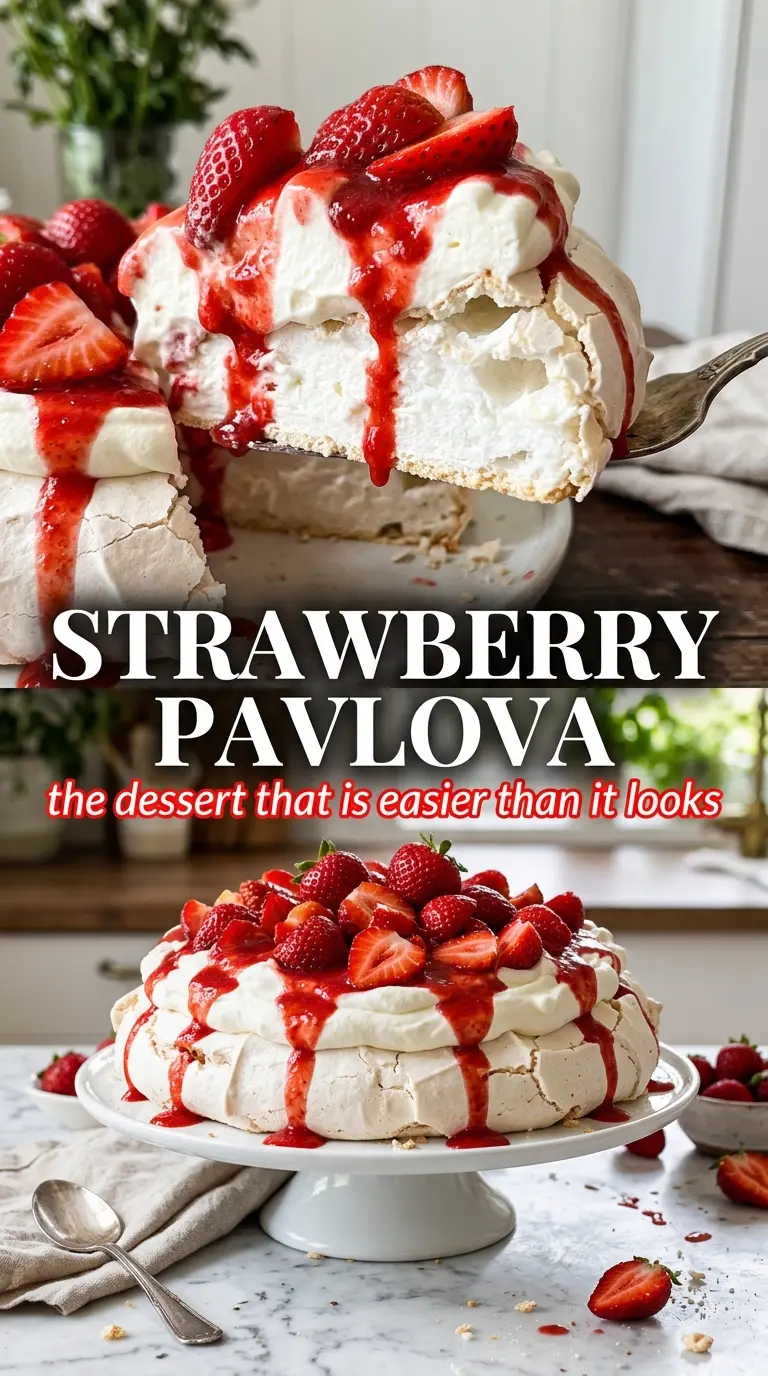
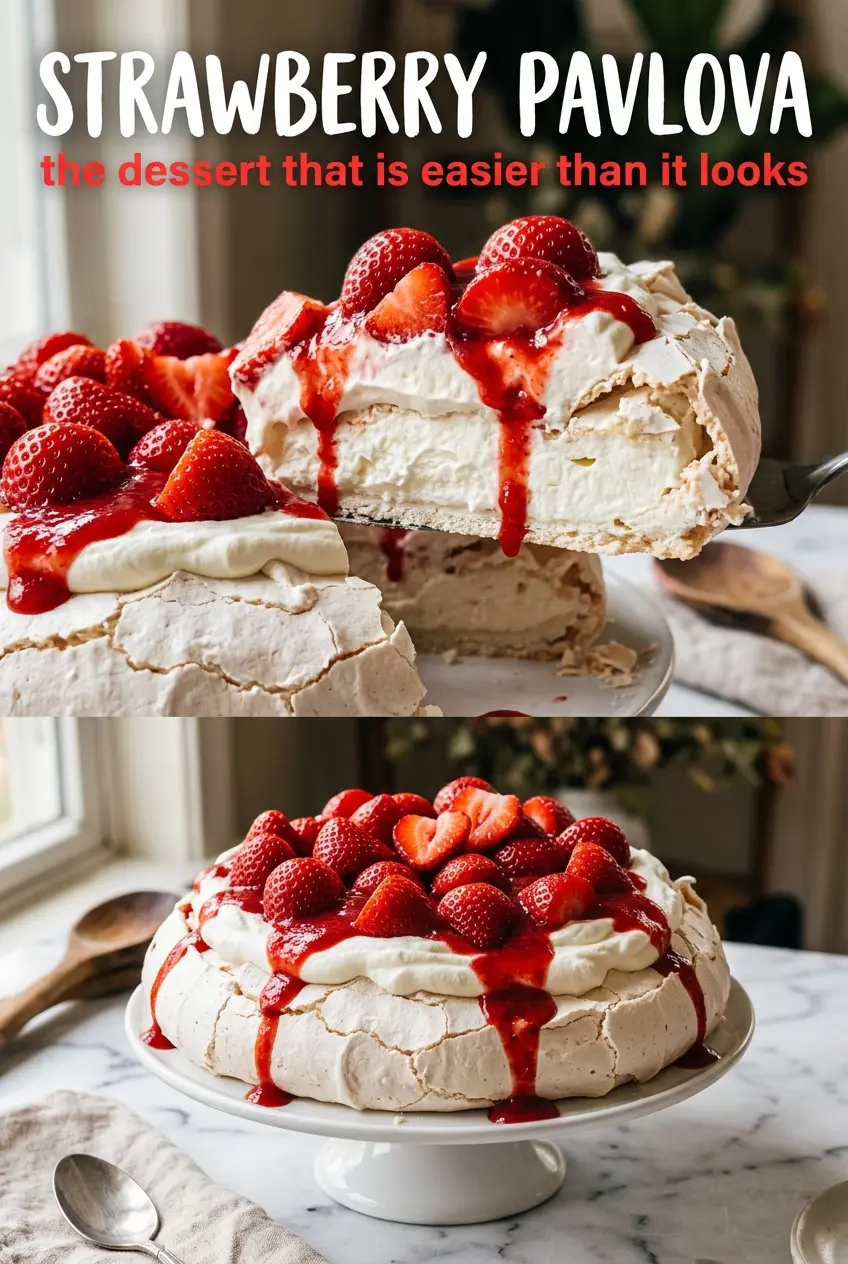
Crisp on the outside, marshmallow-soft in the center, and topped with cool whipped cream and glossy strawberries, strawberry pavlova is the kind of dessert that disappears fast once it hits the table. The contrast is what makes it memorable: crackly meringue, billowy cream, and fruit that brings just enough brightness to keep every bite light instead of sugary.
The meringue depends on slow sugar addition and a low, steady bake. Superfine sugar dissolves more cleanly than regular granulated sugar, which is what gives the shell that smooth, glossy finish instead of a gritty one. Vinegar and cornstarch work together to stabilize the center, so the pavlova bakes up with a crisp shell and that soft, almost marshmallow-like middle people are hoping for.
Below, you’ll find the little details that keep the meringue from weeping, the strawberries from tasting flat, and the cream from going loose before serving. Those small choices matter here, and they make the difference between a good pavlova and one that slices cleanly and looks as elegant as it tastes.
The meringue baked up with a crisp shell and that soft center, and the strawberries with honey kept the whole dessert from feeling too sweet. Mine held together beautifully when I moved it to the serving plate.
Save this Strawberry Pavlova for the dessert nights when you want a crisp meringue shell, soft center, and fresh strawberry topping.
The Little Mistakes That Make Pavlova Weep
Pavlova looks delicate, but most of the trouble starts before it goes in the oven. Egg whites won’t whip properly if there is any trace of fat in the bowl, and even a little yolk can keep them from building volume. The sugar also has to go in gradually. Dumping it all at once leaves the meringue heavy and gritty instead of smooth and glossy.
The other thing that trips people up is heat. Pavlova needs enough time to dry out on the outside without browning hard or cracking from a blast of oven heat. A low oven and a slow cool-down let the shell set while the center stays soft. If you pull it out too soon, the inside can collapse; if you rush the cooling, the shell usually splits.
What Each Component Is Actually Doing Here
- Egg whites — Room-temperature whites whip to more volume and create the airy structure that gives pavlova its lift. Cold whites can still work, but they take longer to whip and are a little less forgiving.
- Superfine sugar — This is the ingredient that gives the meringue its smooth texture. If you only have regular granulated sugar, pulse it briefly in a food processor first so it dissolves faster and doesn’t leave a sandy finish.
- Cornstarch and vinegar — These two are the insurance policy. Cornstarch helps keep the center soft, and vinegar stabilizes the egg whites so the meringue holds its shape as it bakes.
- Heavy whipping cream — Use the full-fat version here. Anything lighter won’t hold the pavlova’s weight as well and can slide once the strawberries go on.
- Strawberries and honey — The honey draws out the berries’ juices and gives them a little gloss. If your strawberries are sweet and peak-season, you don’t need much honey; if they’re a bit flat, let them sit a few extra minutes so the juices build.
Getting the Shell Crisp Without Losing the Marshmallow Center
Whipping the Meringue to the Right Peak
Start with a clean, dry bowl and beat the egg whites until soft peaks form before the sugar goes in. Add the sugar slowly, one spoonful at a time, and keep beating until the mixture looks thick, shiny, and no longer feels gritty when rubbed between your fingers. If the sugar is still crunchy, keep going; under-dissolved sugar is what makes pavlova leak later.
Shaping the Nest
Spoon the meringue onto parchment and shape it into an 8-inch circle with a slight dip in the center. That indentation gives the cream and berries somewhere to sit without sliding off the sides. Keep the edges a little taller than the middle, but don’t overwork the shape or you’ll knock out the air you’ve just built.
Baking and Cooling Slowly
Bake until the pavlova is pale golden and the outside feels dry to the touch. Turn the oven off and let it cool inside with the door closed, which finishes the drying without shocking the meringue. If you move it straight to the counter while it’s still hot, the sudden temperature change can cause cracks or a sunken center.
Finishing With Cream and Strawberries
Whip the cream to stiff peaks so it can hold its shape under the fruit. Toss the strawberries with honey just before serving, then pile everything onto the pavlova right before it goes to the table. If the topping sits too long, the fruit juices start softening the shell and the pavlova loses that crisp edge.
How to Adjust This Pavlova for Different Tables
Dairy-Free Topping
Swap the whipped cream for a thick coconut cream whipped with powdered sugar and vanilla. It brings a light coconut note and holds up well, though it tastes a little richer and less neutral than dairy cream.
Berry Swap
Raspberries, blueberries, or a mix of berries work well if strawberries aren’t at their best. Softer berries release more juice, so wait until the last minute to top the pavlova or the shell will soften faster.
No Superfine Sugar on Hand
Run regular sugar through a food processor for a minute or two to break it down. That tiny step matters because coarser sugar takes longer to dissolve, and the meringue can end up grainy instead of glassy.
Make-Ahead Strategy
Bake the pavlova base a day ahead and store it unadorned in a dry place. Add the cream and fruit only when you’re ready to serve, because moisture is what turns the shell soft.
Storage and Reheating
- Refrigerator: Store leftover assembled pavlova in the fridge for up to 1 day, but expect the meringue to soften under the cream and fruit.
- Freezer: The baked meringue shell freezes well before topping. Wrap it carefully and freeze for up to 1 month, then thaw at room temperature before filling.
- Reheating: Don’t reheat an assembled pavlova. If you need to refresh a baked shell, place it in a low oven for a few minutes to dry it slightly, then cool completely before adding toppings.
Answers to the Questions Worth Asking
Strawberry Pavlova
Ingredients
Equipment
Method
- Preheat oven to 300°F and line a baking sheet with parchment paper. Set the oven rack in the middle so the meringue dries evenly.
- Beat egg whites until soft peaks form, with the mixture looking airy and foamy. Stop as soon as the peaks droop when you lift the whisk.
- Gradually add superfine granulated sugar while beating until stiff, glossy peaks form. Rub a little meringue between your fingers—there should be no graininess.
- Fold in vanilla, vinegar, and cornstarch until evenly streak-free. The mixture should remain thick and hold its shape.
- Spread the meringue onto parchment in a circle about 8 inches across, creating a slight indent in the center with the back of a spoon. The rim should be a bit higher than the middle for a scoopable center.
- Bake for 60 minutes until pale golden and crisp, visible edges setting and lifting slightly from the parchment. The shell should feel dry on the surface.
- Turn off the oven and let cool completely inside for about 30 minutes. The meringue should release without cracking and maintain its pale color.
- Transfer the cooled meringue nest to a serving plate. Handle gently so the crisp shell doesn’t break.
- Whip heavy whipping cream with powdered sugar and vanilla until stiff peaks form. Stop when peaks stand straight and look thick like whipped frosting.
- Toss fresh strawberries with honey until coated and slightly juicy. Let them sit briefly so the honey clings to the slices.
- Top the pavlova with whipped cream, fresh strawberries, and mint just before serving. Dust with powdered sugar right before serving for a light, snowy finish.