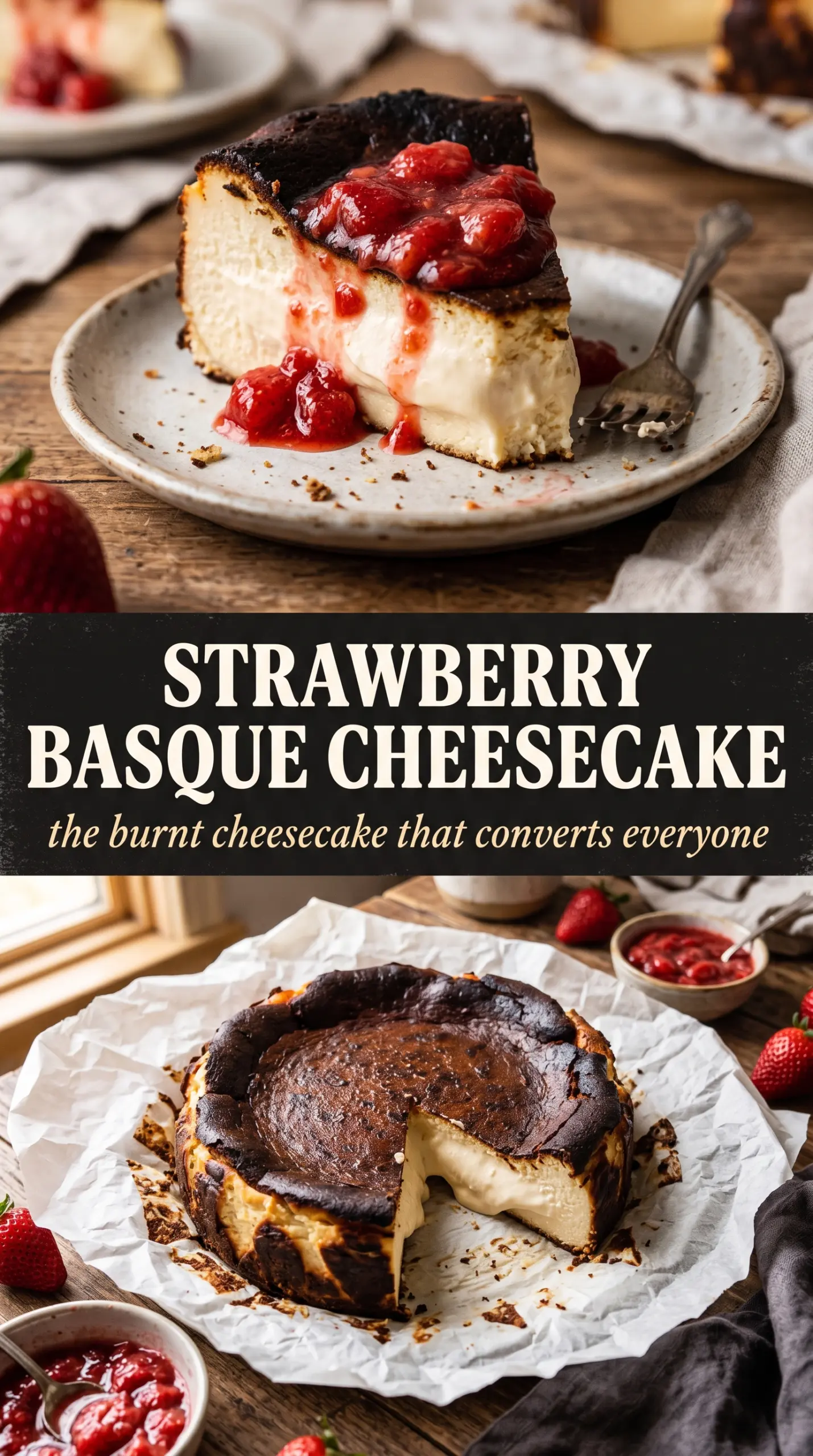
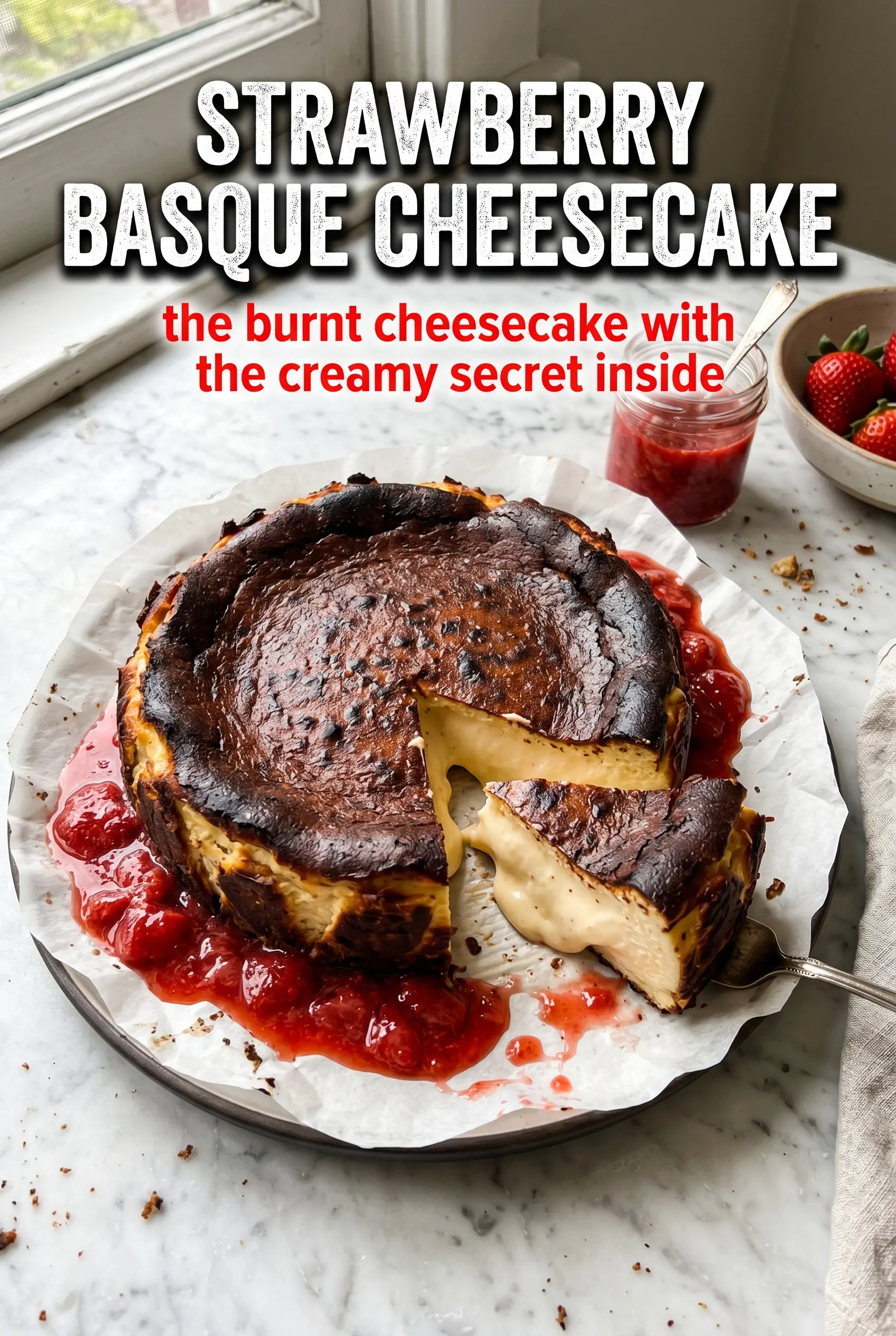
Strawberry Basque cheesecake lands in that sweet spot between elegant and unfussy: a deeply caramelized top, creamy center, and those cracked, craggy edges that make every slice look homemade in the best way. The strawberries on top brighten the whole thing so it doesn’t eat like a heavy brick of cream cheese. Instead, you get contrast in every bite — burnt sugar, tangy cheesecake, and glossy fruit.
What makes this version work is the balance. Basque cheesecake is supposed to be a little rustic, and that means you don’t fight the cracks or the dark top. The batter stays simple so the texture stays silky, then the strawberries get a quick toss with honey and balsamic vinegar to sharpen their flavor and keep the topping from tasting flat. The balsamic doesn’t make it savory; it just wakes the berries up.
Below you’ll find the small details that matter most: how to avoid a grainy batter, why the center should still wobble when it comes out of the oven, and how to top it so the strawberries stay fresh instead of turning watery.
The top went beautifully dark without burning, and the center set up into that creamy, almost custard-like texture after chilling. The strawberry topping with balsamic tasted fancy but took barely any extra time.
Love the crackly top and juicy strawberry finish? Save this strawberry Basque cheesecake for the next time you want a showy dessert with almost no decorating work.
The Bake That Happens Before the Center Looks Done
Basque cheesecake fails when people wait for the middle to look fully set. By the time the center is firm in the oven, the eggs have gone too far and the texture turns dense instead of silky. Pull it when the top is deeply browned and the middle still has a noticeable wobble; it should move like set custard, not slosh like batter. The carryover heat and chilling time finish the job.
The high oven temperature is doing two jobs at once: it sets the edges fast and gives you that trademark burnt, almost toasted surface. That’s what creates the contrast with the cold strawberry topping later. If your cheesecake browns unevenly, it’s usually because the batter was overmixed or the pan wasn’t lined high enough for the edges to climb and cook evenly.
What the Cream Cheese and Strawberries Are Really Doing
- Cream cheese — This is the backbone of the cheesecake, so it needs to be fully softened before you beat it. Cold cream cheese leaves little lumps that never disappear, no matter how long you mix. If yours is still cool, cut it into cubes and give it time on the counter instead of pushing harder with the mixer.
- Heavy cream — This loosens the batter just enough to keep the center plush. Half-and-half will work in a pinch, but the filling won’t be quite as lush. Add it after the eggs so the batter stays smooth and doesn’t get whipped up too airy.
- Flour — Just a little flour helps the cheesecake hold together after chilling without turning it cakey. Skip it and the texture can lean too soft for clean slices. Stir it in at the end and stop as soon as it disappears.
- Fresh strawberries — Fresh berries matter here because they bring a clean, juicy finish against the dark top. Frozen strawberries will bleed and turn the topping watery. Slice them just before serving so they stay glossy and don’t collapse.
- Honey and balsamic vinegar — Honey gives the strawberries a light sheen and soft sweetness, while balsamic sharpens the flavor and keeps the topping from tasting one-note. Use a good balsamic if you have it; the flavor is right there in such a small amount. The berries should look lightly dressed, not soaked.
Building the Batter and Letting the Oven Do the Ugly Work
Smooth the Base Without Whipping Air Into It
Beat the cream cheese and sugar until the mixture looks completely smooth and a little glossy, with no grainy streaks around the bowl. Once the eggs go in, switch to low speed and add them one at a time so the batter stays dense and creamy instead of foamy. Too much air gives you a cheesecake that rises fast, then collapses in the center as it cools.
Stop Mixing the Moment the Flour Disappears
Stir in the cream, vanilla, and flour just until the batter comes together. The last bits of flour should vanish, and then you stop. Overmixing at this stage can make the texture tighter than it should be, and with a Basque cheesecake, the goal is a custardy center, not a fluffy one.
Watch for the Dark Top and the Gentle Jiggle
Bake until the surface is deeply golden brown, even close to dark brown in spots, and the center still trembles when you nudge the pan. If the whole cake looks fully set in the oven, it’s overbaked. Let it cool completely before chilling, because moving it too early can make the center split and slump.
Make it without gluten
Use a good 1:1 gluten-free flour blend in place of the all-purpose flour. The cake will still set, but the slice may be a touch softer, so chill it fully before cutting. Don’t use almond flour here; it changes the texture too much and won’t give the same clean structure.
Dairy-free version
A dairy-free cream cheese and a thick plant-based cream can work, but the filling won’t have quite the same tang or richness. Choose the thickest substitute you can find, because thin alternatives make the batter bake up loose. The strawberry topping still works exactly the same.
Make it ahead for a dinner party
Bake the cheesecake a day ahead and chill it overnight without the strawberry topping. Add the berries right before serving so they stay bright and don’t bleed into the surface. This actually improves slicing, because the cake firms up enough to cut cleanly.
Storage and Reheating
- Refrigerator: Store covered for up to 4 days. The texture gets a little denser as it chills, which is exactly what helps the slices hold.
- Freezer: The cheesecake freezes well without the strawberry topping. Wrap slices tightly and freeze for up to 2 months, then thaw in the refrigerator overnight.
- Reheating: This dessert is best served cold or slightly cool, not reheated. If you want to soften a slice, let it sit at room temperature for 15 to 20 minutes instead of using the microwave, which can make the filling greasy.
Questions I Get Asked About This Recipe
Strawberry Basque Cheesecake
Ingredients
Equipment
Method
- Preheat the oven to 400°F, and line an 8x8 inch baking dish or 9-inch round baking dish with parchment paper that overhangs the sides.
- Beat cream cheese and granulated sugar until smooth and combined, then add eggs one at a time beating on low speed.
- Stir in heavy cream, vanilla extract, and all-purpose flour until just combined, stopping as soon as no dry flour remains.
- Pour the batter into the prepared baking dish and bake at 400°F for 45-50 minutes until the top is deeply golden brown and the center still jiggles slightly.
- Cool the cheesecake completely at room temperature to prevent the topping from melting.
- Refrigerate the cheesecake for at least 30 minutes so the center sets while keeping a tender, custardy texture.
- Toss fresh strawberries with honey and balsamic vinegar until glossy and evenly coated.
- Top the chilled cheesecake just before serving with the strawberry mixture, then garnish with fresh mint.