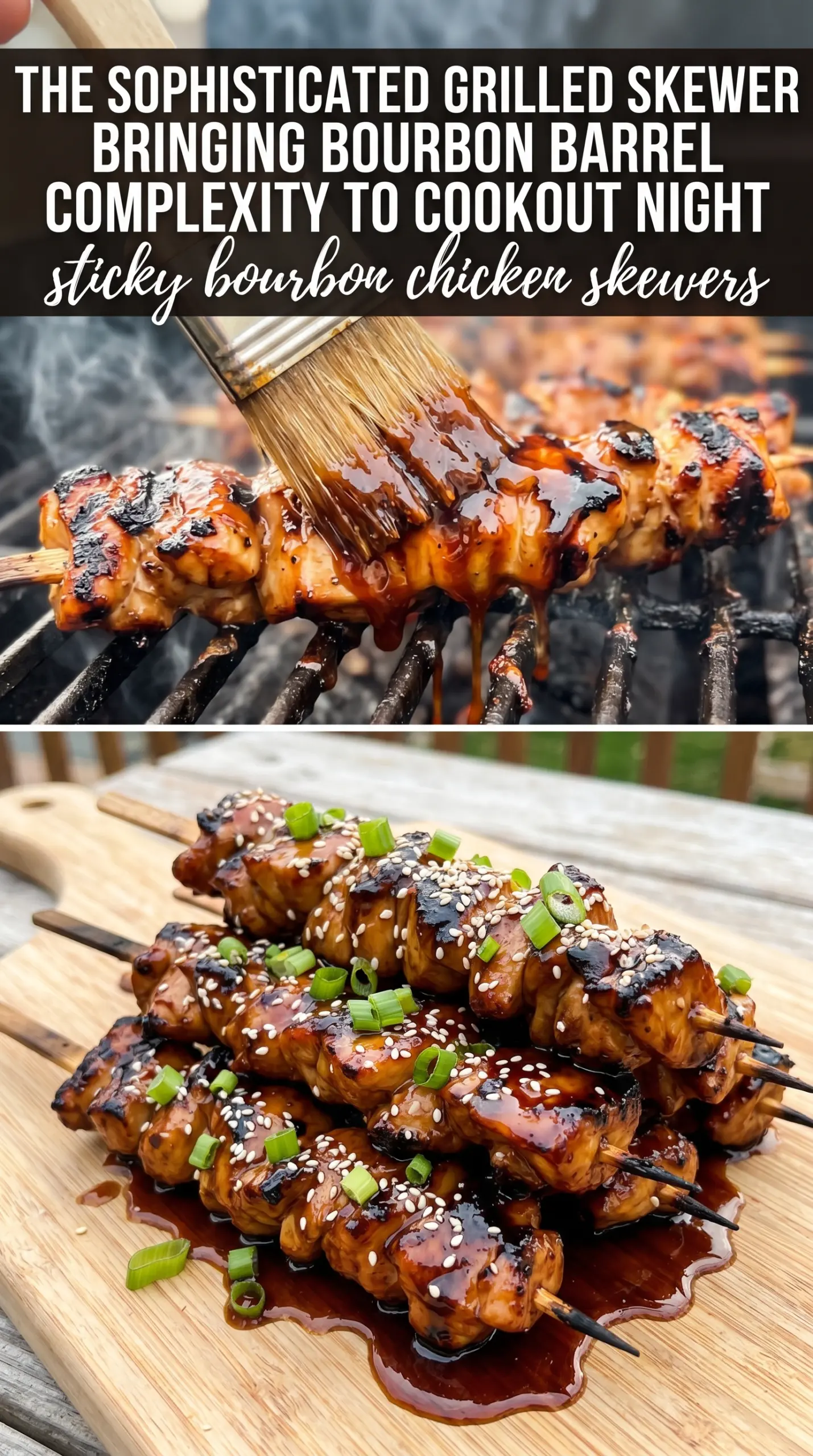
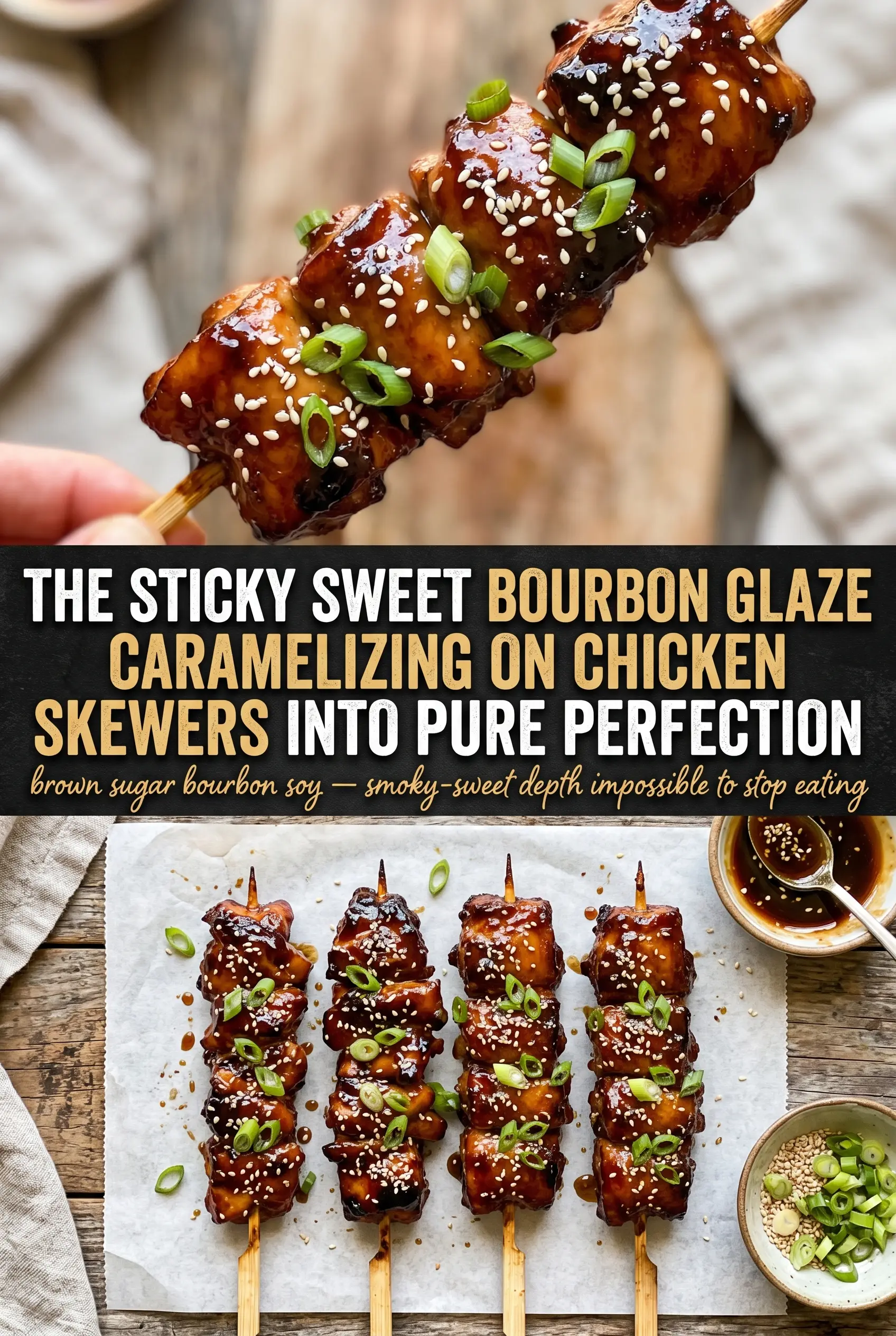
Sticky bourbon chicken skewers hit that sweet spot between smoky, glossy, and just a little bit sharp from the bourbon and soy. The glaze clings to the chicken instead of running off the grill, and the edges caramelize into the kind of bite that disappears off the platter fast. These are the skewers I reach for when I want something that feels party-ready without turning into a complicated production.
The trick is in the balance. Brown sugar and honey give the glaze body, while soy sauce keeps it from tasting flat or candy-sweet. Bourbon adds depth, but it also needs enough heat to cook off the harsh edge, which is why the marinade gets split before the chicken goes in and the reserved portion is used for basting later. That keeps the finished skewers sticky and layered instead of muddy.
Below, I’ve included the little details that matter most: how long to marinate without softening the chicken too much, how to keep the glaze from burning, and what to swap if you want to make these without a grill.
The marinade reduced into the prettiest sticky glaze on the grill, and the chicken stayed juicy even after a quick high-heat cook. I got that caramelized edge on every skewer, and my family kept picking at the tray before dinner.
Love that sticky bourbon glaze? Save these caramelized chicken skewers for your next grill night or party platter.
The part most chicken skewers get wrong: the glaze
The glaze has to do two jobs at once. It needs enough sugar to caramelize and enough salt from the soy sauce to keep the flavor grounded. If you dump all of the marinade on raw chicken and then use the same liquid for basting, you end up with a thin, cloudy sauce that never quite turns sticky. Splitting off a portion first is what gives you that lacquered finish.
Chicken breasts work well here because they cook quickly on skewers, but they dry out fast if the heat is too low or the pieces are cut unevenly. Keep the chunks close in size so they finish at the same time. The other thing worth watching is the grill: once the glaze starts to darken, it can jump from caramelized to burned fast, especially around the edges where the sugar pools.
What each ingredient is doing in these skewers
- Chicken breasts — Lean chicken breast soaks up the marinade and cooks fast, which makes it ideal for skewers. Cut the pieces into even chunks so they brown at the same rate; uneven pieces lead to dry edges and underdone centers.
- Bourbon — This is what gives the glaze its deep, warm backbone. You don’t need an expensive bottle, but you do need enough cooking time for the alcohol edge to mellow; otherwise the marinade tastes sharp instead of rounded.
- Brown sugar and honey — These build the sticky finish. Brown sugar brings molasses depth, while honey helps the glaze cling. If you swap in only one or the other, the sauce still works, but it loses that layered sweetness that makes it coat the chicken so well.
- Soy sauce — This keeps the marinade from tasting like dessert. Use regular soy sauce unless you need a lower-sodium version; the reduced-sodium kind works fine, but the glaze will taste a little less punchy.
- Garlic, ginger, and red pepper flakes — These keep the glaze from becoming one-note. Fresh ginger matters here because dried ginger tastes dusty and flat in a fast-cooked marinade.
How to keep the chicken juicy while the glaze caramelizes
Mix the marinade with one goal in mind
Whisk the bourbon, soy sauce, brown sugar, honey, garlic, ginger, and red pepper flakes until the sugar starts dissolving. It doesn’t need to look perfectly clear, but you do want the mixture cohesive before the chicken goes in. Reserve part of it before marinating the chicken, because anything that touches raw poultry stays off the finished skewers. That one step is what keeps the basting liquid clean and usable at the grill.
Let the chicken marinate, but not forever
One to four hours is the sweet spot. Less than an hour and the flavor stays on the surface; much longer and the acid and salt can start changing the texture of the chicken in a way that makes it a little tight after grilling. Toss the chicken well so every piece gets coated, then refrigerate it while the flavors work in. If the chicken sits in a metal bowl, you can get a faint off taste, so use glass or food-safe plastic.
Build the skewers with even spacing
Thread the chicken onto soaked wooden skewers with a little room between pieces. Crowding the chicken traps steam, and steam is the enemy of browning. Leave the skewers out of the marinade long enough that they’re not dripping before they hit the grill. Wet, heavily dripping skewers tend to flare and the glaze burns before the chicken has a chance to color properly.
Grill over medium-high heat and baste late
Lay the skewers on a preheated medium-high grill and cook them for 5 to 6 minutes per side. Baste with the reserved marinade after the chicken has started to set and pick up grill marks, not at the very beginning. If you brush on too much glaze too soon, the sugar can scorch before the chicken is cooked through. The chicken is done when the center is opaque and the glaze has turned shiny, sticky, and deeply browned at the edges.
How to adapt these skewers without losing the sticky finish
Chicken thighs for a richer bite
Boneless skinless thighs work well if you want a juicier, more forgiving skewer. They take a little longer to cook and won’t dry out as fast if the grill runs hot, but the finished flavor is deeper and a little less lean than chicken breast.
Gluten-free version
Swap in a gluten-free soy sauce or tamari and the recipe holds together just fine. The sauce still gets sticky and savory; you won’t lose the caramelized finish, though tamari can taste a touch rounder and less sharp than regular soy sauce.
No-grill oven method
Set the skewers on a foil-lined sheet pan and broil them, turning once, until the edges are browned and the glaze bubbles. Keep them close to the heat but not so close that the sugar blackens before the chicken cooks through. This method gives you the same sticky finish with less smoke and no fire management.
Make-ahead party prep
Marinate the chicken and thread it onto skewers up to a day ahead, then keep everything covered in the refrigerator. The glaze tastes best when it’s grilled fresh, so don’t baste early or you’ll lose that glossy finish. This is the best route if you’re cooking for a crowd and want the grill time to feel quick.
Storage and Reheating
- Refrigerator: Store leftovers in an airtight container for up to 4 days. The glaze will thicken as it chills and the chicken will lose a little of its fresh-grilled shine.
- Freezer: Freeze cooked skewers without the garnish for up to 2 months. Wrap them well so the glaze doesn’t pick up freezer burn or lose its aroma.
- Reheating: Warm in a 325°F oven, covered loosely with foil, until heated through. A quick microwave works in a pinch, but it softens the glaze instead of bringing it back to life.
Questions I Get Asked About This Recipe
Sticky Bourbon Chicken Skewers
Ingredients
Equipment
Method
- Whisk together bourbon, soy sauce, brown sugar, honey, garlic, ginger, and red pepper flakes until the sugar dissolves and the mixture looks glossy.
- Reserve 1/4 cup of the marinade for basting and set it aside so it stays ready for grilling.
- Marinate the chicken in the remaining marinade for 1-4 hours, refrigerating until it looks well-coated and lightly darkened.
- Thread the chicken onto soaked wooden skewers, arranging pieces so they sit evenly for consistent browning.
- Grill the skewers over medium-high heat for 5-6 minutes per side, until caramelized and cooked through with visible browning.
- Baste with the reserved marinade during grilling so the sauce thickens and turns sticky and glossy on the chicken.
- Garnish with sesame seeds and green onions before serving for a fresh finish and added texture.