Smoked mac and cheese lands with the kind of contrast that keeps people back at the pan: silky sauce underneath, a bronzed crumb on top, and just enough smoke to make the cheese taste deeper instead of heavy. The best versions don’t rely on a long ingredient list. They rely on heat control, a sauce that stays smooth, and pasta that keeps its shape after the smoker does its work.
The smoked Gouda brings the obvious smoke note, but it’s the combination of cheddar, milk, and cream that keeps the sauce from tasting one-dimensional. I cook the pasta just shy of fully tender because it keeps absorbing liquid while the pan smokes. The panko topping matters too. It gives you that crisp lid that turns a creamy casserole into something with actual texture.
Below you’ll find the part that makes the biggest difference between good and grainy: how to build the cheese sauce without breaking it, plus a few ways to adapt this for different pans, different cheeses, and leftovers that still hold up the next day.
The sauce stayed creamy all the way through smoking, and the panko topping turned out crisp instead of soggy. I used a cast iron pan and the edges got that perfect little browned crust my family fought over.
Smoked mac and cheese with that crisp panko top is worth bookmarking for your next BBQ side spread.
The Step Most Smoked Mac And Cheese Recipes Rush Past
The sauce has to be fully smooth before it ever meets the pasta. If the roux is undercooked or the dairy goes in too fast, the sauce can turn pasty first and grainy later, especially once the pan sits in the smoker long enough for the heat to keep working on it. Whisk patiently and keep the burner at medium-low. You want the sauce to thicken enough to coat a spoon, not turn into a gluey blanket.
Smoke adds flavor here, but it also exposes weak spots. A thin sauce dries out around the edges. Overcooked pasta collapses. Heavy-handed cheese can turn oily instead of creamy. The balance comes from a sturdy milk-and-cream base, two cheeses that melt well together, and pasta that still has some bite when it goes into the pan.
What Each Cheese Is Actually Doing In The Pan
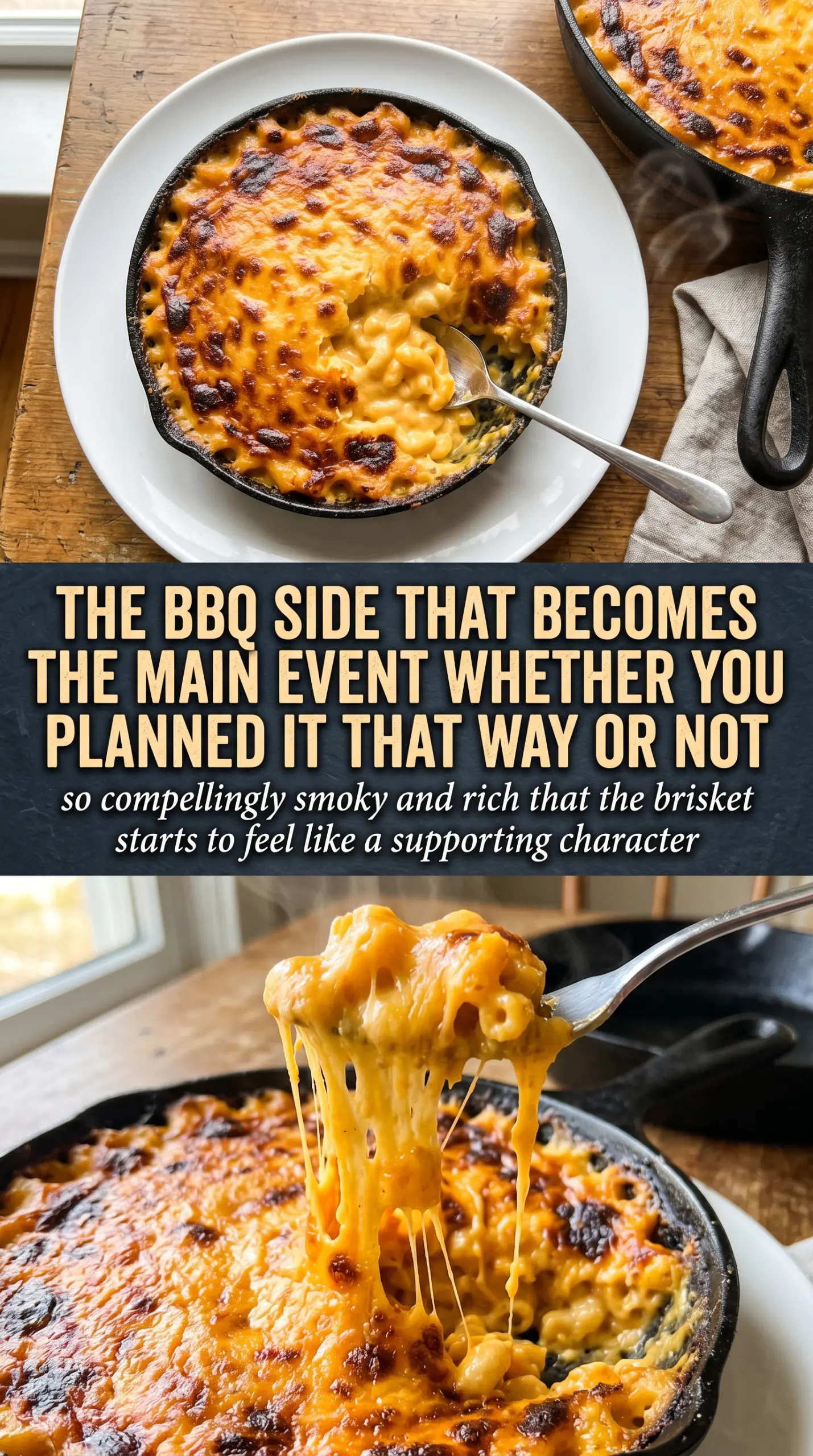
- Sharp cheddar — This is the backbone of the sauce. It gives you the familiar mac and cheese flavor and enough melt to keep the sauce cohesive. Buy a block and shred it yourself if you can; pre-shredded cheese often has anti-caking starch that makes the sauce a little less smooth.
- Smoked Gouda — This is where the smoker and the cheese start speaking the same language. Gouda melts beautifully and brings a deeper, rounder smoke note than cheddar alone. If you can’t find it, fontina is the closest swap for melt, though you’ll lose some of that smoky edge.
- Milk and heavy cream — The milk keeps the sauce loose enough to coat every noodle, and the cream gives it that rich finish that survives the smoker. Using all cream makes the dish too heavy; using all milk makes it taste thinner after smoking.
- Panko and melted butter — This topping is what keeps the top from going soft in the smoker. Panko browns fast and stays craggy, while the butter helps it toast instead of dry out. Regular breadcrumbs work in a pinch, but they won’t give you the same crisp, open texture.
Building The Sauce Before The Smoker Takes Over
Starting The Roux
Melt the butter, whisk in the flour, and cook it until it smells a little nutty and looks like wet sand. That short cooking step matters because raw flour taste gets louder, not quieter, during the long smoke. Keep whisking so the roux stays smooth and doesn’t catch at the bottom of the pan. If it darkens too fast, the heat is too high.
Adding The Dairy Without Breaking It
Pour in the milk and cream gradually while whisking, not all at once. The sauce should go from loose to thick in stages, and that gradual change keeps lumps from forming. Once it starts to bubble, lower the heat and let it thicken enough to coat a spoon. If it starts looking grainy, pull the pan off the burner and whisk hard before the cheese goes in.
Melting The Cheese The Right Way
Turn the heat down before the cheese is added. Cheese melts best in gentle heat, and high heat is the fastest route to an oily, split sauce. Stir in the cheddar and Gouda a handful at a time so each addition disappears before the next one goes in. The sauce should look glossy and elastic, not stringy or broken.
Finishing In The Smoker
Fold the cooked pasta into the sauce and transfer everything to an aluminum pan or another smoker-safe dish. Top it with the buttered panko and smoke until the top is golden and the edges are bubbling hard, usually 60 to 90 minutes. If the top is browning too fast, tent it loosely with foil for the last stretch. Let it rest for 10 minutes so the sauce settles instead of running all over the plate.
How To Adapt This For Different Pans, Diets, Or A Bigger Crowd
Gluten-Free Version
Use your favorite gluten-free elbow pasta and swap the flour for a 1:1 gluten-free flour blend in the roux. The sauce will still thicken, but gluten-free pasta can soften faster in the smoker, so check it a little earlier and pull it when it still has structure.
Dairy-Free Version
Use unsweetened oat milk or cashew milk and a dairy-free butter substitute, then choose a meltable vegan cheese that you trust in sauces. The result won’t have the same depth as cheddar and Gouda, but it will still bake up creamy if you keep the heat low and don’t rush the melt.
Making It For A Crowd
Double everything and use a deeper disposable pan or two shallow pans instead of one overloaded dish. A thicker layer takes longer to smoke through, which can dry out the top before the center is hot. Two pans cook more evenly and give you more browned edges, which is usually the first thing people scrape off anyway.
Skipping The Smoker For The Oven
If you don’t have a smoker, bake it at 350°F until the top is golden and the edges are bubbling, then finish under the broiler for a minute or two if you want more color. You’ll lose the smoke aroma, but the texture and sauce will still work if you keep an eye on the top and don’t overbake it.
Storage and Reheating
- Refrigerator: Store covered for up to 4 days. The pasta will absorb more sauce as it sits, so expect it to firm up a little.
- Freezer: It freezes, but the texture gets a touch grainier after thawing. Freeze in portions, wrapped tightly, for up to 2 months if you don’t mind a less silky sauce.
- Reheating: Reheat covered in a 325°F oven with a splash of milk stirred in first. The common mistake is blasting it uncovered, which dries out the edges before the center is hot.
Answers to The Questions Worth Asking
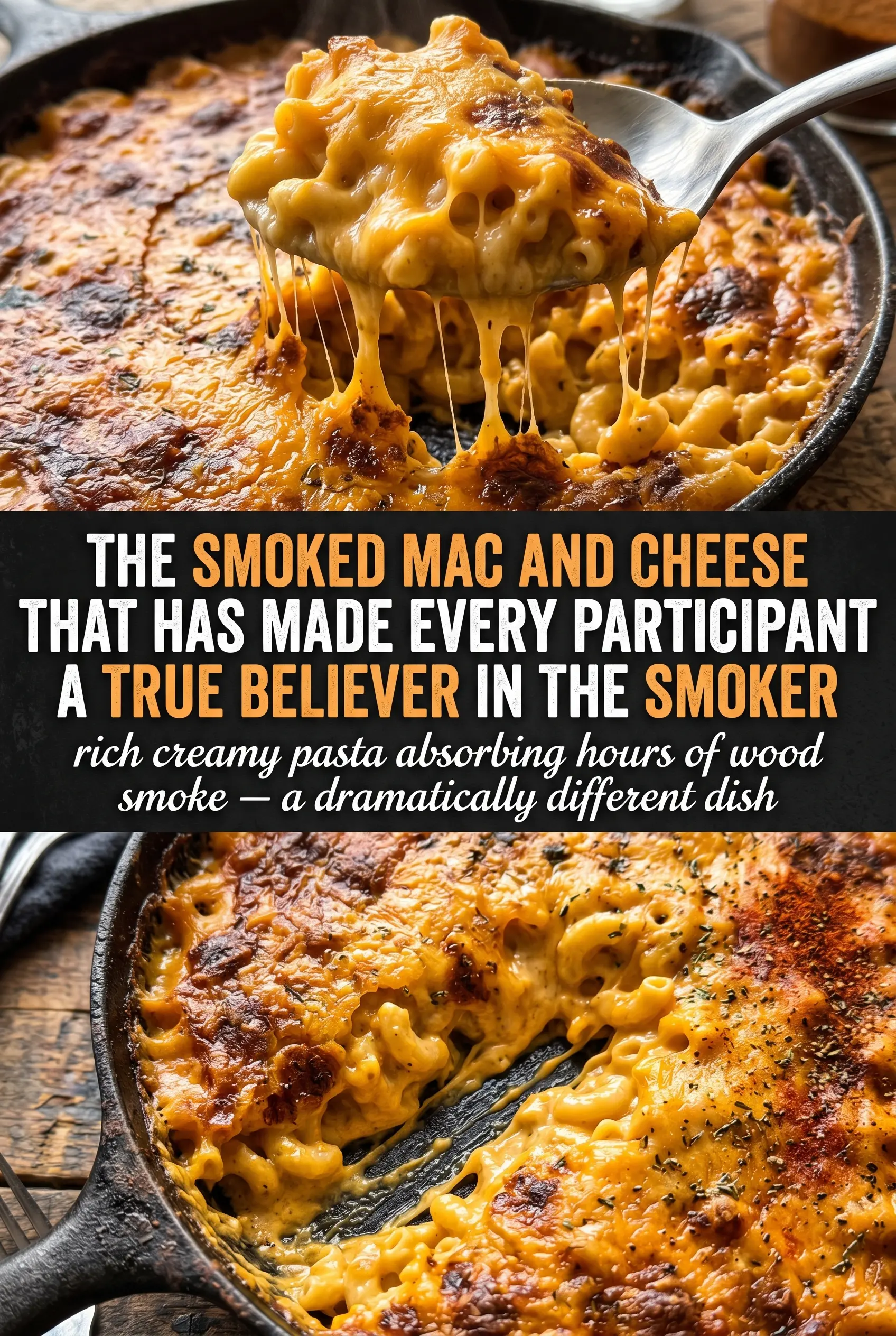
Smoked Mac And Cheese
Ingredients
Equipment
Method
- Prepare smoker to 225°F so it stabilizes for low-and-slow cooking.
- Melt butter and whisk in flour until smooth for a roux base.
- Whisk in milk and heavy cream, bringing the mixture to a gentle simmer until it thickens.
- Add sharp cheddar and smoked Gouda, stirring until melted and the sauce is fully combined.
- Season the sauce with garlic powder, salt, and pepper, mixing until evenly flavored.
- Mix cooked elbow macaroni with the cheese sauce in an aluminum pan until coated.
- Top with panko breadcrumbs mixed with melted butter so the surface looks evenly covered.
- Smoke for 60-90 minutes at 225°F until the mac and cheese is bubbly and the top turns golden.
- Let the smoked mac and cheese rest 10 minutes before serving so it sets and slices cleanly.