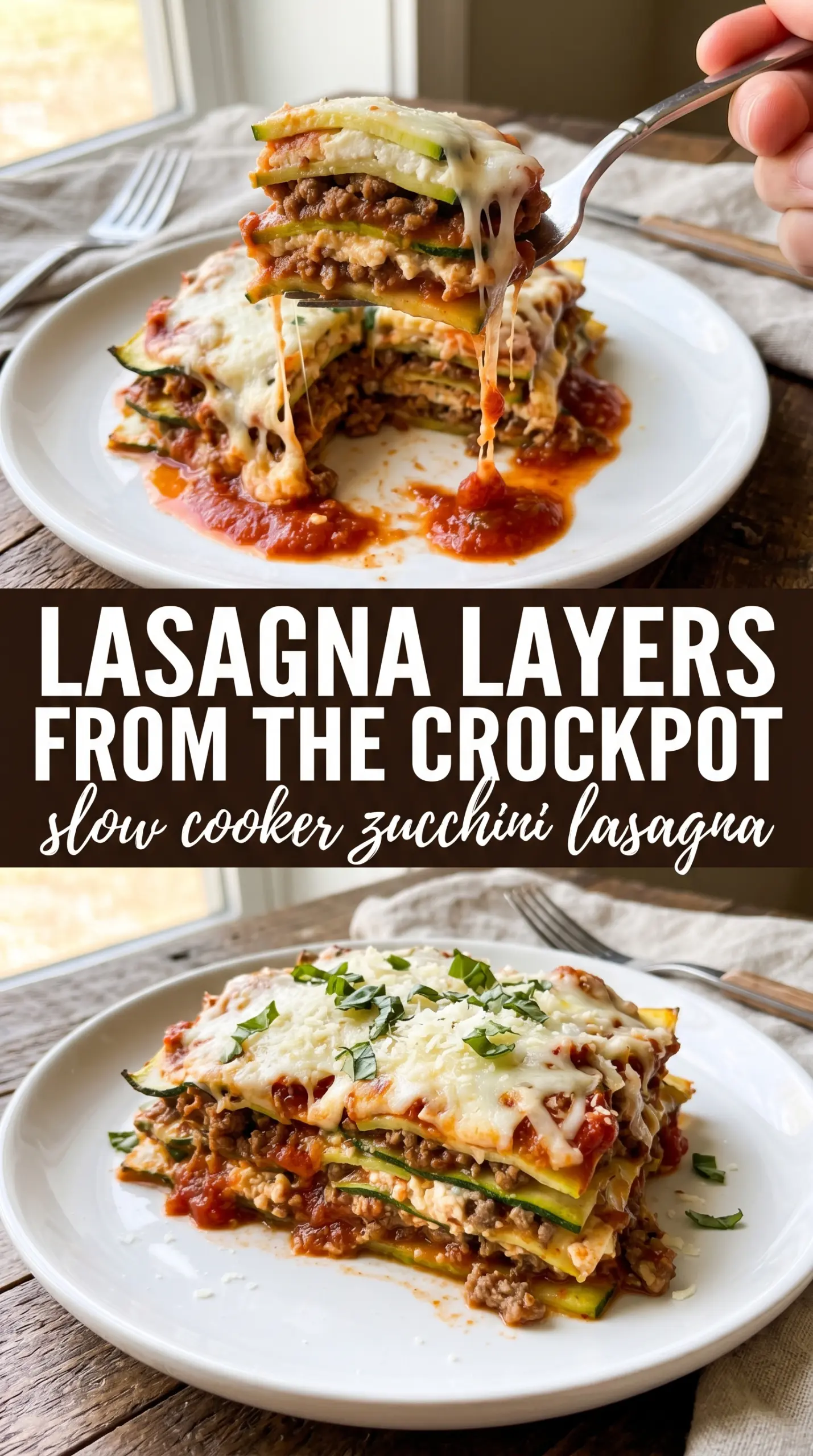
Zucchini lasagna turns out best when the layers stay tender without collapsing into a watery mess, and a slow cooker does that job better than most ovens. The long, gentle cook softens the zucchini just enough, the cheese melts into the sauce instead of sliding off, and the whole pan settles into neat slices after a short rest. What you get is a lasagna that still feels hearty, but lighter than the usual version.
The key is not treating the zucchini like a problem that needs fixing before it goes in. Thin planks, a sturdy meat sauce, and a ricotta layer with egg give the dish enough structure to hold together while the slow cooker works. The steam inside the pot helps the zucchini cook through, so there’s no need to salt and drain the slices first. That step just adds extra work and usually doesn’t improve the finished texture.
Below, I’ll show you how to keep the layers from sliding, how to avoid a soupy bottom, and what to change if you want a lighter version or a gluten-free dinner that still eats like lasagna.
I was worried the zucchini would turn mushy, but the layers held up and the sauce thickened beautifully after the 15-minute rest. My husband went back for seconds and asked if I could make it again next week.
Save this slow cooker zucchini lasagna for the nights when you want hearty layers, melted mozzarella, and almost no hands-on time.
The Reason Zucchini Lasagna Stays Firm Instead of Turning Watery
The mistake most zucchini lasagnas make is trying to force the vegetable to behave like pasta. Zucchini holds a lot of moisture, but in a slow cooker that moisture has a place to go, which means you can build the dish around it instead of fighting it. Thin slices matter here because they soften evenly before the cheese has time to overcook.
The other piece that keeps this from collapsing is the way the ricotta layer is built. The egg helps it set, the parmesan adds salt and body, and the thicker meat sauce gives the stack something substantial to sit on. If you use a thin, watery marinara, the finished dish will slump and the bottom layer can get loose. A meat sauce that clings to a spoon works better than a loose one.
- Zucchini — Slice it into thin planks, not rounds. Thin planks stack like noodles and soften into tender layers instead of turning into chunks that slip apart.
- Ground beef or turkey — Beef gives the deepest, richest sauce. Turkey works well if you want a lighter finish, but it needs the seasoning and marinara to carry more of the flavor.
- Ricotta — Use full-fat ricotta if you can. It bakes up creamier and less grainy in the slow cooker. Part-skim works, but the filling won’t be quite as lush.
- Mozzarella — Shredding your own gives a better melt than pre-shredded cheese, which is coated to keep it from clumping. The melt will be smoother and stretchier.
- Egg — This is what helps the ricotta layer hold together. Skip it and the filling stays soft and a little loose after cooking.
What Each Ingredient Is Actually Doing in This Recipe
- Primary ingredient (the star) — Quality matters most. Choose the best you can find.
- Cooking medium (oil, butter, or broth) — This carries flavors and prevents dryness.
- Seasonings (salt, pepper, spices, herbs) — Layer flavors so nothing overpowers. Build depth gradually.
- Aromatics (garlic, onion, herbs) — Cook with fat to bloom flavors. Become the foundation.
- Supporting ingredients — Complement the main ingredient without overpowering it.
- Sauce or liquid (if applicable) — Brings flavors together. Balance richness with acid.
- Acid (lemon, vinegar, wine, or other) — Brightens and prevents flat-tasting results.
- Final finish (garnish, glaze, or sauce) — Prevents one-dimensional taste and adds visual appeal.
Building the Layers So the Slow Cooker Does the Work for You
Start With a Saucy Base
Spoon a little meat sauce into the bottom of the greased slow cooker before you add anything else. That thin layer keeps the zucchini from sticking and starts the dish with moisture where you want it, not where it can flood the whole pan. If you pile dry zucchini straight onto the insert, the bottom can grab and the first slices can scorch around the edges.
Stack the Zucchini Like Noodles
Lay the zucchini planks in overlapping layers and break pieces to fit the corners. Don’t worry about perfect rows; the goal is full coverage, not restaurant geometry. If the slices are cut too thick, they stay firm in the middle and won’t blend into the rest of the lasagna. Thin planks are the difference between a slice that cuts cleanly and one that slides apart.
Finish With a Covered, Gentle Cook
Cook on low for the best texture if you have the time. High heat works, but low gives the cheese a chance to melt slowly while the zucchini softens without flooding the sauce. When the top is bubbling at the edges and the zucchini feels tender when pierced with a knife, turn the heat off and let it rest with the lid removed. That resting time lets steam escape, which is what helps the slices hold their shape when you serve them.
How to Adapt This for Lighter Eating, Extra Cheese, or What’s in Your Fridge
Make It Dairy-Free
Use a dairy-free ricotta and mozzarella style shred that melts well, then add an extra tablespoon or two of nutritional yeast to the filling for a little more savory depth. The texture won’t be identical to the original, but the layered structure still works if you keep the sauce thick.
Make It Lower-Carb
This recipe is already a good fit for low-carb eating because the zucchini replaces pasta. If your zucchini are especially large and seedy, trim out the soft center so the layers don’t get too wet. That keeps the final slice tighter.
Use Cottage Cheese Instead of Ricotta
Blend cottage cheese until mostly smooth before mixing it with the egg, parmesan, and parsley. The filling will be a little lighter and less dense than ricotta, but it still sets well and gives you a clean, sliceable layer.
Storage and Reheating
- Refrigerator: Store leftovers for up to 4 days. The layers settle a little more as they sit, but the flavor gets even better.
- Freezer: It freezes fairly well in individual portions. Cool completely, wrap tightly, and freeze for up to 2 months. The zucchini softens a bit more after thawing, but it still eats well.
- Reheating: Reheat covered in the oven at 350°F until hot, or warm single portions in the microwave in short bursts. Don’t blast it on high for too long or the cheese can turn greasy before the center is hot.
Questions I Get Asked About This Recipe
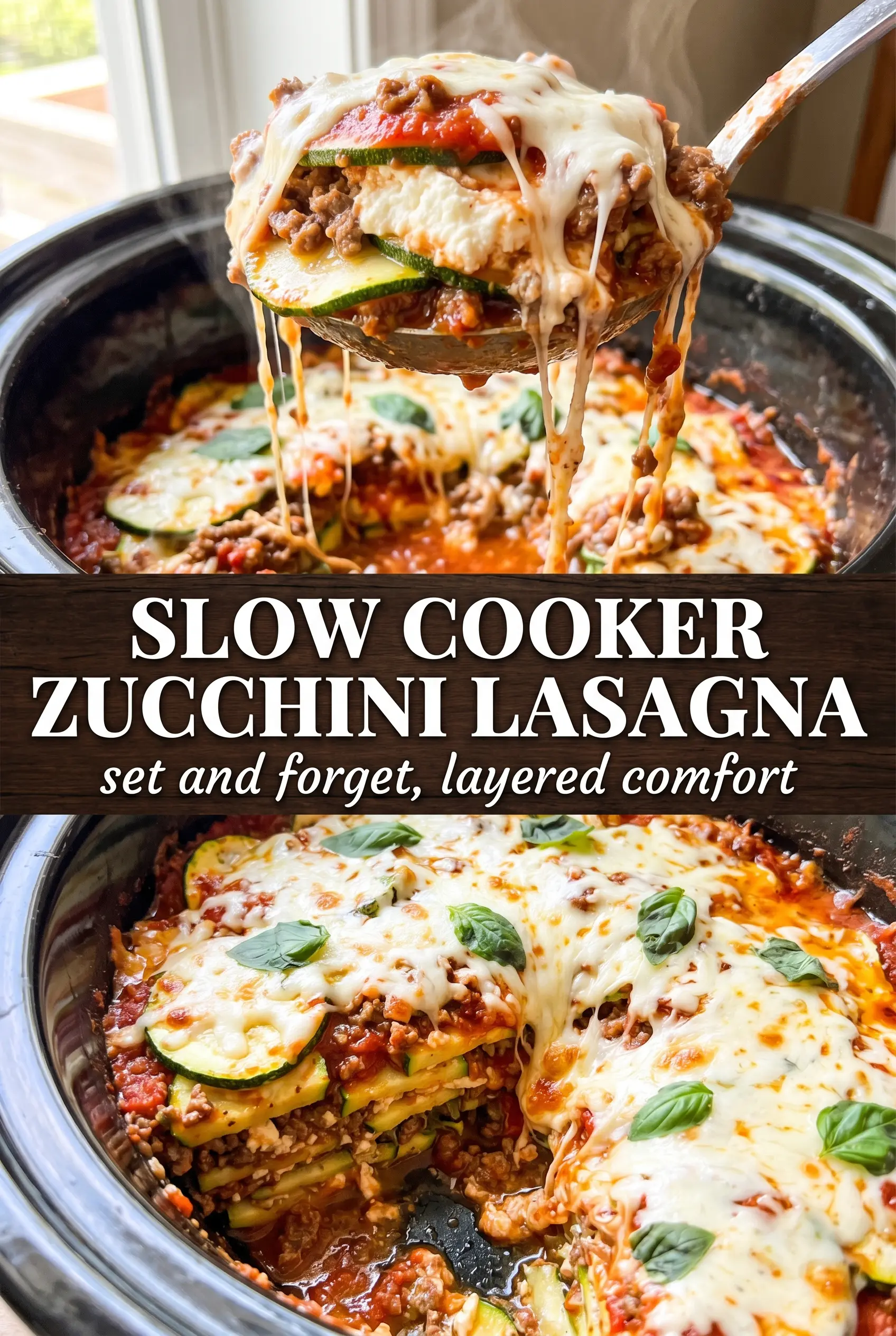
Slow Cooker Zucchini Lasagna
Ingredients
Equipment
Method
- Slice the zucchini into thin planks; there’s no need to salt or dry them since the slow cooker manages moisture well.
- Brown the ground beef or turkey, then drain it and mix it with marinara sauce, Italian seasoning, garlic powder, salt, and pepper.
- In a second bowl, mix ricotta cheese, egg, grated parmesan, fresh parsley, salt, and pepper until smooth.
- Spray the slow cooker insert with cooking spray.
- Spread 1/2 cup meat sauce in the bottom, then layer the zucchini planks (break to fit) in an even layer.
- Spread the ricotta mixture over the zucchini, then add meat sauce and a layer of mozzarella.
- Repeat the layers until you end with meat sauce and the remaining mozzarella.
- Cover and cook on Low for 4–5 hours, or on High for 2–3 hours, until the zucchini is tender and the cheese is melted (visual cue: melted mozzarella throughout and softened zucchini).
- Turn the slow cooker off and rest for 15 minutes with the lid off so steam escapes before serving (visual cue: sauce looks slightly set and less watery).
- Serve hot with fresh basil on top.