Silky, spoonable rhubarb butter is what happens when tart fruit gets cooked down until it turns glossy, thick, and deeply concentrated. The finished spread lands somewhere between jam and fruit curd in texture, but it stays cleaner and brighter than either one, which makes it perfect for toast, biscuits, yogurt, or a warm stack of pancakes. It’s one of those recipes that looks humble in the jar and then disappears fast once people taste it.
This version works because the rhubarb cooks uncovered long enough for the water to evaporate before it gets pureed. That step matters. If you blend too early, you’ll end up with a thin sauce instead of a spread that holds its shape on a spoon. Vanilla goes in at the end so it rounds out the sharp edge of the rhubarb without dulling it. The result is smooth, pink, and balanced — sweet enough to feel finished, but still unmistakably rhubarb.
Below you’ll find the little technique details that keep the texture right, plus a few ways to adapt it if you want to change the sweetness or make a bigger batch.
I’ve made fruit butters before, but this one thickened up into the smoothest spread I’ve had. The vanilla at the end made it taste finished, and it was perfect on toast the next morning.
Love the smooth, sweet-tart finish of this rhubarb butter? Save it to Pinterest for toast mornings and quick homemade gifts.
The Part Most Rhubarb Spreads Get Wrong
The mistake with rhubarb butter is treating it like a sauce that can be thickened later. Rhubarb gives off a lot of liquid at the start, and if you rush the simmer, the purée stays loose no matter how long it sits in the fridge. The cook time here isn’t just about softening the fruit; it’s about reducing the water enough that the final texture turns spreadable instead of pourable.
That’s why the pot stays uncovered. You want steam leaving the pan, not trapped inside it. Stir occasionally so the sugar doesn’t catch on the bottom, but don’t keep it moving constantly — the mixture thickens faster once the bubbles get slower and the spoon leaves a trail through the pan. If it still looks thin when you blend it, keep cooking after the purée stage until it mounds a little on the spoon.
What the Rhubarb, Sugar, and Vanilla Are Actually Doing
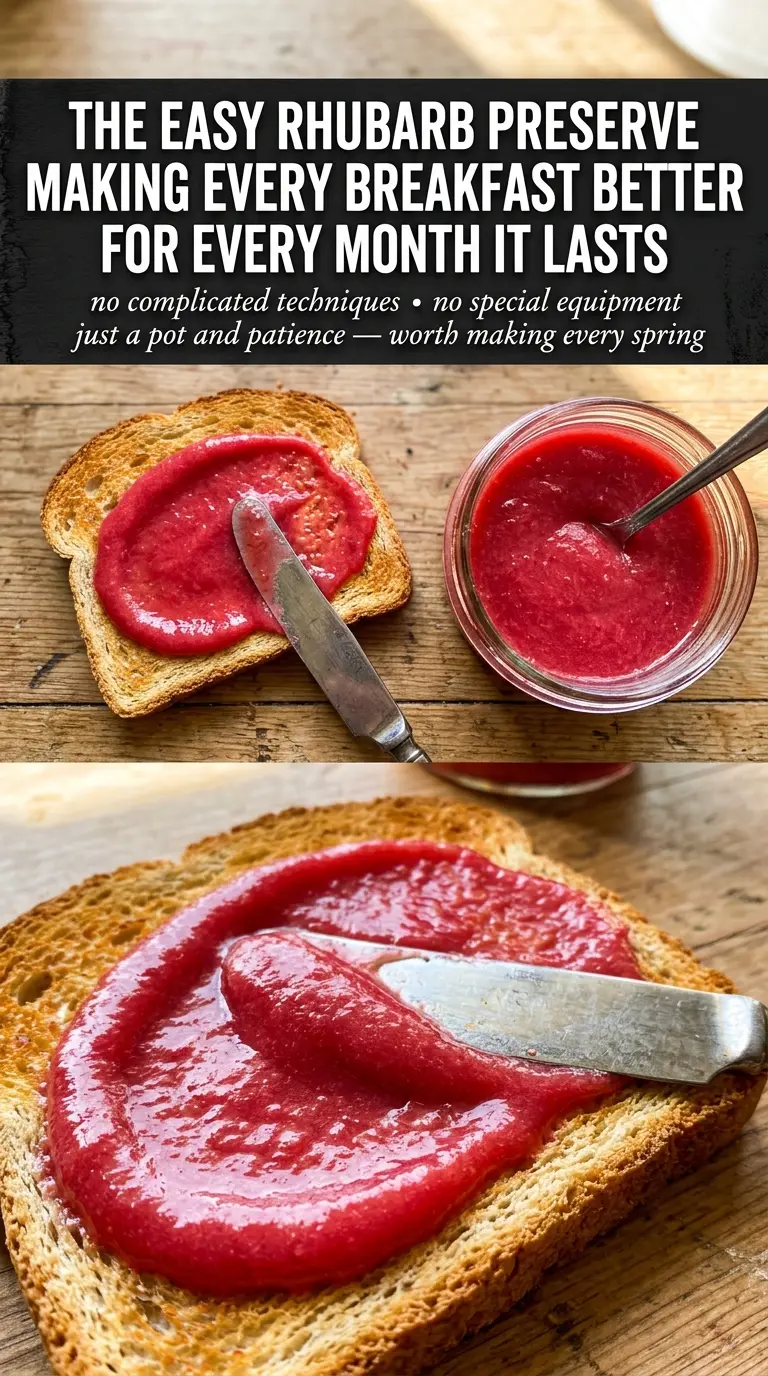
- Rhubarb — Fresh rhubarb gives the butter its sharp, clean flavor and natural pectin-like body once it’s cooked down. Chop it evenly so it breaks down at the same rate; big chunks leave you chasing soft and hard pieces in the pot.
- Sugar — Sugar does more than sweeten here. It draws moisture out of the rhubarb, helps the mixture thicken, and softens the acidity enough that the finished spread tastes balanced instead of aggressively tart. Reducing it much further changes the texture, so if you cut the sugar, expect a looser result.
- Water — The water keeps the fruit from scorching before the rhubarb starts releasing its own juices. It doesn’t stay in the final spread; it’s just there to get the cooking started evenly.
- Vanilla extract — Add it after the simmer so it stays fragrant. Vanilla doesn’t make this taste like dessert; it gives the rhubarb a rounder finish and keeps the fruit flavor from tasting one-note.
Cooking It Down Until It Sets on a Spoon
Starting the Pot
Combine the rhubarb, sugar, and water in a large pot and bring it to a boil over medium-high heat. The sugar should dissolve and the rhubarb will start to slump almost right away. If you see dry sugar clinging to the edges, stir once or twice to keep it moving, but don’t linger over this stage. You’re just getting the fruit released and the mixture hot enough to begin reducing.
Slow Reduction
Lower the heat and simmer uncovered for 25 to 30 minutes, stirring occasionally. The bubbles will go from lively to thick and lazy as the liquid evaporates, and that shift is your cue that you’re on the right track. If the bottom starts to look sticky or dark, the heat’s too high. A gentle simmer keeps the fruit from scorching before it has time to break down fully.
Blending Until Smooth
Use an immersion blender to puree the mixture until completely smooth. This is the point where the texture turns from rustic compote to proper fruit butter, so blend until there are no fibrous bits or visible chunks left. If you don’t have an immersion blender, a standard blender works too, but let the mixture cool a little first and blend in batches so hot steam doesn’t push the lid up.
Finishing the Texture
Stir in the vanilla extract, then cook for about 5 minutes more if the butter still looks loose. It should slowly fall off a spoon rather than run off like sauce. The finished rhubarb butter will thicken more as it cools, so stop cooking when it looks a touch looser than the texture you want in the jar. That keeps it from turning stiff after refrigeration.
How to Adjust It Without Losing the Spreadable Texture
Less-sweet rhubarb butter
You can reduce the sugar a little, but don’t cut it in half and expect the same result. Less sugar means more tartness and a looser set, so plan on a longer simmer and a softer final texture. If you want a brighter, sharper spread, trim the sugar slightly and stop cooking only when it still holds a gentle mound on the spoon.
Maple-vanilla variation
Swap part of the sugar for maple syrup if you want a warmer, deeper sweetness. Keep in mind that maple adds more moisture, so the butter may take a few extra minutes to thicken. The flavor turns a little more caramel-like and less bright, which works especially well on toast or biscuits.
Lemon-rhubarb butter
Add a little lemon zest at the end if you want the rhubarb to taste sharper and fresher. Zest gives lift without thinning the mixture, and it’s a better choice than lemon juice here because extra liquid works against the thick, spreadable texture.
Vegan and gluten-free serving ideas
The rhubarb butter itself is naturally vegan and gluten-free, so the only thing to watch is what you serve it with. It’s excellent on gluten-free toast, dairy-free scones, oatmeal, or swirled into plant-based yogurt. The spread doesn’t need any adjustment for either diet.
Storage and Reheating
- Refrigerator: Store in clean jars for up to 3 weeks. It will firm up as it chills, then loosen slightly once spread.
- Freezer: It freezes well in small containers for about 3 months. Leave a little headspace because fruit butters expand when frozen.
- Reheating: This doesn’t need reheating for serving, but if you want it looser, let a jar sit at room temperature until softened. Don’t microwave the whole batch unless you’re using it immediately, because overheating can make the texture grainy and watery.
Questions I Get Asked About This Recipe
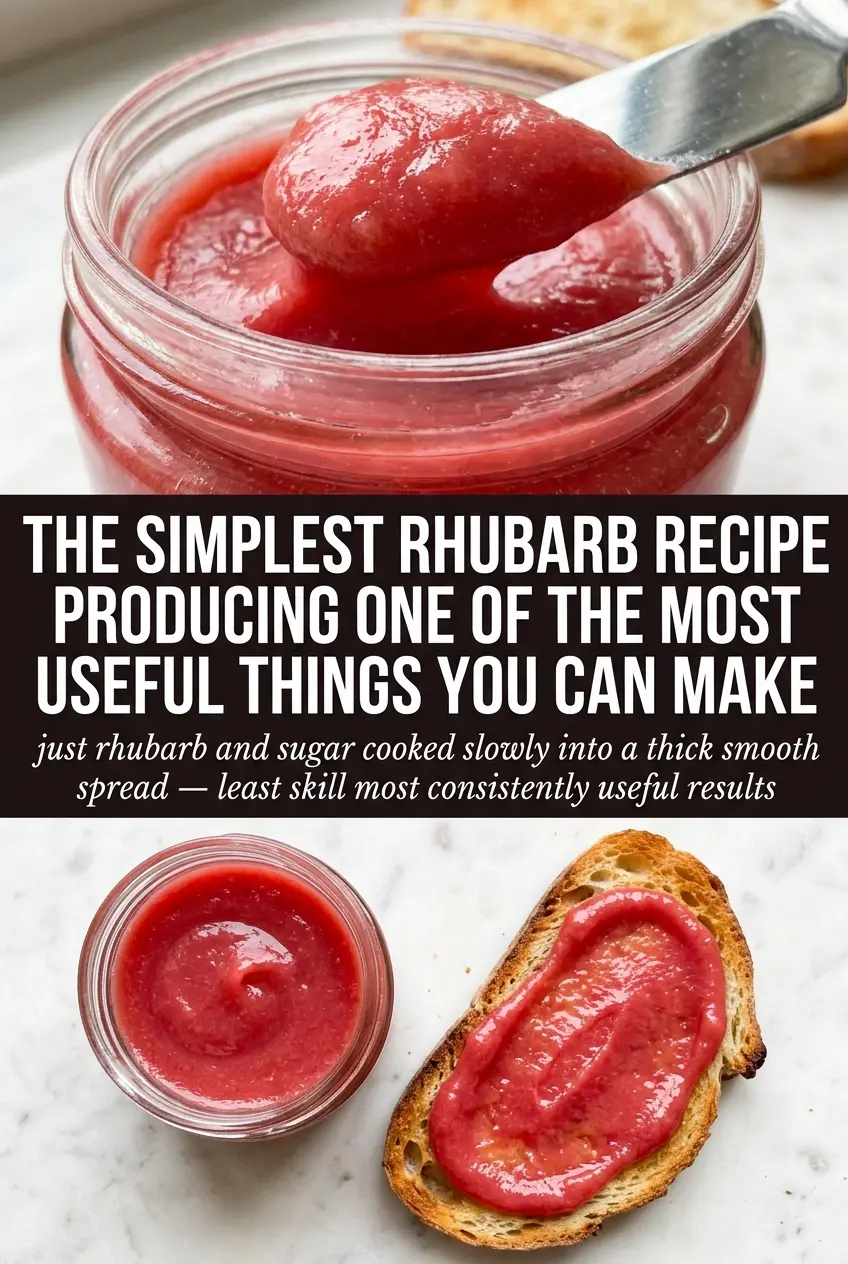
Simple Rhubarb Butter
Ingredients
Equipment
Method
- Combine fresh rhubarb, sugar, and water in a large pot and bring to a boil over medium-high heat, stirring to dissolve the sugar. Once boiling, keep the mixture actively bubbling so it reduces evenly.
- Reduce heat to low and simmer uncovered for 25-30 minutes, stirring occasionally, until the mixture is very thick and reduced. You should see slow movement when you drag a spoon across the bottom of the pot.
- Use an immersion blender to puree the hot rhubarb mixture until completely smooth. Blend until no visible flecks remain and the texture looks uniform.
- Stir in vanilla extract until fully incorporated. The butter should smell fragrant and look evenly colored.
- Continue cooking for 5 minutes more on low, stirring occasionally, until it reaches your desired thickness. Add a little more time if it still looks pourable rather than spreadable.
- Pour the rhubarb butter into clean jars and let it cool slightly before refrigerating. Refrigerate for up to 3 weeks and use it as a thick toast topping or spoonable spread.