Roasted eggplant and zucchini lasagna lands with all the comfort of a baked pasta dish, but the vegetables carry the whole thing with more flavor and a better bite. The layers stay distinct instead of collapsing into a watery casserole, and the top turns into that bubbling, bronzed blanket of cheese that makes people hover near the oven.
The trick is treating the vegetables like the main structure, not an afterthought. Salting them first pulls out moisture, roasting drives off even more, and that extra step is what keeps the layers from turning slick. I also cook the tomato sauce down just a little before assembling, because a thinner sauce is the fastest way to end up with a pan that slumps when you cut it.
Below, I’m walking through the small details that matter most, from how to keep the vegetables tender without going limp to the one resting step that makes clean slices possible.
The roasted eggplant stayed meaty instead of mushy, and the zucchini layered in beautifully. I’d definitely let it rest the full 15 minutes because it sliced into neat pieces and didn’t run all over the plate.
Roasted eggplant and zucchini lasagna with golden cheese layers and a sliceable, no-soggy finish
The Step That Keeps This Vegetable Lasagna From Turning Watery
The biggest failure in eggplant and zucchini lasagna is moisture. Eggplant and zucchini both give off a lot of water, and if you stack them straight into the pan, that liquid leaks into the sauce and softens the whole dish into a puddle. Salting the rounds first pulls out surface moisture, and roasting them before assembly drives off even more so the lasagna can bake into layers instead of settling into one soft mass.
The other thing that matters is sauce thickness. A quick simmer concentrates the tomatoes just enough to cling to the vegetables, while the ricotta layer adds structure without making the whole pan heavy. If either part is too loose, the slices won’t hold.
What Each Ingredient Is Doing in the Pan
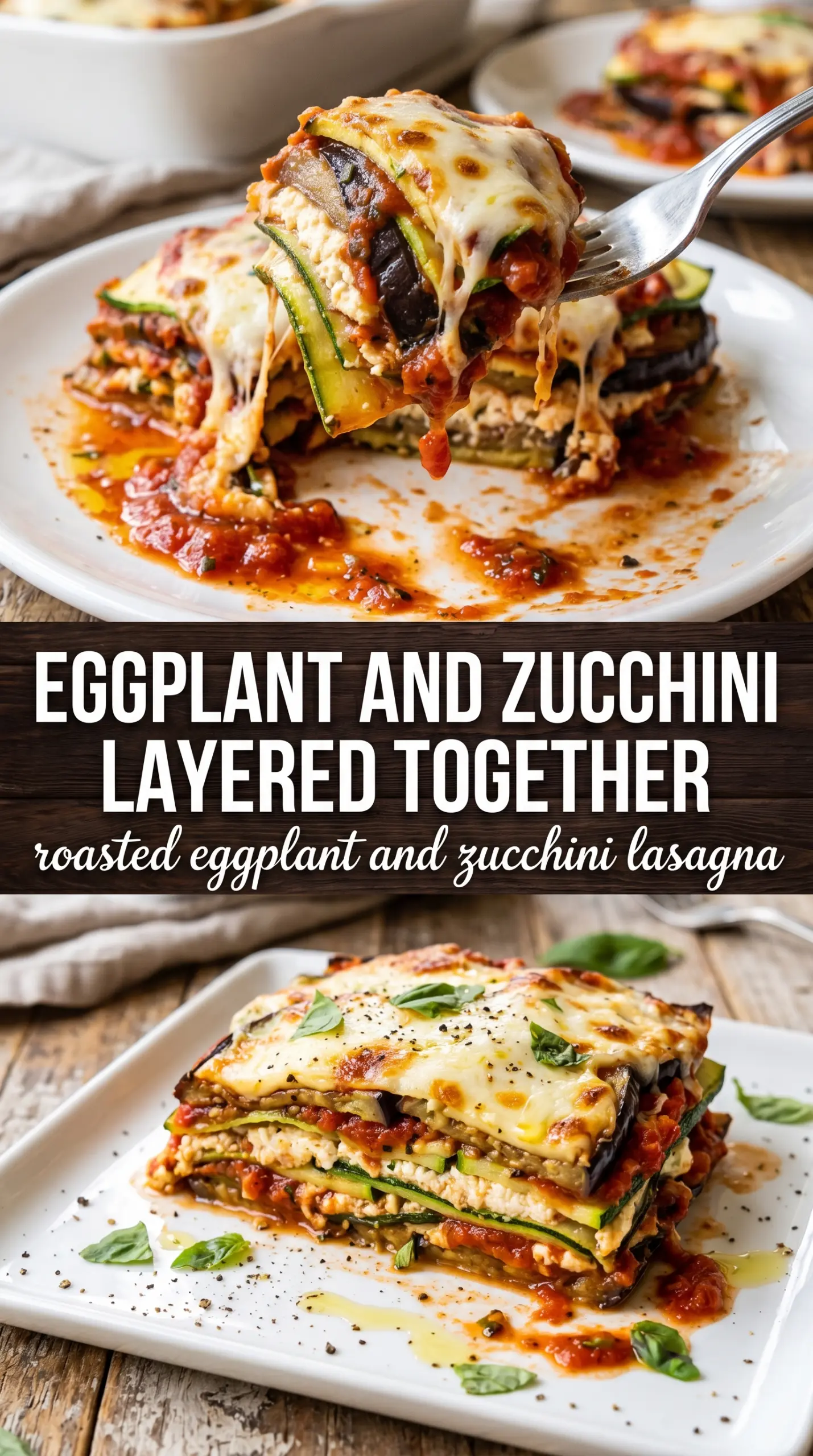
- Eggplant — This is the backbone of the dish. It turns silky in the oven, but only after it’s salted and roasted; skipping either step leaves you with spongey slices that soak up sauce instead of holding the layer together.
- Zucchini — Zucchini adds a lighter, fresher layer and a little sweetness. Slice it the same thickness as the eggplant so it roasts at the same rate; thinner rounds disappear, thicker ones stay too firm.
- Crushed tomatoes — Crushed tomatoes give you a sauce with enough body to coat the vegetables without needing long simmering. If you use a thinner tomato product, cook it down longer so the lasagna doesn’t leak.
- Ricotta — Ricotta creates the creamy middle that makes each slice feel complete. Whole-milk ricotta gives the best texture here; if yours seems wet, drain it for a few minutes so it doesn’t loosen the layers.
- Mozzarella — Mozzarella gives you the stretchy top and the browned finish. Shredded low-moisture mozzarella melts more cleanly than fresh mozzarella, which can release too much liquid in a bake like this.
- Parmesan — Parmesan sharpens the ricotta layer and adds saltiness with depth. A little goes a long way, so use the real thing if you can.
Building the Layers So They Slice Cleanly
Roasting the Vegetables First
Lay the salted eggplant and zucchini in a single layer after patting them dry, then brush lightly with olive oil. Roast at 425°F until the edges take on color and the centers are tender but still intact. If the slices collapse on the tray, they’ve gone too far and will disappear in the bake.
Cooking the Sauce Until It Clings
Start the garlic in olive oil just until it smells fragrant, not browned, then add the tomatoes and seasoning. Let the sauce simmer until it no longer looks watery and the bubbles thicken slightly as they pop. A loose sauce will spread into the pan and make cutting messy, while a thicker sauce settles between the layers and stays put.
Layering With Enough Structure
Spread a thin base of sauce first, then overlap the roasted vegetables instead of stacking them flat. That overlap helps the lasagna hold together when you cut it. Spoon the ricotta in an even layer and keep the mozzarella scattered from edge to edge so the top browns in patches instead of clumping in one heavy blanket.
Knowing When It’s Done
Cover the pan first so the heat moves through the center, then uncover it for the last stretch so the cheese can bronze. It’s done when the sauce is bubbling at the edges and the top has deep golden spots. Let it rest before slicing; if you cut too soon, the layers slide apart and the pan loses all the structure you worked for.
Three Ways to Work This Into Your Own Routine
Make it dairy-free with a creamy cashew layer
Swap the ricotta for a thick cashew ricotta and use a dairy-free mozzarella-style shreds. The texture stays creamy, but the flavor shifts a little nuttier and less tangy, so season the replacement generously with salt, basil, and a touch more garlic.
Make it gluten-free without changing the method
This recipe is naturally gluten-free as written, which is part of why it works so well for a crowd. Just check your crushed tomatoes and cheese labels if you’re cooking for someone with celiac disease, since packaged ingredients can carry hidden additives.
Add meat without losing the vegetable layers
Brown a half pound of Italian sausage or ground turkey and stir it into the tomato sauce after the garlic softens. The dish gets heartier, but keep the sauce thick so the added meat doesn’t make the layers slide.
Use extra zucchini when eggplant is hard to find
You can lean harder on zucchini and reduce the eggplant, but roast it well because zucchini releases even more moisture. The finished lasagna will taste a little lighter and less earthy, which works nicely if you want a softer vegetable flavor.
Storage and Reheating
- Refrigerator: Store leftovers covered for up to 4 days. The layers hold up well, and the flavor gets even deeper by the next day.
- Freezer: It freezes well in portions. Cool completely, wrap tightly, and freeze for up to 2 months; thaw overnight in the fridge before reheating.
- Reheating: Reheat covered in a 350°F oven until hot in the center. The mistake to avoid is blasting it in the microwave for too long, which turns the vegetables soft and the cheese greasy.
Answers to the Questions Worth Asking
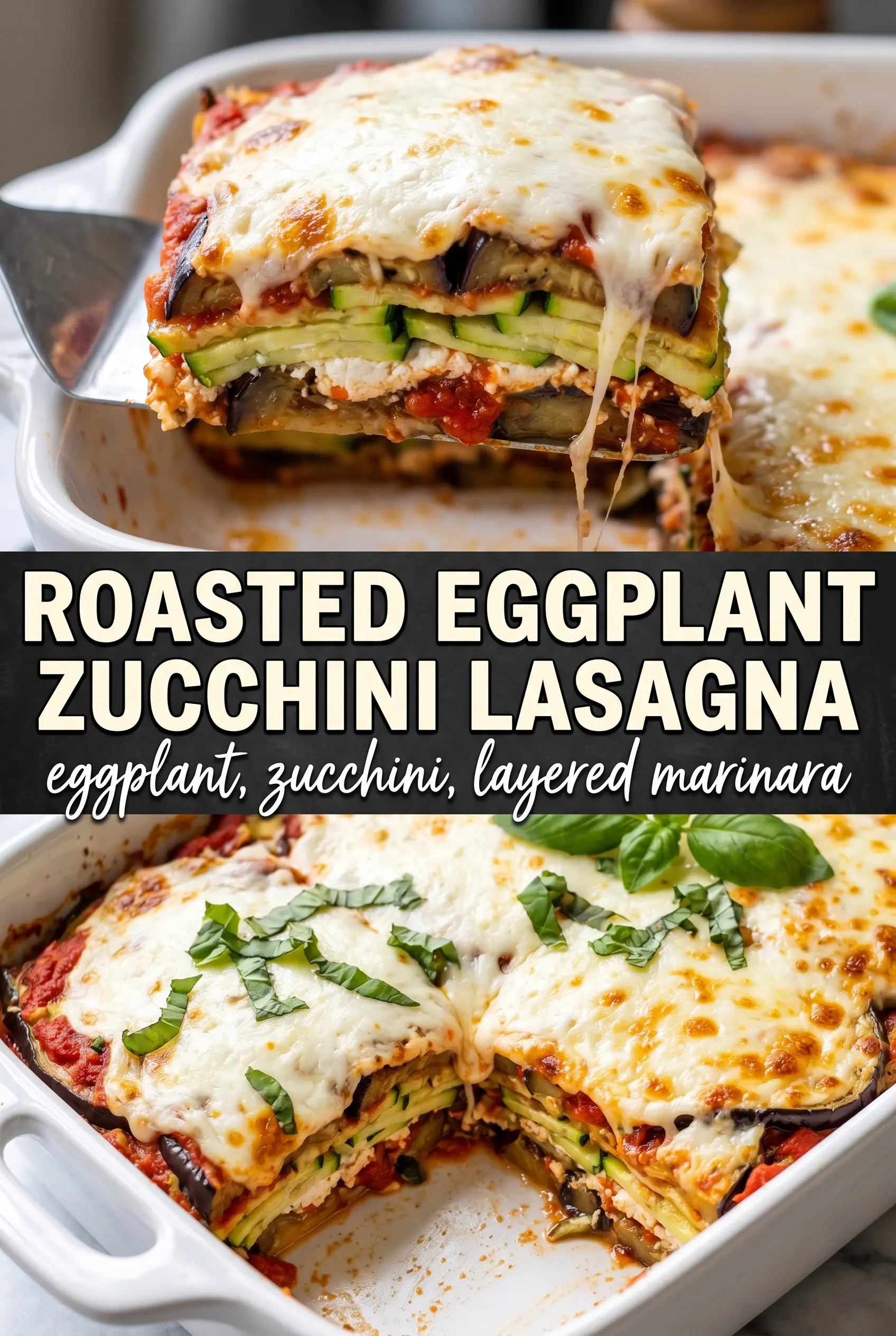
Roasted Eggplant and Zucchini Lasagna
Ingredients
Equipment
Method
- Salt the eggplant and zucchini rounds and let them sit for 20 minutes, then pat them dry.
- Brush the vegetables with olive oil and roast at 425°F for 20–25 minutes, flipping halfway, until golden and tender.
- Set the roasted eggplant and zucchini aside while you make the sauce and filling.
- Simmer sauce: cook the garlic in olive oil for 1 minute.
- Add the crushed tomatoes, Italian seasoning, salt, and pepper, then simmer for 10 minutes.
- Mix ricotta with the egg, parmesan, basil, salt, and pepper until smooth and evenly combined.
- Preheat oven to 375°F and spread 1/2 cup sauce in a 9x13 dish.
- Assemble by layering eggplant and zucchini rounds overlapping, spreading ricotta, spooning sauce, and scattering mozzarella—repeat layers and end with sauce and mozzarella.
- Cover with foil and bake for 30 minutes.
- Uncover and bake for 20–25 minutes until deeply golden and bubbling.
- Rest the lasagna for 15 minutes before slicing so the layers set.
- Garnish with fresh basil and serve.