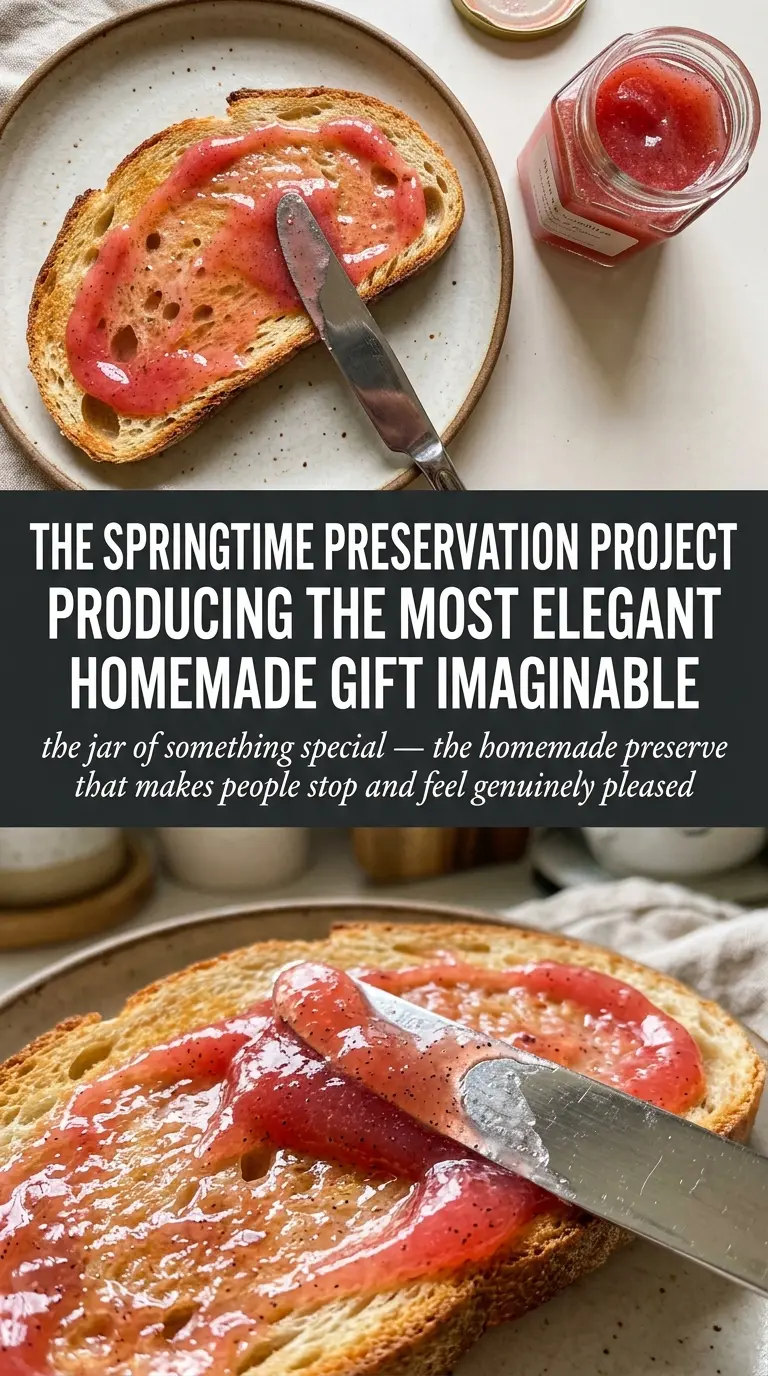
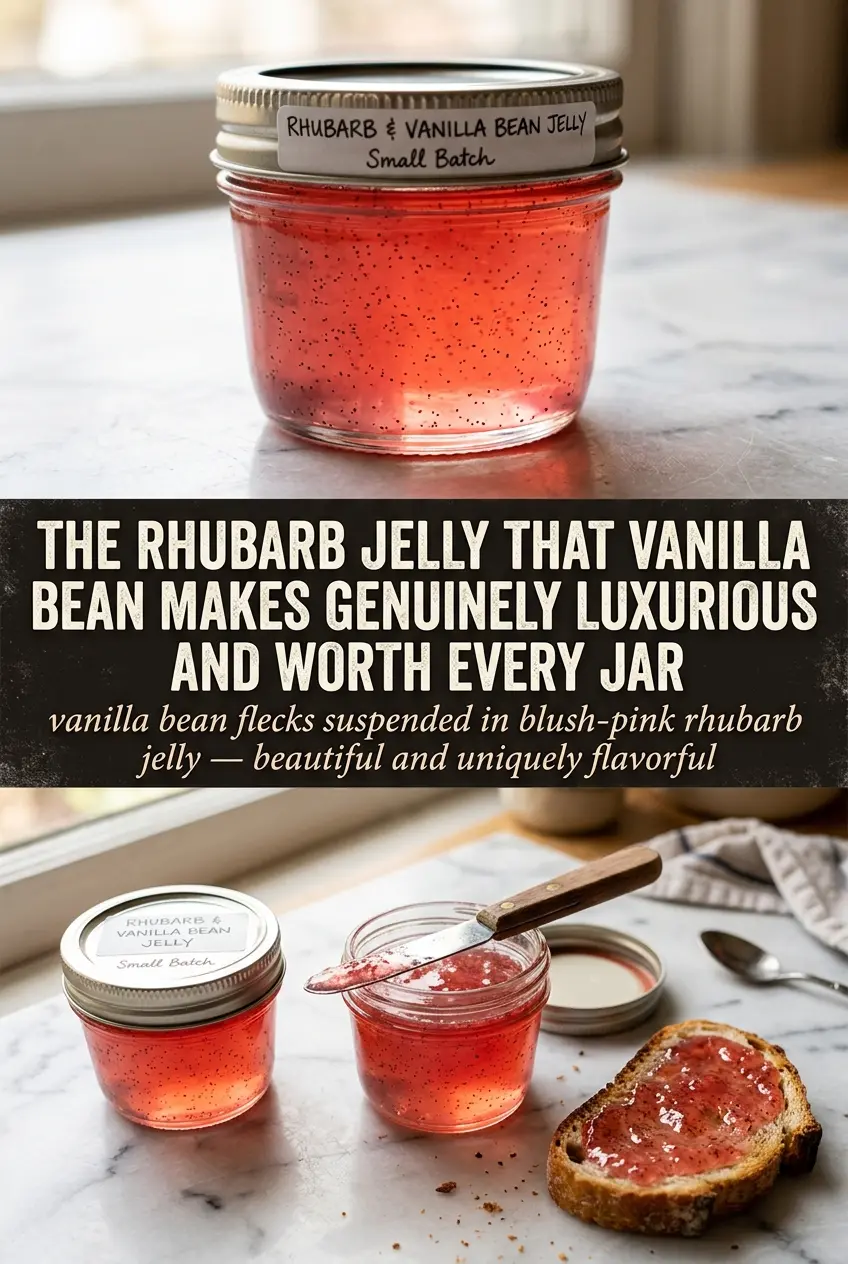
Ruby-pink rhubarb jelly with vanilla bean specks has a way of looking fancy long before you taste it. The flavor is bright and clean at first, then the vanilla comes through in the finish and rounds off rhubarb’s sharp edge. Spread it on toast and it sets up like a proper preserve: glossy, spoonable, and just firm enough to hold its shape without feeling stiff.
This version works because the rhubarb gets simmered gently before it’s strained, which gives you a clear juice instead of a cloudy puree. That matters here. Jelly should shimmer, not thicken with pulp. The vanilla bean goes in with the rhubarb, not after, so the pod has time to infuse the juice while the pectin and sugar do the work of setting it.
Below you’ll find the exact point where the juice should land before it goes back on the stove, plus the canning step that keeps the jars sealed properly. If you’ve ever had jelly turn out too loose or cloudy, the details here will help.
The jelly set beautifully and stayed crystal clear, and the vanilla made the rhubarb taste softer and more polished. I got six jars just like the recipe said, and the texture was perfect on toast the next morning.
Like this ruby-pink rhubarb vanilla bean jelly? Save it to Pinterest for homemade toast spreads, gift jars, and canning day.
The part that keeps rhubarb jelly clear instead of cloudy
Most rhubarb jellies go hazy because the fruit gets mashed too hard or the juice is cooked down after straining. That turns the finished preserve into something closer to jam, even if the set is fine. Here, the rhubarb simmers just long enough to release flavor, then the liquid is strained without forcing pulp through the cloth.
The other place people go wrong is the boil. Pectin needs a hard, active boil to do its job, and sugar has to go in all at once so the mixture can climb back to temperature quickly. If the boil is weak or interrupted, the jelly can set unevenly or stay loose in the jar.
What the rhubarb and vanilla bean are doing here
- Fresh rhubarb — This is the backbone of the jelly. Fresh stalks give you the tart, clean flavor and the bright color that makes the jars glow. Frozen rhubarb will work in a pinch, but it often gives off a little more liquid, so your strained yield may need a quick check before you add the pectin.
- Vanilla bean — The pod and seeds infuse the juice with a soft, round sweetness that extract can’t fully match. Use the real bean here if you can, because those tiny specks also tell you at a glance that the flavor is built in, not added later. Split it lengthwise so the seeds can disperse through the simmering juice.
- Powdered pectin — This is what gives the jelly its set, and the box measurement matters. Don’t swap in liquid pectin without changing the process, because the timing and sugar ratio are different. If you only have low-sugar pectin, use a recipe designed for it instead of trying to improvise.
- Lemon juice — It sharpens the flavor and helps the pectin gel properly. Bottled lemon juice is fine here because consistency matters more than fresh aroma in a canning recipe.
From simmer to sealed jar without losing the set
Softening the rhubarb and infusing the vanilla
Combine the rhubarb, water, and the split vanilla bean in a large pot, then simmer until the fruit is fully softened and the liquid is pink and fragrant. You want the rhubarb to collapse, not break down into a long, aggressive boil. If the pot boils too hard here, you’ll drive off liquid too fast and make the straining step less predictable.
Straining for a clean jelly base
Pour the mixture through cheesecloth or a fine mesh strainer and let it drain, pressing just enough to extract the liquid without pushing pulp through. The goal is a clear juice that still tastes strongly of rhubarb. If you press too aggressively, the jelly can turn cloudy and may carry tiny fibers that interfere with that smooth, glassy finish.
Cooking to the hard boil
Return the juice to the pot and stir in the pectin and lemon juice, then bring it to a rolling boil before adding the sugar all at once. Stir constantly while it comes back to a hard boil and keep it there for one full minute. If the boil barely bubbles or drops when you stir, the pectin won’t activate evenly and the jelly may not set fully.
Jarring and waiting for the set
Skim off any foam, remove the vanilla bean pod, and ladle the hot jelly into sterilized jars with 1/4-inch headspace. Process the jars in a boiling water bath for 10 minutes, then leave them undisturbed for 24 hours. The set happens during that rest, so don’t tilt or tighten-check the jars early; a jelly that looks loose right away can still finish beautifully overnight.
How to adjust this jelly for different kitchens and different pantries
Skip the vanilla bean if you need a cleaner tart flavor
The jelly will still set and taste bright without the vanilla, but it becomes more sharply rhubarb-forward. If you leave it out, don’t replace it with vanilla extract in the boil; the heat dulls the aroma. Add extract only after the pan comes off the heat if you want a lighter vanilla note.
Use frozen rhubarb when fresh isn’t available
Frozen rhubarb works well, but it sheds more water as it cooks, so watch the strained yield before you move on. If you end up with a little more than 3 1/2 cups of juice, you’ll need to boil it down briefly before adding pectin. Too much liquid weakens the set.
Make a lower-sugar version only with the right pectin
This recipe is built around regular powdered pectin and the full sugar amount, so reducing the sugar here changes the set. If you want a lower-sugar jelly, use a low-sugar pectin designed for that style and follow its package ratio exactly. Otherwise, the jelly is more likely to stay soft.
Storage and Reheating
- Refrigerator: Unopened sealed jars keep for up to 1 year in a cool, dark pantry. Once opened, refrigerate and use within 3 to 4 weeks; the texture stays spreadable, though it may loosen slightly after repeated spooning.
- Freezer: This jelly is best stored as canned jars rather than frozen. Freezing can change the gel and make the texture watery after thawing.
- Reheating: No reheating is needed. If you want it softer for serving, let a spoonful sit at room temperature for a few minutes. Microwaving the jar or heating the whole batch can break the set.
The questions that come up once the jars are cooling
Rhubarb Vanilla Bean Jelly
Ingredients
Equipment
Method
- Combine fresh rhubarb, water, and vanilla bean (pod and seeds) in a large pot and simmer for 15 minutes, until the mixture looks rosy and fragrant.
- Strain the mixture through cheesecloth or a fine mesh strainer, pressing to extract all liquid (about 3 1/2 cups total) and pour the strained juice back into the pot.
- Stir powdered pectin and lemon juice into the rhubarb juice, then bring the mixture to a rolling boil.
- Add sugar all at once, then return to a hard boil and boil for 1 minute while stirring constantly.
- Remove from heat, skim off any foam, and remove the vanilla bean pod.
- Ladle the hot jelly into sterilized jars, leaving 1/4-inch headspace, and wipe jar rims clean.
- Process the jars in a boiling water bath for 10 minutes so they seal properly.
- Let jars sit undisturbed for 24 hours to set completely, until the jelly is ruby-pink and translucent in the jar.