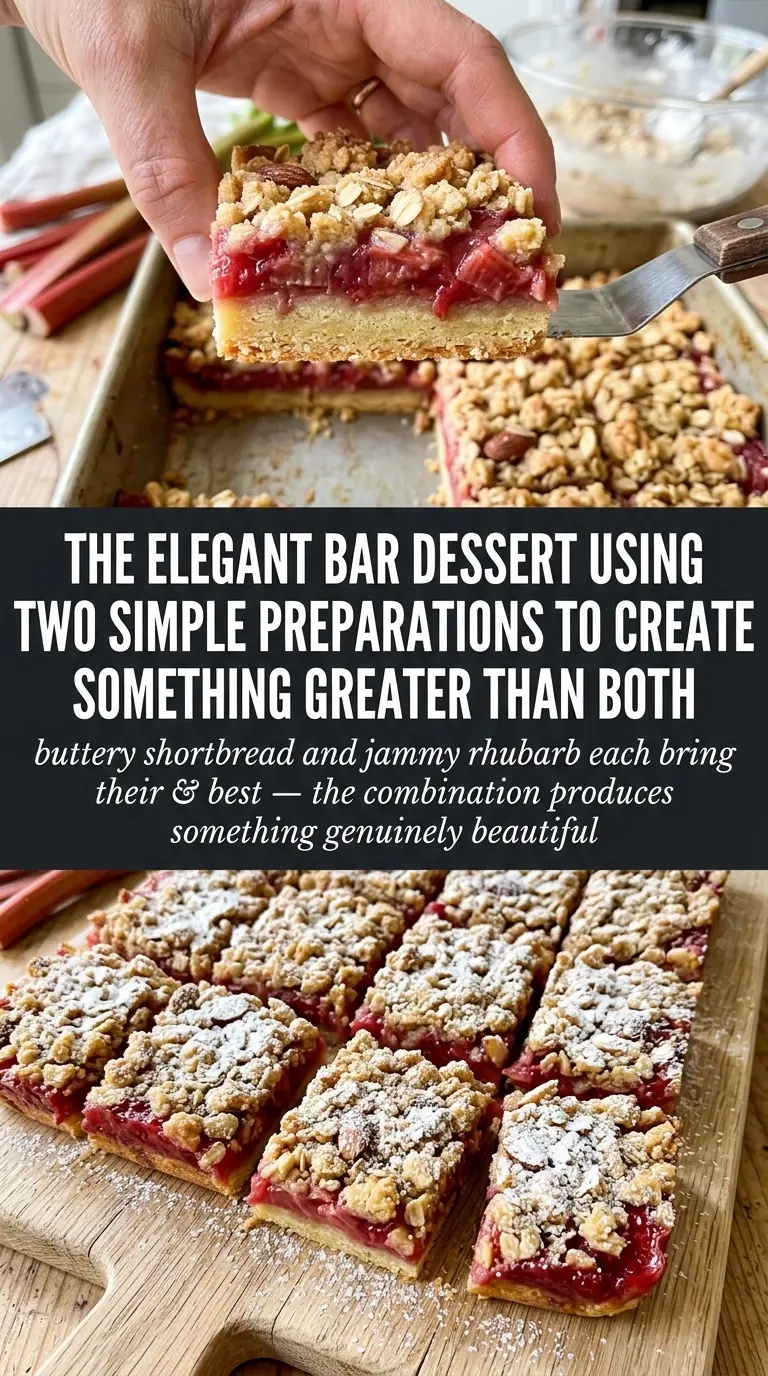
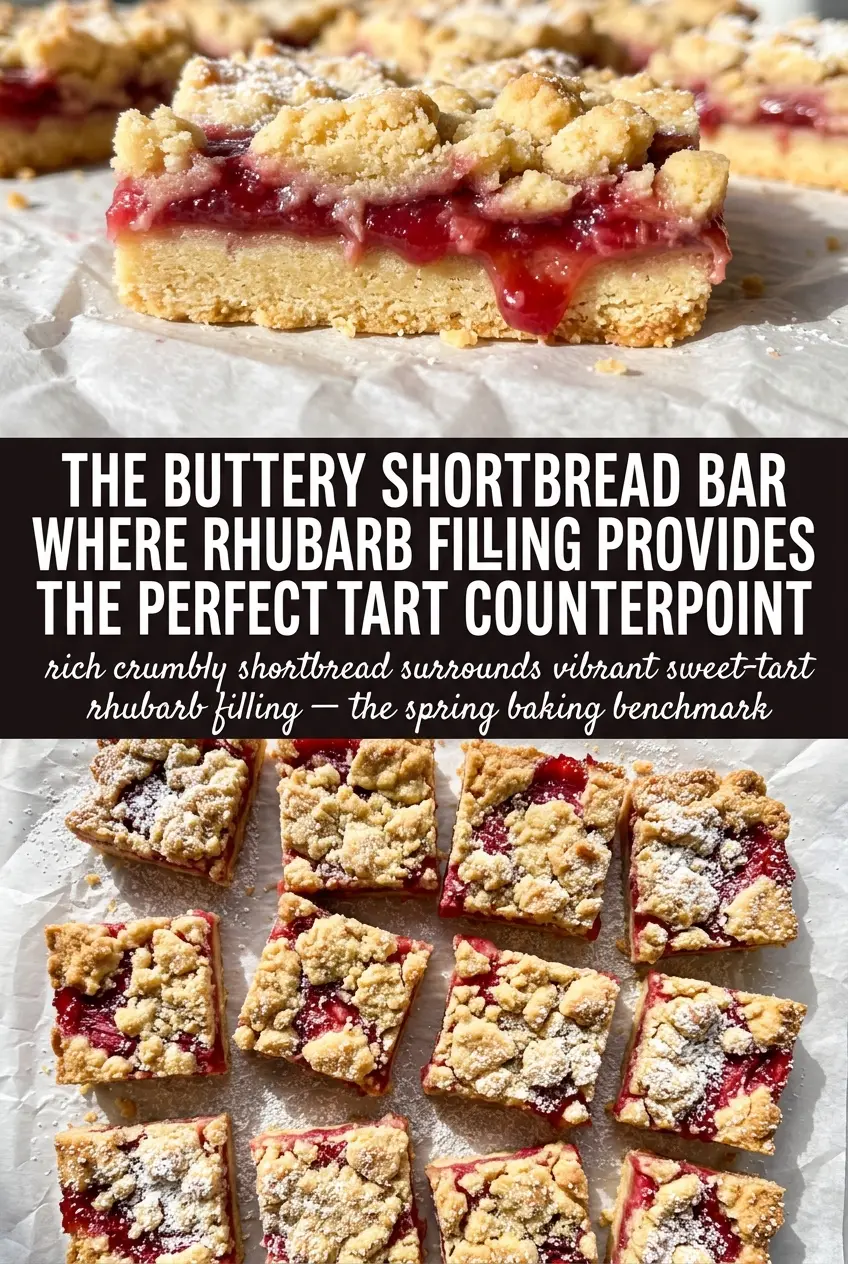
Buttery shortbread and a thick layer of tangy rhubarb make these bars hard to stop reaching for. The crust stays tender but sturdy enough to hold clean slices, and the filling cooks down into a jammy layer that tastes bright instead of overly sweet. A dusting of powdered sugar on top gives them that bakery-case look without adding any fuss.
What makes these bars work is the contrast. The shortbread starts cold, so it bakes up crumbly and rich instead of greasy, and the rhubarb gets cooked twice: first to soften and release its juice, then again with cornstarch so it sets up properly in the pan. That second bake matters. It gives the filling enough structure to cut neatly once chilled, which is where a lot of fruit bars go wrong.
Below, I’ve included the little details that keep the crust tender and the filling thick enough to layer cleanly. If you’ve ever had fruit bars slump apart on the cutting board, this version fixes that.
The filling set up beautifully after chilling, and the shortbread stayed buttery without getting soggy under the rhubarb. I cut them into neat squares after two hours in the fridge, and they held together perfectly.
Save these rhubarb shortbread bars for the days when you want a buttery crust, a thick jammy filling, and clean slices after chilling.
The Reason These Bars Slice Cleanly Instead of Collapsing
Rhubarb brings a lot of water with it, and that’s usually where fruit bars turn into a mess. If you spread undercooked rhubarb over the crust, the filling keeps loosening as it bakes and the bars never set with real structure. Cooking the rhubarb down on the stove first takes care of that excess moisture before it ever reaches the pan.
The other piece that matters is the cornstarch slurry. Stir it into the hot rhubarb after the fruit has softened, then cook it until the filling turns glossy and heavy on the spoon. If it still looks loose in the pan, it’s not ready. The filling should mound slightly when stirred and hold its shape for a second before settling.
- Cold butter — This is what gives the crust its sandy, short texture. Warm butter blends in too smoothly and you lose that tender crumble that makes the base taste like real shortbread.
- Powdered sugar — It dissolves faster than granulated sugar and helps the crust bake up fine and delicate. You can’t swap in granulated sugar and expect the same texture.
- Fresh rhubarb — Fresh is the right choice here because frozen rhubarb releases even more liquid. If frozen is all you have, thaw it first and drain it well before cooking.
- Cornstarch — This is the set. Arrowroot can work in a pinch, but cornstarch gives the thick, bakery-style filling that holds its cut edges after chilling.
What Each Ingredient Is Actually Doing in Rhubarb Shortbread Bars
- Protein (quality, proper thickness) — Good quality protein tastes better. Even thickness ensures even cooking.
- Seasoning (bold, distributed throughout) — Don’t be shy with salt and pepper. Quality seasoning elevates everything.
- Oil or fat (protective and flavorful) — The fat helps develop crust and carries flavors. Use generously.
- Heat management (appropriate temperature for the protein) — Too high and the outside burns before the inside cooks. Too low and it steams.
- Technique (sear, then finish based on thickness) — Proper technique creates flavor. Sear for crust, then cook through gently.
- Aromatics and seasonings (garlic, herbs, spices) — These add complexity and depth. Distribute them throughout the cooking process.
- Resting time (let it rest before serving) — Resting allows juices to reabsorb. This keeps the protein moist and tender.
- Optional: finishing sauce or glaze — A light sauce adds richness without overwhelming. Apply at the very end.
Building the Shortbread Base and Thickening the Rhubarb at the Right Time
Pressing the Crust Without Packing It Hard
Mix the flour, powdered sugar, and salt, then cut in the cold butter until the mixture looks like damp crumbs with some pea-sized bits left. Those little butter pieces melt in the oven and create a more tender base. Press it into the pan just firmly enough to hold together; if you mash it down like cookie dough, it bakes up dense instead of crumbly.
Bake the crust until the edges just start to turn pale gold. That first bake gives it enough structure to support the fruit layer, and it keeps the bottom from turning soft once the rhubarb goes on. Don’t wait for deep color here. The crust finishes baking after the filling is added.
Cooking the Rhubarb Down Until It Gets Jammy
Simmer the diced rhubarb with sugar and water over medium heat until the pieces break apart and the mixture looks thick and glossy, about 15 minutes. At first it will look watery and a little alarming. Keep going until the fruit is mostly collapsed and the spoon leaves a trail across the bottom of the pan.
Whisk the cornstarch with a splash of water before adding it, or it can clump and leave starchy bits in the filling. Once it goes in, cook the mixture for another minute or two. The filling should turn noticeably thicker and slightly translucent, not cloudy or runny.
Finishing in the Oven and Cooling for Clean Cuts
Spread the hot filling over the baked crust and return the pan to the oven for the final bake. This helps the top layer set and lets the filling lock onto the crust instead of sliding around. When it comes out, it should wobble only slightly in the center, not slosh.
The cooling time matters as much as the baking. Let the pan cool completely, then refrigerate it for at least 2 hours before slicing. If you cut them warm, the filling will smear and the shortbread will crumble at the edges. A sharp knife wiped clean between cuts gives the neatest bars.
How to Adapt These Rhubarb Bars Without Losing the Texture
Make them gluten-free with a 1:1 baking blend
Use a cup-for-cup gluten-free flour blend in place of the all-purpose flour. The crust will be a little more delicate, so press it in gently and let it cool completely before lifting from the pan. The flavor stays the same, but the crumb will be slightly less sandy and more tender.
Use strawberries for a sweeter filling
Swap up to half the rhubarb for chopped strawberries if you want a softer, sweeter bar. Strawberries bring more juice and less tartness, so cook the mixture a few extra minutes before adding the cornstarch. The bars will taste fruitier and less sharp, but the texture still needs that same thick stovetop reduction.
Add a little orange zest for a brighter finish
Stir a teaspoon of orange zest into the rhubarb while it simmers. It doesn’t make the bars taste citrusy; it just lifts the flavor and sharpens the tart fruit. Skip juice here, since extra liquid works against the set you’re trying to build.
Storage and Reheating
- Refrigerator: Store covered for up to 5 days. The filling firms up even more as it chills, and the crust stays pleasantly tender.
- Freezer: These freeze well. Wrap the cut bars individually, then store them in an airtight container for up to 2 months. Thaw in the fridge so the filling doesn’t weep.
- Reheating: These are best served cold or at cool room temperature, not warmed. If you want a softer texture, let a bar sit out for 15 to 20 minutes after refrigeration instead of heating it, since warmth can loosen the fruit layer.
Questions I Get Asked About These Rhubarb Shortbread Bars
Rhubarb Shortbread Bars
Ingredients
Equipment
Method
- Preheat the oven to 350°F and line a 9x13-inch pan with parchment paper, leaving overhang for lifting.
- Mix all-purpose flour, powdered sugar, and salt, then cut in the cold butter until the mixture looks crumbly.
- Press the crumbly shortbread mixture firmly into the lined pan to form an even layer.
- Bake for 25 minutes at 350°F until the crust is lightly golden.
- Simmer diced rhubarb with sugar and water until very soft and thick, about 15 minutes.
- Stir cornstarch mixed with a little water into the rhubarb and cook until very thick.
- Spread the thick rhubarb mixture over the hot shortbread crust in an even layer.
- Return to the oven and bake for 15-20 minutes at 350°F until set.
- Cool completely, then refrigerate for 2 hours to fully firm up for clean slices.
- Dust with powdered sugar, cut into bars, and serve.