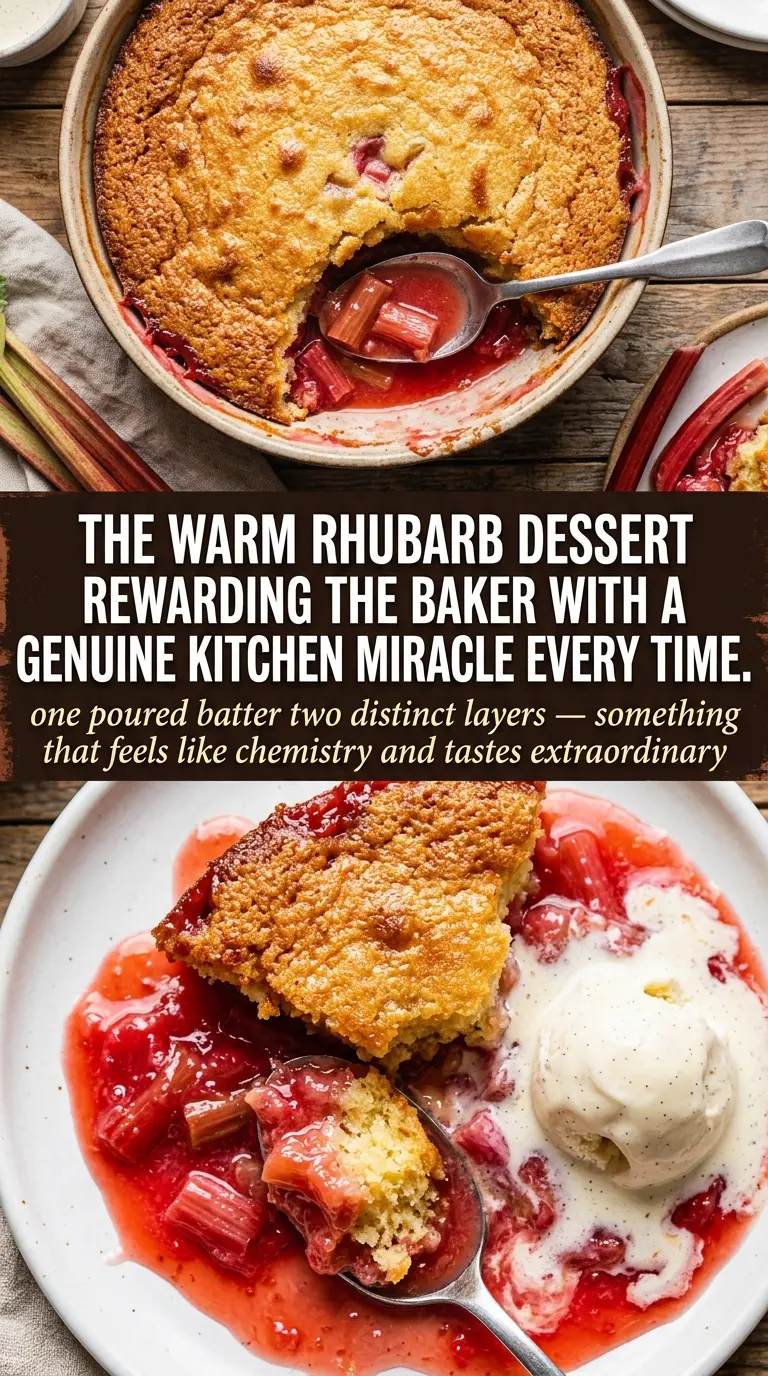
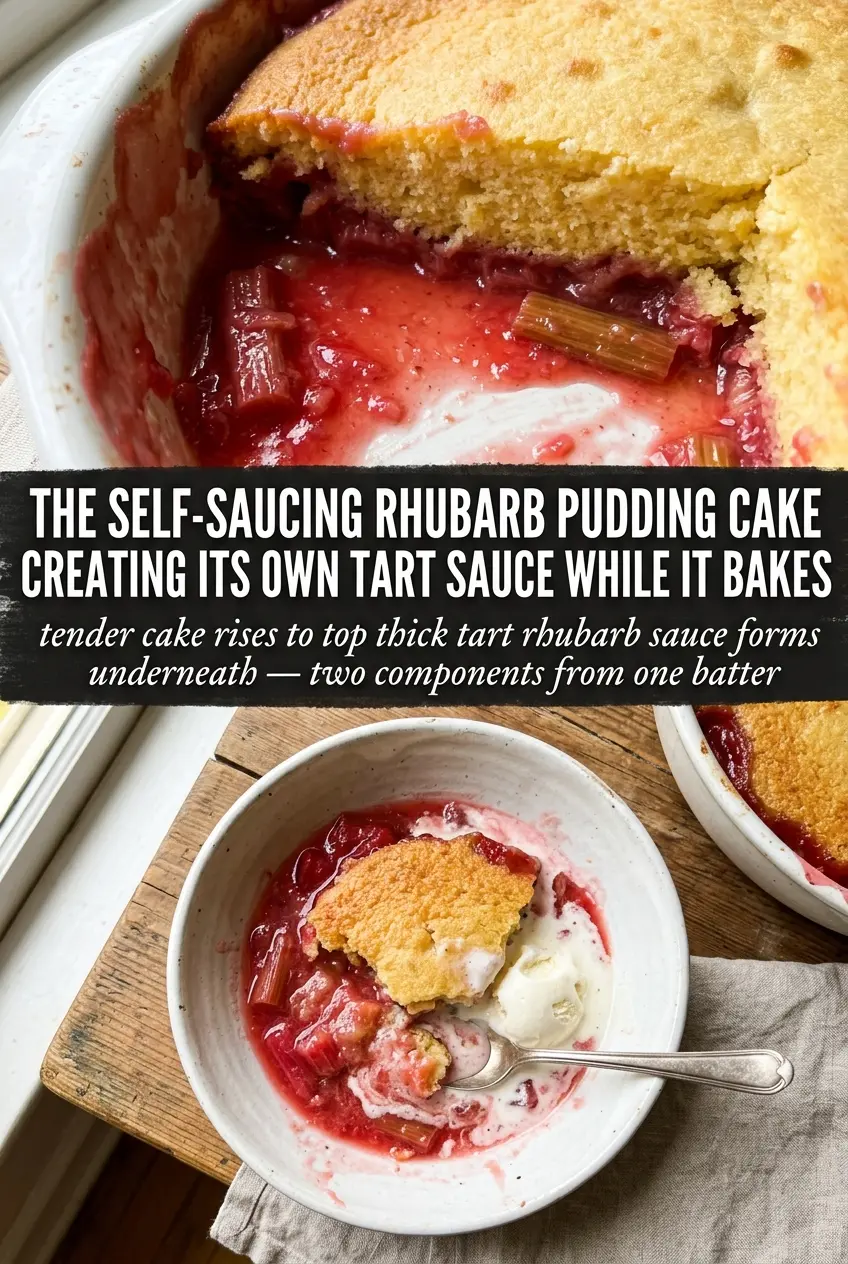
Rhubarb pudding cake bakes into two textures at once: a tender, buttery cake on top and a warm, spoonable sauce underneath. The rhubarb softens just enough to turn bright and jammy, while the top stays light instead of sinking into the filling. It’s the kind of dessert that looks humble in the pan and then gets quiet at the table because everyone’s busy reaching for a second serving.
The trick is in the order of the layers. The batter goes in first, then the sugar-cornstarch mixture, then the boiling water poured over the top without stirring. That sounds backward if you’ve never made a self-saucing dessert before, but it’s exactly what creates the pudding layer as it bakes. The cornstarch thickens the liquid at the bottom while the cake sets above it, and the rhubarb gives the whole pan a tart edge that keeps the sweetness in check.
Below you’ll find the small details that matter most: how to keep the batter from turning tough, what to expect while it bakes, and a few smart swaps if your rhubarb is especially sharp or you need to make it dairy-free.
The sauce settled into the bottom perfectly and the rhubarb stayed bright instead of turning mushy. I served it warm with vanilla ice cream and my husband went back for a second bowl before it cooled.
Save this rhubarb pudding cake for the warm, spoonable dessert layer that forms under the golden top.
The Layer Order That Creates the Sauce Beneath the Cake
Most pudding cakes fail when the batter and sauce get mixed together too early. Once that happens, you lose the separate layers and end up with one dense, muddy dessert instead of a cake with a spoonable sauce below it. Here, the batter stays thick enough to hold the rhubarb in place, and the hot water is poured over the top in a steady stream so it can sink through on its own.
That bottom layer needs cornstarch in the sugar mixture. It doesn’t thicken instantly in the oven, but it gives the cooking liquid a head start so the sauce sets into a glossy pudding instead of staying thin. Bake until the edges are bubbling and the center looks set but still soft when nudged. If the middle still sloshes, it needs more time; if it looks dry, you’ve gone too far and the sauce has cooked off.
What Each Ingredient Is Actually Doing in the Pan
- All-purpose flour — This gives the cake enough structure to rise above the sauce without turning bready. Cake flour makes the crumb a little too fragile here, and the dessert can sink instead of lifting cleanly.
- Rhubarb — Fresh rhubarb is worth using if you can get it. It bakes down into soft, tangy pieces that cut through the sugar; frozen rhubarb can work, but don’t thaw it first or it will water down the batter.
- Milk and melted butter — This is the tender base of the cake. Melted butter keeps the mixing simple and gives the top a soft, even crumb without the fuss of creaming.
- Cornstarch — This is what turns the hot sugary water into sauce. Flour won’t give you the same smooth, glossy finish here, so stick with cornstarch for that classic self-saucing texture.
- Boiling water — It has to be boiling when it goes in. Warm water won’t kick-start the sauce layer the same way, and the dessert can bake up dry underneath.
Getting the Batter and Sauce to Work Together
Mixing the Cake Base
Whisk the dry ingredients first so the baking powder and sugar are evenly distributed, then stir in the milk and melted butter just until the batter comes together. It should look smooth and thick, not whipped. Overmixing will tighten the crumb and make the top less tender, which matters in a dessert that already has a lot going on underneath.
Adding the Rhubarb
Fold in the diced rhubarb gently so it stays in the batter instead of dropping straight to the bottom. Small, even pieces bake more cleanly than big chunks, and you want them spread through the cake so every spoonful gets some tart fruit. Spread the batter into the dish in an even layer; if it’s mounded in the center, the sauce won’t flow through evenly.
Building the Self-Saucing Layer
Mix the sugar and cornstarch together before sprinkling it over the batter. That keeps the cornstarch from clumping once the water hits it. Pour the boiling water over the back of a spoon or slowly around the edge of the pan so you don’t blast a crater into the batter, then dot the top with butter and leave it alone. Stirring at this point ruins the layers.
Baking Until the Center Just Sets
Bake until the top is golden and the sauce is bubbling around the edges. The center should look set, but if you press lightly, it still has a little give. Pull it too early and the sauce stays thin; leave it too long and the bottom thickens past spoonable. Let it rest for 15 minutes so the sauce settles before serving.
How to Adapt This Rhubarb Pudding Cake for Different Kitchens
Make it dairy-free
Use a neutral plant milk and swap the butter for a dairy-free baking stick or refined coconut oil. The cake will still bake up tender, though coconut oil brings a faint flavor that works best if you already like it in desserts.
Use frozen rhubarb
Frozen rhubarb can stand in for fresh, but keep it frozen when you fold it in. Thawed rhubarb releases too much liquid and can thin the batter before it even reaches the oven.
Lean into sweeter fruit
If your rhubarb is especially tart, add a handful of diced strawberries to the batter. Strawberries soften quickly and add sweetness, but they also release juice, so keep the pieces small and don’t go beyond about 1 cup or the sauce can turn loose.
Storage and Reheating
- Refrigerator: Store covered for up to 4 days. The sauce will thicken as it chills.
- Freezer: It freezes, but the sauce layer loses some of its silky texture after thawing. Freeze in portions, wrapped well, for up to 2 months if you don’t mind a softer result.
- Reheating: Warm individual portions in the microwave in short bursts or reheat the whole dish covered in a 300°F oven. Don’t blast it on high heat, or the cake dries out before the sauce loosens again.
The Questions People Ask Before They Bake Rhubarb Pudding Cake
Rhubarb Pudding Cake
Ingredients
Equipment
Method
- Preheat the oven to 350°F and grease an 8x8-inch baking dish.
- Whisk together all-purpose flour, sugar, baking powder, and salt until evenly combined.
- Stir in milk and melted butter until the batter is smooth.
- Fold in diced fresh rhubarb and spread the batter into the prepared dish.
- Mix sugar and cornstarch, then sprinkle the mixture evenly over the batter.
- Pour boiling water over the top and dot with butter.
- Bake at 350°F for 40-45 minutes, until the cake is golden and the sauce is bubbling around the edges.
- Cool for 15 minutes before serving warm with vanilla ice cream.