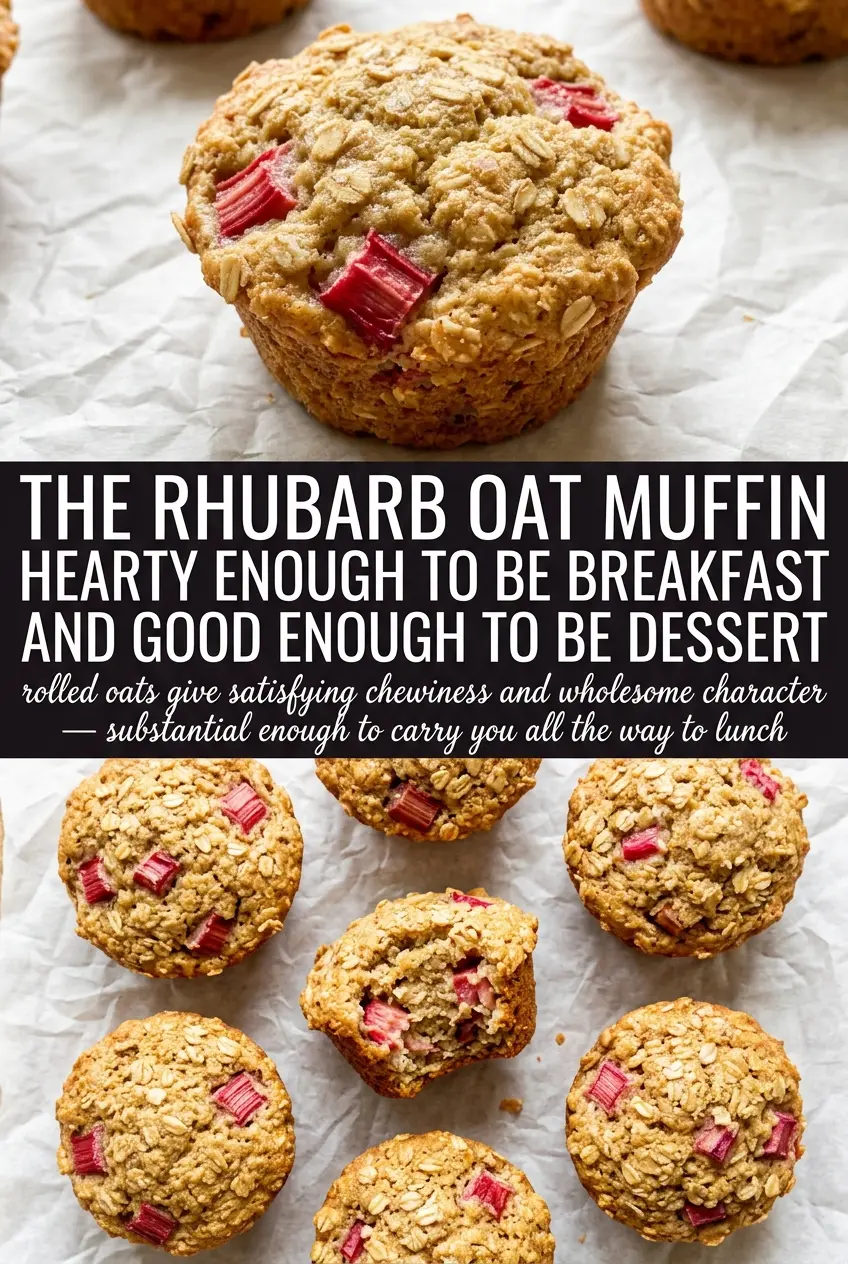
Rhubarb oat muffins bake up with a tender crumb, a little chew from the oats, and bright pockets of rhubarb that keep each bite from turning flat or overly sweet. The streusel-style oat topping adds just enough crunch to make these feel like something special without turning them into a bakery project.
What makes this version work is the oat soak. Letting the oats sit in buttermilk softens them before they go into the batter, which gives the muffins a heartier texture without any toughness. Brown sugar does double duty here too: it sweetens the batter and adds a deeper, almost caramel note that plays nicely with rhubarb’s tart edge.
Below you’ll find the little details that matter most, from keeping the rhubarb evenly scattered to knowing exactly when to pull the muffins from the oven. If you’ve had oat muffins turn dense or dry before, this method fixes both problems.
The oats softened up beautifully in the buttermilk and the muffins stayed moist for two days. I loved the tart little rhubarb pieces in every bite, and the topping gave them just enough crunch.
Save these rhubarb oat muffins for a breakfast bake with soft centers, tart rhubarb, and a crunchy oat topping.
The Trick to Keeping Rhubarb from Sinking to the Bottom
Rhubarb is heavy and wet, which is why it often falls straight through muffin batter and collects in a soggy layer at the bottom. The fix here is simple: fold it in at the very end, after the batter is just mixed, and stop as soon as the fruit looks evenly dispersed. Overmixing tightens the batter and makes it harder for the muffins to rise evenly, while rough stirring crushes the rhubarb and leaks extra juice into the bowl.
The batter should look thick and a little lumpy. That isn’t a problem. Muffin batter isn’t supposed to be smooth, and if it looks glossy and loose, you’ve probably gone too far. These bake up best when the fruit pieces stay distinct and the oats have a chance to hold the crumb together.
What the Oats, Buttermilk, and Brown Sugar Are Each Doing Here
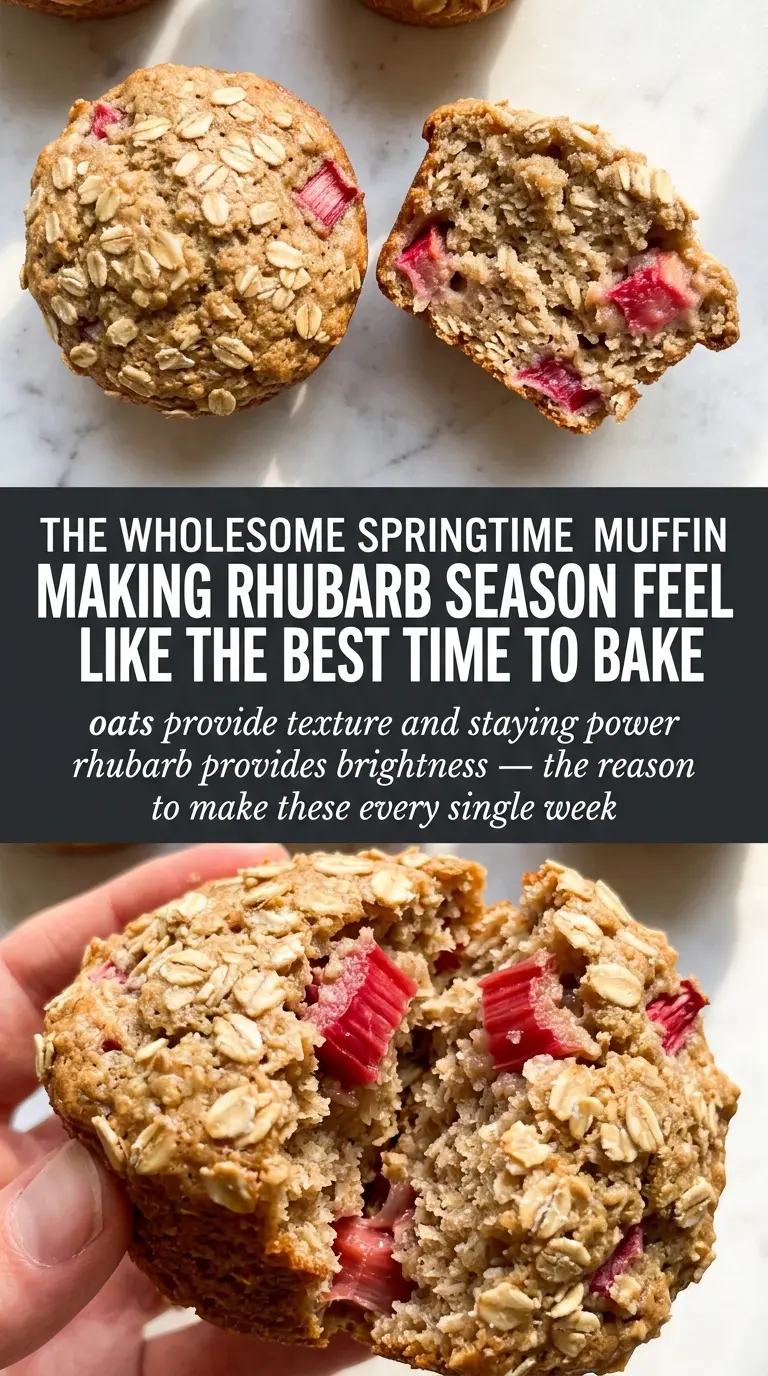
- Old-fashioned oats — These give the muffins their hearty texture and a little chew. Quick oats can work in a pinch, but they soften more and the muffins lose some of that rustic bite.
- Buttermilk — This softens the oats and adds acidity, which helps the baking soda lift the muffins. Regular milk won’t do the same job, so if you need a substitute, mix 1 cup milk with 1 tablespoon lemon juice or vinegar and let it sit for 5 minutes before using.
- Brown sugar — It brings moisture and a deeper sweetness that works better than white sugar with tart rhubarb. Light or dark brown sugar both work, though dark brown sugar gives a little more molasses flavor.
- Vegetable oil — Oil keeps the crumb soft for days. Melted butter adds flavor, but it can make the texture a bit firmer once the muffins cool.
- Fresh rhubarb — Fresh is best here because frozen rhubarb can bleed too much liquid into the batter. If frozen is all you have, don’t thaw it first; fold it in straight from frozen and expect a slightly wetter muffin.
Mixing the Batter Without Losing the Lift
Soak the Oats First
Stir the oats into the buttermilk and let them sit for the full 15 minutes. They should look plumper and softer, not dry and papery. This step keeps the oats from stealing moisture from the batter later, which is one of the main reasons oat muffins turn dry after cooling.
Build the Batter in Two Quick Turns
Whisk the dry ingredients together in one bowl, then add the oat mixture, oil, egg, and vanilla. Stir only until the flour disappears. If you keep mixing past that point, the muffins turn dense and a little rubbery instead of tender.
Fold in the Rhubarb and Stop
Add the diced rhubarb last and use just a few folding strokes. The batter should look uneven, with fruit tucked throughout but not smashed. Divide it right away so the baking powder and baking soda can start working in the oven, not on the counter.
Bake Until the Tops Spring Back
The muffins are done when the tops are golden and a toothpick comes out clean or with a few moist crumbs. If the tops look set but the centers still feel soft, give them another minute or two. Pulling them too early leaves a gummy middle, especially with the extra moisture from the rhubarb.
Three Ways to Adjust These Muffins Without Losing the Good Part
Make Them Dairy-Free
Swap the buttermilk for an unsweetened plant milk mixed with 1 tablespoon lemon juice or vinegar. The acidity still helps the muffins rise, though the flavor will be a little less tangy and the oats won’t soften quite as much as they do with real buttermilk.
Use Whole Wheat for a Fuller, Heavier Muffin
Replace up to half the all-purpose flour with whole wheat flour. The muffins will be a little denser and nuttier, which works nicely with the oats, but the crumb won’t be quite as light. Go all the way to 100% whole wheat only if you want a much firmer, more rustic result.
Turn Them Into a Freezer-Friendly Breakfast Bake
Bake the muffins as written, cool them completely, and freeze in a single layer before bagging. They thaw with their texture intact, and a short warm-up in the oven brings the tops back to life better than the microwave, which tends to make the oats a little chewy.
Storage and Reheating
- Refrigerator: Store in an airtight container for up to 4 days. The rhubarb keeps them moist, but the tops soften after the first day.
- Freezer: Freeze for up to 2 months. Wrap each muffin tightly or freeze them on a tray first so the topping doesn’t smear.
- Reheating: Warm in a 300°F oven for 8 to 10 minutes, or microwave for 15 to 20 seconds if you’re in a hurry. Don’t overheat them, or the crumb turns dry and the rhubarb can get mushy.