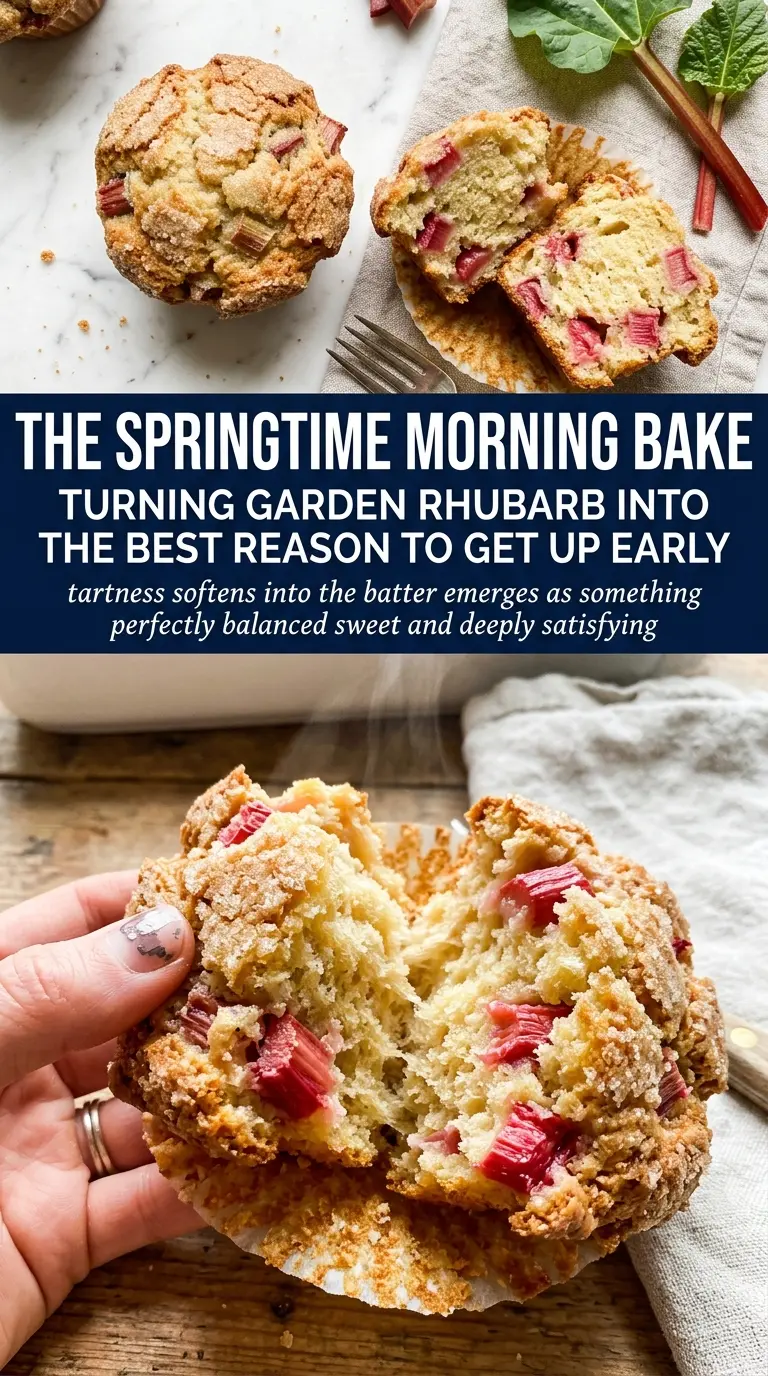
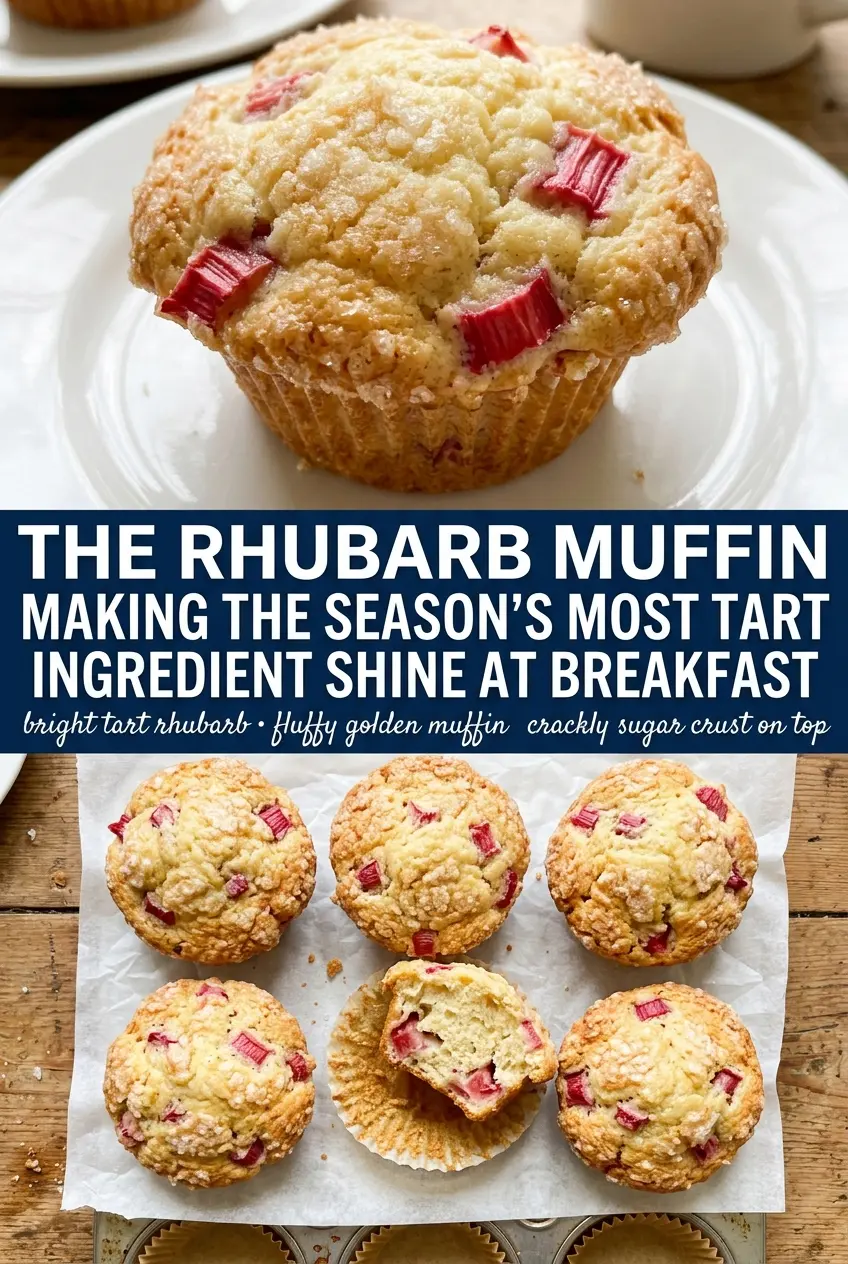
Rhubarb muffins bake up with tender crumbs, golden domed tops, and little pockets of tart fruit that wake up every bite. The sugar on top gives you a light crunch, while the inside stays moist from the oil and milk, not heavy or cake-like. They’re the kind of breakfast muffin that disappears fast because they taste bright without being fussy.
What makes this version work is the balance. Rhubarb brings a sharp edge, so the batter needs enough sweetness and fat to keep it from tasting harsh, but not so much that you lose the fruit. A quick muffin method keeps the gluten from tightening up, which is what gives you that soft, just-baked texture instead of a dense loaf shape in muffin cups.
Below you’ll find the small details that matter: how to keep the rhubarb from sinking, why the batter should look a little rough before it goes into the pan, and a few smart swaps if you need to work with what’s in the kitchen.
The rhubarb stayed evenly spread through the batter and the muffins came out with those beautiful domed tops. Mine baked in 19 minutes and the cinnamon sugar made the tops just crisp enough.
Save these rhubarb muffins for the mornings when you want tart fruit, a soft crumb, and a cinnamon sugar top in one pan.
The Part That Keeps Rhubarb Muffins Tender Instead of Tough
Rhubarb is tricky because it brings a lot of moisture and a lot of sharp flavor at the same time. If you stir the batter too long after the flour goes in, the muffins turn rubbery before they even hit the oven. The better move is to mix just until the dry streaks disappear, then fold in the rhubarb with a light hand so the fruit stays scattered through the batter instead of sinking to the bottom.
The oven temperature matters here too. Four hundred degrees gives the muffins a quick burst of lift, which is how you get those domed tops instead of flat, pale ones. If your muffins spread more than they rise, the batter was overmixed or the oven wasn’t fully preheated before the pan went in.
What Each Ingredient Is Actually Doing in These Muffins
- All-purpose flour — This gives the muffins enough structure to hold the rhubarb without collapsing. Cake flour would make them too delicate, and bread flour would make them chewy instead of tender.
- Sugar — Rhubarb needs enough sweetness to round out its tartness. You can reduce it a little, but not much if you want the muffins to taste balanced instead of sharp.
- Baking powder — This is the lift. Fresh baking powder matters here because the batter depends on it for the domed top and open crumb.
- Milk and oil — Oil keeps the crumb soft even after the muffins cool, while milk loosens the batter enough to bake through without drying out. Butter can be used, but the texture will be a little less moist once the muffins sit.
- Fresh rhubarb — Dice it small so it softens during the short bake time and distributes evenly. Big chunks can leave wet pockets and pull the crumb apart.
- Cinnamon sugar — This is the finish that gives the tops a little crunch and a warm note that works with the tart fruit. Plain sugar works in a pinch, but the cinnamon makes the top taste finished.
Mix Fast, Fill High, and Bake Hot
Building the Dry Base
Whisk the flour, sugar, baking powder, and salt together until the mixture looks even and light. This matters more than it sounds like it should, because the baking powder has to be distributed well or some muffins rise unevenly. If you see clumps of baking powder in the finished batter, those spots can taste bitter and leave little tunnels in the crumb.
Bringing the Batter Together
Beat the egg, milk, oil, and vanilla until the liquid looks smooth, then pour it into the dry ingredients all at once. Stir just until the flour disappears and stop before the batter turns glossy. A lumpy batter is the right batter here; smooth batter means you’ve gone too far and the muffins will bake up tougher.
Folding in the Rhubarb
Add the diced rhubarb and fold only enough to spread it around. If the pieces are coated in batter and still clearly visible, you’re in good shape. Heavy stirring at this stage breaks the fruit and streaks too much moisture through the batter, which can leave the center gummy.
Baking to a Golden Top
Divide the batter into a lined 12-cup tin, filling each cup about two-thirds full so there’s room for lift. Sprinkle the cinnamon sugar over the tops right before baking. Pull the muffins when they’re golden and a toothpick comes out clean or with just a few moist crumbs; if the tops look done but the center feels soft, give them another minute or two rather than guessing.
How to Adjust These Muffins Without Losing the Good Part
Make them dairy-free
Use an unsweetened non-dairy milk with a neutral taste, like almond or oat milk. The muffins will still be soft and tender because the oil carries most of the moisture here, and you won’t lose much except a little richness from dairy milk.
Swap in frozen rhubarb
Use it straight from frozen and don’t thaw it first. Thawed rhubarb leaks too much juice and can make the batter wet in spots, while frozen pieces hold their shape long enough to bake evenly.
Add strawberries for a sweeter muffin
Replace up to half the rhubarb with small diced strawberries. The muffins turn softer and sweeter, and you lose some of the tart edge, so they taste more like a classic bakery-style fruit muffin than a sharp rhubarb one.
Store and reheat for later
Refrigerator: Keep in an airtight container for up to 4 days. Freezer: Freeze fully cooled muffins in a sealed bag for up to 2 months; wrap them first if you want to protect the tops from freezer burn. Reheating: Warm from room temperature in a low oven or give one muffin a short burst in the microwave; long reheating makes the crumb dry and the rhubarb turn mushy.
Questions I Get Asked About These Rhubarb Muffins
Rhubarb Muffins
Ingredients
Equipment
Method
- Preheat the oven to 400°F and line a 12-cup muffin tin with paper liners.
- Whisk together all-purpose flour, sugar, baking powder, and salt in a large bowl.
- Beat egg, milk, vegetable oil, and vanilla extract in a separate bowl until combined.
- Pour the wet ingredients into the dry ingredients and stir until just moistened.
- Gently fold in fresh rhubarb, finely diced.
- Divide batter among muffin cups, filling each about 2/3 full, then sprinkle with cinnamon sugar for topping.
- Bake for 18-20 minutes at 400°F until golden and a toothpick comes out clean.
- Cool the muffins in the pan for 5 minutes before transferring to a wire rack.