Silky custard, tart rhubarb, and a flaky crust make this pie the kind of dessert that disappears fast once it hits the table. The filling sets into a soft, sliceable custard with bright pieces of rhubarb running through it, so every bite gives you contrast instead of just sweetness. It lands somewhere between old-fashioned cream pie and fruit pie, which is exactly why it earns a permanent place in the spring dessert rotation.
The trick is keeping the custard gentle enough to set without curdling and giving the rhubarb enough time in the oven to soften before the filling firms up. The first blast of heat helps the crust and filling get moving, then the lower temperature lets the custard finish cooking evenly. I also like cutting the rhubarb into small, even pieces so it cooks through at the same pace and doesn’t leave you with crunchy pockets in the finished pie.
Below you’ll find the small details that matter here: how to keep the crust from going soggy, what the filling should look like when it’s done, and a few smart swaps if you need to work with what you have.
The custard set up beautifully and the rhubarb stayed tender without turning mushy. I chilled it overnight, and the slices came out clean with no runny center.
Save this rhubarb custard pie for the creamy, tart filling and that flaky golden crust.
The Part That Keeps Rhubarb Custard Pie Sliceable
Custard pie fails for two reasons: the filling gets too hot too fast, or the fruit dumps excess moisture into the pie before the eggs have a chance to set. Rhubarb brings a lot of water with it, so the structure depends on the flour doing its job and the oven heat easing down after the first burst. That first 15 minutes at 400°F isn’t about browning the top. It’s about setting the edges of the custard and starting the fruit cook so the center can finish at a lower, steadier temperature.
If you’ve had a custard pie turn grainy or soupy, the problem was probably heat, not the ingredient list. The filling should look puffed at the edges and slightly wobbly in the center when it comes out. It finishes setting as it cools. Pull it when the center still has a soft jiggle, and don’t wait for a firm middle in the oven or you’ll overshoot it.
What Each Ingredient Is Doing in the Filling
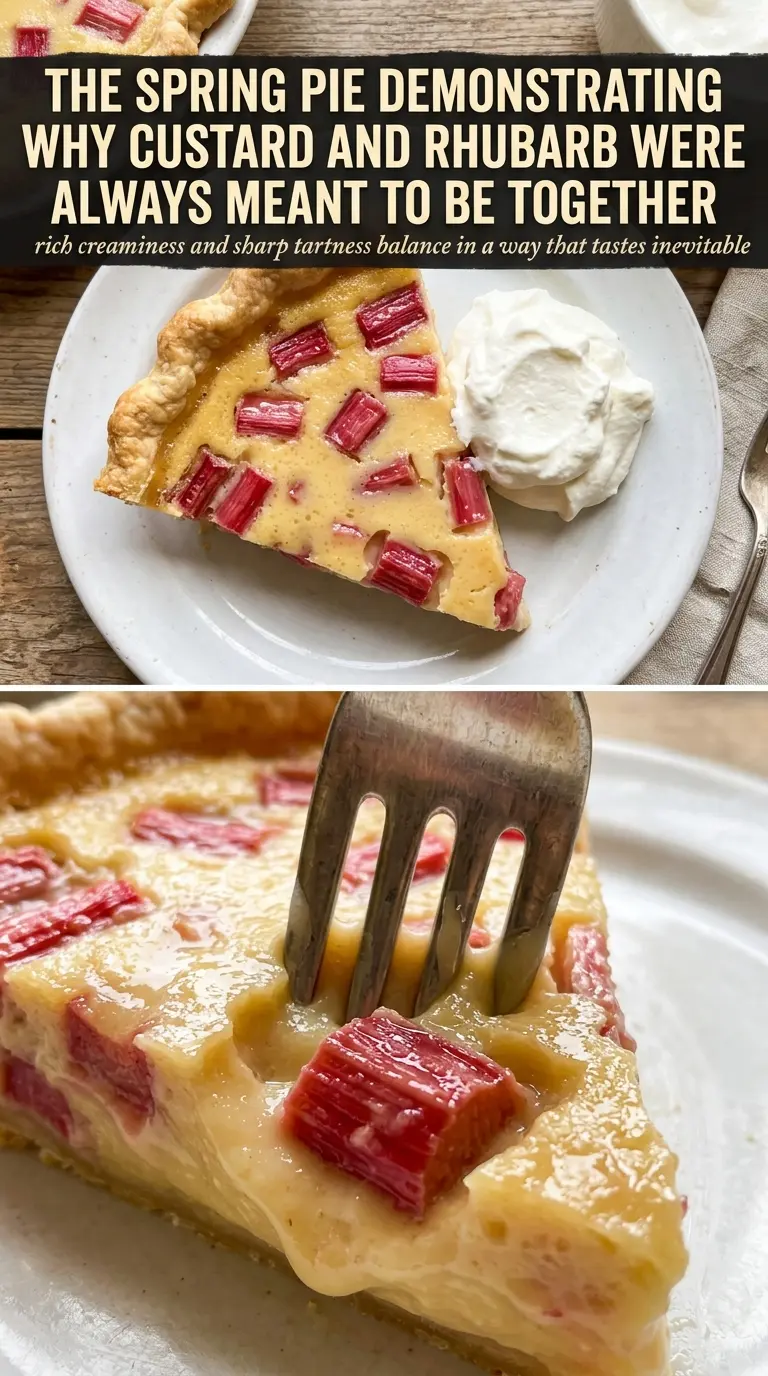
- Rhubarb — Fresh rhubarb gives the pie its clean tart edge and its pretty pink flecks. Cut it into 1/2-inch pieces so it softens during the bake without disappearing completely. Frozen rhubarb works in a pinch, but thaw it first and drain it well or the filling can turn loose.
- Eggs — They are the backbone of the custard. Whisk them until smooth, but don’t beat in a lot of air; too much foam can make the texture less silky. Room-temperature eggs blend more evenly with the milk and sugar.
- Flour — This is what helps the filling hold together once the rhubarb starts releasing juice. Three tablespoons is enough to stabilize the custard without turning it pasty. Don’t swap in cornstarch here unless you know exactly how it behaves, because it sets differently and can make the filling feel gelled instead of creamy.
- Milk — Whole milk gives the custard its tender, creamy body. Lower-fat milk will work, but the filling won’t taste as rich. I wouldn’t use a heavy cream substitute here unless you want a much denser pie.
- Nutmeg — Just a little is enough. It adds warmth and helps the pie taste classic instead of flat. Freshly grated nutmeg is worth using if you have it.
How to Layer, Bake, and Cool the Pie Without Breaking the Custard
Building the Fruit Base
Scatter the rhubarb evenly over the unbaked crust so the pieces are in a single layer as much as possible. That keeps the custard from pooling in one spot and helps every slice pick up fruit. If you pile the rhubarb too deep, the filling can set around the outside while staying wet underneath.
Mixing the Custard Smoothly
Whisk the sugar, eggs, flour, milk, nutmeg, and salt until the mixture looks completely smooth and slightly frothy. Dry flour streaks will leave little lumps in the baked custard, so scrape the bottom of the bowl well. Pour it over the rhubarb slowly so the fruit stays evenly distributed instead of floating to the top.
Using the Two-Temperature Bake
Start the pie at 400°F for 15 minutes, then reduce the heat to 350°F without opening the oven for too long. That initial heat helps the crust begin to set before the filling can seep into it. If your oven runs hot, check the crust edge early and shield it with foil if it starts to darken before the center is done.
Reading the Doneness Correctly
The pie is done when the edges are set and the center still has a slight wobble, like gelatin that has just barely tightened. Don’t trust a knife inserted in the middle to come out clean; custard pie doesn’t test that way. Cool it at least 3 hours before slicing so the structure firms up enough to cut cleanly.
Three Ways to Adjust Rhubarb Custard Pie for Your Kitchen
Gluten-Free Version
Use a sturdy gluten-free pie crust and replace the all-purpose flour with a 1:1 gluten-free baking blend. The filling still sets well, but the crust needs to be fully baked through so it doesn’t taste gummy under the custard.
Dairy-Free Swap
Unsweetened almond milk or oat milk can replace the milk, though the pie will taste a little lighter and less rich. Oat milk gives the closest body. Skip anything strongly flavored, because this pie depends on a clean custard base.
Making It Less Sweet
You can reduce the sugar a little if your rhubarb is very tart, but don’t cut it too far or the custard won’t taste balanced. A small reduction still leaves enough sweetness for the eggs and nutmeg to come through without turning the pie flat.
Storage and Reheating
- Refrigerator: Store covered for up to 4 days. The custard stays best when chilled, and the slices hold together more cleanly the next day.
- Freezer: I don’t recommend freezing this pie. Custard can turn watery and grainy after thawing, and the rhubarb softens too much.
- Reheating: Serve it cold or let it sit at room temperature for 20 to 30 minutes. Warming this kind of pie can loosen the custard and make the crust lose its crisp edge.
Answers to the Questions Worth Asking
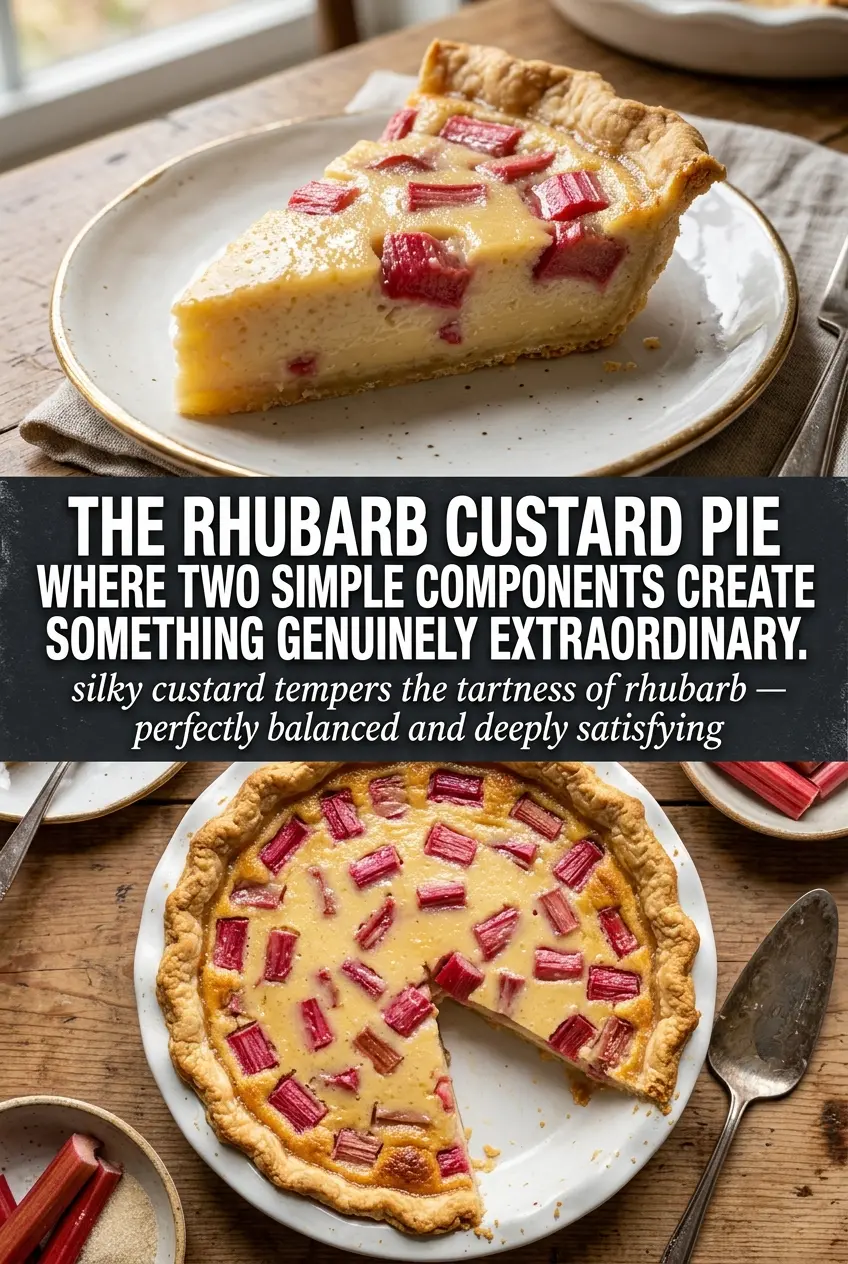
Rhubarb Custard Pie
Ingredients
Equipment
Method
- Preheat the oven to 400°F and place the pie crust in a pie plate, keeping the edges even. Visual cue: the crust should sit flat with no major folds.
- Arrange the rhubarb pieces in the bottom of the pie crust in an even layer. Visual cue: you should see pink rhubarb across the base.
- Whisk together the sugar, eggs, flour, milk, nutmeg, and salt until smooth. Visual cue: the mixture should look glossy and free of flour lumps.
- Pour the custard mixture over the rhubarb, distributing it to the edges. Visual cue: rhubarb should be partially covered with creamy custard.
- Bake at 400°F for 15 minutes. Visual cue: the custard will start to look slightly set around the edges.
- Reduce the oven temperature to 350°F and bake for 30-35 minutes more until the custard is set. Visual cue: the center should jiggle only slightly and not look liquid.
- Cool the pie completely for at least 3 hours before slicing. Visual cue: the filling should feel firm when you gently move the pie plate.
- Serve chilled with whipped cream. Visual cue: a cold slice will show creamy custard with rhubarb pieces throughout.