Rhubarb Custard Kuchen comes out with a soft, lightly sweet yeast crust, tart rhubarb tucked into the top, and a creamy custard that bakes into a smooth, golden layer. It slices cleanly once cooled, which matters here, because the contrast between the tender base and the set custard is the whole point. When it’s done right, you get a bakery-style pan dessert that feels old-fashioned in the best way.
The trick is keeping the dough simple and letting the custard do the heavy lifting. The yeast dough only needs a short rise, just enough to relax and puff a little before it goes into the pan. The custard is thickened with eggs and a little flour, which helps it set around the rhubarb instead of leaking into the crust. That small bit of flour is what keeps the filling from baking up loose or watery.
Below, I’ve included the part that usually trips people up most: how to tell when the custard is actually set, not just browned. I’ve also added a few smart variations for using different fruit or making the cake a little richer or lighter without losing the structure that makes kuchen work.
The custard set up beautifully and the rhubarb stayed bright and tart instead of turning mushy. I let it cool completely and the slices came out neat, with that tender cake layer holding everything together.
Save this Rhubarb Custard Kuchen for the pan dessert with a tender yeast crust and a creamy baked custard top.
The Custard Sets at the Edge Before It Looks Done in the Middle
This is the part that separates a neat slice from a pan of soft filling. The custard keeps cooking after it leaves the oven, so if you wait until the center looks firm, you’ve already gone too far. Pull it when the edges are puffed, the top is golden, and the center still has the slightest wobble when you nudge the pan.
The rhubarb releases some liquid as it bakes, which is why the flour in the custard matters. It gives the filling enough structure to hold onto that moisture instead of turning runny. Letting the cake cool all the way is not optional here; warm custard always looks looser than it will once set.
What the Dough, Custard, and Rhubarb Each Bring to the Pan
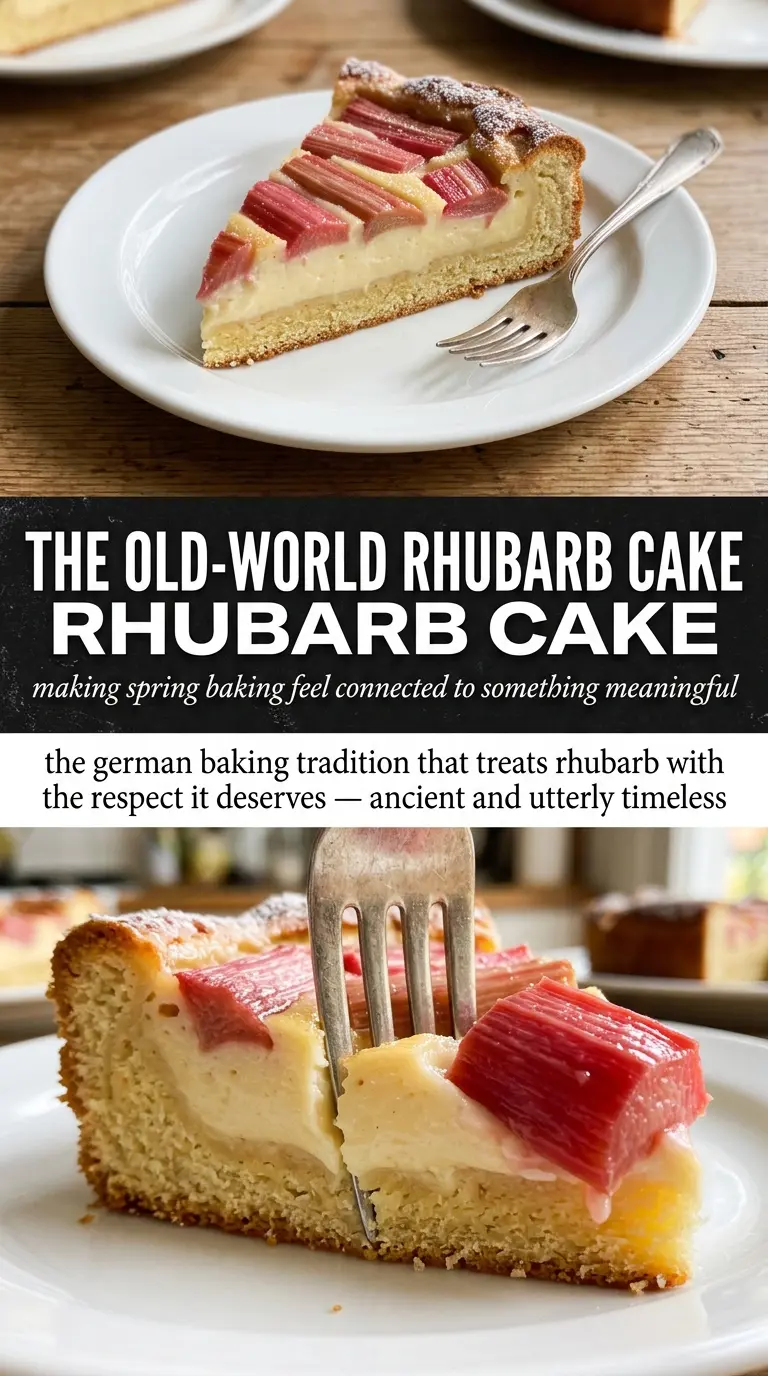
- Active dry yeast — This gives the crust its soft, bread-like lift. Proof it in warm water first so you know it’s alive; if the mixture doesn’t look foamy after 5 minutes, start over before adding the rest of the dough ingredients.
- Milk and butter — These keep the dough tender and slightly rich. The milk should be warm, not hot, or it can kill the yeast and leave you with a dense base instead of a light one.
- Eggs in the custard — They set the filling and give it that classic baked custard texture. Whisk them thoroughly with the sugar and flour so the custard bakes evenly instead of separating into streaks.
- Heavy cream — This is what makes the topping taste plush and smooth. I wouldn’t swap in milk here unless you want a thinner, less luxurious custard.
- Rhubarb — Fresh rhubarb is worth using if you can get it because it keeps its shape and bright tartness. Cut it into even 1-inch pieces so it bakes through at the same rate and doesn’t leave pockets of underdone fruit.
- Flour in the custard — This is the quiet stabilizer. It helps the filling slice cleanly and keeps the juices from the rhubarb from loosening the custard as it bakes.
Building the Pan So the Custard Bakes Up Cleanly
Proofing the Yeast
Dissolve the yeast in warm water and let it stand for about 5 minutes. You’re looking for a lightly foamy surface and a yeasty smell, not a dramatic rise. If the mixture stays flat, the yeast is dead or the water was too hot, and the dough won’t rise properly no matter how long you wait.
Mixing the Soft Dough
Stir in the milk, sugar, butter, egg, and salt, then add the flour gradually until the dough comes together and feels smooth after kneading. It should be soft and a little tacky, but not sticky enough to cling to everything. Overflouring is the common mistake here; it turns the base bready and dry instead of tender.
Pressing and Topping the Pan
Press the dough evenly into a greased 9×13-inch pan, getting all the way into the corners so the custard doesn’t pool in one spot. Scatter the rhubarb over the top in an even layer. If the pieces are piled thickly in the center, the middle takes longer to set and the edges can overbake before the filling is ready.
Whisking and Baking the Custard
Whisk the eggs, cream, sugar, flour, and vanilla until the mixture looks smooth and unified, then pour it over the rhubarb. Bake at 350°F until the top is golden and the custard has just a slight jiggle in the center. If the top is browning too fast before the center is set, lay a loose piece of foil over the pan for the last part of baking.
Swap in strawberries for half the rhubarb
This softens the tart edge and gives the filling a sweeter, rounder flavor. Keep at least half the rhubarb in the pan so the cake still tastes like kuchen and not just a fruit custard bar.
Use a dairy-free cream substitute
A full-fat coconut cream or unsweetened plant-based cooking cream can work in place of heavy cream, though the custard will taste a little different and may set slightly softer. Choose the thickest version you can find and whisk it well so the filling stays smooth.
Make it a little richer with sour cream in the custard
Replace 1/2 cup of the cream with full-fat sour cream for a tangier filling that tastes a little closer to old-country bakery cake. The custard will be denser and more pronounced in flavor, which pairs well if your rhubarb is especially tart.
Storage and Reheating
- Refrigerator: Store covered for up to 4 days. The custard firms up more in the fridge, and the crust will soften a bit at the edges.
- Freezer: It freezes better in slices than as a whole pan. Wrap tightly and freeze for up to 2 months, then thaw overnight in the refrigerator.
- Reheating: Warm individual slices in a low oven at 300°F for 10 to 12 minutes. Microwaving can make the custard rubbery and the crust soggy, so use gentle heat if you want the texture to stay close to fresh.
Answers to the Questions Worth Asking
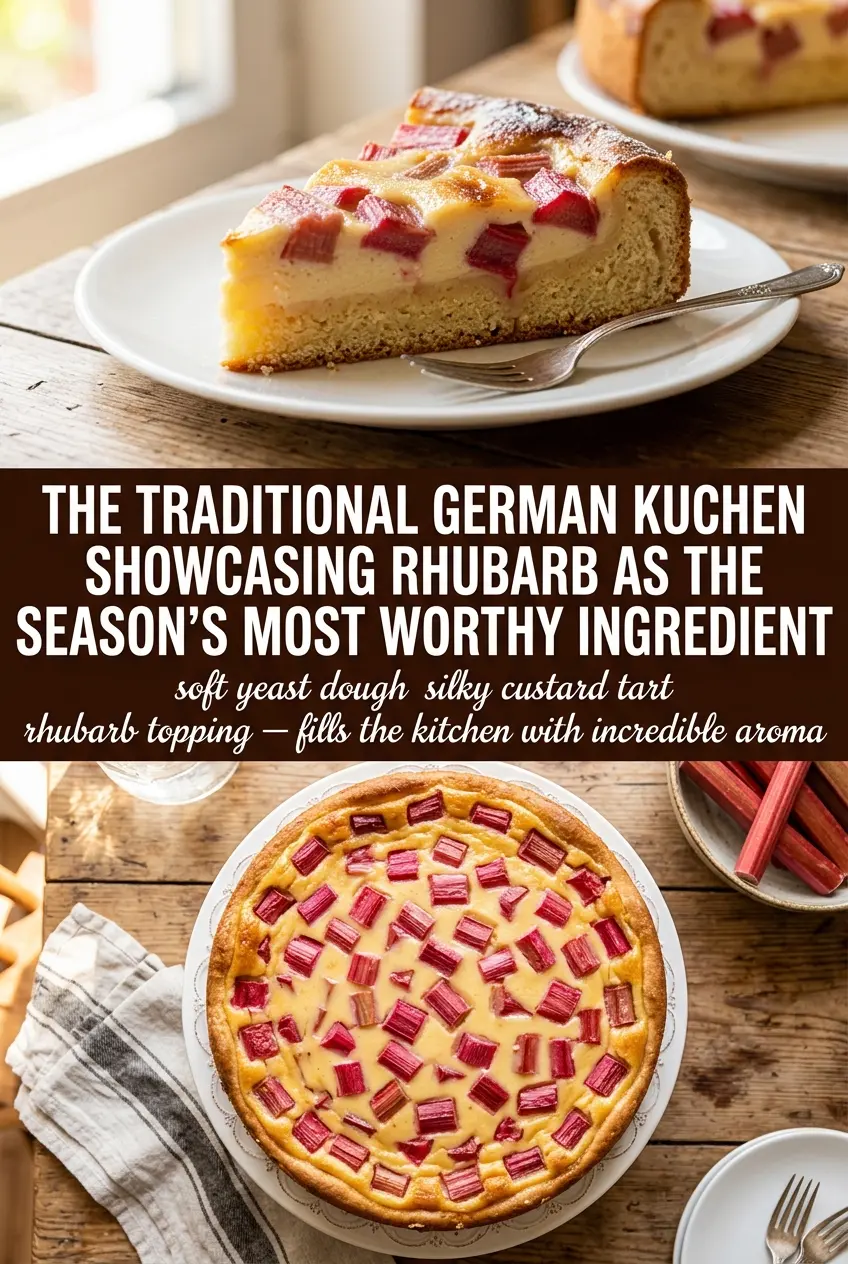
Rhubarb Custard Kuchen
Ingredients
Equipment
Method
- Dissolve active dry yeast in warm water and let sit for 5 minutes, until foamy (about 75°F–110°F).
- Mix in warm milk, sugar, melted butter, egg, and salt until evenly combined.
- Gradually add all-purpose flour and knead until smooth and cohesive.
- Let the dough rise for 30 minutes in a warm spot, until puffy.
- Press the dough into a greased 9x13-inch pan and arrange fresh rhubarb, cut into 1-inch pieces on top.
- Whisk together eggs, heavy cream, sugar, all-purpose flour, and vanilla extract until smooth.
- Pour the custard over the rhubarb so it coats the top layer.
- Bake at 350°F for 50-55 minutes until the custard is set and the top turns golden.
- Cool completely before cutting to allow the custard to fully set.