Creamy custard, tart rhubarb, and a buttery shortbread base make these rhubarb custard bars the kind of dessert people keep reaching back for. The bottom bakes up sturdy enough to hold clean slices, while the filling sets into a soft, almost silky layer that still carries little bursts of rhubarb through every bite. The powdered sugar on top is more than decoration. It gives the bars a finished look and takes the edge off the tart fruit just enough.
What makes this version work is the order of the layers and the way the crust gets a head start in the oven. A warm crust helps the custard start setting right away, which keeps the filling from soaking in and turning the base soggy. The rhubarb is diced small so it softens evenly and distributes through the custard instead of sinking into one heavy layer at the bottom.
If you’ve ever had custard bars that were too loose to cut neatly, the chilling step below is the part worth respecting. I’ve also included a few notes on rhubarb swaps, storage, and the one thing that helps the bars slice cleanly every time.
The custard set up beautifully and the rhubarb stayed bright instead of getting mushy. I chilled it overnight and the bars cut into perfect squares with that buttery crust still crisp on the bottom.
Save these rhubarb custard bars for the dessert table when you want a buttery crust, silky custard, and tart fruit in one chilled square.
The Trick to Keeping the Custard Layer Set, Not Runny
The biggest mistake with bars like these is treating the filling like pie custard and expecting it to thicken the same way. It won’t. The eggs, flour, and sugar need the oven’s steady heat to set together, and the bars need to cool completely so that structure firms up before you cut them. If you slice too early, the custard will look underbaked even when it isn’t.
Pouring the filling over the hot crust matters more than it seems. That warm base starts the set at the bottom edge right away, which gives you a cleaner layer instead of a crust that gets damp and heavy. The rhubarb also releases a little juice as it bakes, so the filling should look just set in the center when you pull it out, not firm all the way through.
- Hot crust: Keeps the bottom from going soft and gives the custard a head start on setting.
- Eggs plus flour: The flour helps stabilize the custard, while the eggs give it that rich, creamy slice.
- Chilling time: This is what turns a soft baked filling into neat bars. Skip it and you’ll get a spoon dessert instead.
What the Crust and Rhubarb Are Each Doing Here
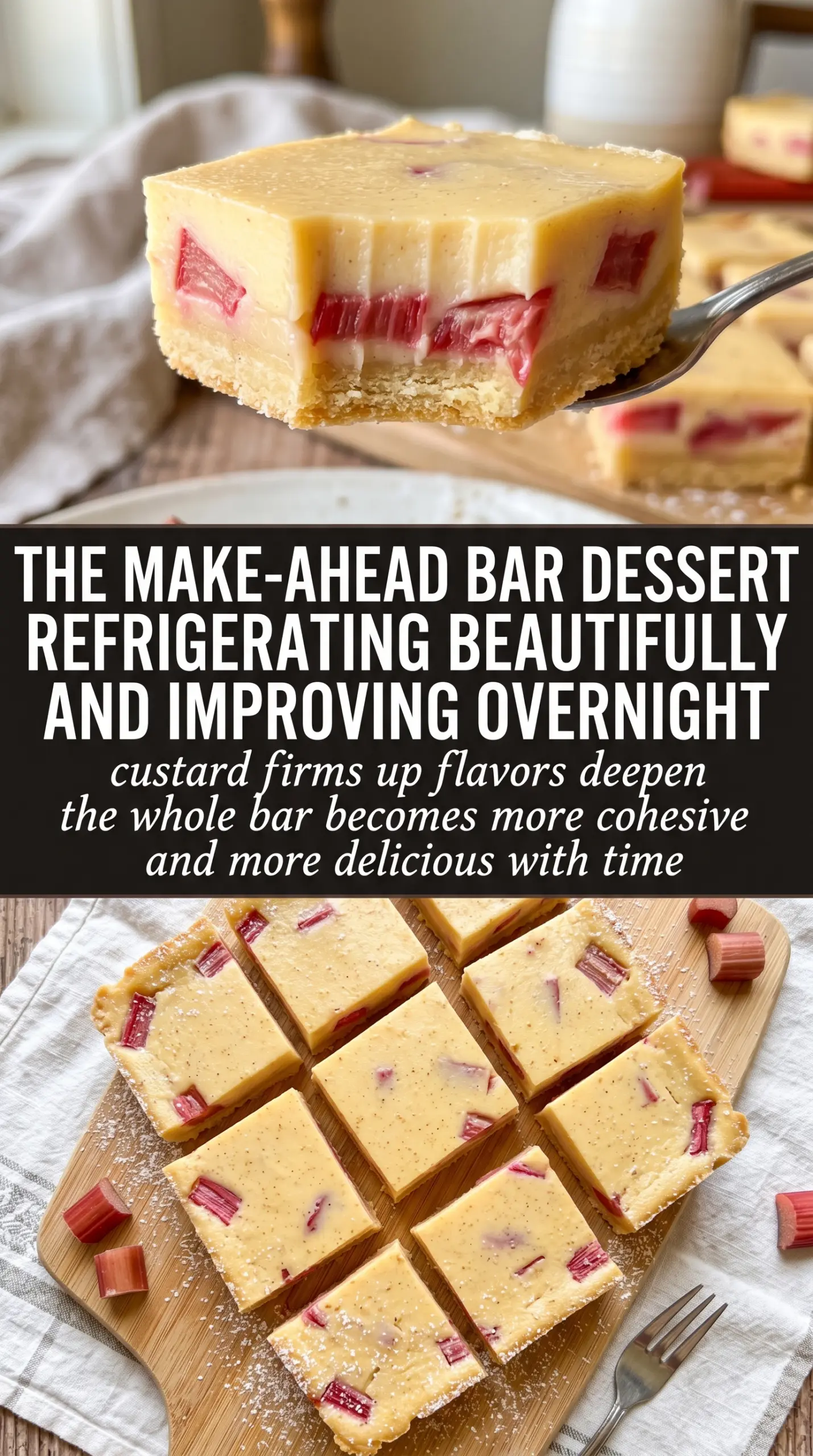
The alt attribute should be updated to a natural description of the finished bars, but the rest of the image block stays exactly as written in the prompt. The crust, filling, and fruit all have a job here, and none of them are decorative. The flour and butter form a shortbread-style base that can carry the custard without crumbling apart. Rhubarb brings sharpness and enough moisture to keep the bars from tasting flat.
- Cold butter: This is what gives the crust its tender, sandy texture. Soft butter will blend in too quickly and make the base pasty instead of crumbly.
- Fresh rhubarb: Fresh is worth using here because frozen rhubarb can dump more liquid into the filling. If you only have frozen, thaw it first and drain it well before folding it in.
- Powdered sugar: Dust it right before serving. Add it too early and it melts into the top as the bars sit.
Press, Bake, Fill, Chill: The Four Stages That Matter
Building the Shortbread Base
Mix the flour and sugar first, then cut in the cold butter until the mixture looks like coarse crumbs with a few pea-sized pieces still visible. That texture is what bakes into a tender crust instead of a dense slab. Press it firmly and evenly into the pan so the corners don’t bake thinner than the center. If the dough feels greasy or paste-like, the butter got too warm.
Baking the Crust Until It Just Turns Golden
Fifteen minutes is enough to set the crust without fully browning it. You want the edges lightly golden and the center matte, not raw-looking. Pulling it too dark makes the final bars taste dry, and underbaking leaves you with a soft base that won’t support the filling. Keep the oven on while you mix the custard so the crust goes back in hot.
Whisking the Custard Smooth
Whisk the sugar, flour, salt, and eggs until the mixture looks uniform and the flour has disappeared. The filling should pour like a thick batter, not sit in clumps. Fold in the diced rhubarb at the end so it stays evenly distributed. If you dump the fruit in and stir aggressively, the mixture can turn uneven and streaky.
Knowing When the Bars Are Done
Bake until the top is lightly golden and the center has only a slight wobble when you nudge the pan. A completely firm center usually means the edges have gone a little too far. The bars will finish setting as they cool. Let them reach room temperature before refrigerating, or condensation can soften the top.
Make Them a Little Less Tart
If your rhubarb is especially sharp, use the full dusting of powdered sugar and let the bars chill overnight before serving. The sweetness settles in as they rest, and the custard tastes smoother the next day. Don’t cut the sugar in the filling too far or the texture starts to feel flat instead of balanced.
Gluten-Free Swaps That Still Hold
Use a 1:1 gluten-free flour blend in both the crust and filling. The bars will still set, but the crust may be a little more delicate when warm, so chill them fully before lifting from the pan. Avoid almond flour here; it won’t behave the same way in the custard or the base.
Frozen Rhubarb in a Pinch
Frozen rhubarb works if that’s what you have, but thaw it first and drain off as much liquid as possible. Extra moisture is the enemy here because it can loosen the custard and keep the center from setting cleanly. Chop it after thawing if the pieces are large and wet.
Storage and Reheating
- Refrigerator: Store covered for up to 4 days. The crust stays best in the first two days, but the bars still slice well after that.
- Freezer: These freeze well. Cut into bars, wrap individually, and freeze in a single layer before moving them to a container. Thaw in the refrigerator so the custard doesn’t weep.
- Reheating: Serve these chilled or at cool room temperature. Warm them only slightly if you want softer custard, because heat can make the filling loose and mute the clean slices.
Questions I Get Asked About This Recipe
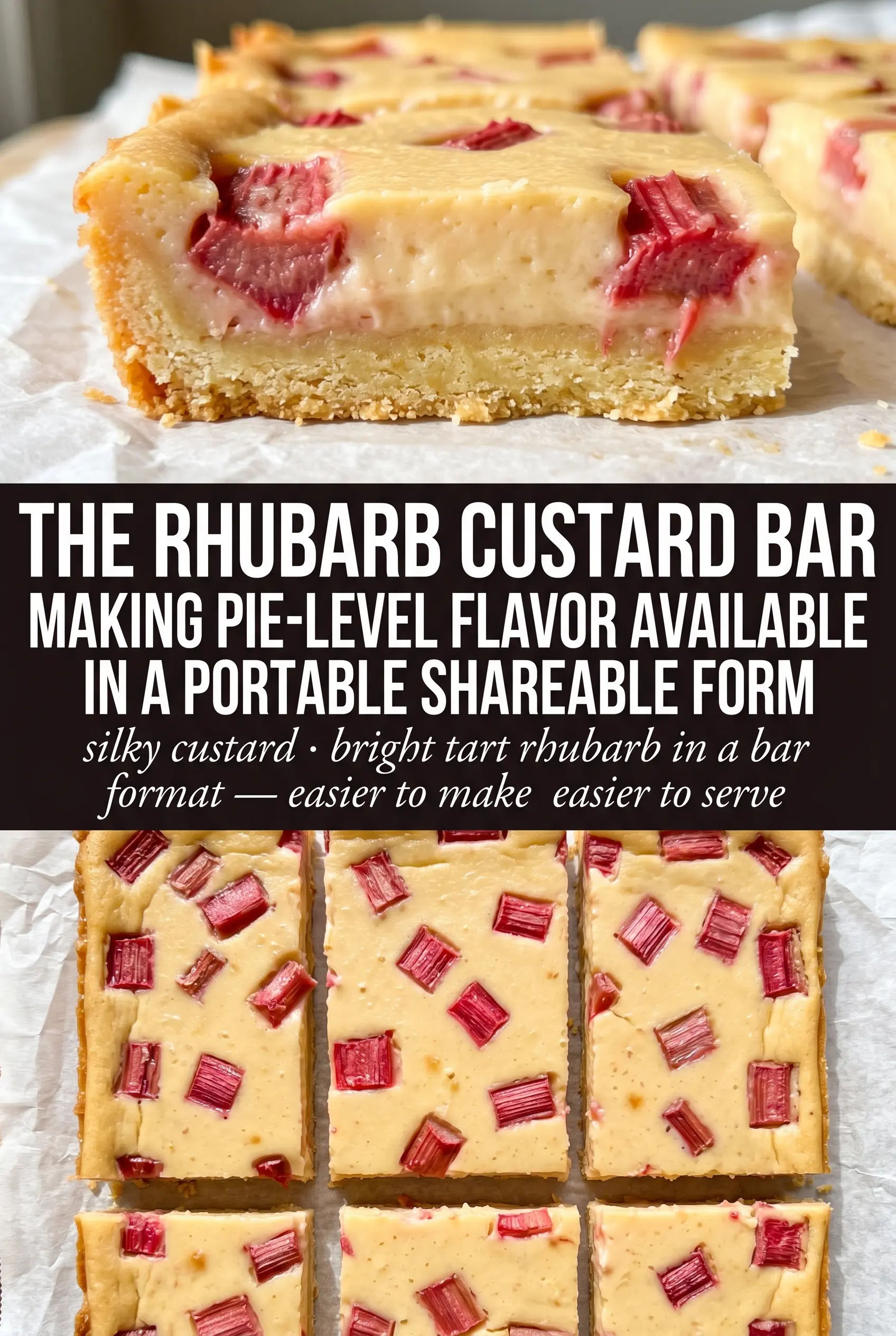
Rhubarb Custard Bars
Ingredients
Equipment
Method
- Preheat the oven to 350°F and line a 9x13-inch pan with parchment paper, leaving overhang for easy lifting.
- Mix the flour and sugar, then cut in the cold butter until the mixture looks crumbly and no large butter pieces remain.
- Press the crumb mixture firmly into the bottom of the lined pan to form an even crust layer.
- Bake the crust for 15 minutes, until lightly golden, then remove it from the oven.
- Whisk together the sugar, flour, salt, and beaten eggs until smooth and fully combined.
- Fold the finely diced rhubarb into the custard mixture so the pieces are evenly distributed.
- Pour the custard mixture over the hot crust and spread gently to an even layer.
- Return to the oven and bake for 35-40 minutes, until the custard is set and lightly golden on top.
- Cool the bars completely in the pan to room temperature before chilling.
- Refrigerate for at least 3 hours before cutting into bars.
- Dust the bars with powdered sugar right before serving and slice cleanly.