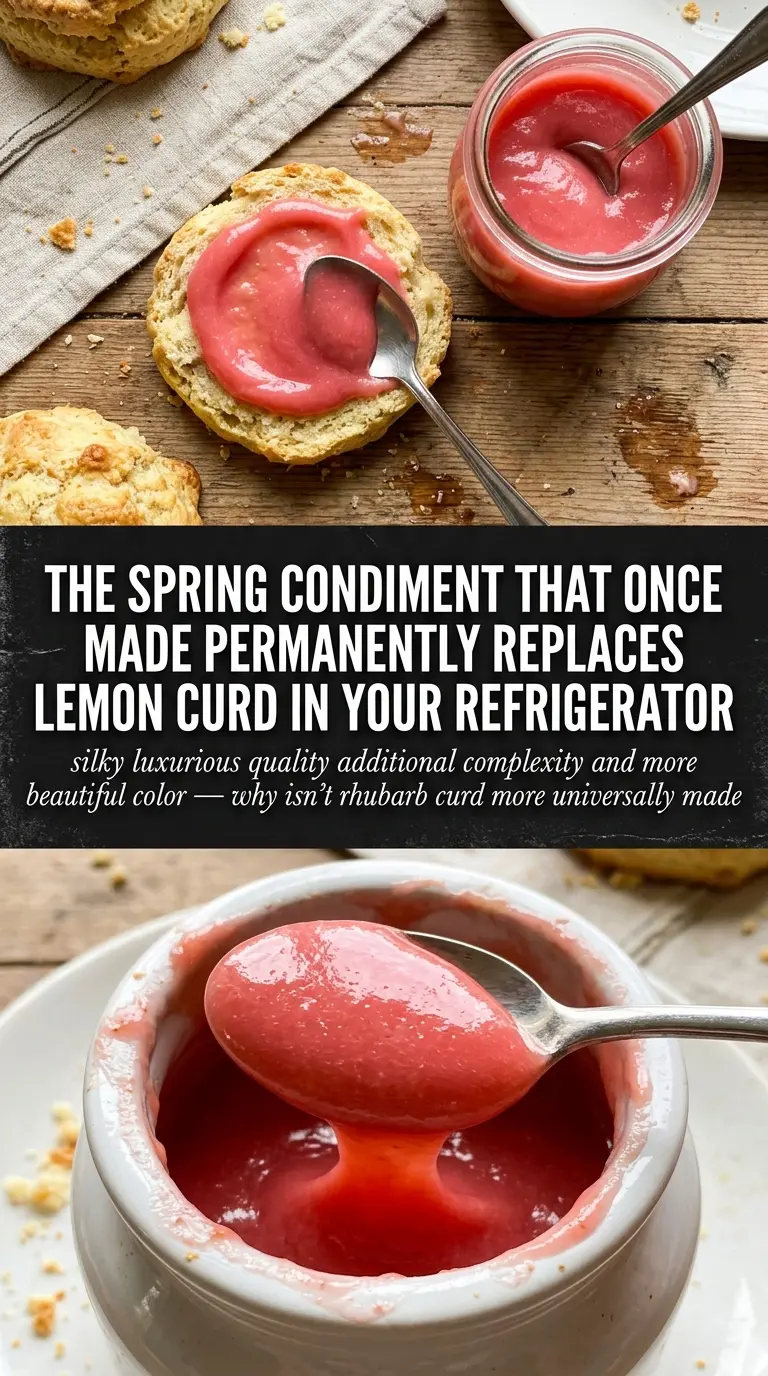
Silky rhubarb curd has that rare balance of bright tartness and buttery richness that makes a spoonful stand up and get noticed. It’s smooth enough to spread on warm scones, sharp enough to wake up plain yogurt, and elegant enough to spoon over cake without feeling heavy. The color alone is worth the effort: a soft pink that looks as fresh as it tastes.
What makes this version work is the way the rhubarb is fully cooked, blended, and strained before the eggs go in. That extra step gives you a curd with no stringy bits and no pulpy texture, just a clean, glossy finish. The heat stays gentle once the yolks are added, which keeps the mixture from scrambling and lets the butter melt in at the end for that classic velvet feel.
Below, I’ve included the small details that matter most: how to know when the curd is thick enough, which substitutions hold up, and how to store it so the surface stays smooth.
The curd thickened exactly when you said it would, and straining the rhubarb made it unbelievably smooth. I spooned it over scones and my daughter kept sneaking bites straight from the jar.
Love this smooth, bright Rhubarb Curd? Save it for the scones, layer cakes, and yogurt bowls that need a tart buttery finish.
The Trick to Keeping Rhubarb Curd Smooth Instead of Grainy
Rhubarb is fibrous, and if you stop at a quick simmer you’ll taste that stringiness in the finished curd. Cooking it down fully before blending gives you a softer base, and straining it after blending removes the last tough bits that can make the texture feel rough. That step matters here more than in a jam, because curd should feel polished and spoonable.
The other place people run into trouble is heat. Once the egg yolks go in, the mixture needs steady stirring over medium-low heat, not a lively bubble. If it gets too hot, the eggs tighten up too fast and you end up with little flecks instead of a glossy custard.
- Cooked rhubarb — Fresh rhubarb gives the cleanest flavor and the best color. Frozen rhubarb works too, but it gives off more liquid, so let it cook down until it looks jammy before blending.
- Egg yolks — Yolks are what turn this from fruit puree into curd. Whole eggs won’t give the same rich texture or buttery finish, and the curd will be looser.
- Butter — Add it off the heat so it melts smoothly into the thickened curd. If you stir it in while the pan is still aggressively hot, the emulsion can look greasy instead of silky.
- Fine mesh sieve — Don’t skip this if you want that classic velvety texture. Even well-cooked rhubarb can leave tiny fibers behind, and the sieve catches them.
What Each Ingredient Is Actually Doing in Rhubarb Curd
- Protein (quality, proper thickness) — Good quality protein tastes better. Even thickness ensures even cooking.
- Seasoning (bold, distributed throughout) — Don’t be shy with salt and pepper. Quality seasoning elevates everything.
- Oil or fat (protective and flavorful) — The fat helps develop crust and carries flavors. Use generously.
- Heat management (appropriate temperature for the protein) — Too high and the outside burns before the inside cooks. Too low and it steams.
- Technique (sear, then finish based on thickness) — Proper technique creates flavor. Sear for crust, then cook through gently.
- Aromatics and seasonings (garlic, herbs, spices) — These add complexity and depth. Distribute them throughout the cooking process.
- Resting time (let it rest before serving) — Resting allows juices to reabsorb. This keeps the protein moist and tender.
- Optional: finishing sauce or glaze — A light sauce adds richness without overwhelming. Apply at the very end.
Getting the Curd to Thicken Without Scrambling the Eggs
Cooking Down the Rhubarb
Start by cooking the rhubarb with half the sugar until it breaks down completely and looks soft enough to mash with a spoon. The fruit should collapse into a loose puree and the pan will look glossy and slightly watery at first, then more concentrated as the moisture cooks off. If you rush this stage, the puree will taste thin and the curd will need extra time later, which raises the risk of overcooking the yolks.
Blending and Straining the Base
Blend the cooked rhubarb until smooth, then push it through a fine mesh sieve. The puree should feel satiny when you stir it, with no visible threads or lumps left behind. This is the step that gives the finished curd its clean texture, and it’s worth the extra minute because once the yolks are in, you don’t want to be fixing texture problems.
Building the Custard Slowly
Return the puree to the saucepan and whisk in the remaining sugar, egg yolks, and salt. Keep the heat at medium-low and stir constantly, especially around the edges and bottom of the pan where the curd wants to set first. You’re looking for a thickened texture that coats the back of a spoon and leaves a clear line when you drag a finger through it.
Finishing with Butter
Pull the pan off the heat before you whisk in the butter cubes. They should melt in gradually and disappear into a glossy, smooth curd without any separation. If the mixture looks broken at this stage, it usually means the heat was still too high, so give it a minute off the burner and keep whisking until it comes back together.
How to Adapt This Rhubarb Curd When You Need a Different Finish
Dairy-Free Rhubarb Curd
Swap the butter for a good plant-based butter block, not a soft tub spread. The result will still be smooth and spreadable, though a little less rich and slightly more delicate once chilled.
Extra-Tart Curd
Use the full amount of rhubarb and hold back a tablespoon or two of sugar. The curd will taste brighter and sharper, which works well if you’re planning to spread it over sweet pastry or meringue.
Strawberry-Rhubarb Version
Replace up to one cup of the rhubarb with strawberries for a softer, rounder flavor and a deeper pink color. Strawberries add more sweetness and less sharpness, so the curd will taste gentler but still keep that fruity lift.
Storage and Reheating
- Refrigerator: Store in clean jars for up to 2 weeks. The curd will firm up as it chills, but it should still spoon easily.
- Freezer: It freezes well for up to 2 months. Leave a little headspace in the jar because it will expand slightly as it freezes.
- Reheating: For a softer spread, let it sit at room temperature for 10 to 15 minutes. Don’t microwave it hard; high heat can make the butter separate and change the texture.
Questions I Get Asked About This Recipe
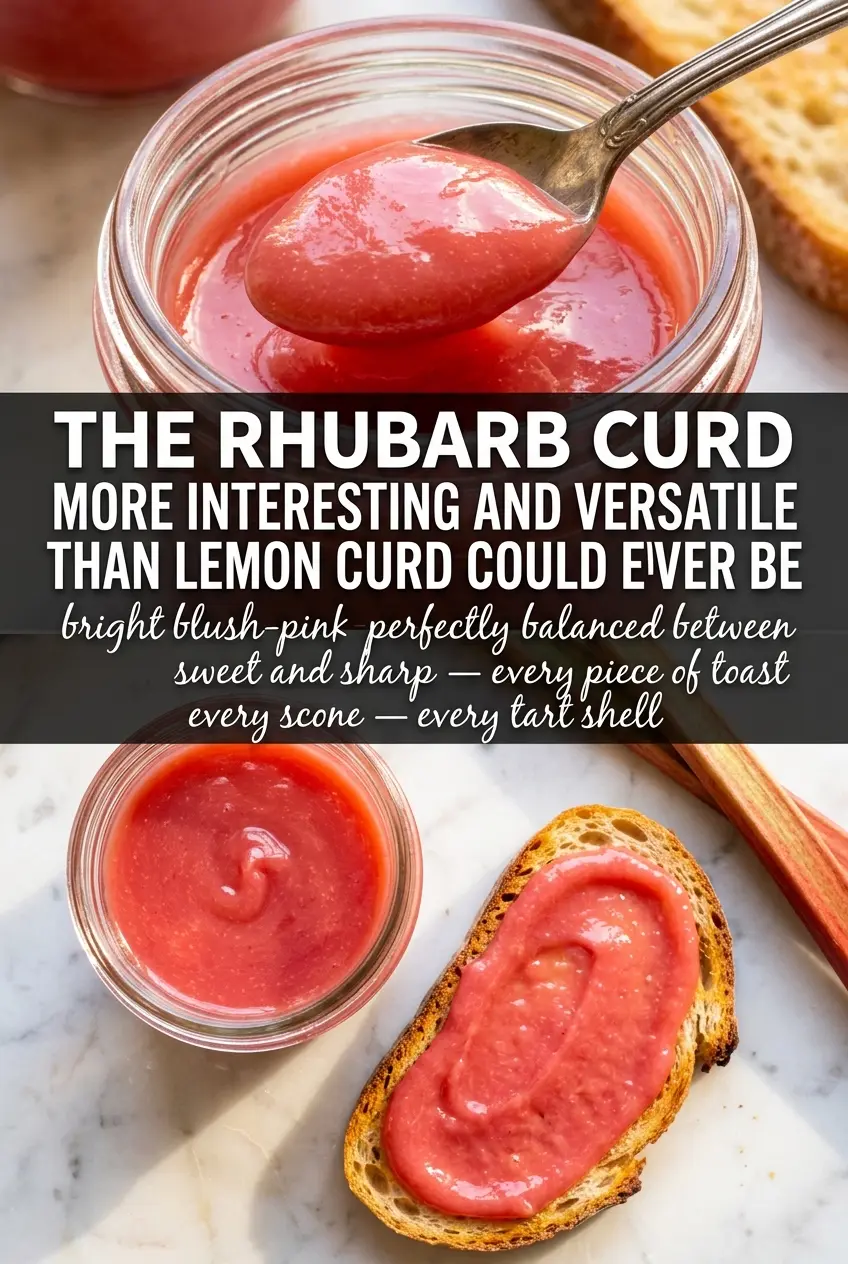
Rhubarb Curd
Ingredients
Equipment
Method
- Cook the fresh rhubarb with 1/2 cup sugar in a saucepan over medium heat until very soft, about 10 minutes, stirring occasionally as it breaks down into a thick mixture.
- Puree the rhubarb mixture in a blender until smooth, then strain through a fine mesh sieve into a clean bowl to remove any fibrous bits.
- Return the rhubarb puree to the saucepan and whisk in the remaining sugar, egg yolks, and salt until fully combined and glossy.
- Cook over medium-low heat, stirring constantly, until the mixture thickens and coats the back of a spoon, about 8-10 minutes, scraping the bottom as it thickens.
- Remove the pan from the heat and whisk in the butter cubes until fully melted and incorporated, keeping the curd smooth and silky.
- Pour the curd into clean jars, cover the surface with plastic wrap to prevent a skin, and refrigerate for at least 2 hours to set.
- Store in the refrigerator for up to 2 weeks, keeping the jars sealed for best texture and flavor.