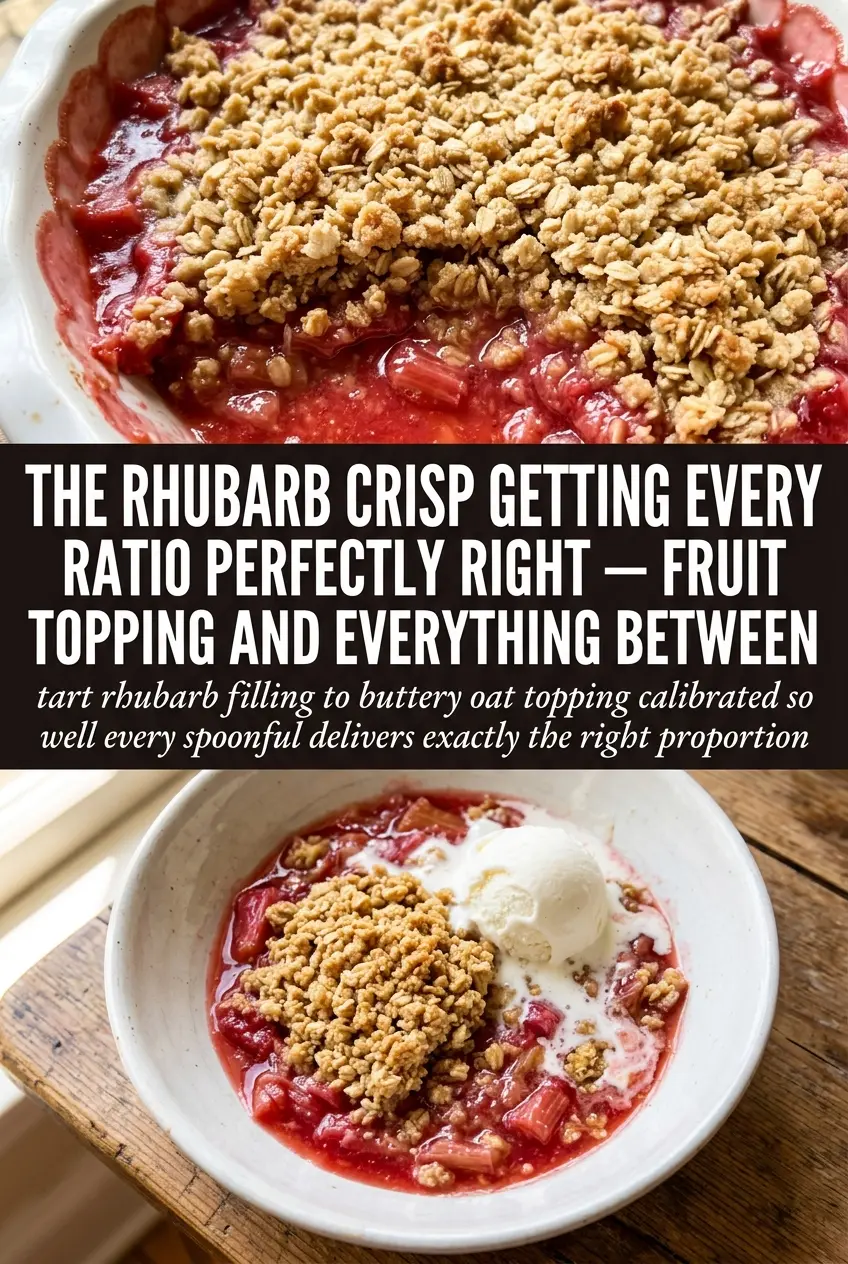
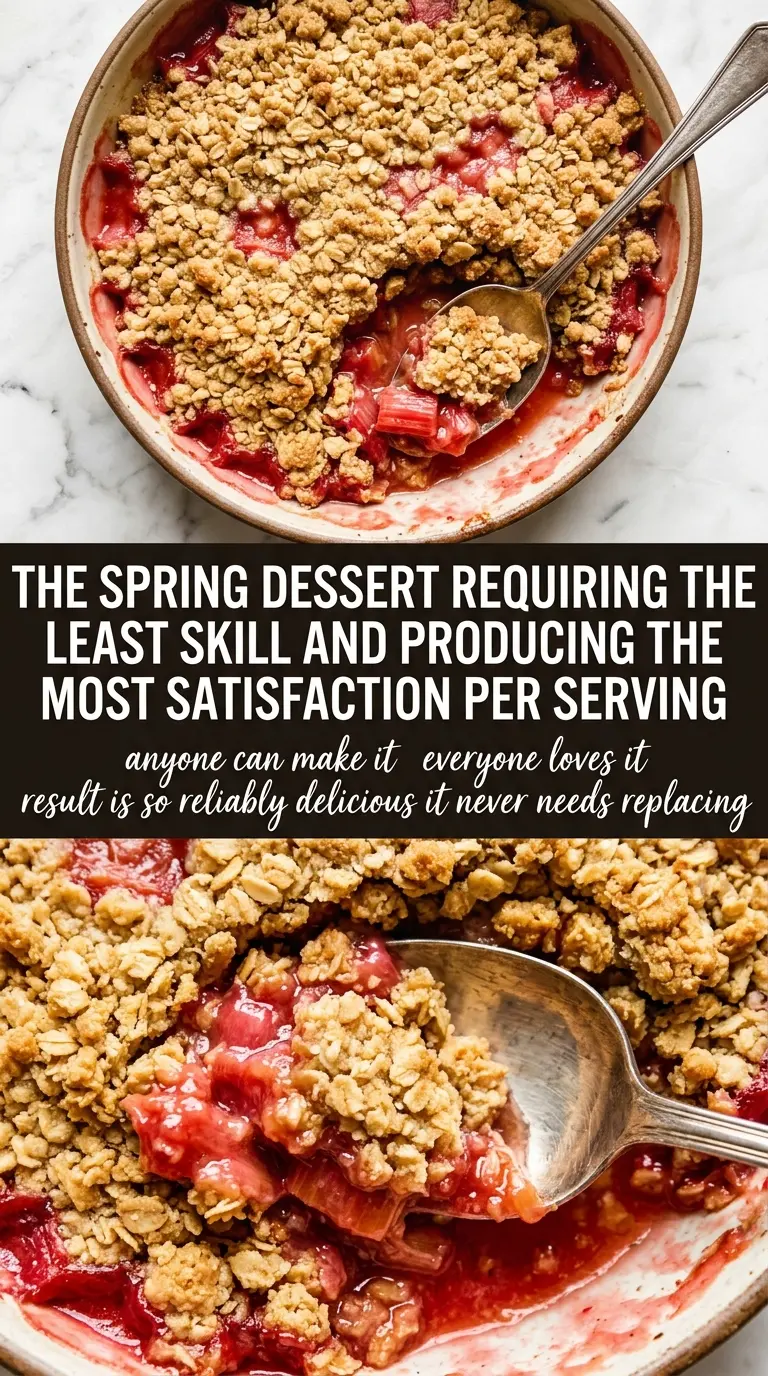
Tender rhubarb tucked under a thick oat and brown sugar crust is the kind of dessert that disappears fast, especially when the filling turns syrupy at the edges and the topping bakes into craggy, golden clusters. This rhubarb crisp has that perfect contrast: tangy fruit underneath, buttery crunch on top, and just enough sweetness to keep every bite balanced. It’s the kind of pan dessert I make when I want something unfussy that still feels like a proper treat.
The trick is getting enough sugar into the rhubarb to draw out its juices, then letting a little flour help those juices thicken instead of pooling into a watery layer. Orange zest adds a quiet brightness that keeps the filling from tasting flat, and cold butter is nonnegotiable for the topping because it melts in pockets and gives you those crisp, nubbly bits instead of a sandy lid.
Below, I’ve included the small details that make the texture work every time, plus a few simple swaps if you need to adjust for what’s in the pantry.
The filling thickened up beautifully and the topping stayed crisp even after sitting for a bit. I served it with vanilla ice cream and my husband went back for a second bowl before dinner was even cleared.
Save this rhubarb crisp for the kind of dessert that bakes up juicy underneath, crisp on top, and perfect with melting vanilla ice cream.
The Part That Keeps Rhubarb From Turning Soupy
Rhubarb gives off a lot of juice as it bakes. That’s part of the appeal, but it’s also where a lot of crisps go wrong. If you skip the flour in the filling or cut the sugar too far back, the fruit can break down into a thin, tart puddle that never quite settles. The flour here isn’t for a heavy filling; it’s there to catch the juices and turn them into a glossy syrup that clings to the fruit instead of running all over the pan.
The other thing worth paying attention to is the bake. You want the topping deeply golden and the filling visibly bubbling through the edges and center. Bubbling is the signal that the fruit has cooked through and the thickener has activated. Pulling it early leaves the filling loose, even if the top looks done.
What Each Ingredient Is Doing in the Pan
- Fresh rhubarb — Cut it into even 1-inch pieces so it softens at the same rate. Smaller pieces turn mushy before the topping has time to brown.
- Sugar — Rhubarb needs more sweetening than most fruits because it’s sharply tart. This amount balances the filling without muting the rhubarb’s edge.
- All-purpose flour — A small amount in the filling thickens the juices, and the flour in the topping helps the crumbs hold together while baking.
- Orange zest — It doesn’t make the crisp taste orangey. It lifts the rhubarb and keeps the filling from tasting one-note.
- Old-fashioned oats — Use the thicker rolled oats, not quick oats. They keep the topping hearty and give you those crisp shards instead of a pasty layer.
- Cold butter — Cold cubes are what create the best crumble. If the butter softens too much before baking, the topping turns dense instead of crisp.
- Brown sugar — This gives the topping a deeper caramel note and helps it bake into clusters.
- Cinnamon — Just enough to warm the topping without pushing it into pie territory.
Building the Crisp So the Top Stays Crunchy
Mix the filling first
Combine the rhubarb with the sugar, flour, and orange zest, then spread it into the buttered baking dish right away. The sugar starts pulling moisture from the fruit as soon as it sits, so don’t let it hang around in the bowl. If the mixture looks wet before it even hits the pan, that’s normal; the flour will catch those juices as it bakes.
Work the topping until it looks rough and sandy
Stir the oats, flour, brown sugar, cinnamon, and salt together first, then cut in the cold butter until the mixture looks like coarse crumbs with a few pea-size bits left. Those bigger bits matter because they melt into crisp, craggy pieces instead of a flat crust. If the butter starts to smear, stop and chill the bowl for a few minutes before continuing.
Bake until the center is bubbling
Spread the topping evenly over the fruit and bake at 375°F until the top is deep golden and the filling is actively bubbling through the middle, not just at the edges. That bubbling tells you the rhubarb has softened and the thickener has done its job. If the top browns before the fruit bubbles, lay a loose piece of foil over it and keep baking until you see those juices moving.
Let it rest before serving
The 15-minute cool-down is part of the recipe, not an extra step. The filling thickens as it sits, and if you scoop it too soon, the juices run everywhere and the texture feels loose. After a short rest, the fruit settles into a spoonable layer that holds up better under ice cream.
Three Ways to Make This Rhubarb Crisp Fit What You Have
Make it gluten-free
Swap the all-purpose flour in both the filling and topping for a cup-for-cup gluten-free baking blend. Keep the oats certified gluten-free if cross-contamination matters. The texture stays close to the original, though the topping may brown a little faster, so start checking it near the end of the bake.
Use strawberries with the rhubarb
Fold in 1 to 2 cups sliced strawberries if you want a softer, sweeter filling. Strawberries add perfume and color, but they also release more liquid, so the crisp may need a few extra minutes in the oven. The result is less tart and a little juicier.
Lean it dairy-free
Use a solid plant-based butter that bakes well and stays cold during mixing. Margarine that’s too soft can make the topping greasy instead of crumbly. The crisp will still brown and hold together, but the flavor is a little less rich, so the orange zest becomes even more helpful.
Storage and Reheating
- Refrigerator: Store covered for up to 4 days. The topping softens a bit in the fridge, but the flavor holds well.
- Freezer: Freeze tightly wrapped portions for up to 2 months. The texture is best when frozen after baking, then thawed overnight in the fridge.
- Reheating: Warm individual portions in a 325°F oven until hot. The biggest mistake is microwaving it too long, which turns the topping soggy before the filling is hot.