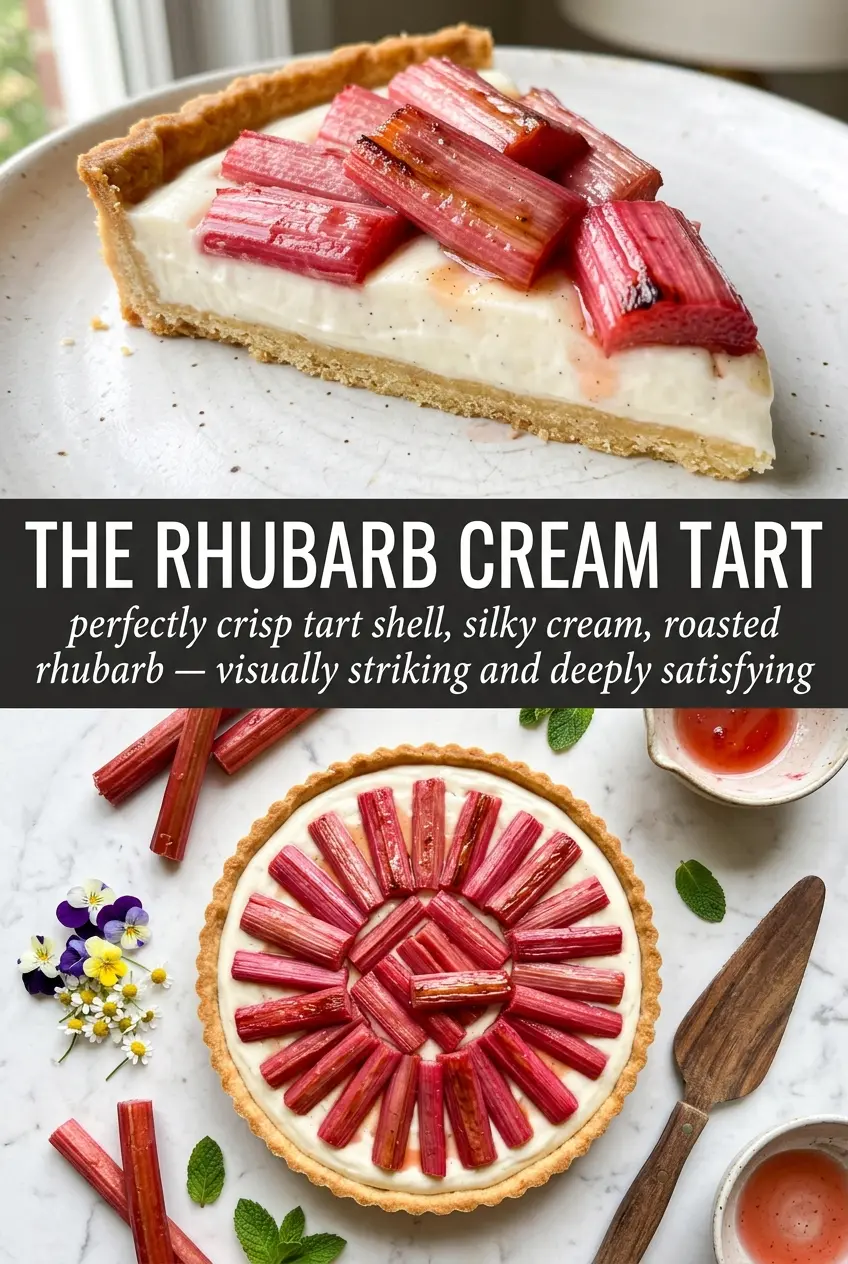
Buttery tart shell, silky vanilla cream, and glossy roasted rhubarb make this tart the kind of dessert people remember after the plates are cleared. The crust stays tender and crisp, the pastry cream slices cleanly, and the rhubarb keeps enough structure to look elegant instead of mushy. It’s the balance of textures that makes each bite feel composed and special.
This version works because each part is handled on its own terms. The shell is baked until fully set before the cream goes in, which keeps the bottom from turning soggy. The pastry cream is cooked until it’s properly thickened, then cooled with plastic wrap pressed onto the surface so it doesn’t form a skin. The rhubarb is roasted with just enough sugar and honey to soften it and bring out its color without turning it jammy.
Below, I’ve included the small details that matter most: how to keep the cream smooth, how to keep the tart shell crisp, and how to arrange the rhubarb so the finished tart looks bakery-worthy without being fussy.
The pastry cream came out perfectly smooth and the rhubarb stayed tender instead of collapsing. I chilled it overnight and the slices held their shape beautifully the next day.
Save this rhubarb cream tart for the dessert table when you want crisp pastry, smooth vanilla cream, and a polished rhubarb topping.
The Reason Tart Shells Go Soggy Under Cream
The mistake here is almost always timing. If the shell is still warm, or if the cream is still loose when it goes in, the bottom starts absorbing moisture before the tart ever reaches the table. A properly baked shell should feel dry and set, with the edges just turning golden, and the pastry cream should hold a thick spoon trail before it comes off the heat.
Rhubarb brings its own challenge because it sheds liquid as it roasts. That’s why it gets roasted separately and cooled before it goes on top. You want tender pieces with defined edges, not a purée that bleeds into the cream and stains the surface pink in a messy way.
- Blind baking matters here — even if the crust looks pale, it needs enough time to dry out fully so it can stand up to the filling.
- Cook the cream until it’s thick — if it still pours like custard, it’s not ready.
- Cool every layer first — warm components are the fastest route to a tart that slices poorly.
What the Crust, Cream, and Rhubarb Are Each Doing
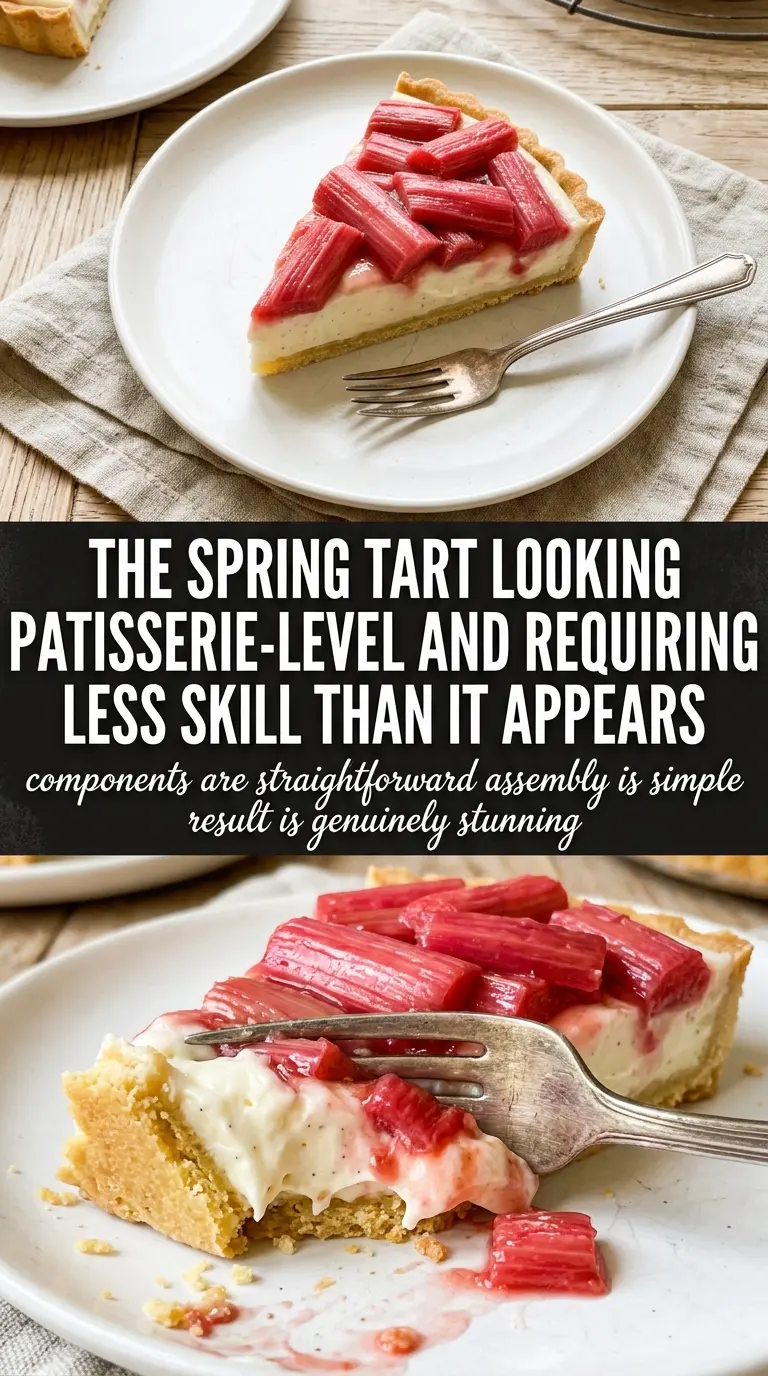
The crust is built with powdered sugar instead of granulated sugar, which gives it a finer, more delicate crumb and helps it bake into something almost sandy and shortbread-like. Cold butter is nonnegotiable. If it warms up too much before baking, you lose those tiny pockets of steam that make the shell tender instead of dense.
The pastry cream relies on egg yolks and cornstarch for body. Egg yolks add richness and color, while cornstarch gives the custard enough stability to hold a clean slice after chilling. Whole milk works well here; there’s no need for anything fancier, but skim milk will taste flatter and set less luxuriously. The vanilla is what makes the filling taste round and complete, so use the best extract you have.
Rhubarb is the part that needs the most judgment. Fresh stalks roast into the best texture, and the sugar-honey mix pulls out their tartness without drowning it. If your rhubarb is especially thick, cut the pieces a little smaller so they soften at the same rate.
- All-purpose flour — gives the tart shell structure without making it tough.
- Powdered sugar — dissolves into the dough more smoothly than granulated sugar and keeps the crust tender.
- Cornstarch — thickens the pastry cream cleanly; flour won’t give the same smooth finish.
- Rhubarb — fresh is best here. Frozen rhubarb releases too much water and softens unevenly.
Building the Tart in the Right Order
Making the Tender Crust
Mix the flour and powdered sugar first, then cut in the cold butter until the mixture looks like coarse crumbs with a few pea-size bits still visible. Add the egg yolk and just enough cold water for the dough to come together; if you add too much, it turns sticky and bakes up hard. Press it into the tart pan without overworking it, then chill if the dough feels soft. That short rest keeps the shell from shrinking in the oven.
Cooking the Pastry Cream
Heat the milk and sugar until steam rises and the sugar dissolves, then temper the yolks and cornstarch with the hot milk in a thin stream. Return everything to the pot and whisk over medium-low heat until it thickens and starts to bubble lazily. The cream should look glossy and hold its shape for a moment when you drag the whisk through it. Pull it off the heat before it gets past that point, or it can turn grainy.
Roasting the Rhubarb
Toss the rhubarb with sugar and honey, then spread it in a single layer so it roasts instead of steams. You’re looking for pieces that are tender at the edges but still hold their shape in the middle. Fifteen minutes is usually enough, but thicker stalks may need a few minutes more. Let it cool completely before arranging it on the tart, or the juices will run into the cream.
Assembling and Chilling
Spread the cooled pastry cream into the baked shell in an even layer, then arrange the rhubarb over the top with the prettiest pieces facing up. Don’t rush the chill. At least three hours in the refrigerator gives the custard time to set fully and the crust time to stay crisp under the filling. If you cut it too early, the slices slump and the cream smears.
Three Ways to Adjust This Tart Without Losing the Point
Dairy-Free Cream Filling
Use a full-fat canned coconut milk in place of the milk and a dairy-free butter for finishing the cream. The filling will taste a little richer and more coconut-forward, but it still sets nicely if you cook it to full thickness before chilling.
Gluten-Free Tart Shell
Swap in a 1:1 gluten-free baking blend that includes xanthan gum. The shell will be a little more fragile when you press it into the pan, so chill it before baking and handle it gently after it comes out of the oven.
Mixed Fruit Topping
Replace up to one cup of the rhubarb with strawberries or raspberries for a softer, sweeter topping. The tart will read less sharply tangy and a little more dessert-like, but keep most of the rhubarb in the mix so the topping still tastes like rhubarb tart and not just berry custard.
Storage and Reheating
- Refrigerator: Store covered for up to 3 days. The crust softens a little as it sits, but it still slices well.
- Freezer: I don’t recommend freezing the finished tart. The pastry cream can turn watery after thawing and the rhubarb loses its clean texture.
- Reheating: No reheating needed. Serve it chilled straight from the refrigerator for the cleanest slices. If you want to take the chill off, let it sit at room temperature for 15 to 20 minutes, but don’t leave it out long enough for the cream to loosen.