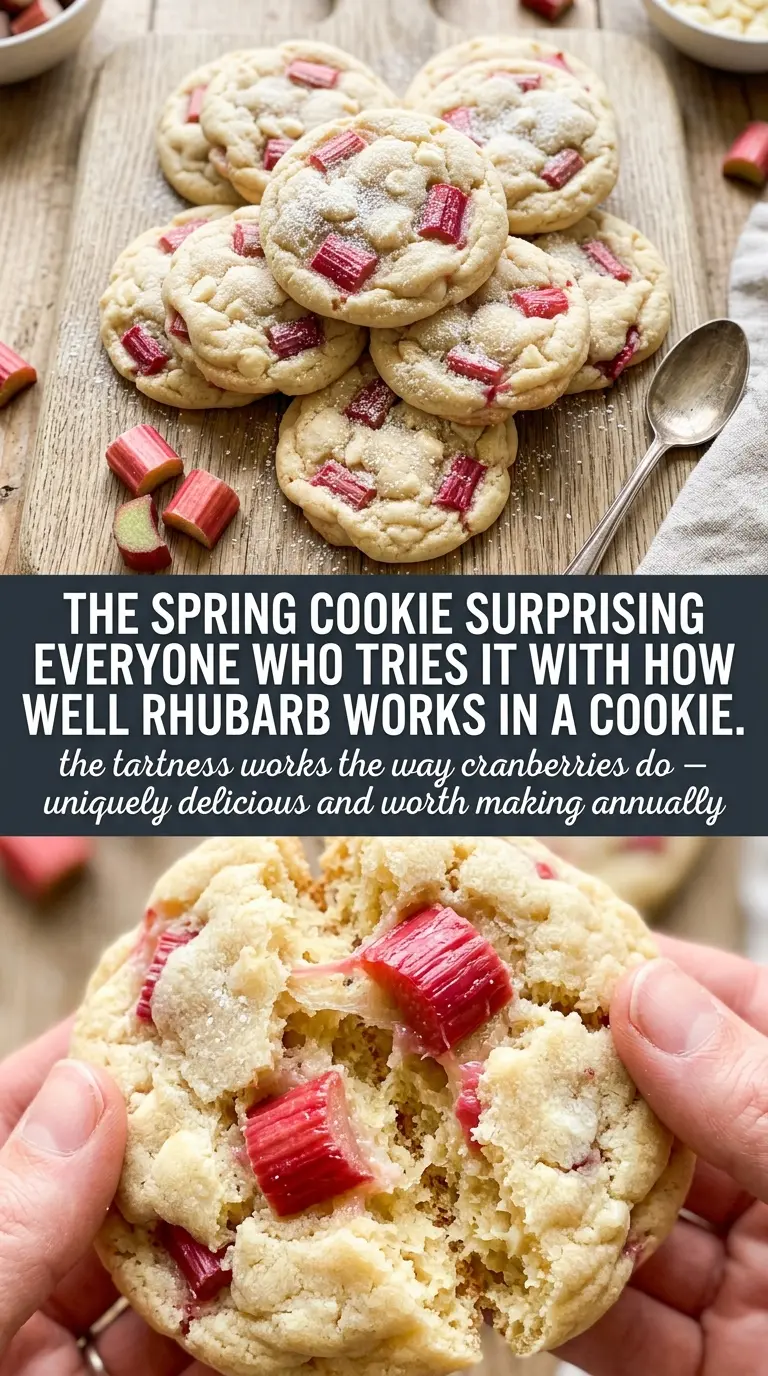
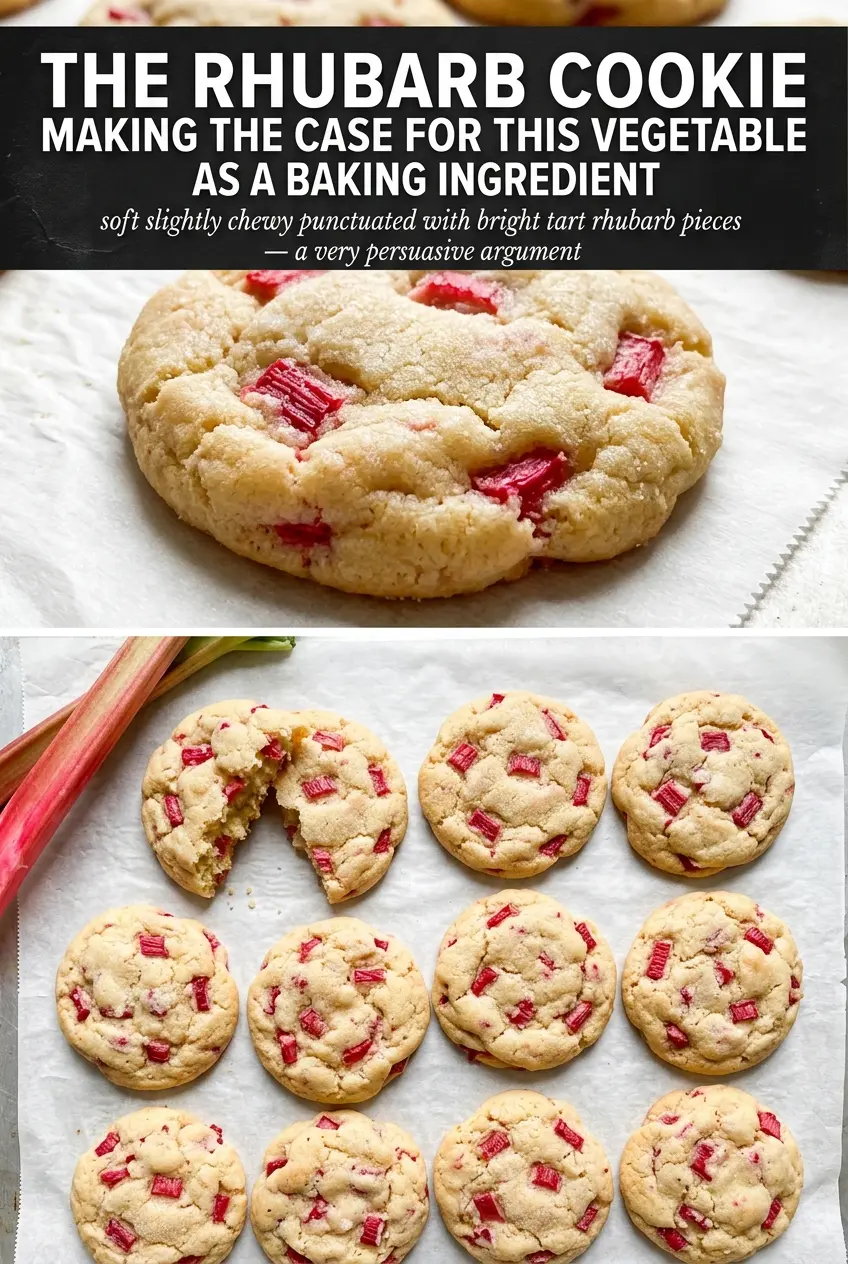
Soft rhubarb cookies bake up with pillowy centers, crisp sugar-dusted tops, and little pink bursts of fruit that keep every bite interesting. They’re the kind of cookie that disappears off the cooling rack fast because they’re sweet enough to feel like dessert, but the rhubarb keeps them from tasting flat or one-note.
What makes this version work is the balance. Brown sugar brings a deep, caramel note that plays nicely with the tart rhubarb, and the dough stays thick enough to hold those diced pieces instead of letting them sink into the pan. The rhubarb goes in raw, which keeps the flavor bright and the texture tender instead of jammy.
Below, I’ve included the small details that matter most: how to keep the cookies soft in the center, why the rhubarb should be cut fine, and what to do if your fruit is extra juicy. Those little choices are what turn a decent batch into the kind you’ll want to bake again.
The cookies stayed soft for days and the little rhubarb pieces baked up tender without turning mushy. I loved the sugar on top because it gave just enough sparkle and crunch.
Save these soft rhubarb cookies for the days when you want a tender spring cookie with tart pink bits and a sparkly sugar top.
The Trick to Keeping Rhubarb from Turning These Cookies Watery
Rhubarb brings a lot of moisture with it, and that’s where cookie batches usually go sideways. If the pieces are too large, they release juice unevenly and create soggy pockets. If the dough is too loose, the cookies spread before the centers set. The fix is simple: dice the rhubarb finely and fold it in at the very end so the flour-coated dough stays thick and holds its shape on the tray.
These cookies are meant to bake soft, not dry out into little cakes. Pull them when the edges look set and the centers still look a touch underbaked. They finish on the hot pan, and that short rest is what keeps them pillowy instead of crumbly.
Why the Brown Sugar and Butter Matter More Than You Think
- Butter — Softened butter creams with the brown sugar and traps air, which gives these cookies their lift. Cold butter won’t fluff properly, and melted butter will make the dough greasy and flatter.
- Brown sugar — This is what gives the cookie its deeper flavor and soft texture. White sugar can work in a pinch, but you’ll lose the caramel note that makes the rhubarb taste rounder and less sharp.
- Fresh rhubarb — Fresh is worth using here because frozen rhubarb throws off more liquid and can turn the dough patchy. If frozen is all you have, thaw it first, drain it well, and pat it dry before dicing it finely.
- Vanilla — Vanilla doesn’t make the cookies taste like vanilla cookies; it smooths out the rhubarb’s tart edge and ties the brown sugar and butter together. Don’t skip it.
- Sugar for sprinkling — The sugar on top gives the cookies a light crunch and helps the tops bake with a little sparkle. Coarse sugar gives the best finish, but regular granulated sugar works too.
Mixing, Scooping, and Baking the Dough the Right Way
Build the base until it looks fluffy
Cream the butter and brown sugar until the mixture looks lighter in color and a little fluffy around the edges of the bowl. That step matters because it gives the cookies structure before the flour goes in. If the butter is too cold, the mixture stays dense and the cookies bake up heavy. Beat in the eggs one at a time if they seem reluctant to blend, then stir in the vanilla.
Fold in the rhubarb without overworking the dough
Once the dry ingredients are mixed in, stop as soon as you no longer see streaks of flour. Overmixing makes the cookies tough, and it also breaks down the rhubarb so the dough turns streaky. Fold in the diced rhubarb gently so the pieces stay intact and evenly distributed. The dough should be thick enough to mound on a spoon.
Bake until the centers still look soft
Drop rounded tablespoons of dough onto the parchment-lined sheets and keep plenty of space between them. Sprinkle the tops with sugar, then bake just until the edges are set and the centers still look slightly soft and pale. If you wait for the middle to look fully done in the oven, you’ll overbake them. Let them sit on the pan for five minutes before moving them so they finish setting without drying out.
Three Ways to Adjust These Rhubarb Cookies Without Losing the Soft Texture
Make them a little brighter with lemon zest
Add 1 teaspoon of finely grated lemon zest to the sugar and butter mixture. It lifts the rhubarb without making the cookies taste lemony, and it helps the whole batch taste fresher.
Use gluten-free flour for a softer, more delicate cookie
A good 1:1 gluten-free baking flour works here, though the cookies may spread a little more and the crumb will be slightly more tender. Chill the dough for 15 minutes if it feels loose before scooping.
Swap in dairy-free butter if needed
Use a plant-based stick butter, not a soft tub spread, so the dough still creams properly. The flavor will be a little less rich, but the cookies will still bake up soft with good structure.
Add chopped strawberries for a fruitier twist
Replace up to 1 cup of the rhubarb with small diced strawberries. The cookies will taste sweeter and a little softer, so keep the fruit pieces small and don’t add more than that or the dough can get wet.
Storage and Reheating
- Refrigerator: Store in an airtight container for up to 4 days. They stay soft, though the sugar top loses a little crunch.
- Freezer: These freeze well baked. Freeze in a single layer, then move to a container for up to 2 months.
- Reheating: Warm a cookie for 8 to 10 seconds in the microwave if you want that just-baked softness back. Don’t overheat them or the rhubarb can turn gummy.
Questions I Get Asked About This Recipe
Rhubarb Cookies
Ingredients
Equipment
Method
- Preheat oven to 350°F and line baking sheets with parchment paper.
- Whisk together all-purpose flour, baking soda, and salt until evenly combined.
- Cream butter and brown sugar until fluffy, then beat in eggs and vanilla extract.
- Mix in the dry ingredients until just combined, then fold in diced fresh rhubarb.
- Drop rounded tablespoons of dough onto prepared sheets, spacing 2 inches apart.
- Sprinkle the tops with sugar for sprinkling.
- Bake at 350°F for 10-12 minutes until edges are set but centers still look soft.
- Cool on the baking sheet for 5 minutes before transferring to a wire rack.