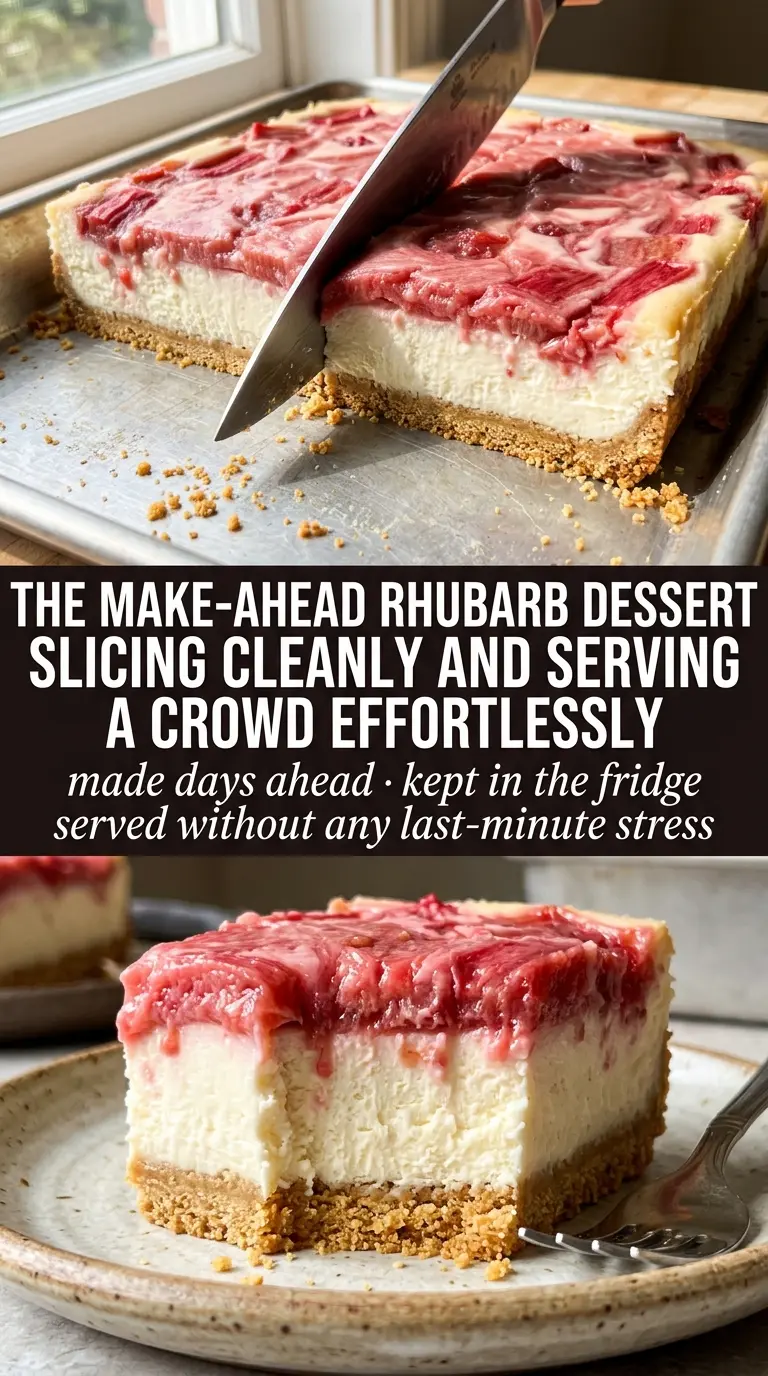
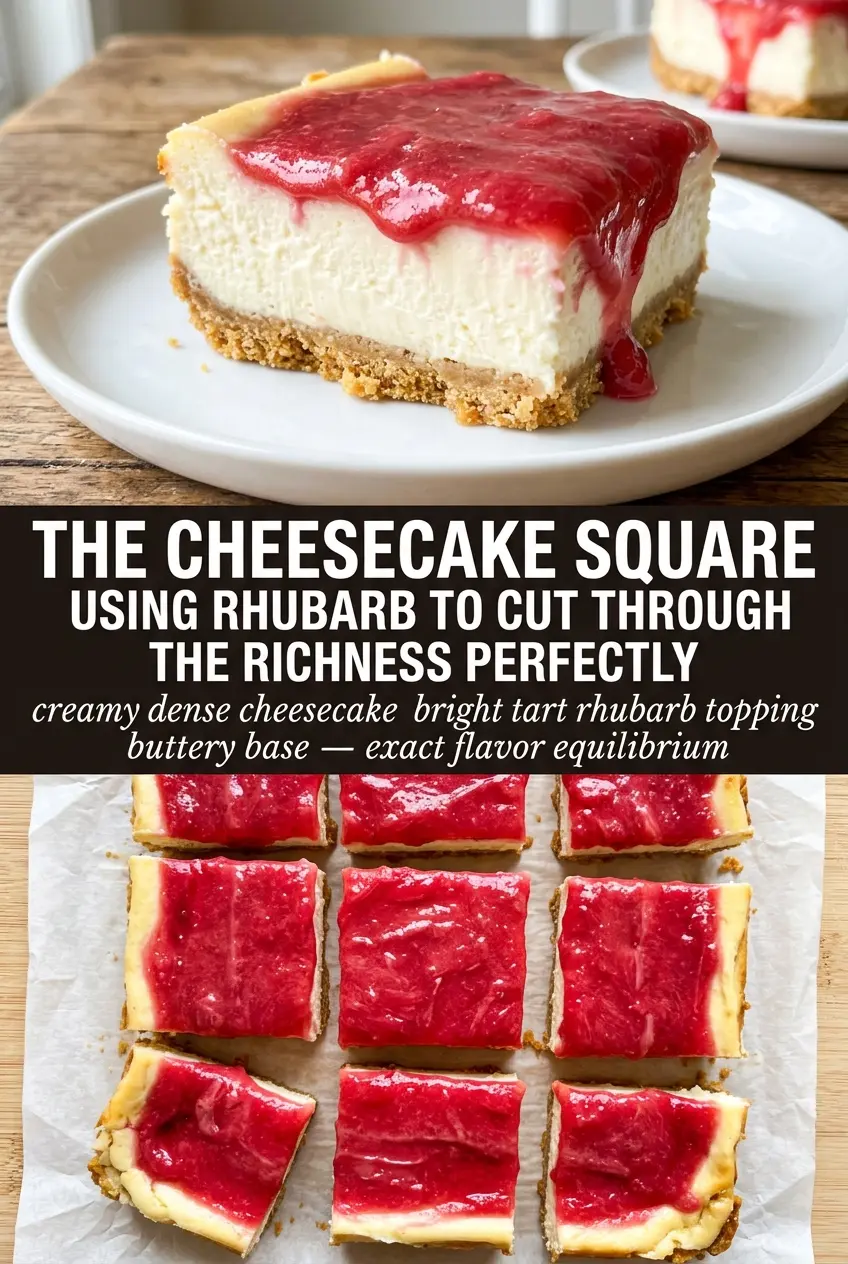
Rhubarb cheesecake squares land in that sweet spot between rustic and polished: a buttery graham crust, a smooth cheesecake layer, and a glossy pink rhubarb topping that cuts cleanly once it’s chilled. The texture is what keeps me coming back. You get a firm base that doesn’t crumble apart, a creamy center that stays rich without feeling heavy, and fruit on top that tastes bright instead of jammy.
The trick is treating each layer on its own terms. The crust gets a short bake so it sets before the filling goes in, which keeps the bottom from turning sandy. The cheesecake layer bakes just until the center loses its wobble, and the rhubarb topping is thickened on the stove before it ever hits the bars, so you don’t end up with a watery seep-through situation after chilling.
Below, I’ll walk through the exact point where most cheesecake bars go wrong, how to keep the rhubarb topping thick enough to slice, and a few useful swaps if you need to work with frozen rhubarb or a gluten-free crust.
The rhubarb topping thickened up beautifully, and the bars held their shape after chilling overnight. I was worried the cheesecake layer would be too soft, but the slices came out neat and creamy.
Like this rhubarb cheesecake squares recipe? Save it to Pinterest for the creamy bars and pink fruit topping you’ll want chilled and ready to slice.
The Part That Keeps the Layers Clean When You Slice
The mistake most people make with cheesecake bars is rushing the cooling. If the cheesecake is still warm when the rhubarb goes on, the top layer slides around and the whole square turns messy when you cut it. Let the cheesecake cool all the way down before adding the fruit, then chill long enough for the filling to firm up properly.
The second issue is moisture. Rhubarb gives off juice as it cooks, and if that liquid isn’t thickened before it’s spread on top, it will soak into the cheesecake instead of sitting neatly above it. Cooking the topping until it looks glossy and spoonable keeps the layers distinct and gives you those clean, bakery-style squares.
- Graham cracker crumbs — These give you a crust that tastes familiar and sturdy without fighting the filling. If you swap in store-bought crumbs, use the same weight by volume and don’t skip the pre-bake.
- Cream cheese — Full-fat cream cheese matters here because it bakes into a smooth, sliceable layer. Low-fat versions can work in a pinch, but they’re softer and more likely to weep.
- Fresh rhubarb — Fresh is best for the topping because it holds a brighter flavor and a cleaner texture. If you use frozen rhubarb, thaw it first and drain off the excess liquid before cooking so the topping doesn’t turn thin.
- Cornstarch — This is what turns the cooked fruit into a topping that sets on the bars instead of running off the sides. Whisk it with a little cold water before adding it to the pan so it thickens smoothly instead of clumping.
What Each Ingredient Is Actually Doing in Rhubarb Cheesecake Squares
- Protein (quality, proper thickness) — Good quality protein tastes better. Even thickness ensures even cooking.
- Seasoning (bold, distributed throughout) — Don’t be shy with salt and pepper. Quality seasoning elevates everything.
- Oil or fat (protective and flavorful) — The fat helps develop crust and carries flavors. Use generously.
- Heat management (appropriate temperature for the protein) — Too high and the outside burns before the inside cooks. Too low and it steams.
- Technique (sear, then finish based on thickness) — Proper technique creates flavor. Sear for crust, then cook through gently.
- Aromatics and seasonings (garlic, herbs, spices) — These add complexity and depth. Distribute them throughout the cooking process.
- Resting time (let it rest before serving) — Resting allows juices to reabsorb. This keeps the protein moist and tender.
- Optional: finishing sauce or glaze — A light sauce adds richness without overwhelming. Apply at the very end.
Building the Bars Without Breaking the Filling
Pressing and Baking the Crust
Mix the graham crumbs, melted butter, and sugar until every crumb looks evenly coated, then press the mixture firmly into the parchment-lined pan. Use the bottom of a measuring cup to pack it down; a loose crust falls apart when you slice the bars. Bake it until it smells toasty and the edges deepen a shade, which gives the crust enough structure to support the cheesecake layer.
Mixing the Cheesecake Filling
Beat the cream cheese and sugar until the mixture looks smooth and slightly fluffy, with no little lumps left at the bottom of the bowl. Add the eggs one at a time and mix just until combined, then stir in the vanilla. If you beat it hard after the eggs go in, you’ll whip in too much air, and that can cause the center to puff and crack as it bakes.
Watching for the Right Bake
Pour the filling over the warm crust and bake until the edges are set and the center still has a small jiggle when you nudge the pan. That slight wobble is what you want; it finishes setting as the bars cool. If you wait until the whole surface is firm in the oven, the cheesecake will overbake and turn dry instead of creamy.
Cooking the Rhubarb Topping
Simmer the rhubarb, sugar, and water until the pieces soften and break down slightly, then add the cornstarch slurry and cook just until the mixture thickens. It should look glossy and mound on a spoon, not run like sauce. Cool it for a few minutes before spreading so it doesn’t melt the cheesecake layer underneath.
Gluten-Free Crust Swap
Use certified gluten-free graham-style crumbs or gluten-free cookie crumbs in the same amount. The bars still slice well, though cookie crumbs will taste a little sweeter and less toasty than classic graham crackers.
Frozen Rhubarb Works Too
Thaw frozen rhubarb first, then drain it well before cooking the topping. Frozen rhubarb gives off more liquid than fresh, so skipping the drain step makes the topping loose and harder to slice cleanly.
Lemon for a Brighter Finish
Add 1 to 2 teaspoons of lemon zest to the cheesecake batter if you want a sharper contrast against the sweet-tart rhubarb. It lifts the flavor without changing the texture, and it helps the bars taste less heavy.
Dairy-Free Version
Use a plant-based cream cheese that bakes well and a dairy-free butter substitute for the crust. The filling won’t taste exactly the same, but the bars will still chill into neat squares if you give them the full resting time.
Storage and Reheating
- Refrigerator: Store covered for up to 4 days. The crust softens a little by day two, but the bars still slice well.
- Freezer: These freeze well. Wrap individual squares tightly and freeze for up to 2 months, then thaw overnight in the refrigerator.
- Reheating: No reheating needed. Serve these chilled straight from the fridge, and use a sharp knife wiped clean between cuts so the layers stay neat.
Answers to the Questions Worth Asking
Rhubarb Cheesecake Squares
Ingredients
Equipment
Method
- Preheat the oven to 350°F and line a 9x13-inch pan with parchment paper, keeping the paper edges draped for easy lifting. You should see parchment covering the base with clean overhangs.
- Mix graham cracker crumbs, melted butter, and sugar, then press the mixture firmly into the bottom of the pan. The crust layer should look evenly packed and slightly shiny from the butter.
- Bake for 10 minutes until the crust is set and lightly fragrant. The surface should look a shade deeper and feel firm to the touch.
- Beat cream cheese and sugar until smooth, scraping the sides as needed for a lump-free texture. The mixture should be glossy and uniform in color.
- Add eggs and vanilla extract, then mix just until combined. The batter should turn smooth and thick enough to pour without streaks.
- Pour the cheesecake batter over the baked crust and spread into an even layer. The top should be level with no visible crumb gaps.
- Bake for 25-30 minutes at 350°F until the center is set but still slightly jiggly. A gentle shake should show a soft wobble in the middle, not liquid sloshing.
- Cool completely before adding the topping. The cheesecake should reach room temperature so the rhubarb layer doesn’t melt in.
- Simmer diced rhubarb, sugar, and water over medium heat until the fruit is tender. You should see the rhubarb soften and release bright pink juices.
- Stir cornstarch with a little water, then add to the simmering rhubarb and cook until thickened. The compote should coat the back of a spoon and look glossy.
- Cool the rhubarb mixture slightly, then spread it over the cheesecake layer. The topping should sit on top in an even pink layer with no watery pooling.
- Refrigerate for at least 4 hours before cutting. The bars should feel firm throughout with clean edges when sliced.