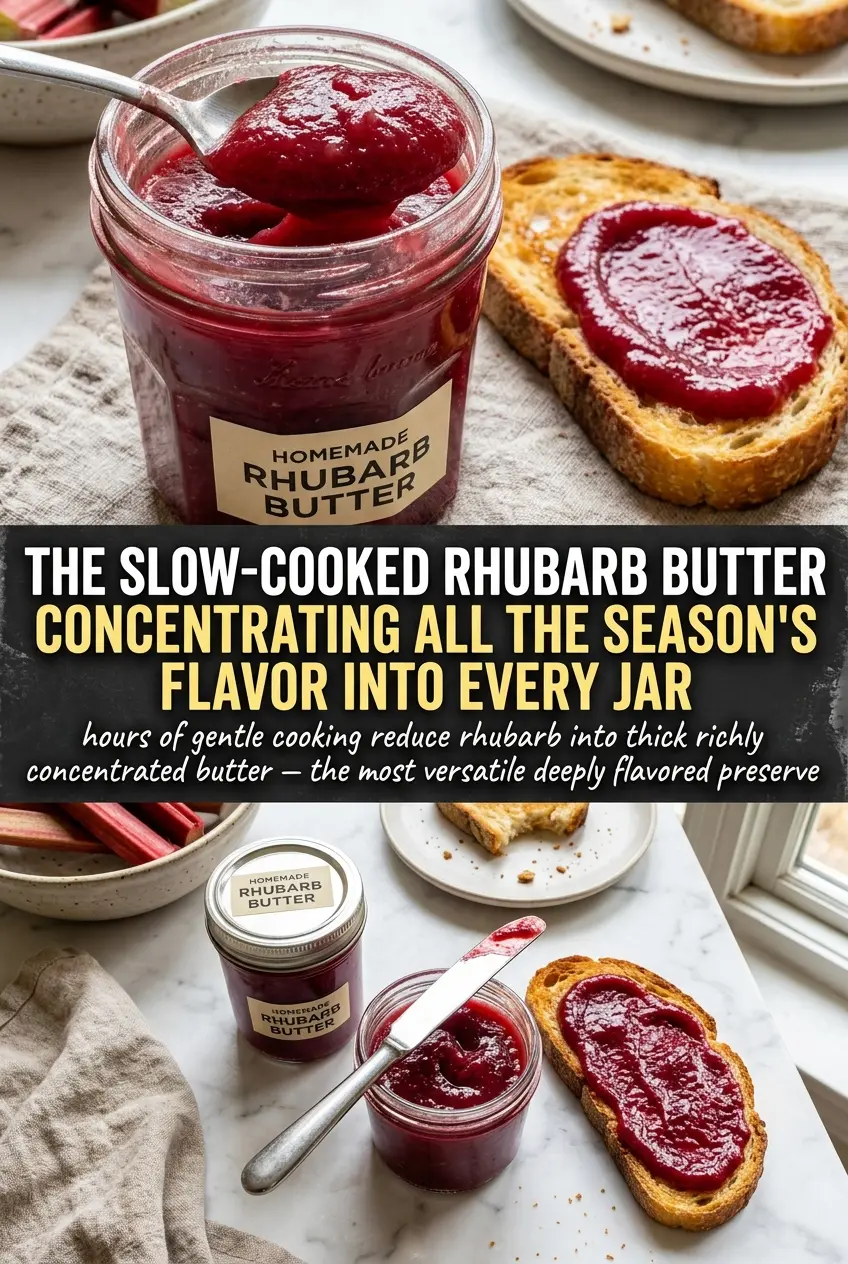
Thick, glossy rhubarb butter is one of those spreads that turns plain toast into something worth slowing down for. The flavor lands somewhere between bright fruit preserves and a soft, spoonable butter, with the rhubarb cooked down until it tastes concentrated instead of sharp. When it’s done right, it spreads cleanly, holds its shape on bread, and carries just enough spice to round out the tang.
The trick is patience with the simmer. Rhubarb starts out watery, and if you rush the cooking, you end up with a thin puree instead of a true fruit butter. The sugar helps draw out the juices, but the real texture comes from reducing the mixture until it mounds on a spoon and leaves a trail when you drag a spatula across the pot. Blending it smooth after the first cook gives it that velvety finish that makes this feel special.
Below, I’ll show you the texture cues I use so you know when it’s thick enough, plus the small spice balance that keeps the rhubarb front and center instead of burying it.
I simmered it until it was thick enough to mound on a spoon, and the immersion blender made it silky smooth. The cinnamon and vanilla were perfect with the tart rhubarb, and it set up beautifully in the fridge.
Save this silky rhubarb butter for toast, biscuits, and spooning over warm scones.
The Reason Rhubarb Turns From Watery to Spreadable
Rhubarb behaves a little differently from other fruit butters because it breaks down fast and gives off a lot of liquid early on. That’s helpful at first, but it also means the pot can look deceptively close to done long before it has the texture you want. The finished spread should be thick enough to hold a line when stirred and should slump off the spoon slowly, not pour.
The other mistake is pulling it off the heat too soon after blending. Pureeing makes the texture look smooth immediately, but it can still be too loose to store well. The last 5 to 10 minutes on the stove are where the butter tightens up and loses that raw, watery edge.
- Uncovered simmering — lets moisture escape instead of trapping it back in the pot. Covered rhubarb almost always needs extra reduction.
- Immersion blending — gives you a smooth, jammy texture. A regular blender works too, but blend in small batches and vent the lid so steam doesn’t build up.
- Final thickening — this is where the spread becomes spoonable. If it still looks glossy and loose, keep cooking.
What Each Ingredient Is Doing in the Pot
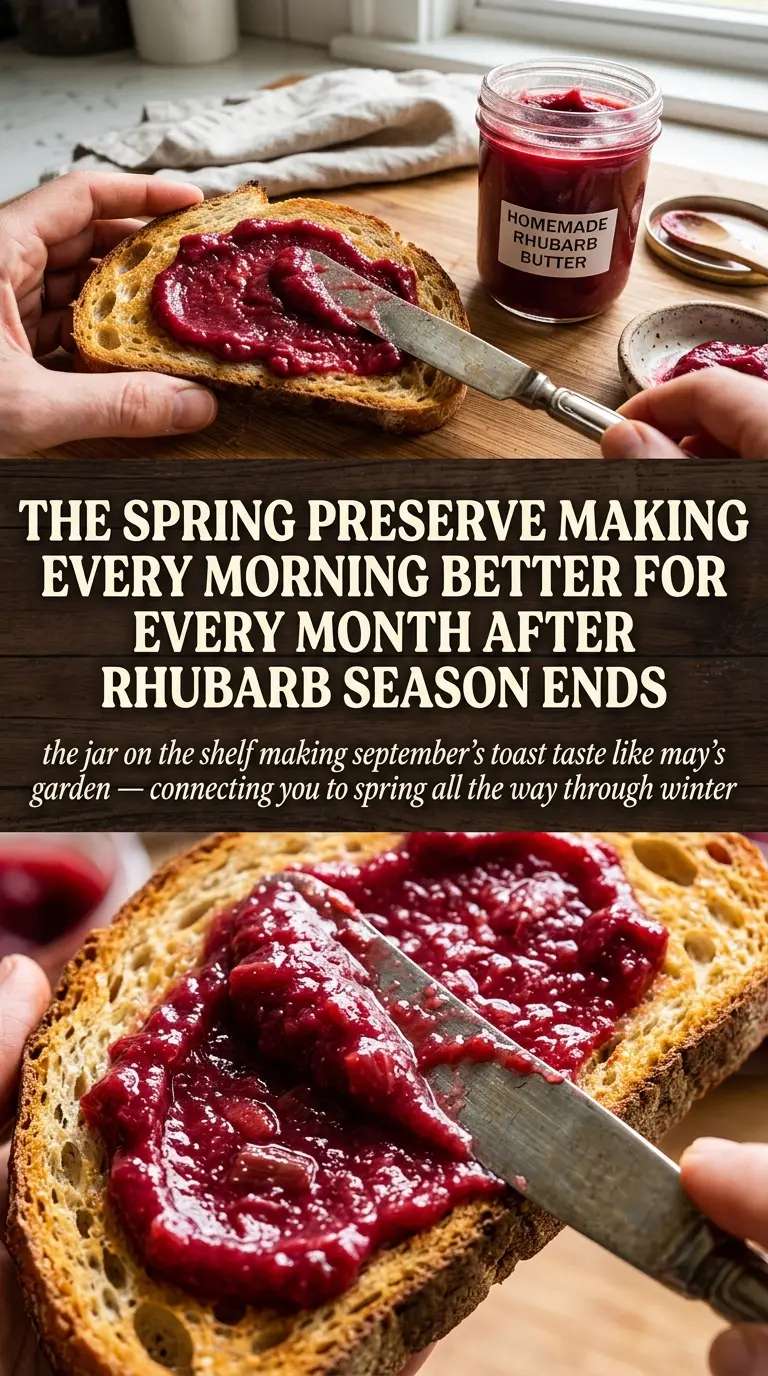
- Fresh rhubarb — this is the whole character of the recipe. Fresh stalks give you the brightest color and cleanest tart flavor; older, stringier rhubarb can still work, but trim away tough ends and any heavily blemished pieces.
- Sugar — balances the tartness and helps the fruit release liquid so it can cook down evenly. You can reduce it slightly if your rhubarb is very sweet, but cutting too much will make the finished butter taste flat and sharp.
- Water — gets the pot started before the rhubarb has had time to collapse. It keeps the bottom from scorching while the fruit begins to soften, and you need less of it than you think.
- Vanilla, cinnamon, and nutmeg — these round out the rhubarb without taking over. The vanilla softens the edges, cinnamon adds warmth, and nutmeg gives the finish a little depth.
How to Cook It Down Until It Mounds on a Spoon
Starting the Breakdown
Combine the rhubarb, sugar, and water in a large pot and bring it to a boil, then drop the heat to a steady simmer. At first the rhubarb will look dry in places and pool with liquid in others, which is normal. Stir occasionally so the sugar dissolves evenly and nothing sticks to the bottom. If the heat is too high, the liquid reduces before the rhubarb softens, and that’s how you end up with scorched edges and undercooked pieces.
Reducing the Mixture
Let it cook uncovered for 30 to 40 minutes, stirring now and then, until the fruit is completely collapsed and the mixture looks much thicker. You’re looking for slow bubbles and a glossy, jam-like consistency, not a loose sauce. If you drag a spoon through the pot and the path stays open for a second before filling in, you’re on the right track. If it still looks soupy, keep going.
Blending to a Smooth Finish
Turn off the heat and puree with an immersion blender until smooth, or blend in batches in a regular blender. This is where the texture changes from cooked fruit to true fruit butter. If you use a blender, don’t fill it all the way and don’t seal it tightly while hot; steam needs somewhere to go. A few seconds of extra blending is worth it if you want that silky, spreadable finish.
Spicing and Final Thickening
Stir in the vanilla, cinnamon, and nutmeg, then return the pot to the stove for another 5 to 10 minutes. This last cook deepens the flavor and drives off the remaining moisture. The butter is ready when it mounds on a spoon instead of sliding off in a thin layer. That final texture matters more than the timer.
How to Adjust Rhubarb Butter for Different Kitchens and Uses
Lower-Sugar Version
You can cut the sugar a little, but don’t take it too far. Sugar isn’t just for sweetness here; it helps the rhubarb soften into a smooth spread and keeps the finished butter from tasting sharp. If you reduce it, expect a looser texture and a more tart result.
Dairy-Free and Naturally Vegan
This recipe already fits dairy-free and vegan eating without any changes. The butter name refers to the texture, not an actual dairy ingredient, so it stays fully plant-based while still tasting rich and concentrated.
Spice Swaps That Still Work
If you want a softer spice profile, swap the cinnamon and nutmeg for a small pinch of cardamom or leave the nutmeg out entirely. Keep the vanilla, though, because it smooths the rhubarb’s edge and helps the flavor read as round instead of just tart.
Storage and Reheating
- Refrigerator: Store in sterilized jars for up to 3 weeks. It firms up as it chills, so don’t judge the final texture while it’s still hot.
- Freezer: It freezes well for longer storage. Leave a little headspace in the jar or use freezer-safe containers so expansion doesn’t crack the container.
- Reheating: Rhubarb butter is usually served cold or at room temperature. If you want it looser for spooning, warm only the amount you need gently; overheating can make it thinner than you want.