Tender crumb, tart rhubarb, and a cinnamon-brown sugar top make this breakfast cake the kind of pan you cut into for coffee and somehow keep coming back to all morning. The cake stays soft underneath the crumble, and the rhubarb bakes down just enough to turn juicy without disappearing into the batter.
What makes this version work is the balance: melted butter keeps the crumb rich without turning it heavy, and the rhubarb goes in at the very end so it stays in distinct pieces instead of streaking the whole batter pink. The topping uses cold butter, which gives you those little sandy clumps that bake into a crisp lid instead of melting into the cake.
Below, I’ve included the small details that matter most, from keeping the batter tender to knowing exactly when the center is done. If you’ve ever had a breakfast cake bake up dense or soggy in the middle, this one gives you a cleaner path.
The rhubarb stayed in little bright pockets and the crumb topping baked up crisp instead of soggy. I served it warm and my husband went back for a second square before the coffee was even gone.
Save this rhubarb breakfast cake for the mornings when you want tart fruit, a soft crumb, and a cinnamon crumble on top.
The Trick to Keeping Rhubarb Cake Tender Instead of Wet
Rhubarb brings a lot of moisture with it, and that’s where breakfast cakes usually slip from tender into gummy. The fix is partly in the batter and partly in the bake: stir just until the flour disappears, then stop. Overmixing builds structure you don’t want here, and it makes a cake that eats more like quick bread than a soft morning cake.
The other piece is the pan. A 9×9-inch baking pan gives the batter enough depth to rise into a proper cake without spreading too thin and drying out at the edges. If the top is browning before the center is set, the oven is running a little hot or the pan is too shallow; keep baking until the middle springs back lightly and a toothpick comes out clean or with a few moist crumbs, not raw batter.
What the Butter, Milk, and Crumble Are Really Doing
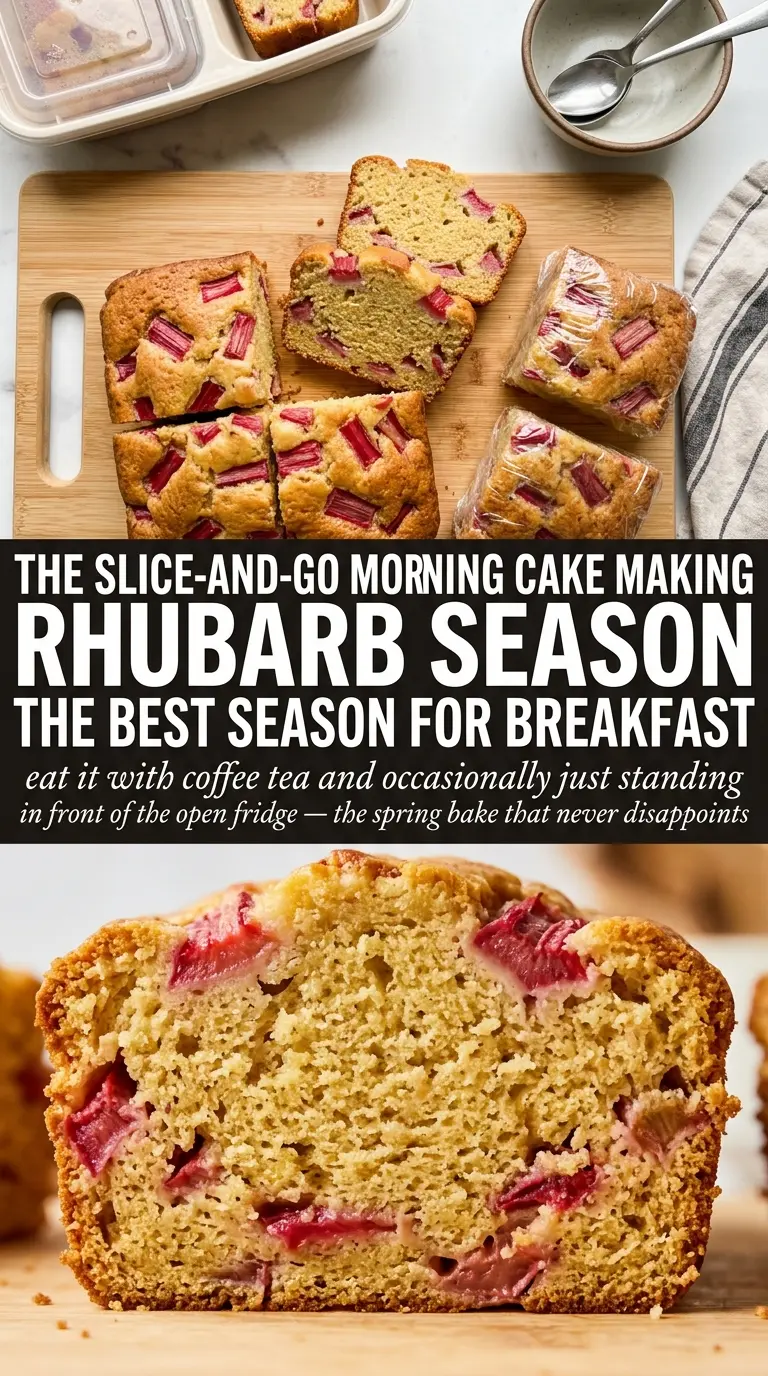
- Rhubarb — Fresh rhubarb is the point of the cake. Dice it into small, even pieces so it softens at the same rate and doesn’t punch holes through the batter. Frozen rhubarb works in a pinch, but don’t thaw it first or you’ll bring extra liquid into the pan.
- Melted butter — Melted butter gives the cake a soft, even crumb without the extra step of creaming. It also keeps the cake moist after cooling. If you swap in oil, the texture will be a touch more plush and less bakery-style, but it will still bake well.
- Milk — Milk loosens the batter just enough to keep it spoonable and tender. Whole milk gives the best texture, but 2% works fine. Non-dairy milk can work too, as long as it’s unsweetened and unflavored.
- Cold butter for the topping — This is what makes the crumble. Cold butter cut into the brown sugar, flour, and cinnamon creates those little clumps that bake into crisp, sandy bits. If the butter is soft, the topping turns paste-like and melts flat.
Building the Batter and Crumble in the Right Order
Mix the Dry Base First
Whisk the flour, sugar, baking powder, and salt together until they look evenly combined and the baking powder is fully distributed. That small step keeps the cake from rising unevenly or tasting patchy at the edges. If you see streaks of baking powder in the finished crumb, the dry ingredients weren’t mixed well enough before the wet went in.
Bring the Wet Ingredients Together
Stir the melted butter, egg, milk, and vanilla in a separate bowl until the egg is fully broken up and the mixture looks smooth. Don’t pour hot butter straight onto the egg or it can scramble in spots. The butter should be warm, not steaming, so it blends cleanly into the batter.
Fold in the Rhubarb Last
Pour the wet mixture into the dry and stir just until there are no dry flour pockets left, then fold in the rhubarb. A few streaks of flour are better than a tough cake, because the batter finishes hydrating in the oven. Spread it into the pan gently and even it out without pressing it down.
Finish with the Crumble and Bake
Mix the brown sugar, flour, and cinnamon, then cut in the cold butter until the topping looks like damp sand with some pea-sized bits. Sprinkle it evenly over the batter, not in one thick heap, so every slice gets some crunch. Bake until the top is golden and a toothpick in the center comes out clean; if the middle still looks glossy, give it a few more minutes before pulling it out.
How to Adapt This Rhubarb Breakfast Cake for Different Mornings
Make It Dairy-Free
Swap the butter for a plant-based baking stick and use unsweetened non-dairy milk. The cake still bakes up tender, though the crumble may be a little less rich and the flavor a touch less buttery. Choose a dairy-free butter that’s meant for baking, not a soft tub spread, so the topping holds its shape.
Use Frozen Rhubarb When Fresh Isn’t Around
Frozen rhubarb works, but add it straight from the freezer and don’t thaw it first. Thawing releases too much liquid, which makes the batter heavier and the center slower to set. Expect a slightly softer crumb and add a few extra minutes in the oven if the fruit is very icy.
Make It a Little Less Sweet
You can reduce the sugar in the cake by a couple of tablespoons if your rhubarb is especially sweet or you prefer a sharper bite. Don’t cut the topping sugar too much, though, or the crumble loses its crispness and becomes more like a dusty layer than a proper lid. The cake will taste more tart, which works nicely with coffee.
Storage and Reheating
- Refrigerator: Store covered for up to 4 days. The crumb topping softens a little by day two, but the cake stays moist.
- Freezer: Freeze individual squares tightly wrapped for up to 2 months. The topping won’t stay perfectly crisp after freezing, but the cake itself holds up well.
- Reheating: Warm slices in a 300°F oven for 8 to 10 minutes or microwave briefly in short bursts. Don’t overheat it, or the cake turns rubbery and the rhubarb can get watery.
Questions I Get Asked About This Recipe
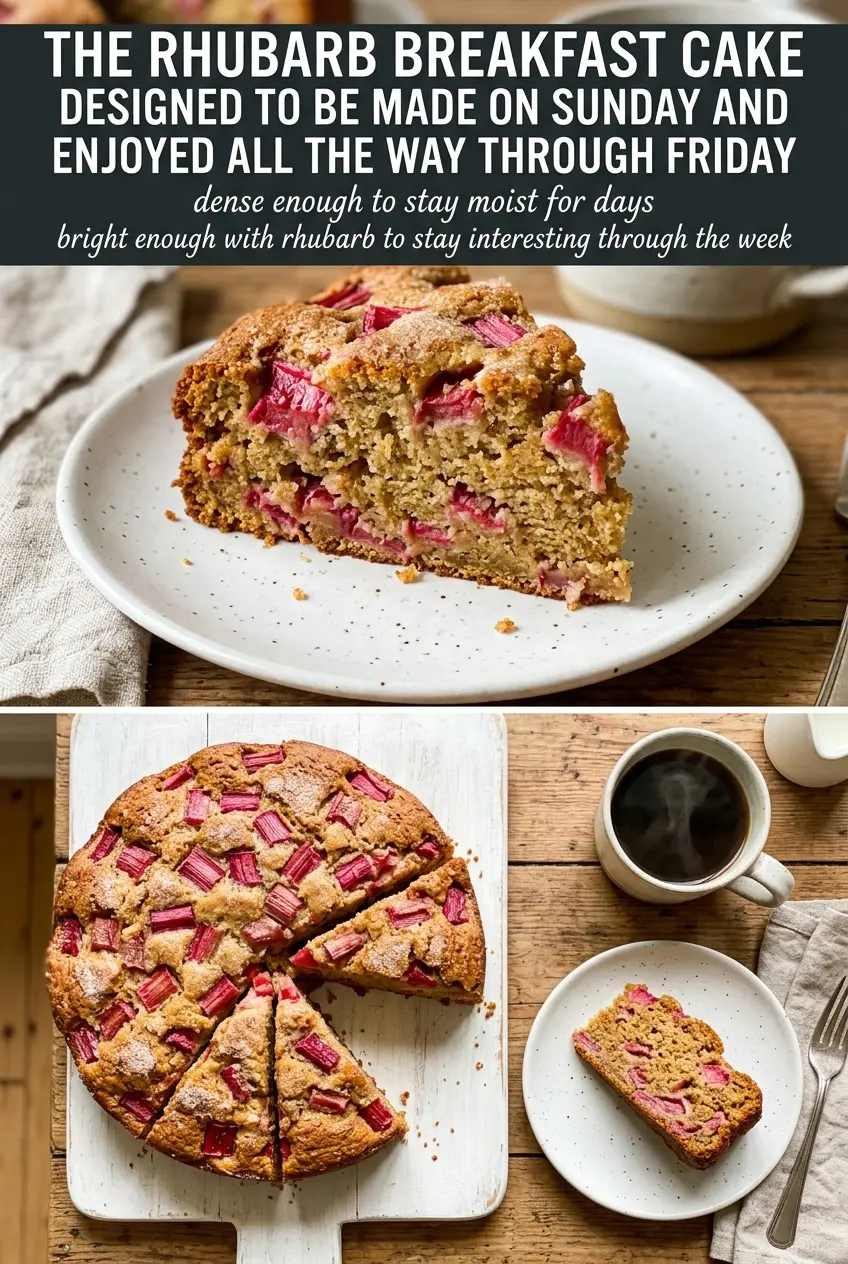
Rhubarb Breakfast Cake
Ingredients
Equipment
Method
- Preheat oven to 350°F and grease a 9x9-inch baking pan with a thin coating of butter or nonstick spray, so the cake releases cleanly after baking.
- Whisk together all-purpose flour, sugar, baking powder, and salt until evenly combined with no visible lumps.
- Mix melted butter, egg, milk, and vanilla extract in a separate bowl until smooth and fully blended.
- Pour wet ingredients into dry and stir until just combined, then fold in diced fresh rhubarb until evenly distributed without overmixing.
- For topping, mix brown sugar, all-purpose flour, and cinnamon, then cut in cold butter until crumbly and sprinkle evenly over the batter.
- Bake for 35-40 minutes at 350°F until golden and a toothpick comes out clean when inserted in the center.
- Cool for 15 minutes before serving warm to let the crumb set; slice and serve while still slightly warm.