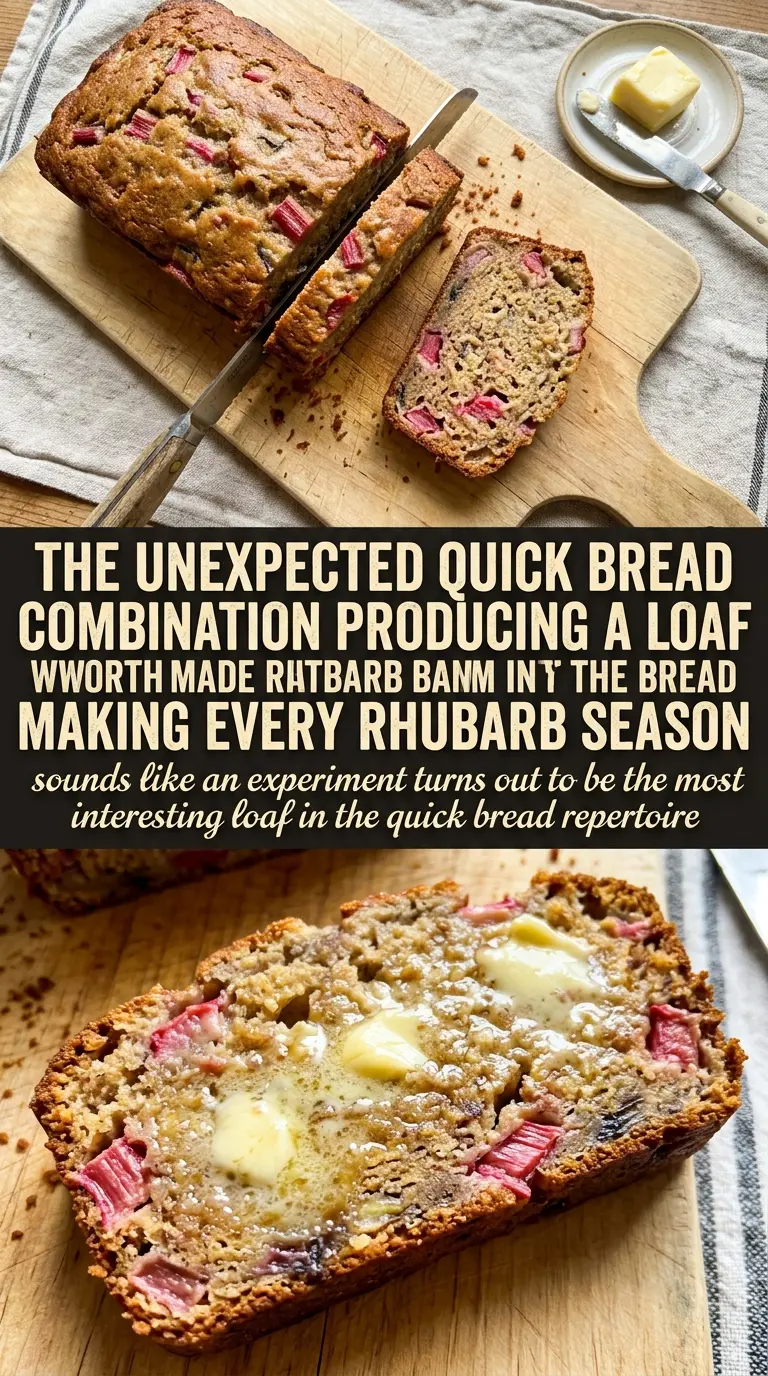
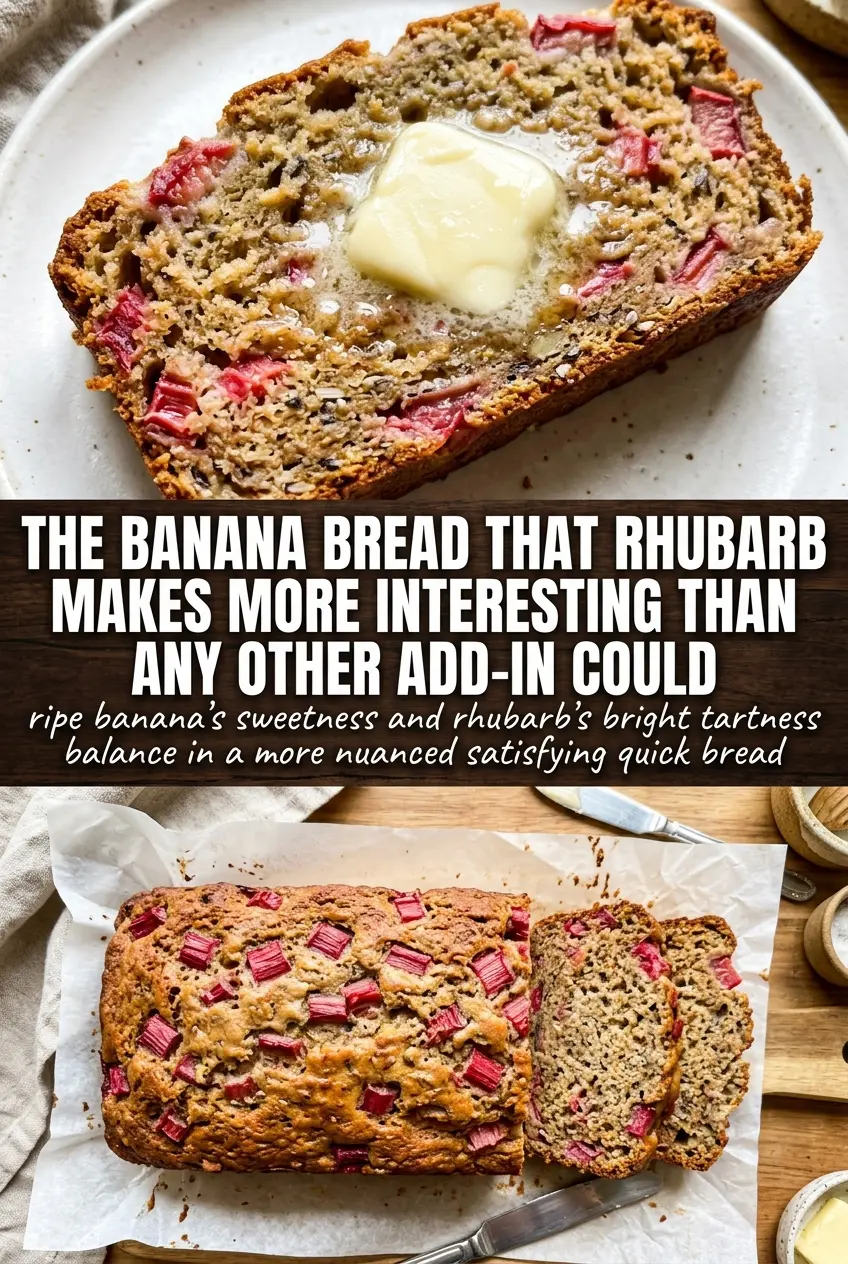
Rhubarb banana bread bakes up with a tender, moist crumb, little pink bursts of rhubarb, and the kind of sweet-tart balance that keeps you reaching for another slice. The banana brings softness and body, while the rhubarb cuts through the sweetness with just enough sharpness to keep the loaf lively. It’s the sort of quick bread that tastes even better on day two, if it lasts that long.
What makes this version work is the way the rhubarb is handled. Finely dicing it helps it soften in the oven without turning the whole loaf soggy, and the bananas need to be ripe enough to mash smoothly for flavor and moisture. Oil keeps the crumb plush, which matters here because rhubarb can dry out a loaf if the batter is too lean. The result is balanced, not heavy, with a clean slice and a soft, almost custardy center around the fruit.
Below you’ll find the one mixing rule that matters most, plus a few swaps that actually make sense if you need to work around what’s in your kitchen.
The loaf stayed incredibly moist and the rhubarb pieces baked up soft without disappearing. I loved how the banana flavor came through without making it taste too sweet.
Save this rhubarb banana bread for the days when you want a soft, fruit-filled loaf with a tangy edge and a moist crumb.
The Trick to Keeping Rhubarb From Sinking and Turning Mushy
The biggest mistake in rhubarb quick breads is treating the fruit like an afterthought. Large chunks stay firmer longer, which sounds good until they sink into the batter and leave tunnels or wet pockets. Finely diced rhubarb disperses more evenly, so every slice gets that tart pop without collapsing the crumb.
The other thing that matters is not overmixing once the dry and wet ingredients come together. Quick bread batter should look just combined, with a few streaks still visible before the rhubarb goes in. Overworking it builds gluten and gives you a tight, rubbery loaf instead of the soft, tender crumb this bread is supposed to have.
What Each Ingredient Is Doing in This Loaf
- Bananas — Use very ripe bananas with plenty of brown spots. They add sweetness, moisture, and that familiar banana bread flavor, and underripe bananas won’t break down the same way.
- Rhubarb — Fresh rhubarb gives the loaf its tang and those pretty pink-speckled slices. Frozen rhubarb can work, but thaw it first and drain it well so extra water doesn’t make the center gummy.
- Vegetable oil — Oil keeps the crumb softer for longer than butter would here. Since rhubarb brings moisture of its own, oil helps the loaf stay plush without needing a heavy batter.
- Cinnamon — It doesn’t dominate, but it rounds out the tartness from the rhubarb and gives the banana a little warmth. Skip it only if you want the fruit to taste sharper and more bare-bones.
- All-purpose flour — This gives the loaf enough structure to hold the fruit without turning dense. A 1:1 gluten-free baking blend can work, but the texture will be a little more delicate and crumbly.
Building the Batter Without Overworking It
Mix the Dry Ingredients First
Whisk the flour, sugar, baking soda, salt, and cinnamon together until the mixture looks even. That step keeps the baking soda from clumping, which matters because uneven leavening gives you a loaf that domes oddly or tastes a little metallic in one bite. A quick whisk is enough; you’re not aerating here, just combining.
Combine the Wet Ingredients Until Smooth
Beat the eggs, oil, mashed bananas, and vanilla together in a separate bowl until the bananas are mostly broken down. You want a thick, loose mixture with no large banana lumps left behind. If the bananas are only half mashed, they won’t distribute evenly, and the loaf can bake up streaky.
Fold in the Rhubarb at the End
Pour the wet mixture into the dry ingredients and stir only until the flour disappears. Then fold in the rhubarb with a few deliberate turns. Stop as soon as it looks evenly distributed. If you keep stirring, the loaf gets tough, and the rhubarb can bleed too much juice into the batter before it hits the oven.
Bake Until the Center Sets
Scrape the batter into a greased 9×5-inch loaf pan and bake until a toothpick comes out clean or with just a few moist crumbs attached. The top should be deeply golden and the center should spring back lightly when pressed. If the top browns too quickly before the middle is done, tent it loosely with foil for the last 10 to 15 minutes.
Cool Before Slicing
Let the loaf rest in the pan for 10 minutes, then turn it out onto a wire rack and let it cool completely. This is the part people rush, and it matters: a warm loaf will seem gummy even when it’s baked through. Once it cools, the crumb sets up and the slices hold together cleanly.
How to Adjust This Loaf When You Need a Swap
Make It Dairy-Free Without Changing the Texture
This loaf is already dairy-free as written, which is part of why it stays so soft. If you want to serve it with butter, use a dairy-free spread after baking rather than swapping anything into the batter.
Use Frozen Rhubarb When Fresh Isn’t Available
Thaw the rhubarb completely, drain off excess liquid, and pat it dry before folding it in. Frozen rhubarb releases more moisture in the oven, so if you add it straight from the freezer, the loaf can turn damp in the middle and bake unevenly.
Turn It Into Muffins for Faster Baking
Divide the batter into lined muffin cups and bake until the tops spring back and a tester comes out clean, usually around 18 to 22 minutes. Muffins lose a little of the sliceable loaf texture, but you gain crisp edges and quicker cooling.
Cut the Sugar Slightly for a More Tart Loaf
You can reduce the sugar a little if your bananas are very ripe or you prefer a sharper rhubarb flavor. Go too far, though, and the loaf loses tenderness because sugar does more than sweeten here — it also helps keep the crumb soft.
Storage and Reheating
- Refrigerator: Store tightly wrapped for up to 4 days. The crumb stays moist, though the rhubarb may look a little darker after day one.
- Freezer: This loaf freezes well. Wrap slices or the whole cooled loaf tightly in plastic and then foil, and freeze for up to 3 months.
- Reheating: Warm slices in a toaster oven or microwave just until heated through. Don’t overdo it, or the banana bread can dry out and the rhubarb pieces turn overly soft.
Questions I Get Asked About This Recipe
Rhubarb Banana Bread
Ingredients
Equipment
Method
- Preheat the oven to 350°F and grease a 9x5-inch loaf pan. The pan should be evenly coated so the loaf releases cleanly.
- Whisk together all-purpose flour, sugar, baking soda, salt, and cinnamon in a mixing bowl. Whisk until the dry mixture looks uniform in color.
- Beat eggs, vegetable oil, mashed ripe bananas, and vanilla extract until combined in a separate bowl. Stop when the mixture looks smooth and glossy.
- Pour the wet ingredients into the dry ingredients and stir until just mixed. Mix only until no dry streaks remain for a tender crumb.
- Fold in finely diced fresh rhubarb until evenly distributed. You should see pink pieces throughout the batter.
- Pour the batter into the prepared loaf pan and level the top. The batter should fill the pan evenly.
- Bake at 350°F for 55-60 minutes, until a toothpick comes out clean. The loaf should be golden and the center should spring back lightly.
- Cool the loaf in the pan for 10 minutes. It should firm up slightly so it holds shape when unmolded.
- Turn the loaf out onto a wire rack and cool completely for 30 minutes. The crust should set and the interior should feel tender rather than gummy.