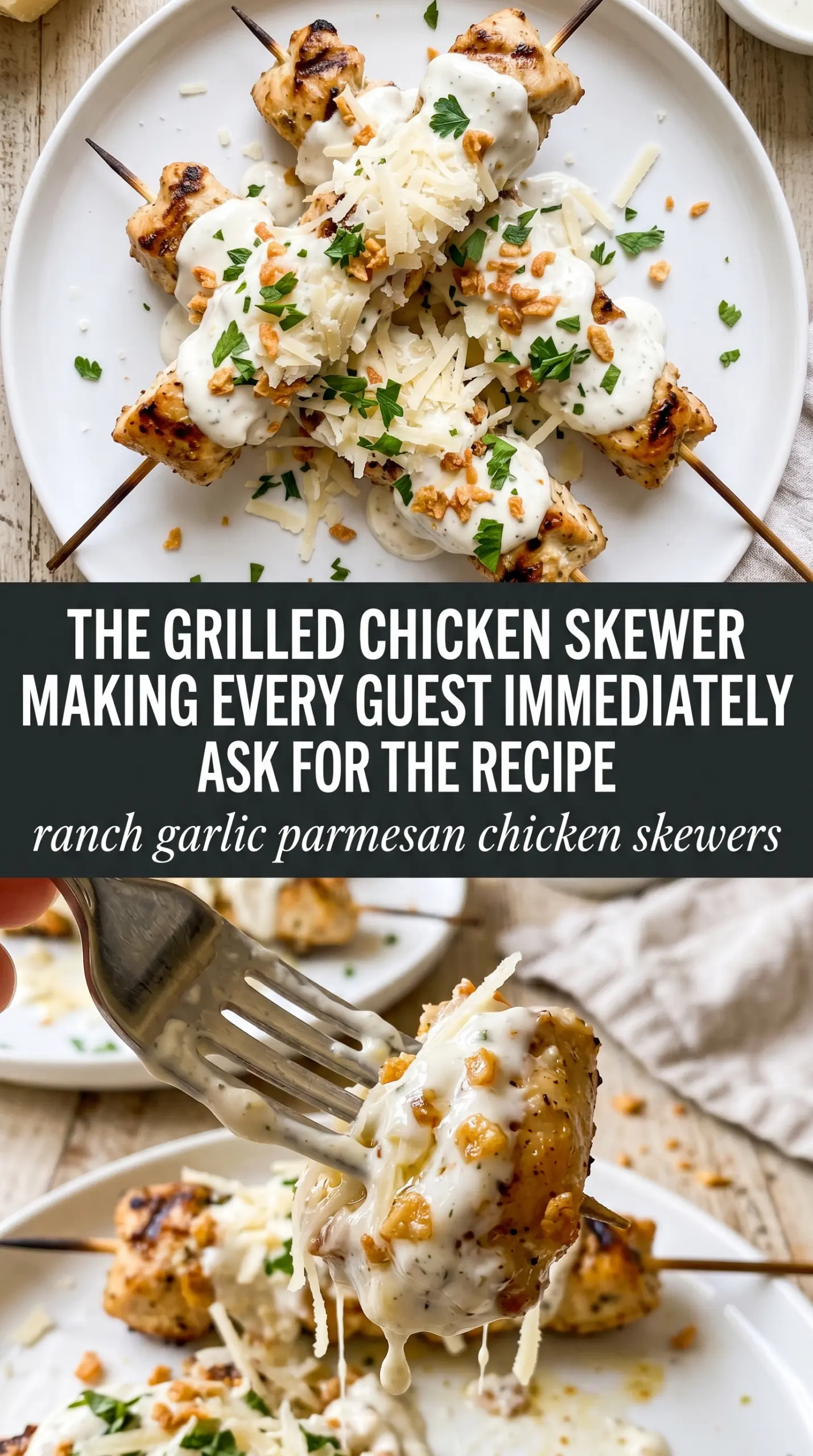
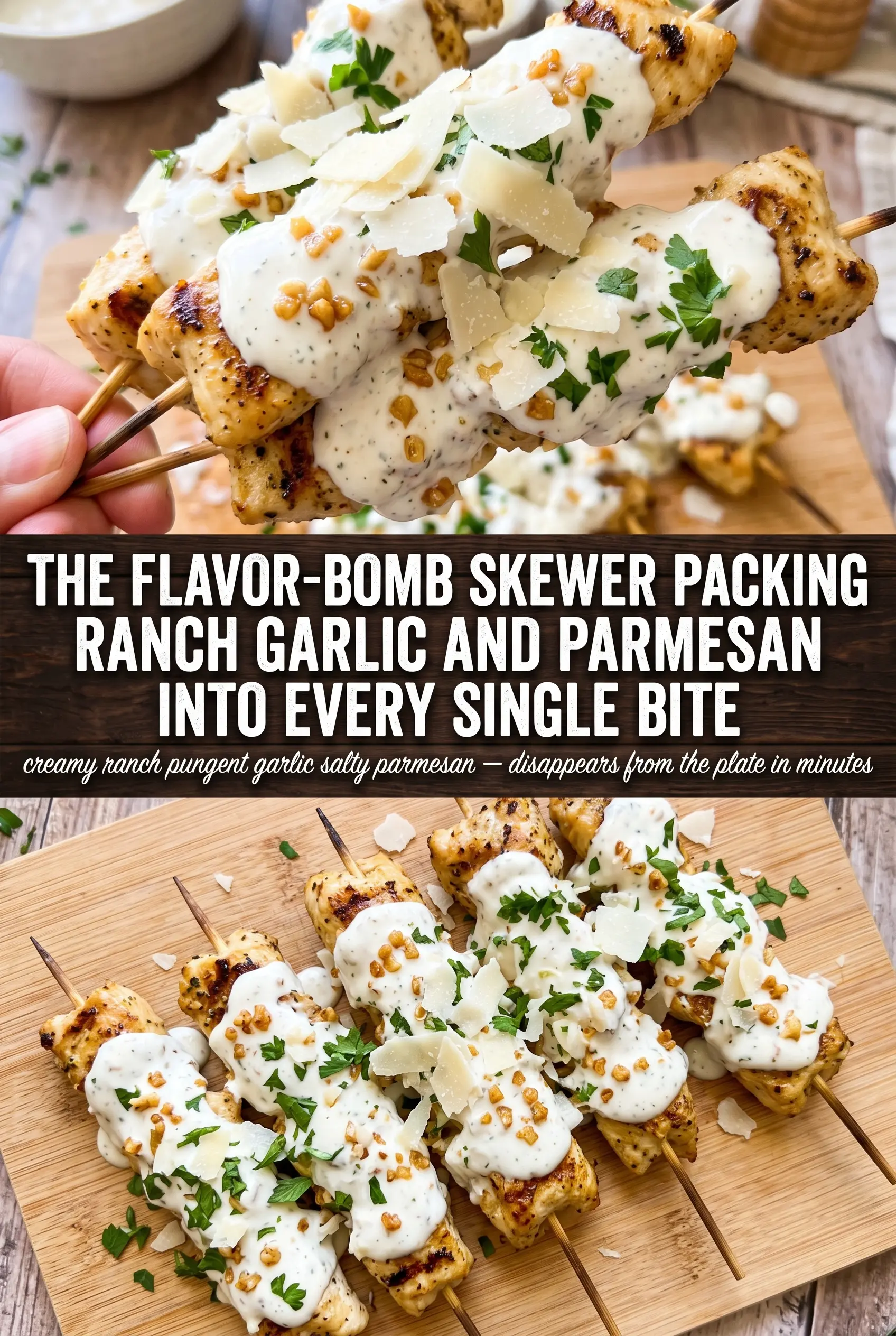
Juicy chicken skewers with a salty Parmesan coating and a ranch-garlic marinade are the kind of grill food that disappears fast. The chicken stays tender, the edges pick up a little char, and every bite lands with that familiar ranch-and-cheese combination that people usually go back for before the tray even hits the table.
What makes these skewers work is the balance in the marinade. Ranch dressing brings seasoning and tang, olive oil helps the coating cling, and Parmesan adds a savory crust that browns beautifully over direct heat. The short marinating window matters here. Long enough for the chicken to pick up flavor, but not so long that the dairy and salt start tightening the meat before it ever reaches the grill.
Below, I’ve included the small details that keep the skewers juicy, from soaking the wooden sticks to watching for the point where the Parmesan turns golden instead of burnt. There’s also a storage note and a few smart variations if you want to stretch the recipe or change up the flavor without losing what makes it work.
The chicken stayed super juicy and the Parmesan got this crisp, salty edge on the grill. I marinated it for about an hour and served it with extra ranch, and my husband asked if we could add it to the regular dinner rotation.
Save these Ranch Garlic Parmesan Chicken Skewers for the nights when you want smoky grilled chicken with a crisp Parmesan edge and zero fuss at the table.
The Part That Keeps the Parmesan from Burning on the Grill
The biggest mistake with cheesy chicken skewers is treating the Parmesan like a coating that can survive aggressive heat on its own. It can’t. The cheese should cling to the chicken through the ranch and oil, but the grill needs to stay at medium-high, not screaming hot, so the outside browns before the cheese scorches. If the marinade is dripping heavily when the skewers hit the grates, that’s a sign the coating is too loose and the grill will start flaming instead of searing.
Cutting the chicken into even chunks matters more than people think. Uneven pieces finish at different times, and the small ones dry out while the larger ones wait for the center to reach 165°F. A short marinade also helps here. You want flavor on the surface and a little tenderness from the ranch, not a chicken bath that turns the texture soft and muddy.
- Ranch dressing — This brings tang, salt, and body all at once. A thicker ranch clings better than a thin pourable version, which is why bottled ranch dressing works better here than ranch dip thinned with extra liquid.
- Parmesan cheese — Use finely grated Parmesan, not the shelf-stable powdery kind. Freshly grated cheese melts into the marinade and browns into little salty bits on the grill instead of disappearing.
- Chicken breasts — Breasts stay lean and slice cleanly onto skewers. If you swap in chicken thighs, they’ll stay juicier and forgive overcooking better, but they need to be trimmed well so the pieces cook at the same pace.
- Wooden skewers — Soak them long enough to reduce scorching. If you skip that step, the ends can char before the chicken is done, especially if the grill has hot spots.
What Each Ingredient Is Actually Doing in Ranch Garlic Parmesan Chicken Skewers
- Protein (quality, proper thickness) — Good quality protein tastes better. Even thickness ensures even cooking.
- Seasoning (bold, distributed throughout) — Don’t be shy with salt and pepper. Quality seasoning elevates everything.
- Oil or fat (protective and flavorful) — The fat helps develop crust and carries flavors. Use generously.
- Heat management (appropriate temperature for the protein) — Too high and the outside burns before the inside cooks. Too low and it steams.
- Technique (sear, then finish based on thickness) — Proper technique creates flavor. Sear for crust, then cook through gently.
- Aromatics and seasonings (garlic, herbs, spices) — These add complexity and depth. Distribute them throughout the cooking process.
- Resting time (let it rest before serving) — Resting allows juices to reabsorb. This keeps the protein moist and tender.
- Optional: finishing sauce or glaze — A light sauce adds richness without overwhelming. Apply at the very end.
Building the Coating Before the Grill Takes Over
Mixing the Marinade
Stir the ranch dressing, olive oil, Parmesan, garlic, ranch seasoning, Italian seasoning, salt, and pepper until the mixture looks thick and speckled. The garlic should be evenly distributed, not sitting in little clumps, or some skewers will taste sharp while others barely register it. If the marinade looks too runny, add a little more Parmesan; if it feels paste-like, the chicken will still coat fine once it’s tossed.
Letting the Chicken Pick Up Flavor
Add the chicken chunks and turn them until every piece is coated. Thirty minutes is enough for solid flavor, and two hours is the upper edge I’d go before the salt starts pulling too much moisture from the meat. If you marinate it overnight, the texture can turn a little tacky and the surface won’t brown as nicely.
Threading and Grilling
Thread the chicken onto soaked skewers with a little space between pieces so heat can move around each chunk. Place them on a preheated medium-high grill and leave them alone long enough to get grill marks before turning. If the chicken sticks when you try to flip it, it’s not ready yet; once it releases cleanly, the surface has set and you’re close to that golden edge. Pull the skewers when the thickest piece reaches 165°F, then let them rest for a few minutes so the juices settle back in.
Oven-Baked Skewers
If you don’t want to grill, bake the skewers on a lined sheet pan at 425°F, turning once halfway through. You won’t get the same smoky edge, but the Parmesan still browns and the chicken stays juicy if you pull it as soon as the center hits temperature.
Dairy-Free Version
Use a dairy-free ranch and swap the Parmesan for a dairy-free hard-style cheese or nutritional yeast. You’ll lose a little of the salty crust, but the garlic-ranch base still carries the flavor and the chicken stays tender.
Chicken Thigh Swap
Boneless thighs work well if you want a richer, juicier skewer. Trim excess fat first and cut the pieces a little larger so they don’t dry out or overcook while waiting for the exterior to brown.
Storage and Reheating
- Refrigerator: Store leftovers in an airtight container for up to 4 days. The coating softens a bit, but the chicken stays flavorful.
- Freezer: Freeze the cooked chicken off the skewers for up to 2 months. The texture is best if you freeze the pieces in a single layer first, then move them to a bag.
- Reheating: Warm in a 325°F oven or air fryer until hot. The main mistake is blasting them on high heat, which tightens the chicken and burns the cheese before the center warms through.
Questions I Get Asked About This Recipe
Ranch Garlic Parmesan Chicken Skewers
Ingredients
Equipment
Method
- Mix ranch dressing, olive oil, grated Parmesan, minced garlic, ranch seasoning mix, Italian seasoning, salt, and pepper until well combined.
- Add the chicken chunks to the marinade and toss to coat thoroughly.
- Marinate the chicken for 30 minutes to 2 hours in the refrigerator.
- Thread the marinated chicken onto soaked wooden skewers, leaving a little space between chunks.
- Preheat the grill to medium-high heat.
- Grill the skewers for 5-6 minutes per side, until the chicken reaches 165°F.
- Serve the skewers hot with extra ranch for dipping.