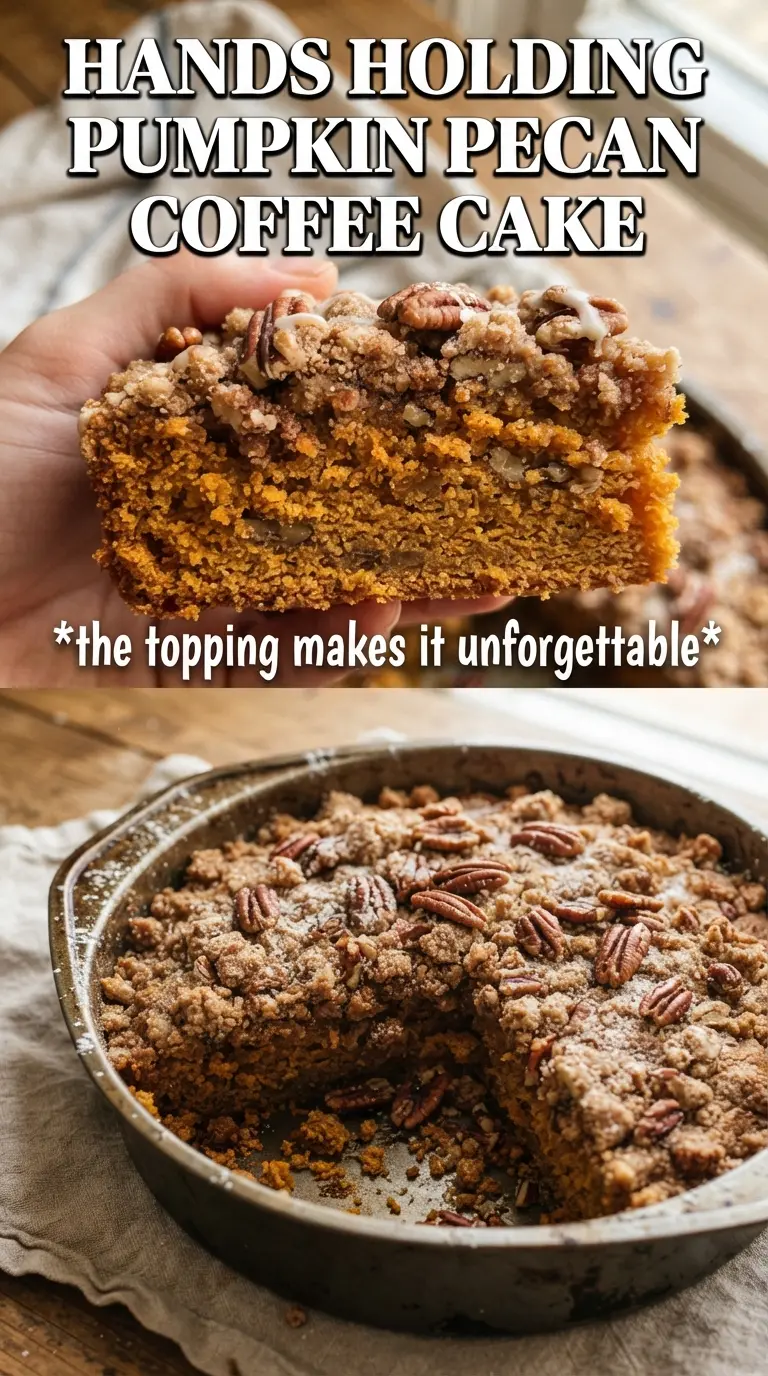
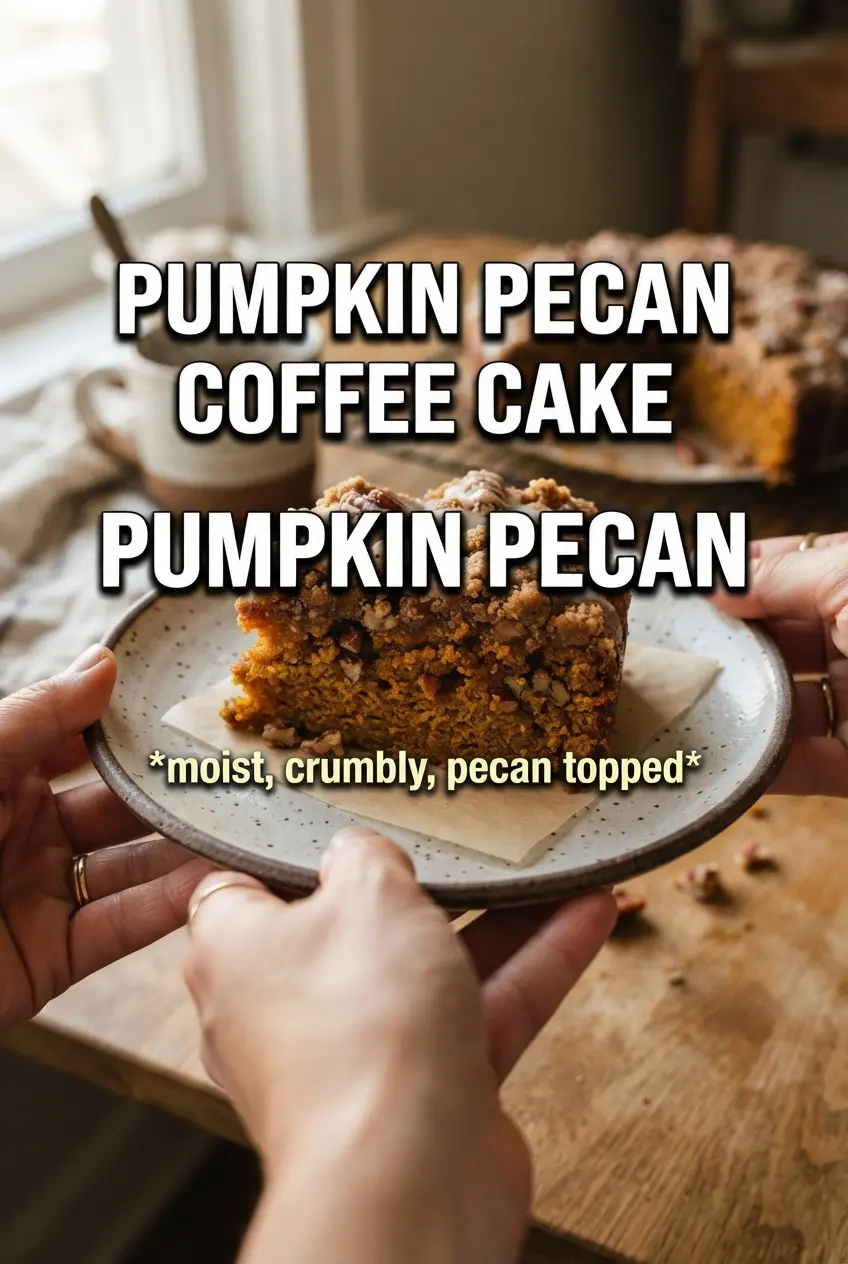
Pumpkin pecan coffee cake lands in that sweet spot between cozy breakfast and proper dessert: tender, deeply spiced cake under a thick, craggy streusel that stays crisp at the top and just a little buttery where it meets the crumb. The best slices hold together cleanly, but the topping still spills into sandy little pieces when you cut in, which is exactly what you want from a coffee cake.
This version leans on sour cream for a soft, plush crumb and uses brown sugar in both the cake and the streusel for a deeper, caramel note that plain white sugar can’t give you. The pumpkin adds moisture, but it also needs structure from the flour and eggs, so the batter gets mixed just until combined. Overmix it and the cake turns tight instead of tender.
Below you’ll find the small details that make the topping stay chunky, the cake bake evenly, and the pumpkin flavor come through without tasting heavy. If you’ve ever had coffee cake that baked up dense in the middle or lost its streusel to the batter, the notes here will help you avoid both.
The streusel stayed chunky and crisp, and the cake baked up moist without sinking in the middle. I liked that the pumpkin flavor came through without being too sweet.
Love the thick pecan streusel and tender pumpkin crumb? Save this Pumpkin Pecan Coffee Cake for the mornings when you want a bakery-style breakfast at home.
The Streusel Needs Cold Butter, Not Patience
The topping is what makes this coffee cake memorable, and the texture depends on keeping the butter cold long enough to form distinct crumbs. If the butter softens too much, the streusel melts into a paste and bakes into a flat layer instead of those chunky, golden clumps that give each bite crunch. Cut the butter in until the mixture looks like damp sand with some pea-size pieces still visible, then stop.
The pecans go in after the crumb has formed, not before. That keeps them coated in the buttery sugar mixture without chopping them down too fine or making the streusel heavy. You want enough flour and sugar around the nuts to help the topping brown and hold together, but not so much that it turns cakey.
What Each Ingredient Is Actually Doing in This Recipe
- Primary ingredient (the star) — Quality matters most. Choose the best you can find.
- Cooking medium (oil, butter, or broth) — This carries flavors and prevents dryness.
- Seasonings (salt, pepper, spices, herbs) — Layer flavors so nothing overpowers. Build depth gradually.
- Aromatics (garlic, onion, herbs) — Cook with fat to bloom flavors. Become the foundation.
- Supporting ingredients — Complement the main ingredient without overpowering it.
- Sauce or liquid (if applicable) — Brings flavors together. Balance richness with acid.
- Acid (lemon, vinegar, wine, or other) — Brightens and prevents flat-tasting results.
- Final finish (garnish, glaze, or sauce) — Prevents one-dimensional taste and adds visual appeal.
What Each Ingredient Is Actually Doing in This Cake
- Pumpkin puree — This brings moisture, color, and that unmistakable pumpkin flavor. Use plain pumpkin puree, not pumpkin pie filling, or the cake will bake up overly sweet and spiced in a way you can’t control.
- Sour cream — This is what keeps the crumb soft and gives the cake a little tang that balances the brown sugar. Full-fat sour cream works best, but plain Greek yogurt will do in a pinch; expect a slightly tighter texture.
- Brown sugar — Brown sugar sweetens the cake and deepens the flavor, and it also helps hold on to moisture. Light or dark brown sugar both work, though dark brown sugar gives the cake a richer, more molasses-like finish.
- Pecans — These are worth using in good shape, not dusty bits from the bottom of the bag. Chop them coarsely so they stay crunchy in the oven and give the topping some real texture.
- Butter — Butter appears in both the cake and the streusel, but it plays a different role in each. In the cake, it adds richness; in the topping, cold butter is what creates the crumbly structure.
Building the Batter Without Deflating the Crumb
Mix the Streusel First and Chill It Out
Start with the streusel so it has time to stay cold while you make the batter. Work the butter into the flour, sugar, and cinnamon until the mixture clumps into crumbs, then stir in the pecans and set it aside. If the kitchen is warm or the mixture looks soft, slide the bowl into the fridge while you prep the cake base.
Cream the Base Until It Looks Light, Not Fluffy
Beat the butter and brown sugar until the mixture looks lighter in color and a little airy, then add the eggs one at a time. Stir in the pumpkin, sour cream, and vanilla just until smooth. If the mixture looks slightly curdled after the pumpkin and sour cream go in, that’s normal and it will come together once the dry ingredients are added.
Fold the Dry Ingredients in Only Until the Flour Disappears
Whisk the flour, baking powder, baking soda, spices, and salt separately, then add them to the wet mixture. Mix just until no dry streaks remain. Overmixing here is the fastest way to get a tough cake, because once the flour hydrates and the batter turns smooth, the gluten has already started developing.
Layer the Pan So the Topping Stays on Top
Spread the batter evenly into a greased 9×13 pan, then scatter the streusel generously over the surface. Don’t press the topping into the batter; it needs to sit loose so it bakes into a rough, crisp crown instead of sinking. Bake until the center is set and a tester comes out with a few moist crumbs, not wet batter.
Make It Gluten-Free
A 1:1 gluten-free flour blend works well here because the cake is already rich and moist from the pumpkin and sour cream. Don’t use almond flour by itself; it won’t give you the structure this batter needs, and the cake will sink under the streusel.
Swap the Pecans for Walnuts
Walnuts bring a slightly earthier, less sweet edge and work in the same amount. Keep the pieces coarse so the topping still has crunch instead of turning into a dense nut layer.
Use Greek Yogurt Instead of Sour Cream
Plain full-fat Greek yogurt gives you the same tang and moisture, with a slightly tighter crumb. Use it measure for measure, but expect the cake to lose a touch of the plushness that sour cream adds.
Storage and Reheating
- Refrigerator: Store covered for up to 5 days. The streusel softens a little, but the cake stays moist.
- Freezer: Wrap individual slices tightly and freeze for up to 2 months. Thaw overnight in the fridge or at room temperature for a couple of hours.
- Reheating: Warm slices in a 300°F oven for 8 to 10 minutes or microwave briefly. Don’t overheat it, or the crumb dries out and the topping loses its crunch.
Questions I Get Asked About This Recipe
Pumpkin Pecan Coffee Cake
Ingredients
Equipment
Method
- Preheat oven to 350F, then grease a 9x13 pan for easy release after baking.
- Set the pan aside while you make the streusel and batter so the topping stays thick and crumbly.
- Cut cold butter into the flour, brown sugar, and cinnamon until crumbly, using a gentle rubbing motion for pea-size bits (about 2-3 minutes).
- Stir in the chopped pecans until evenly distributed, and keep the mixture cool so it bakes into a crunchy top.
- Beat butter and brown sugar until smooth and lighter in color, then add eggs one at a time and mix until incorporated.
- Add pumpkin puree, sour cream, and vanilla, and mix just until the batter looks cohesive and thick.
- Fold in the dry ingredients until no dry streaks remain, then spread the batter evenly in the greased pan.
- Scatter pecan streusel generously over the top as a thick, even layer, with visible crumble peaks.
- Bake at 350F for 45-50 minutes, until a toothpick in the center comes out clean and the crumble is golden brown.