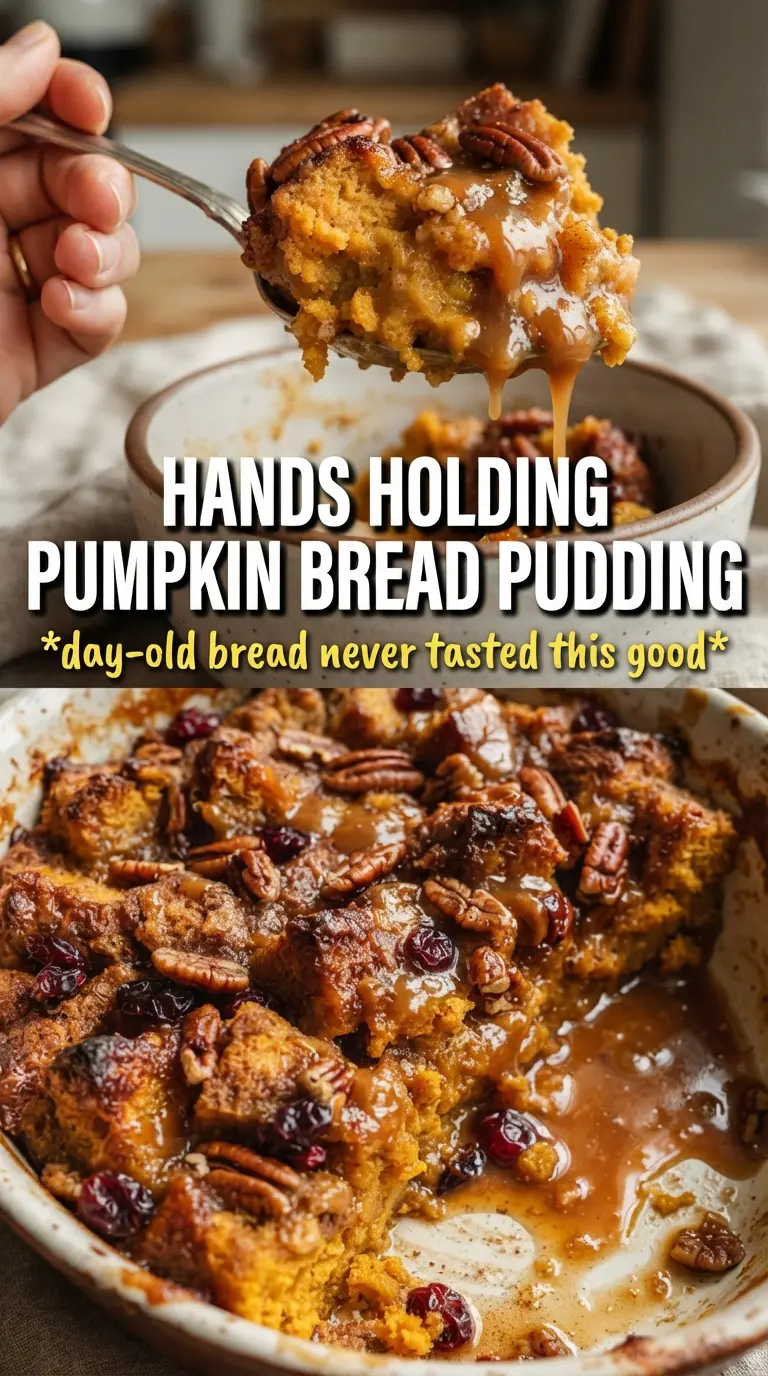
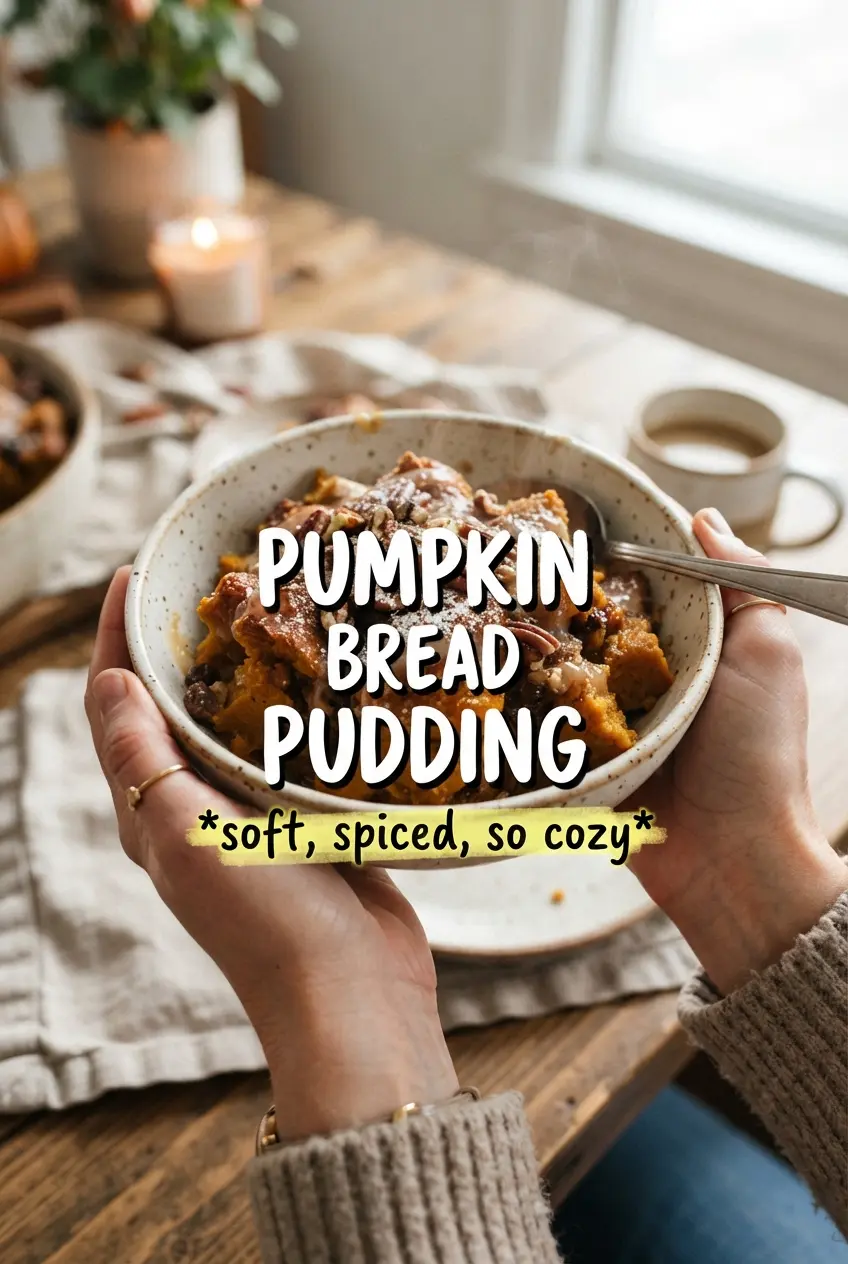
Warm pumpkin bread pudding lands somewhere between a custard dessert and the kind of breakfast casserole everyone mysteriously goes back for after dinner. The edges bake up browned and a little crisp, the center stays soft and spoonable, and every bite tastes like pumpkin spice folded into buttery bread. A drizzle of caramel bourbon sauce on top takes it from cozy to the kind of dessert people lean in for before the pan even hits the table.
The texture depends on two things: sturdy bread and enough soak time for the custard to move into every cube without turning the whole dish mushy. Brioche or challah works best because the crumb is rich and tight enough to hold its shape, and the mix of pumpkin puree, milk, cream, and eggs gives the pudding that set-but-creamy finish. The extra sugar in the custard isn’t just for sweetness; it helps the top caramelize while the inside stays soft.
Below, I’m walking through the part that matters most: how to keep the center custardy without leaving a soggy middle, plus the small tweaks that make the caramel sauce taste polished instead of one-note.
The custard soaked in beautifully and the top baked up with those crisp, caramelized edges I was hoping for. The bourbon caramel took it over the top and wasn’t hard at all.
Save this pumpkin bread pudding for the night you want soft custard, crisp edges, and warm caramel bourbon sauce in one pan.
The Part That Keeps Pumpkin Bread Pudding Custardy Instead of Soggy
The common mistake with bread pudding is drowning the bread in custard and calling it done. Bread needs time to drink in the liquid, but it also needs enough structure to hold the bake. That’s why brioche or challah matters here: both breads are rich, slightly sturdy, and cut into cubes that keep some shape after soaking.
The other piece that matters is the rest before baking. Those 30 minutes let the custard move into the center of the cubes instead of just coating the outside. If you skip that soak, the top can brown before the middle sets, and you end up with a dry top layer over a loose bottom.
- Pumpkin puree — This gives the pudding its body and deep pumpkin flavor. Use plain pumpkin puree, not pumpkin pie filling, or the sweetness and spice level will throw off the custard.
- Eggs — They set the custard. Four eggs is what gives you slices that hold together without turning rubbery.
- Heavy cream plus whole milk — The cream adds richness, and the milk keeps the custard from becoming too dense. Don’t swap both for lower-fat milk unless you want a lighter, less plush texture.
- Brioche or challah — This is the bread pudding insurance policy. Day-old bread is even better because it absorbs custard without collapsing.
What the Pumpkin, Cream, and Bourbon Each Do Here
The ingredient list looks simple, but each part is pulling a different weight. The pumpkin brings earthiness and thickness. The cream rounds everything out so the pudding tastes lush instead of eggy. The bourbon in the caramel sauce doesn’t just add alcohol; it cuts through the sweetness and gives the sauce a deeper finish.
- Brown sugar — Use it in the custard and the sauce. It adds molasses depth that works better than plain white sugar alone.
- Pumpkin pie spice and cinnamon — These should read warm and balanced, not aggressive. If your spice blend is very heavy on clove, cut back a little so the pumpkin still tastes like pumpkin.
- Vanilla — It softens the edges of the spice and makes the custard taste fuller. A good vanilla matters more here than in some recipes because the flavor base is otherwise very simple.
- Bourbon — If you don’t want alcohol, leave it out and add an extra teaspoon of vanilla plus a pinch of salt. The sauce will still work, but it loses some of its backbone.
Building the Custard, Soaking the Bread, and Baking It Until Set
Make the custard smooth first
Whisk the pumpkin, eggs, milk, cream, sugars, spices, vanilla, and salt until the mixture looks smooth and evenly colored. You don’t want streaks of pumpkin or clumps of brown sugar left behind, because those pockets can bake unevenly. The custard should look loose and pourable, not thick like batter.
Press the bread into the soak
Arrange the cubes in the baking dish, pour the custard over the top, then press the bread down so every piece gets touched by the liquid. Let it sit for 30 minutes. If you rush this part, the top will taste saturated while the center stays dry and bready.
Bake until the center no longer sloshes
Bake at 350°F until the top is golden and the middle is set with just a slight wobble. The edges should look deeper brown and a little crisp. If the center still looks wet and jiggles like liquid, it needs a few more minutes; if the top gets too dark too fast, lay a sheet of foil loosely over the dish.
Finish with the caramel while it’s warm
For the sauce, melt the butter and brown sugar together, then stir in the cream and bourbon and simmer briefly until glossy. It should coat a spoon but still pour easily. Drizzle it over the pudding while both are warm so it sinks into the crusty edges and picks up the best part of the bake.
How to Adapt This for Different Crowds and Different Pantries
Dairy-Free Version
Swap the milk and cream for full-fat canned coconut milk or a rich oat creamer. The pudding will still set, but the flavor turns a little lighter and the caramel sauce won’t have the same dairy richness unless you use a plant-based butter. The texture stays good as long as you keep the liquid amount the same.
Gluten-Free Bread Pudding
Use a sturdy gluten-free loaf that’s meant to toast well, not a soft sandwich bread. Gluten-free bread often breaks down faster, so cube it and let it stale a little before you start. The finished pudding will still be cozy and custardy, but the cubes won’t hold their shape quite as neatly.
No Bourbon in the Caramel Sauce
Leave out the bourbon and add a little extra vanilla plus a pinch of salt to keep the sauce from tasting flat. You’ll lose the slight edge that bourbon gives, but the sauce will still drizzle beautifully over the warm pudding. This is the easiest swap if you’re serving kids or want a fully alcohol-free dessert.
Storage and Reheating
- Refrigerator: Store covered for up to 4 days. The top softens a bit after chilling, but the custard stays creamy.
- Freezer: Freeze portions tightly wrapped for up to 2 months. Thaw overnight in the fridge; the texture is best if you freeze the pudding without the sauce.
- Reheating: Warm individual portions in the oven at 325°F until heated through, or use short bursts in the microwave. Don’t blast it on high heat or the custard can turn rubbery before the center is warm.
Answers to the Questions Worth Asking
Pumpkin Bread Pudding
Ingredients
Equipment
Method
- Grease a 9x13 baking dish and arrange the bread cubes in the dish so they sit in an even layer.
- Whisk pumpkin puree, eggs, whole milk, heavy cream, brown sugar, granulated sugar, pumpkin pie spice, cinnamon, vanilla extract, and salt until smooth and fully combined.
- Pour the custard mixture over the bread and press down gently so all cubes are moistened.
- Rest 30 minutes so the bread soaks the custard thoroughly.
- Preheat the oven to 350°F while the pudding finishes soaking.
- Bake at 350°F for 50-55 minutes, until the top is golden brown and the center is set.
- Melt butter and brown sugar together in a saucepan over heat until glossy and combined.
- Add cream and bourbon, then simmer for 3 minutes to thicken slightly.
- Stir in vanilla, then drizzle the warm caramel sauce over the warm bread pudding before serving.