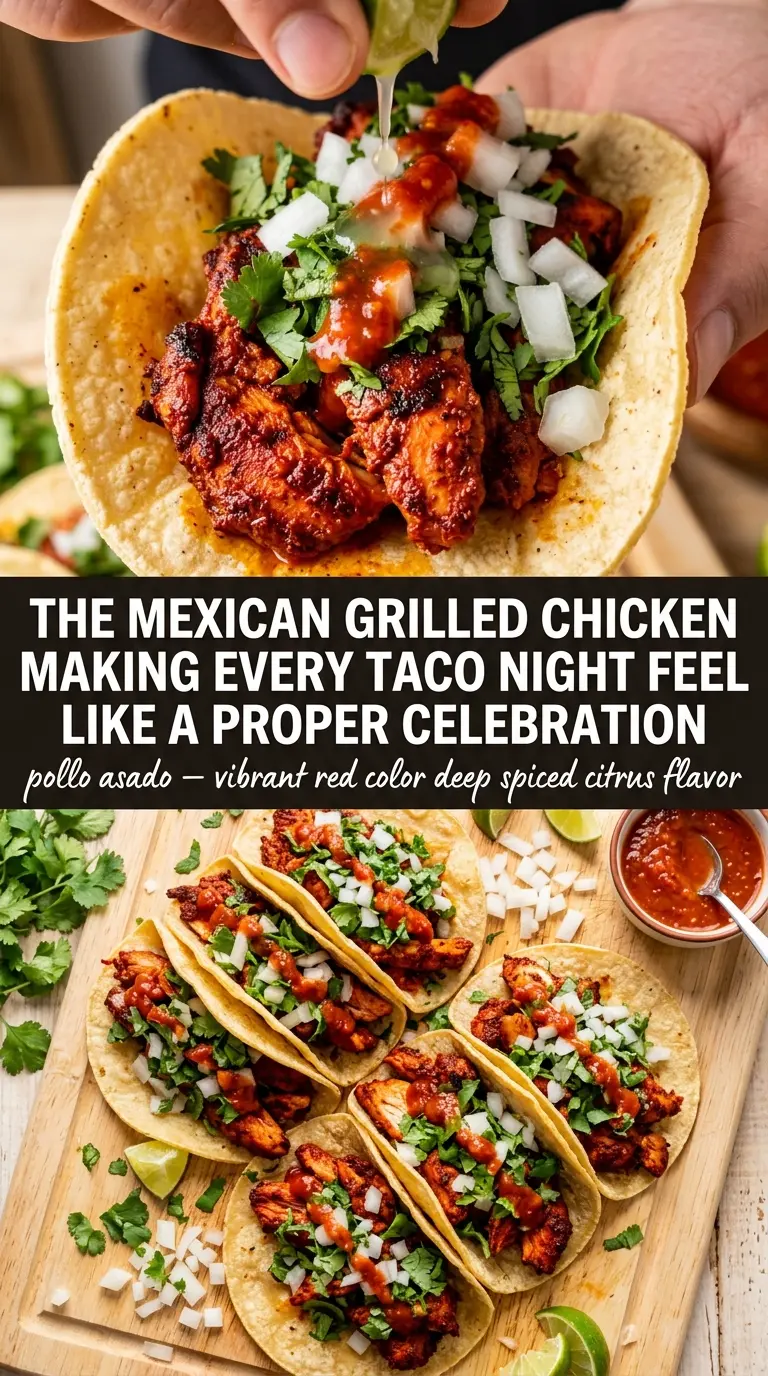
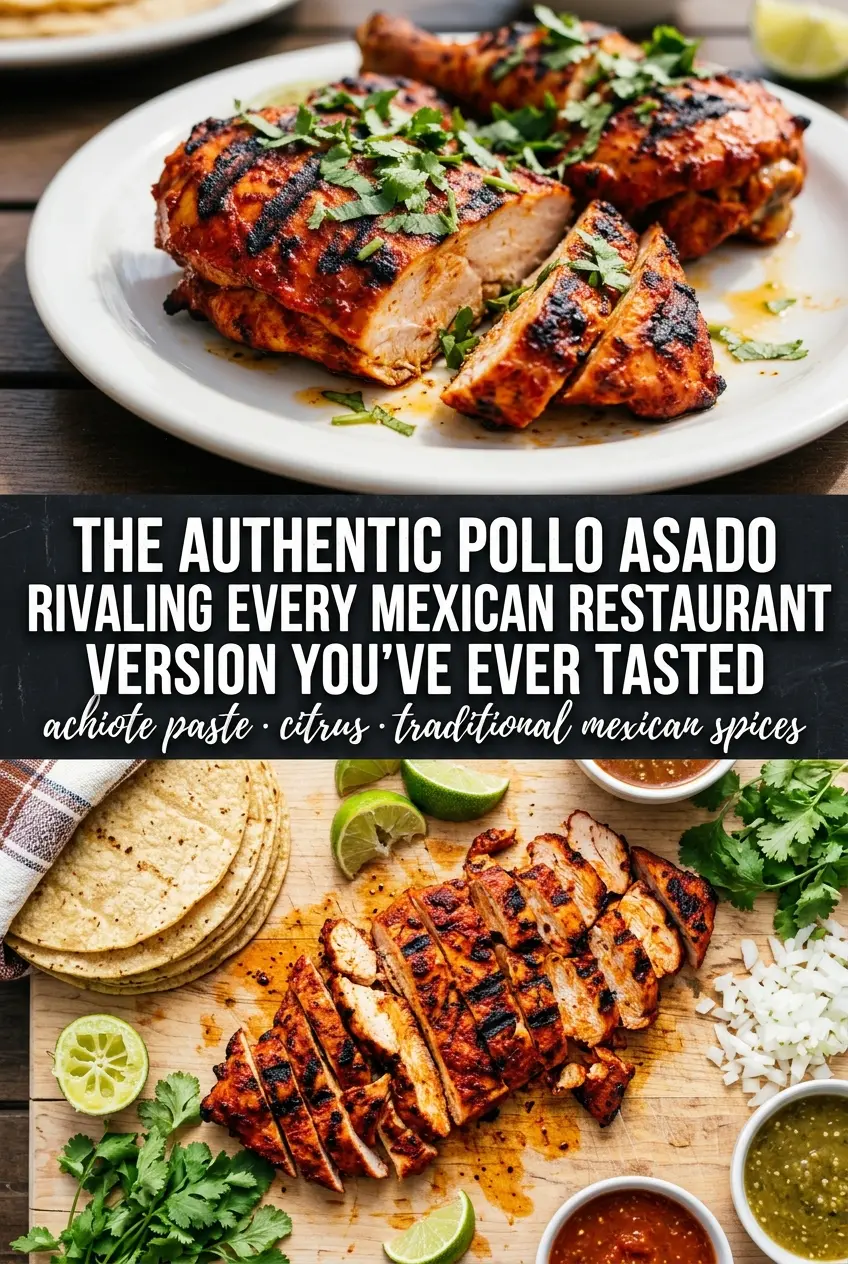
Charred edges, juicy meat, and that deep orange-red seasoning are what make pollo asado worth firing up the grill for. The citrus cuts through the richness of the chicken, while achiote brings the color and earthy backbone that keeps every bite tasting like more than just “grilled chicken.” When it’s done right, the skin or edges pick up little blistered spots, and the meat stays bright and savory underneath.
This version works because the marinade doesn’t just sit on the surface. Orange juice and lime juice bring acidity and aroma, olive oil carries the spices, and achiote paste stains the chicken as it seasons it. I like to blend the marinade so the garlic and spices disperse evenly instead of clinging in gritty pockets. The result is a chicken that tastes seasoned all the way through, not just painted on.
Below, I’ve included the small details that matter most: how long to marinate, how to keep the citrus from taking over, and what changes if you’re cooking pieces instead of a whole bird. If you’ve ever had grilled chicken turn out dry or flat, this is the version that fixes both problems.
The marinade gave the chicken that gorgeous orange color, and after 6 hours it grilled up juicy with the best charred edges. I served it with tortillas and lime, and there wasn’t a piece left.
Save this pollo asado for the nights when you want smoky grilled chicken with bright citrus and that classic achiote color.
The Marinade Needs Time to Reach the Meat, Not Just Color the Outside
With pollo asado, the biggest mistake is treating the marinade like a last-minute coating. Citrus and spices need hours, not minutes, to work into the surface of the chicken, especially if you’re using bone-in pieces or a whole bird. The achiote gives you that signature color, but the salt, garlic, and citrus are what build flavor underneath it.
The other thing people miss is heat management. If the grill runs too hot at the start, the outside chars before the chicken has time to cook through. Medium-high heat is the sweet spot here: hot enough for color, steady enough that the sugars in the citrus don’t scorch into bitterness.
- Achiote paste — This is the ingredient that gives pollo asado its deep orange-red color and earthy, peppery flavor. There isn’t a perfect substitute, but if you can’t find it, a mix of paprika and a little ground annatto will get you closer than anything else.
- Orange juice and lime juice — The combination matters. Orange brings sweetness and roundness, while lime keeps the marinade bright. Don’t swap in bottled lime juice if you can avoid it; fresh juice tastes cleaner and won’t flatten the whole marinade.
- Olive oil — This helps the spices cling to the chicken and keeps the surface from drying out on the grill. It also carries the garlic and cumin so they don’t just wash off in the marinade.
- Chicken pieces or whole chicken — Bone-in pieces are easier and more forgiving, but a whole chicken gives you that classic grilled look. If you use pieces, watch for smaller cuts finishing early and pull them before the thicker pieces overcook.
What Each Ingredient Is Actually Doing in Pollo Asado – Mexican Grilled Chicken
- High heat (essential for browning) — High heat creates crust and caramelization. Medium heat just cooks without developing flavor.
- Oil or fat (for browning and flavor) — The fat helps transfer heat and create crust. It also carries seasonings.
- Salt and seasoning (bold, applied before) — Season confidently. The high heat cooking mellows flavors slightly.
- No moving it around (let it sit) — The food needs time to develop crust. Constant flipping and moving prevents browning.
- Timing (watch carefully) — High heat cooks fast. Check doneness frequently to avoid overcooking.
- Optional: finishing sauce or glaze — Apply in the last minute for flavor without burning. Heavy sauces applied early can char.
- Resting time (5-10 minutes before serving) — Resting allows juices to reabsorb. Cutting right away lets them run out.
- Optional: smoke or char flavor (if available) — Wood smoke or char adds depth. Build the fire strategically for the flavor you want.
Building the Marinade So the Chicken Grills Cleanly
Blending the Marinade
Blend everything until the achiote paste is fully broken down and the marinade looks smooth and rusty orange. If you leave chunks of paste or garlic, they can burn on the grill before the chicken is cooked through. A blender or food processor gives the cleanest coating and the most even flavor.
Marinating for Depth, Not Just Surface Color
Coat the chicken thoroughly and refrigerate it for at least 4 hours, with 24 hours as the upper end. Less than that and the flavor stays thin; much longer and the citrus can start to make the outside of the meat soft in a way that works against a good grilled texture. Turn the chicken once or twice if you can so every side gets equal contact with the marinade.
Grilling to Char Without Drying Out
Preheat the grill to medium-high and oil the grates if they tend to stick. Put the chicken on and let it sear before moving it around; if it sticks, it needs another minute. Turn occasionally and watch for charred spots, not blackened patches. The chicken is done when the juices run clear and the thickest part reaches temperature, but the visual cue is just as important: the skin or edges should look lacquered and blistered, not pale and wet.
Resting Before You Slice or Serve
Let the chicken rest for 10 minutes after grilling. That pause keeps the juices in the meat instead of running onto the cutting board. If you cut too early, even perfectly cooked pollo asado can seem dry, and that’s a shame after all the work of building flavor.
What to Change When You Need a Different Cut or a Different Heat Level
Use bone-in thighs for the juiciest result
Bone-in, skin-on thighs hold up especially well to the citrus marinade and stay juicy even if the grill runs a little hotter than planned. They also pick up great char in the skin. You’ll lose the dramatic look of a whole bird, but you gain a piece of chicken that’s hard to overcook.
Make it dairy-free and gluten-free without changing a thing
This recipe is naturally both dairy-free and gluten-free as written, which is one reason it’s such a dependable grill recipe. Just double-check your achiote paste if you’re using a packaged brand, since some blends can include additives. Serve it with corn tortillas and you’re still in good shape.
Tame the citrus if you want a milder finish
If you prefer a softer, less tangy marinade, cut the lime juice back slightly and replace it with a little more orange juice. You’ll still get brightness and color, but the flavor leans rounder and less sharp. Don’t remove the acid entirely, or the marinade starts tasting flat.
Storage and Reheating
- Refrigerator: Store leftovers for up to 4 days. The flavor deepens overnight, though the grilled skin or edges will soften.
- Freezer: It freezes well for up to 2 months. Slice or portion the chicken first so it thaws evenly, then freeze it with a little of the juices to help protect the meat.
- Reheating: Reheat gently in a covered skillet over low heat or in a 300°F oven until warmed through. High heat dries out the chicken fast, especially if it’s already been grilled once.
Answers to the Questions Worth Asking
Pollo Asado - Mexican Grilled Chicken
Ingredients
Equipment
Method
- Blend orange juice, lime juice, olive oil, garlic, achiote paste, cumin, oregano, chili powder, salt, and pepper until smooth and evenly colored.
- Marinate chicken for 4-24 hours in the refrigerator, turning or coating again halfway through if your container allows.
- Preheat grill to medium-high heat.
- Grill chicken, turning occasionally, until cooked through and charred in spots, about 30-40 minutes for whole chicken.
- Let chicken rest for 10 minutes before serving.
- Serve with warm tortillas, lime wedges, and cilantro.