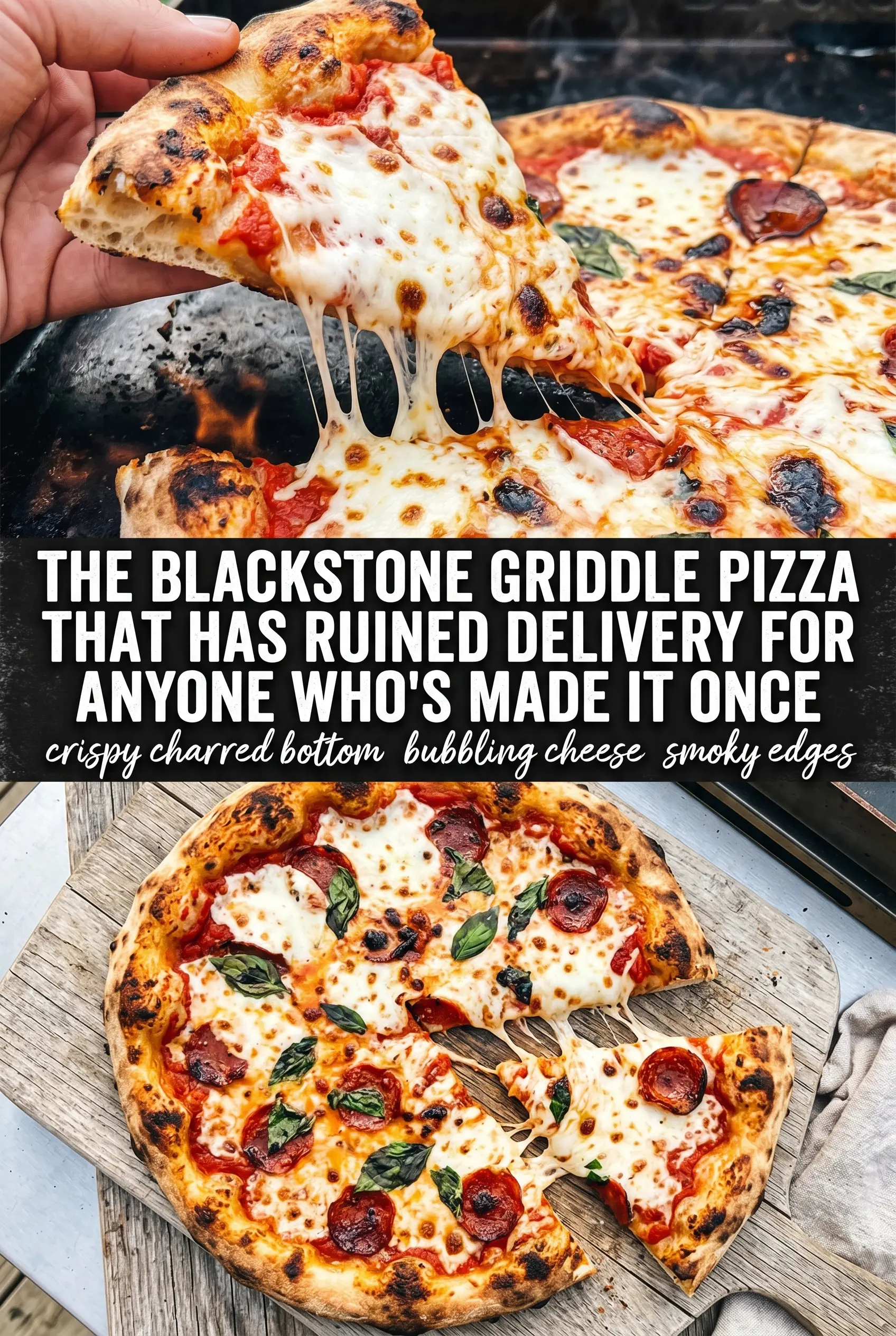
Pizza on a Blackstone griddle gives you the kind of crust that disappears fast: crisp on the bottom, tender in the middle, with just enough char to taste like it came from a great outdoor pizza oven. The best part is how the cheese melts right on the cooktop while the crust keeps its structure, so you get that classic pizza pull without heating up the whole kitchen.
What makes this version work is the two-stage cook. The dough gets a head start on the griddle before the toppings go on, which sets the underside and keeps the center from turning soggy once the sauce hits. A light hand with sauce matters here, and so does medium heat. Too hot, and the crust darkens before the cheese melts. Too much sauce, and you lose the clean, sturdy slice that makes griddle pizza worth making.
Below, I’ve included the little details that keep the crust from sticking, the cheese from burning, and the toppings from sliding around once the lid goes on. If you’ve only ever made pizza in the oven, this method is worth learning.
The crust came out crisp underneath and the cheese melted evenly once I covered it with a dome. I used pepperoni and mushrooms, and the bottom still held up under the sauce.
Save this Blackstone pizza method for the nights when you want a charred crust, bubbling cheese, and dinner on the griddle in under 30 minutes.
The Reason the Crust Stays Crisp Instead of Going Limp
The trap with griddle pizza is the same one that catches people making pizza on a sheet pan: the dough cooks on one side, then the sauce turns the center wet before the bottom has enough structure to stay firm. This version avoids that by giving the dough a quick first cook directly on the griddle. That sets the base before the toppings go on, which is what keeps the slice from folding into itself when you lift it.
Medium heat matters more than most people think. If the griddle runs too hot, the bottom gets too dark before the cheese has time to melt under the cover. If it runs too cool, the crust dries out before it browns and you lose the texture that makes this method worth using in the first place.
- The first side builds the structure. You’re not fully cooking the dough yet. You’re setting it just enough that it can handle sauce and cheese without turning soggy.
- Flipping the crust is the key move. The cooked side becomes the pizza side, so the sauce sits on the already-stable surface instead of soaking into raw dough.
- The cover traps heat for the cheese. That’s how the toppings melt through before the crust overcooks.
- Thin rounds work best. Thick dough needs too long to cook through, and by then the toppings are in danger of drying out.
What the Dough, Sauce, and Cheese Are Each Doing Here
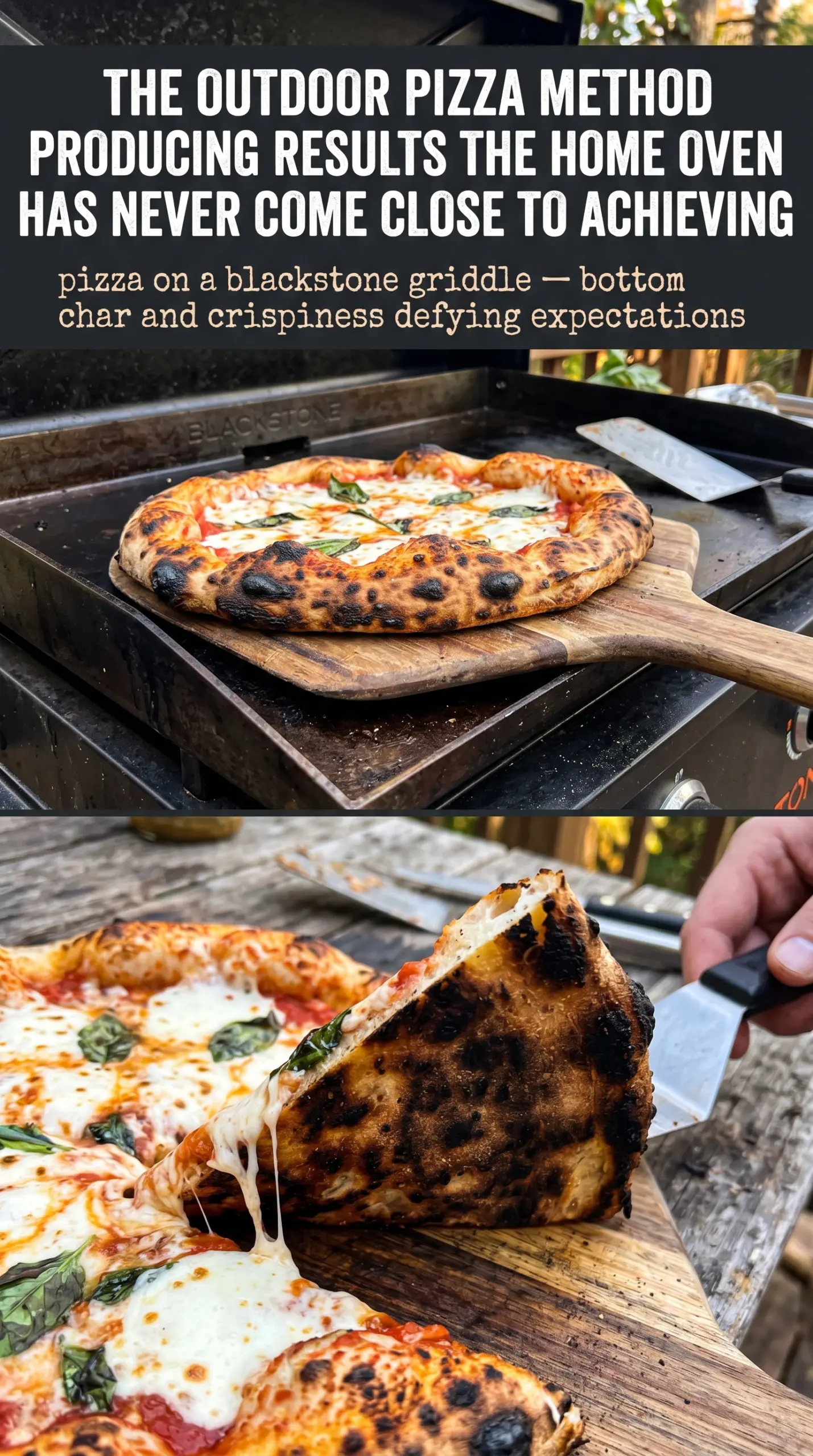
- Pizza dough — A standard pound of dough gives you four personal pizzas that are easy to handle on the griddle. If your dough keeps snapping back when you stretch it, let it rest for 10 to 15 minutes before trying again. Cold dough resists, and fighting it only makes the rounds uneven.
- Olive oil — This helps prevent sticking and encourages browning on the griddle surface. Use enough to lightly coat the cooking area, not so much that the dough fries.
- Pizza sauce — Use a thick sauce, not a watery one. Thin sauce runs to the edges and softens the crust faster than the cheese can set. If yours is loose, simmer it down before assembling.
- Mozzarella — Shredded low-moisture mozzarella melts more predictably than fresh mozzarella on a griddle. Fresh mozzarella can work, but it releases more liquid and needs careful draining.
- Toppings — Keep them sliced thin and pre-cooked if they need a long cook, like sausage or mushrooms. The griddle phase is short, so toppings that need extra time should already be mostly cooked.
- Flour — A light dusting keeps the dough from sticking while you stretch it and move it. Too much flour can burn on the griddle, so brush off the excess before cooking.
- Fresh basil and Parmesan — Add these at the end. Basil bruises and darkens fast, and Parmesan gives you a sharp finish that tastes better than melting it under the lid.
Getting the Pizza Built Before the Cheese Burns
Heat the griddle and oil the surface
Bring the Blackstone to medium heat before the dough goes down. The surface should feel hot when you hover your hand above it, but not scorching enough to smoke the oil hard. Add the olive oil and spread it into a thin, even layer. If the oil puddles, the dough slides around instead of setting in place.
Stretch the dough into thin rounds
Divide the dough into four portions and stretch each one into a thin round with a little flour underneath. Aim for even thickness so the center cooks at the same pace as the edges. If the dough shrinks back, let it rest for a few minutes. That tells you the gluten is tight, and forcing it now only makes the crust tough.
Cook the first side until the bottom is golden
Lay the dough directly on the oiled griddle and let it cook for 2 to 3 minutes. You’re looking for a golden underside with a few darker spots and a surface that looks set enough to flip cleanly. If it still clings, give it another 20 to 30 seconds. Pulling too early tears the crust and makes the topping stage harder than it needs to be.
Flip fast and top the cooked side
Once the crust is flipped, work quickly. Spread on the sauce, then add cheese and your toppings while the cooked side is facing up. The goal is to build on the firm side so the toppings stay on top instead of sinking into the dough. Keep the sauce layer thin; too much slows the melt and softens the crust.
Cover until the cheese bubbles
Set a dome or large pan over the pizzas and cook for 3 to 5 minutes. The trapped heat melts the cheese evenly and helps the toppings finish without blasting the crust with direct heat. When the cheese is fully melted and starting to bubble, the pizza is ready. If the bottom darkens before the top melts, the griddle is too hot and needs to be lowered for the next round.
How to Change This for Different Toppings and Diets
Gluten-Free Crust
Use a gluten-free pizza dough that’s made for shaping, not batter-style flatbread. It usually needs a gentler flip because it won’t have the same elasticity as wheat dough, but the griddle still gives it a crisp edge if you keep the heat moderate.
Dairy-Free Pizza
Swap in a dairy-free mozzarella-style shred that melts well, not one that dries into brittle bits. These usually brown less than dairy cheese, so lean on well-cooked toppings and a good finish of olive oil or fresh herbs for extra richness.
Making It Meatier
Pepperoni, cooked sausage, or chopped bacon all work well, but they should be cooked or partially cooked before they go on. The griddle finish is too short to fully render raw sausage, and extra grease can make the center slippery.
Storage and Reheating
- Refrigerator: Store leftovers in an airtight container for up to 3 days. The crust softens a bit, especially under saucy toppings.
- Freezer: Freeze slices wrapped individually for up to 2 months. Reheat from frozen for the best texture instead of thawing first.
- Reheating: Warm slices in a skillet or on the griddle over medium-low heat until the bottom crisps back up and the cheese loosens. The mistake to avoid is microwaving, which turns the crust chewy and the cheese greasy.