Pineapple coconut ice cream lands with that rare balance of bright, tangy fruit and plush, creamy richness that keeps pulling people back for another spoonful. The pineapple stays lively instead of getting lost, and the toasted coconut adds little pockets of crunch that make each bite feel layered instead of one-note. It tastes like a frozen piña colada, but cleaner and more balanced, with enough fruit to keep it from feeling heavy.
The texture depends on treating the custard gently. Egg yolks give the base its body, coconut milk brings that unmistakable tropical flavor, and heavy cream keeps the final scoop soft instead of icy. Pineapple is added near the end of churning so it stays in pieces instead of turning mushy, and the toasted coconut gets folded in just long enough to distribute without disappearing into the base. That small timing detail is what keeps this from tasting flat.
Below you’ll find the little choices that make this ice cream churn smoothly, freeze evenly, and keep the pineapple flavor clean. If you’ve ever had homemade fruit ice cream turn too icy or too soft, the notes here will help you avoid that.
The custard came out silky, and the pineapple stayed in little juicy pieces instead of freezing into hard chunks. I let it churn the full last 5 minutes with the coconut, and the texture was spot on after an overnight freeze.
Save this pineapple coconut ice cream for a creamy, fruit-forward frozen dessert with real pineapple chunks and toasted coconut in every scoop.
The Custard Has to Stay Smooth Before the Fruit Goes In
This base works because the custard is cooked just enough to thicken without scrambling the yolks. If you rush the heat, the eggs can seize and leave you with tiny bits of cooked yolk instead of a silky base. Keep the whisk moving and look for the custard to coat the back of a spoon and reach 175F, which is hot enough to set the egg proteins without pushing them into curdled territory.
The other mistake is adding the pineapple too early. Fresh pineapple carries a lot of moisture, and if it goes into the custard before churning, it softens too much and throws off the texture. Adding it during the last few minutes of churning lets the machine distribute it evenly while keeping the pieces distinct and bright.
What Each Ingredient Is Doing in the Bowl
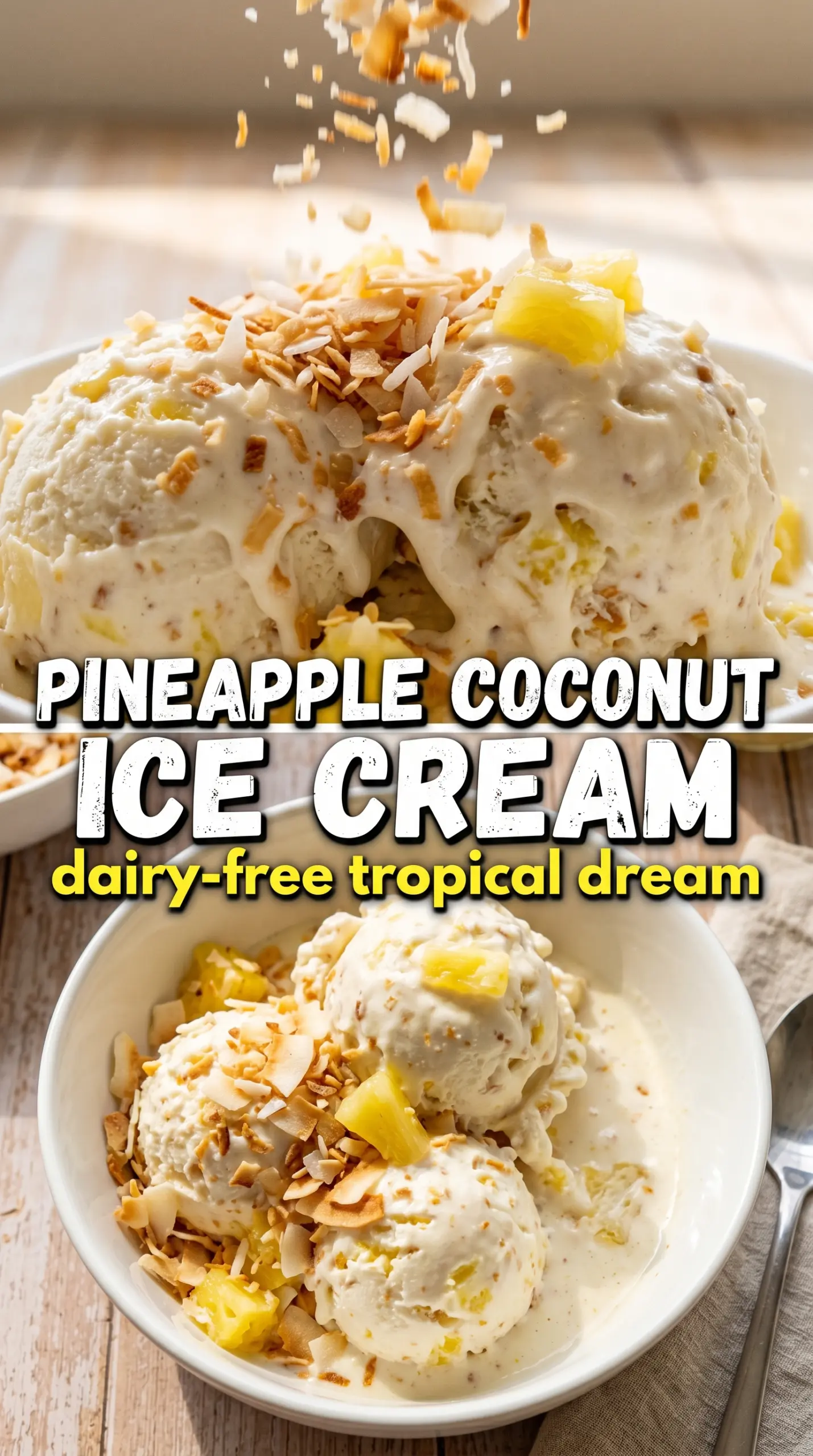
- Full-fat coconut milk — This brings the coconut flavor that makes the ice cream taste tropical instead of just sweet. Use full-fat, not light coconut milk, or the base will freeze too hard and lose that lush texture.
- Heavy cream — The cream keeps the final ice cream scoopable and smooth. You can swap in more coconut milk if you need a dairy-free version, but expect a firmer set and a slightly icier finish.
- Egg yolks — These build a custard base that gives the ice cream body and a rich mouthfeel. Whole eggs won’t give the same silkiness, and skipping the yolks entirely will make the finished ice cream feel thin.
- Fresh pineapple — Fresh pineapple gives the brightest flavor and the cleanest bite. Chop it finely so it distributes well; big chunks freeze into hard, icy pieces.
- Coconut extract — This punches up the coconut flavor without adding extra liquid. It matters because coconut milk alone can taste milder than people expect once the base is frozen.
- Toasted shredded coconut — Toasting brings out a nutty edge and keeps the coconut from tasting raw. Fold it in near the end so it stays textured instead of turning soggy.
Cooking the Custard, Churning the Fruit, Finishing the Freeze
Warming the Dairy Without Scorching It
Combine the coconut milk, cream, and sugar in a saucepan and heat it just until the sugar dissolves and the mixture is steaming. You don’t want a hard boil here; that can make the dairy taste cooked and can cause the mixture to reduce more than you want. The goal is a smooth, hot base that will temper the yolks without shocking them.
Tempering the Yolks Slowly
Whisk the hot dairy into the egg yolks in a thin stream, then return everything to the saucepan. That gradual whisking matters because it raises the yolks’ temperature little by little instead of scrambling them on contact. If you see any lumps at this stage, strain the base before it hits the heat again.
Cooking to the Right Thickness
Cook the custard over medium-low heat, stirring constantly and scraping the bottom and corners of the pan. Stop at 175F, or when the mixture lightly coats a spoon and leaves a clean path when you run a finger through it. If it goes much hotter, the eggs can curdle and the finished ice cream will taste grainy.
Cooling Before Churning
Strain the custard into a clean bowl, then stir in the coconut extract, vanilla, and salt. Chill it completely before churning, or the ice cream maker will struggle to freeze it fast enough and you’ll get a softer, icier result. Four hours is the minimum, but colder is better here.
Adding the Pineapple at the End
Churn the base until it’s thick and softly frozen, then add the diced pineapple and toasted coconut in the last 5 minutes. This keeps the fruit from sinking and helps the coconut stay visible throughout the finished ice cream. When it comes out of the machine, it should look like soft serve with clear pieces of pineapple running through it.
Dairy-Free Version
Swap the heavy cream for full-fat coconut milk and keep the rest of the custard the same. The flavor gets even more coconut-forward, but the finished ice cream will freeze a little firmer, so let it sit on the counter for 5 to 10 minutes before scooping.
No-Churn Adaptation
If you don’t have an ice cream maker, fold the cooled custard into whipped cream, then freeze it in a loaf pan. You’ll lose a little of the dense, churned texture, but the flavor still comes through well if the pineapple is diced very small.
Pineapple Swaps
Frozen pineapple works if that’s what you have, but thaw it and drain it well first. Too much extra juice will make the ice cream icy, while well-drained fruit keeps the flavor bright without watering down the base.
Storage and Reheating
- Refrigerator: Not applicable for long storage once churned; keep it in the freezer instead. The base before churning can be refrigerated up to 2 days.
- Freezer: Store in a shallow airtight container for up to 2 weeks. After that, the pineapple flavor softens and ice crystals start to show.
- Reheating: Let it sit at room temperature for 5 to 10 minutes before scooping. If it’s rock hard, it’s usually because the base wasn’t fully chilled before churning or the freezer runs very cold.
Answers to the Questions Worth Asking
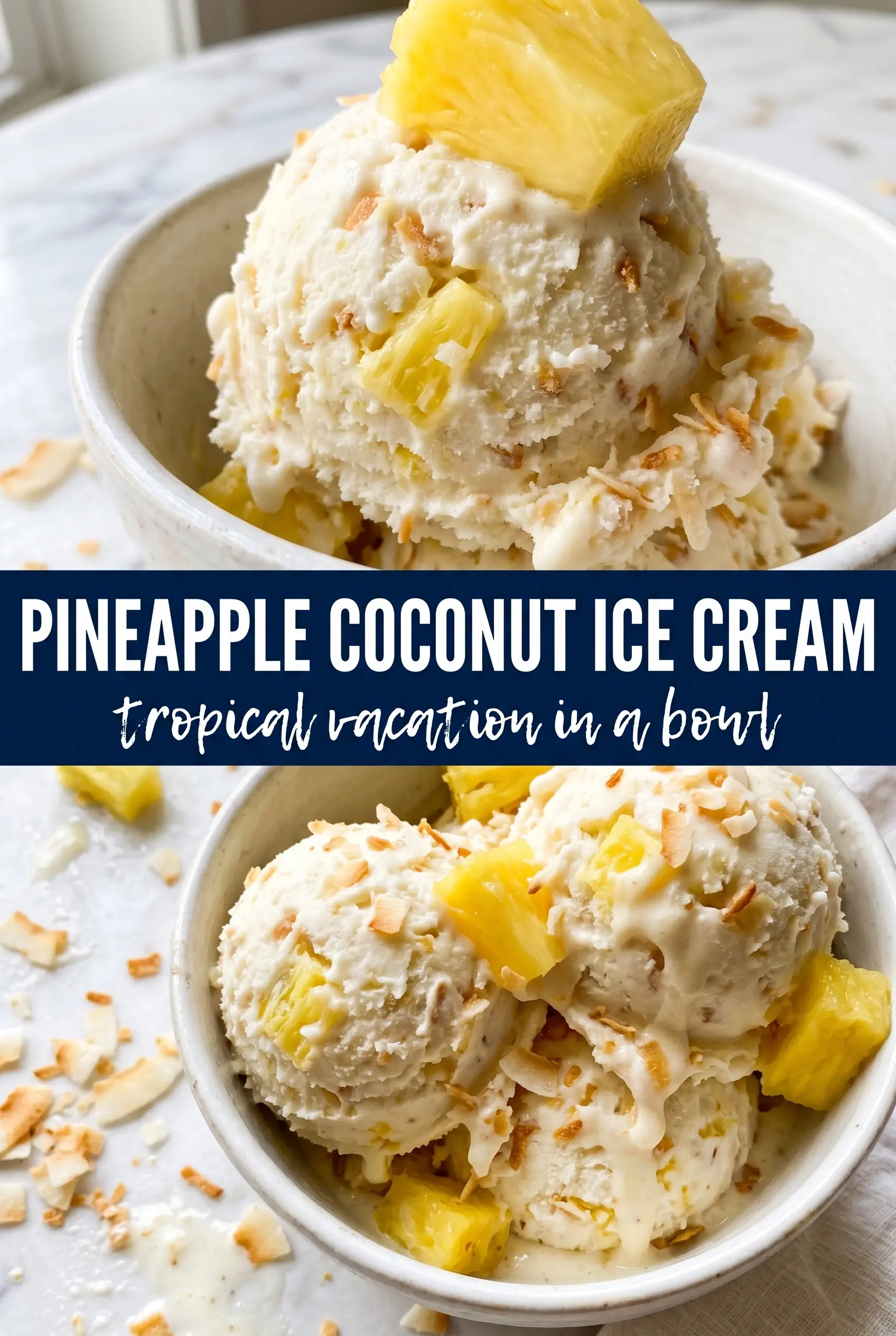
Pineapple Coconut Ice Cream
Ingredients
Equipment
Method
- Heat coconut milk and heavy cream with granulated sugar in a Dutch oven over medium heat, whisking until the sugar is dissolved. Visual cue: the mixture should look smooth and slightly glossy with no grainy sugar specks.
- Whisk the hot coconut mixture slowly into the egg yolks to temper them. Visual cue: keep whisking until the yolks look loosened and smooth rather than streaky.
- Return everything to the Dutch oven and cook, stirring constantly, until thickened to 175°F (about 10 minutes). Visual cue: the custard coats the back of a spoon and doesn’t immediately run off.
- Strain the custard into a bowl, then stir in coconut extract, vanilla extract, and salt. Visual cue: the flavorings fully disappear and the custard returns to a uniform creamy color.
- Cool the custard completely, then refrigerate at least 4 hours until very cold. Visual cue: the mixture thickens slightly and feels chilled throughout.
- Churn the chilled custard in an ice cream maker until it reaches soft-serve texture. Visual cue: it looks pale, airy, and thick enough to hold ridges.
- Add the finely diced pineapple and toasted shredded coconut in the last 5 minutes of churning. Visual cue: yellow pineapple bits and toasted coconut flakes become visible throughout the ice cream.
- Transfer to a freezer-safe container and freeze until scoopable. Visual cue: the surface firms up and scoops cleanly without collapsing.