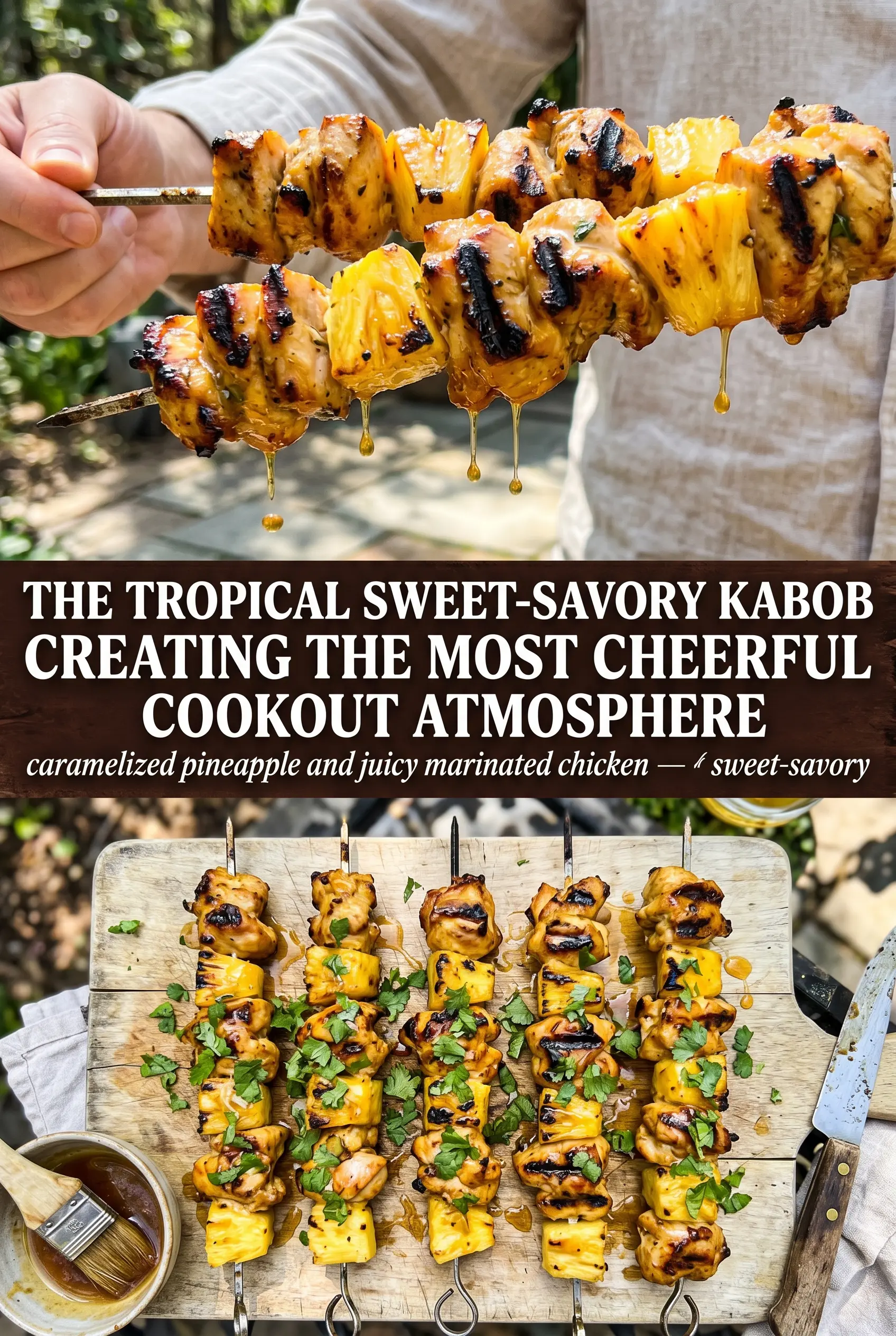
Pineapple chicken kabobs hit that sweet spot between fresh and smoky: juicy chicken, caramelized pineapple, and peppers that still have a little bite. The glaze clings to everything as it grills, so every skewer comes off glossy, browned at the edges, and packed with that salty-sweet teriyaki-style flavor that works just as well for a weeknight dinner as it does on a grill night with friends.
What makes these work is the balance in the marinade. Pineapple juice brings sweetness and a little natural acidity, soy sauce adds depth, and honey helps the kabobs brown instead of drying out. I like to marinate the chicken long enough to season it, but not so long that the texture turns soft from the fruit juice. The other big win is cutting everything into even pieces so the chicken finishes at the same time as the pineapple and vegetables.
Below you’ll find the small details that matter: how to keep wooden skewers from burning, when to baste so the glaze doesn’t scorch, and the easiest swaps if you need to work with what you already have in the fridge.
The marinade gave the chicken a great grilled flavor, and the pineapple caramelized instead of turning mushy. I cooked them for just under 12 minutes and the kabobs came off the skewers perfectly.
Pineapple Chicken Kabobs with caramelized edges and a glossy sweet-savory glaze are worth saving for your next grill night.
The Trick to Keeping the Pineapple Juicy Instead of Mushy
Pineapple is the ingredient that can make or break these kabobs. Cut too small, it disappears into the grill before the chicken is done. Marinated too long, it starts losing its clean, bright texture and can turn soft on the skewer. The sweet spot is firm, ripe pineapple cut into chunks about the same size as the chicken, so it browns at the edges while still holding its shape.
The other thing that matters is heat. Medium-high is hot enough to caramelize the fruit and get color on the chicken, but not so aggressive that the honey in the marinade burns before the meat cooks through. If the glaze starts smoking hard or turning black fast, the grill is too hot and the sugars are scorching instead of browning.
What Each Ingredient Is Actually Doing in This Skewer

- Chicken breasts — Breasts stay lean and cook quickly, which is why they’re good for kabobs. Cut them into even cubes so the outside doesn’t dry out before the center reaches 165°F. Thighs work too if you want a little more forgiveness and richer flavor.
- Pineapple juice — This adds sweetness and a little tenderizing power, but it’s also what gives the marinade its tropical backbone. Fresh or bottled juice both work. If you use canned, choose one without added sugar so the kabobs don’t turn cloying.
- Soy sauce — This is the salty base that keeps the glaze from tasting flat. Low-sodium soy sauce is the better pick here because the marinade reduces and clings as it grills. Tamari works well if you need a gluten-free option.
- Honey — Honey helps the kabobs brown and gives the finished glaze that sticky shine. It also balances the salt in the soy sauce. Don’t replace it with plain sugar unless you’re prepared for a thinner marinade and less gloss on the grill.
- Bell peppers and onion — These aren’t just filler on the skewer. They add sweetness, color, and a little crunch, and they help break up the richer bites of chicken and pineapple. Cut them to match the chicken so everything cooks evenly.
- Wooden skewers — Soak them long enough that they don’t char before the kabobs finish. If you skip that step, the ends can burn faster than the chicken cooks, especially over a hot grill.
How to Grill These Kabobs Without Burning the Glaze
Mixing the Marinade
Whisk the soy sauce, pineapple juice, honey, olive oil, and garlic until the honey dissolves and the mixture looks smooth. If the honey sits in streaks at the bottom, it won’t coat the chicken evenly. The garlic should be minced fine enough to cling to the meat without falling through the grill grates later.
Marinating the Chicken
Add the chicken to the marinade and let it sit for 1 to 4 hours. Less than an hour won’t season the meat deeply enough, and much longer than 4 hours can start to soften the surface from the pineapple juice. Keep it refrigerated the whole time so the texture stays clean and safe.
Building the Skewers
Thread the chicken, pineapple, peppers, and onion onto the soaked skewers, leaving a little space between pieces so the heat can move around them. If you pack everything tightly, the middle pieces steam instead of grill. Aim for similar-sized chunks across the board so the chicken and vegetables finish together.
Grilling and Basting
Grill over medium-high heat for 5 to 6 minutes per side, turning once and basting with the marinade as you go. The outside should pick up dark grill marks and the pineapple should start to caramelize at the edges. Stop basting once the chicken is nearly done, because the sugars can burn if you keep brushing on a thick layer too late in the cook.
Knowing When They’re Done
The safest finish is 165°F in the thickest piece of chicken, but the visual cue matters too: the chicken should look opaque all the way through and release easily from the grate. If the pineapple looks deeply browned before the chicken is ready, move the kabobs to a slightly cooler spot on the grill. That gives the meat time to finish without turning the glaze bitter.
How to Adapt These Kabobs When You Need a Different Route
Gluten-Free Version
Swap the soy sauce for tamari or coconut aminos. Tamari gives the closest savory result, while coconut aminos taste a little sweeter and lighter. If you use coconut aminos, cut the honey back slightly so the glaze doesn’t drift too sweet.
Chicken Thigh Kabobs
Chicken thighs bring more flavor and stay juicier if your grill runs hot or you tend to cook a minute too long. They take almost the same amount of time, but they’re a little harder to dry out. Trim excess fat before cubing so the skewers don’t flare up.
No Grill, Indoor Option
Use a broiler set on high and line the kabobs on a foil-lined sheet pan. Turn them once halfway through and watch the glaze closely, because the honey can go from browned to burned fast under the broiler. You won’t get the same smoke, but you’ll still get good color and caramelized pineapple.
Vegetable-Forward Skewers
Replace some of the chicken with extra peppers, red onion, and chunks of zucchini for a lighter skewer. Zucchini cooks faster than chicken, so cut it thicker than you think and keep an eye on it. The result is softer and more vegetable-forward, with the same sweet-savory glaze.
Storage and Reheating
- Refrigerator: Store leftovers in an airtight container for up to 3 days. The pineapple softens a little, but the flavor stays good.
- Freezer: The cooked chicken freezes well, though the pineapple and peppers soften after thawing. Freeze off the skewers in a sealed container for up to 2 months.
- Reheating: Reheat gently in a covered skillet over medium-low heat or in a 300°F oven until warmed through. High heat dries out the chicken and can make the glaze turn sticky and hard.
Answers to the Questions Worth Asking
Pineapple Chicken Kabobs
Ingredients
Equipment
Method
- Whisk soy sauce, pineapple juice, honey, olive oil, and minced garlic in a bowl until honey dissolves and the mixture looks glossy.
- Marinate the cubed chicken for 1-4 hours so the surface takes on a golden tint from the glaze.
- Thread the marinated chicken onto soaked wooden skewers, leaving small gaps so the pieces grill evenly.
- Add cubed pineapple, bell peppers, and onion to the skewers in alternating sections for colorful spacing.
- Preheat the grill to medium-high heat and place kabobs on the grate.
- Grill for 5-6 minutes per side, basting with the marinade during grilling for a sticky, caramelized sheen.
- Cook until the chicken reaches 165°F and the pineapple is caramelized, with browned edges and slightly softened fruit.